Estate Planning Services in Walnut Creek: A California Guide to Protecting Your Legacy
Effective estate planning services do more than produce a will or a collection of signed forms. They bring together decisions about who can act for you, how your property is owned, who should receive it, and how those decisions will work in practice. For individuals, families, property owners, and business owners in Walnut Creek, Saranap, San Miguel, and Castle Hill, the goal is a California plan that reflects their circumstances rather than a generic set of documents.
A carefully prepared plan cannot eliminate every difficulty. It can, however, give the people you choose clearer authority and instructions when they need them most. That requires attention not only to drafting, but also to asset titles, beneficiary designations, the people selected to serve, and changes over time.
Why estate planning matters before a crisis
People often revisit planning after buying or refinancing a home, welcoming a child, marrying or separating, changing business ownership, or experiencing a death or incapacity in the family. A substantial change in assets can be just as important. These events may alter both what a person wants and whether an existing plan will accomplish it.
Planning is also about decisions during life. If illness or injury prevents someone from handling financial matters or communicating health-care wishes, properly prepared documents can identify who may act and what guidance they should follow. The California Courts’ guide to planning documents addresses both lifetime decision-making and property transfers after death.
The right approach depends on more than the value of an estate. Family relationships, the types of assets involved, a potential fiduciary’s ability to serve, and a client’s preferences all matter. An attorney can help identify where those considerations align—and where a seemingly simple instruction could create practical problems later.
What estate planning services can include
An individualized engagement may involve wills, trusts, powers of attorney, health-care directives, and planning for children or business interests. Each document has a different purpose. Equally important is the work that follows drafting: signing documents correctly, reviewing ownership and beneficiary arrangements, keeping records accessible, and updating the plan when circumstances change. Legal advice helps clients evaluate choices; it does not guarantee a particular tax, probate, or family outcome.
Wills and instructions for distributing property
A will can state who should receive property governed by the will and nominate an executor to administer the estate. For parents, it can also be a place to express a preference about who should care for minor children. A will is useful, but it is not a promise that probate will be unnecessary. California Courts explains that an estate may require probate even when the person who died left a will.
Certified Estate Law Specialist
Brillant Law Firm are Certified Specialist in Estate Planning, Trust and Probate Law
Nor does a will necessarily control every asset a person owns. Property held under a different ownership arrangement or payable to a named beneficiary may follow that arrangement instead. A pour-over will is commonly coordinated with a living trust to direct certain remaining property toward the trust, but it should not be treated as a substitute for reviewing how assets are titled. Readers considering that combination can explore how a pour-over will works with a California trust.
Living trusts, trust funding, and successor trustees
A living trust can establish instructions for managing trust-owned assets during incapacity and distributing them after death. It names a successor trustee to act when the circumstances described in the trust require it. That role calls for more than willingness: the person selected should be able to follow instructions, maintain records, handle property responsibly, and communicate with beneficiaries.
Signing the trust is only part of implementation. A plan may also call for reviewing deeds, account ownership, and beneficiary arrangements. As California Courts notes, the trust-based transfer process generally depends on assets having been placed in the trust. A trust therefore does not automatically keep every asset out of probate simply because the document exists. The appropriate funding steps depend on the asset and the client’s broader plan.
It is worth considering administration while the trust is being designed. Where will the successor trustee find the documents? How will they identify assets and understand whom to contact? Brillant Law Firm’s trust planning checklist offers a practical starting point for preparing a future administrator and organizing information.
Financial powers of attorney and advance health care directives
A California power of attorney can authorize a chosen agent to handle specified financial or property matters. An advance health care directive addresses a different set of decisions: it can express health-care preferences and appoint an agent to make health-care decisions. Because money and medical care present different questions, the choice of agent, the authority granted, and when that authority takes effect deserve separate consideration.
These documents can help others act during incapacity, rather than leaving important wishes unexplained until a crisis. Sample forms may help someone understand the issues, but they cannot determine which provisions fit a particular family, business, or property situation.
Guardianship nominations and planning for children
For parents of minor children, a plan can express a preferred guardian and organize how assets should be managed for the children’s benefit. A guardianship nomination communicates the parent’s choice; it is not an absolute guarantee of a court’s decision. Parents should discuss the role with the person they have in mind and consider that person’s willingness, location, values, and practical capacity to care for the children.
Caregiving and financial management need not be treated as the same question. A parent may wish to consider who is best suited to each responsibility, what resources would be available, and how the people involved would communicate. Thoughtful instructions can provide direction while leaving room for the realities a family may face.
Tax-aware planning and business succession
Estate planning attorney services may include reviewing how proposed transfers, lifetime gifts, business interests, and possible federal estate-tax considerations fit together. Tax analysis must be based on current law and the client’s complete financial picture. The IRS states that the federal estate-tax basic exclusion amount for decedents dying in 2026 is $15,000,000. That year-specific figure does not establish whether a particular estate owes tax or has a filing obligation, and a trust is not a universal tax solution.
Business owners have additional continuity questions. Who can manage operations if an owner becomes incapacitated? What should happen to an ownership interest after death? Do existing entity documents or agreements support the intended transition? Coordinating estate documents with ownership records and appropriate tax and business advisers helps expose inconsistencies before successors must resolve them under pressure.
How California property ownership affects a plan
A residence, rental property, business interest, bank account, retirement account, and insurance policy may not all transfer in the same way. Their ownership records and beneficiary designations may be as consequential as the instructions in a will or trust. That is why a complete asset inventory is more useful than a rough estimate of total wealth.
Start with what you own, how each asset is titled, whether it has a beneficiary designation, and where the supporting records are kept. Include debts and obligations that the person administering your affairs would need to identify. Then review those details alongside the proposed documents. For example, instructions intended to govern trust property should prompt a separate question about whether the relevant property has actually been transferred to the trust in an appropriate way.
Property transactions can leave a plan out of date. A newly purchased home, a sold rental property, or an account opened after a trust was signed may warrant another review. In Walnut Creek, Saranap, San Miguel, and Castle Hill, the useful local question is not whether a neighborhood has a special estate-planning rule. It is whether each client’s California property and accounts have been accounted for accurately. Trust funding and account titling should be verified, not assumed.
Probate, trusts, and realistic expectations
Probate is a court process that may be needed to transfer certain property after someone dies. Whether it is required depends on the assets, how they were owned, and the California procedures available in the circumstances. Having a will does not, by itself, rule out probate; having a living trust does not mean every asset necessarily belongs to it.
A properly implemented trust can provide a way for a successor trustee to administer trust-owned assets outside a probate proceeding. It does not eliminate all administration, expenses, tax questions, or opportunities for disagreement. After a death, a trustee may still need to identify property, follow the trust’s instructions, address applicable obligations, keep records, and communicate with beneficiaries. For a closer look at that work, see Brillant Law Firm’s guides to trust administration in California and trustee duties after death.
Realistic planning considers what happens if an asset was overlooked or family members disagree about an instruction. No document can promise a dispute-free future. Clear drafting, consistent asset arrangements, and organized records can nevertheless give successors a sounder basis for acting and for answering reasonable questions.
When to review or update an estate plan
An estate plan should remain connected to the life it is meant to serve. Changes in family circumstances, an acquisition or sale of property, business formation or a change in ownership, a move, or a significant shift in assets can all justify review. So can a change in intended beneficiaries, an executor, a trustee, or an agent—or a change in applicable law.
Periodic review is sensible even when there has been no obvious crisis. It creates an opportunity to confirm that named people remain willing and able to serve, that important records can be located, and that ownership and beneficiary arrangements still reflect current intentions. There is no need to assume every review requires an entirely new plan.
When changes are needed, they should be made through legally appropriate documents and coordinated with related asset records. An informal note to a relative may communicate a wish, but it should not be relied on to revise a signed plan or change an account’s designated beneficiary. Keeping the documents and implementation steps aligned is part of maintaining the plan.
Preparing for a meeting with an estate planning attorney
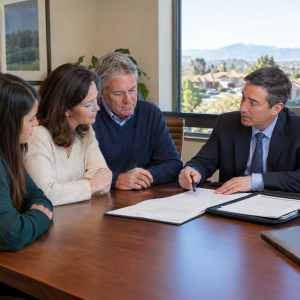
Clients do not need to arrive having selected every legal document. A productive first discussion can establish goals, identify missing information, and explain possible next steps. Bringing the following items, if available, can make that discussion more specific:
- A current list of assets and debts, including property, accounts, insurance, and business interests.
- Deeds or other ownership information for real property.
- Existing wills, trusts, powers of attorney, and health-care directives.
- Beneficiary information for life insurance and retirement accounts.
- Relevant business or entity documents and ownership agreements.
- Family details that affect decision-making, including potential fiduciaries and beneficiaries.
- A short list of priorities, concerns, and questions.
It is acceptable if some records are incomplete. Identifying a gap is itself useful. A client might know, for example, that an account exists but be uncertain how it is titled. That uncertainty gives the attorney a concrete issue to investigate before recommending how the account should fit into a plan.
Questions to ask about estate planning attorney services
Ask how the attorney approaches California estate planning and what work is included in the engagement. Who prepares and reviews the documents? How will execution be handled? If a trust is recommended, what guidance will be provided on funding it and checking related beneficiary arrangements? These questions distinguish document preparation from the additional work needed to put a plan into effect.
It is also reasonable to ask how fees are structured, what follow-up or future review is available, and what information the attorney will need from you. If a family expects complicated administration, ask whether the firm can advise a successor trustee or address a dispute if one later arises. Answers should help you understand the proposed scope of representation, not serve as a promise that a particular outcome can be secured.
Local estate planning guidance for Walnut Creek and nearby communities
Brillant Law Firm serves California clients in Walnut Creek, Saranap, San Miguel, and Castle Hill. Its stated practice areas include trusts, estates, taxation, business, civil litigation, and appeals. That range of work can be relevant when a planning conversation touches property ownership, a closely held business, tax concerns, or the prospect that future fiduciaries may need legal guidance.
Local familiarity is most valuable when it supports careful attention to a client’s actual circumstances. A Walnut Creek homeowner and a San Miguel business owner may have very different priorities, just as families in Saranap or Castle Hill may have different relationships and choices about who should serve. The planning process should begin with those facts, not with assumptions about a community or a predetermined document package.
Brillant Law Firm’s estate-planning consultation guide discusses issues clients can raise at an initial meeting, including California property, business ownership, taxes, trust funding, and potential disputes. Discussing those subjects early can help identify where documents and practical follow-through need to work together.
A coordinated plan is more than paperwork
Sound planning connects suitable documents with consistent ownership records, beneficiary designations, informed choices of agents and fiduciaries, and later review. A trust administration attorney may eventually help a successor trustee carry out a plan, but the preparation undertaken today can make that later responsibility clearer. Brillant Law Firm’s trust planning checklist illustrates the value of organizing records and preparing the person who may administer a trust.
For those considering estate planning services in Walnut Creek, Saranap, San Miguel, or Castle Hill, the next step is a conversation about their goals and the property and people the plan must address. Brillant Law Firm can discuss California estate planning attorney services and help identify the issues an individualized plan should consider.
This article is for general educational information, not legal advice. Reading it does not create an attorney-client relationship. Advice about a particular California situation requires a review of its specific facts.