

Why Finding a Property Tax Appeal Attorney Near You is Crucial
If you’re overwhelmed with high property tax assessments and searching for a property tax appeal attorney near me, your search ends here. Property tax assessments can often be incorrect or inflated, leading to higher taxes than necessary. Acting promptly is key to ensuring your tax bill reflects your property’s true market value.
Quick Solutions to Find a Property Tax Appeal Attorney Near You:
- Local Expertise: Search for attorneys with specific knowledge of your area’s real estate market.
- Client Reviews: Look for peer reviews and client feedback to gauge their reputation.
- Experience: Choose someone with proven success in property tax appeals.
If your property tax assessment seems inaccurate, our experienced legal team at Brillant Law Firm specializes in property tax appeals for both residential and commercial properties.
I’m David Brillant, a seasoned expert in tax and estate law. With experience in both transactional and litigation practices, my team and I have saved countless clients from overpaying property taxes. I invite you to continue reading to find how we can help you too.

Similar topics to property tax appeal attorney near me:
– civil appeals attorney
– attorneys that deal with insurance claim appeal near me
– unemployment appeals attorney near me
Understanding Property Tax Appeals
Property tax appeals can be a powerful tool for homeowners and businesses alike. They help ensure you are not overpaying on your property taxes due to an inaccurate or inflated assessment. Let’s explore the common reasons for property tax appeals and the process involved.
Common Reasons for Property Tax Appeals
Over-Assessment: One of the most common reasons for a property tax appeal is over-assessment. This happens when the county property appraiser’s value of your property is higher than its actual market value. For example, if your property has declined in value due to market conditions or physical issues like a cracked slab or environmental problems, it might be over-assessed.
Wrongful Denial of Exemptions: Another significant reason for appealing your property tax is the wrongful denial of exemptions. Exemptions like homestead, veterans, or senior citizen exemptions can significantly reduce your tax bill. If your application for any of these exemptions is denied, you have the right to appeal.
Misclassification: Sometimes, properties are misclassified. For instance, a property used for agricultural purposes might be classified as residential, leading to higher taxes. Successfully appealing this misclassification can result in substantial tax savings.
The Appeal Process
The process for appealing a property tax assessment involves several steps. Knowing these steps can help you steer the system more efficiently.
Value Adjustment Board (VAB): The first step usually involves filing a petition with your local Value Adjustment Board (VAB). The VAB is responsible for hearing appeals and making decisions on property tax disputes. You will need to provide evidence, such as property appraisals or photographs, to support your claim.
Administrative Appeals: If the VAB’s decision is not in your favor, you can opt for an administrative appeal. This involves presenting your case to a higher administrative body within the state, which will review the VAB’s decision and the evidence you provided.
Circuit Court: If you are still unsatisfied with the outcome, you can take your appeal to the Circuit Court. This is a more formal process and often requires legal representation. The court will review all previous decisions and evidence before making a final ruling.
Real-World Examples
Our firm has successfully represented clients in various property tax appeals. For instance, we helped a client achieve a reduction in assessed value by over $17.5 million on a vacant land project. Another client received an agricultural classification for raising exotic birds, resulting in significant tax savings.
These examples highlight the importance of having experienced attorneys who understand the complexities of property tax appeals.
By understanding the common reasons for property tax appeals and the steps involved in the process, you can better steer your own property tax dispute. If you’re facing an over-assessment or wrongful denial, don’t hesitate to seek professional help.
Now that you understand the basics, let’s move on to how you can choose the right property tax appeal attorney to represent you.
How to Choose the Right Property Tax Appeal Attorney
Selecting the right property tax appeal attorney can make all the difference in successfully lowering your property taxes. Here’s how to evaluate potential attorneys and ensure you make the best choice.
Evaluating Experience and Expertise
Years of Practice: Look for attorneys with substantial experience in property tax appeals. Attorneys like those at Brillant Law Firm, with years of practice, bring deep knowledge of the local property tax landscape. This expertise can be crucial for navigating the complexities of the appeals process.
Types of Properties Handled: Ensure the attorney has experience with the type of property you own. Whether it’s residential, commercial, or agricultural, different property types have unique challenges and nuances. For example, our firm has successfully handled appeals for both residential homes and large commercial properties, including a $17.5 million reduction in assessed value for a vacant land project.
Successful Cases: Past successes can be a good indicator of future performance. Attorneys who have a track record of winning appeals are more likely to help you achieve a favorable outcome. Look for case studies or testimonials that highlight these successes.
Checking Client Reviews and Testimonials
Peer Reviews: Peer reviews provide insight into an attorney’s reputation within the legal community. Positive peer reviews suggest that other attorneys respect and recognize the attorney’s expertise. This can be a good sign of their competence and professionalism.
Client Feedback: Client reviews are equally important. They offer a account of what it’s like to work with the attorney. Look for reviews that mention successful outcomes, effective communication, and overall satisfaction. For instance, clients of Brillant Law Firm often highlight our dedication to achieving their goals and our commitment to delivering personalized service.
Reputation: An attorney’s reputation can be a strong indicator of their reliability and effectiveness. Research their standing in the community and any accolades or awards they may have received. Attorneys with a solid reputation are more likely to be trusted and respected by property tax authorities, which can be advantageous in your appeal.
Real-World Examples
To illustrate, consider a client who faced an over-assessment due to a misclassification of their agricultural property. By choosing an attorney with specific expertise in property tax appeals and a strong track record, they successfully reclassified their property, leading to substantial tax savings.
By focusing on these factors—experience, client reviews, and reputation—you can find a property tax appeal attorney near you who is well-equipped to handle your case effectively.
Next, we’ll explore how to use local resources and gather referrals to find the best attorney for your needs.
Top Tips for Finding a Property Tax Appeal Attorney Near You
Finding the right property tax appeal attorney near you is crucial for a successful appeal. Here are some tips to guide you through the process.
Use Local Resources
Local Expertise: An attorney familiar with your local area will have a better understanding of the local property tax landscape. They can leverage this knowledge to build a stronger case for your appeal.
Local Bar Associations: Your local bar association can be a valuable resource. They often have directories of attorneys specializing in property tax appeals. This can help you find qualified professionals in your area.
Online Directories: Websites like Martindale-Hubbell offer comprehensive directories of attorneys. You can filter by location and specialty to find the best fit for your needs.
Community Recommendations: Sometimes, the best referrals come from your community. Local real estate professionals, neighbors, or community groups can provide insights and recommendations based on their experiences.
Ask for Referrals
Friends and Family: Start by asking friends and family if they have worked with a property tax appeal attorney. Personal referrals can give you a sense of trust and reliability.
Real Estate Professionals: Realtors, property managers, and other real estate professionals often have connections with property tax attorneys. They can recommend attorneys who have successfully handled appeals for their clients.
Research Online
Law Firm Websites: Visit the websites of potential law firms. Look for information about their experience, case studies, and client testimonials. For example, Brillant Law Firm provides detailed information about their services and successful cases.
Legal Directories: Use legal directories to read reviews and ratings. Websites like Legal Library Search can provide peer reviews and client feedback, helping you gauge an attorney’s reputation.
Online Reviews: Don’t overlook online reviews on platforms like Google and Yelp. These reviews can offer real-world insights into the attorney’s performance and client satisfaction.
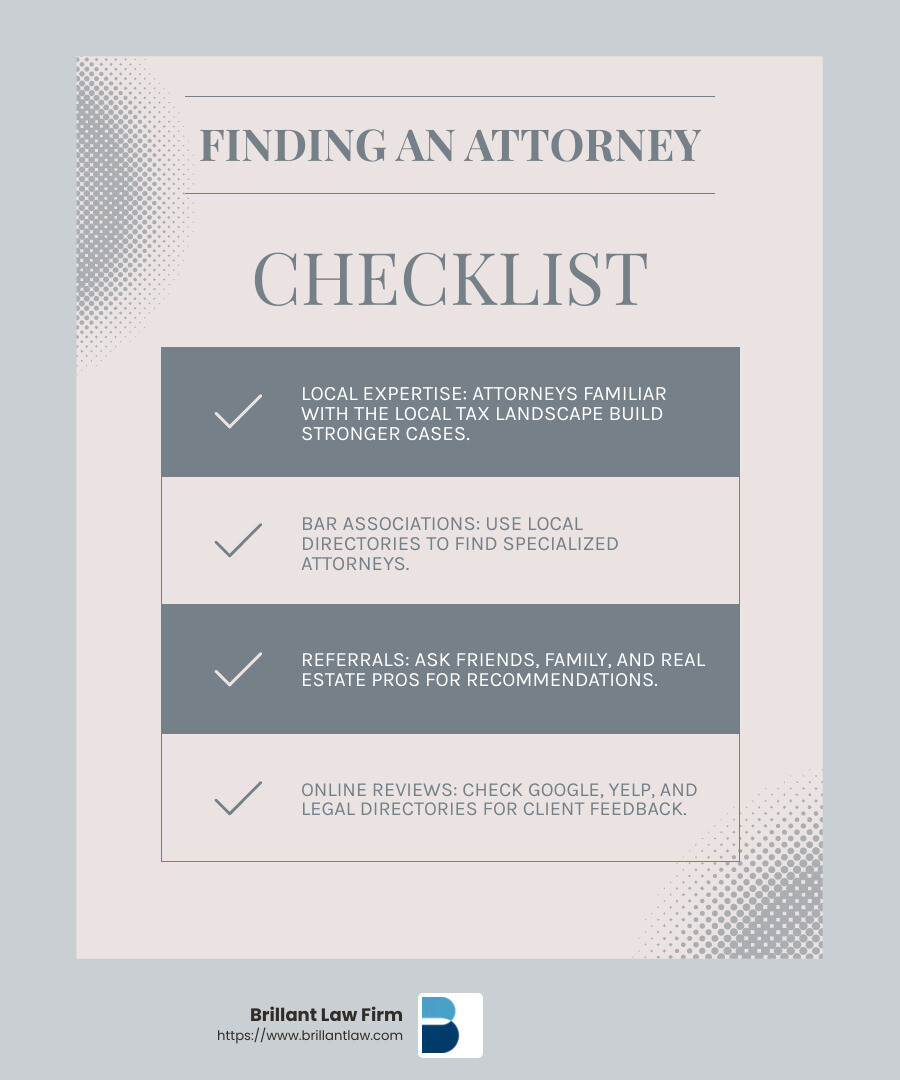
By utilizing these resources and gathering referrals, you can find a property tax appeal attorney near you who meets your needs and can effectively handle your case.
Next, we’ll address some frequently asked questions about property tax appeals to further guide you through the process.
Frequently Asked Questions about Property Tax Appeals
How to Fight Property Tax Increase in Florida?
In Florida, property owners have the right to appeal their property tax assessments if they believe they are incorrect. Here’s how you can fight a property tax increase:
File a Petition: Start by filing a petition with the Value Adjustment Board (VAB). This must be done within 25 days of receiving your Notice of Proposed Property Taxes. The petition form can be obtained from your county’s property appraiser’s office or their website.
Attend Hearings: Once your petition is filed, you will be scheduled for a hearing before the VAB. Prepare to present evidence supporting your claim that the assessment is too high. This could include recent sales of comparable properties, an independent appraisal, or evidence of property damage.
Submit Appeal Forms: Ensure all required forms and documentation are submitted on time. Missing deadlines can result in the dismissal of your appeal.
For more details, check your county’s property appraiser’s website or visit the Florida Department of Revenue.
Can You Appeal Property Taxes in Michigan?
Yes, you can appeal property taxes in Michigan. Here’s how:
Board of Review: Your first step is to appeal to the local Board of Review. This typically occurs in March. You must present evidence that your property was over-assessed.
Michigan Tax Tribunal: If the Board of Review denies your appeal, you can take your case to the Michigan Tax Tribunal. This must be done by July 31st for residential properties and May 31st for commercial properties.
Deadlines: Be mindful of deadlines. Missing them can forfeit your right to appeal. Ensure you gather all necessary documentation, such as appraisals and property sales data, to support your case.
For more information, visit the Michigan Tax Tribunal.
How Do I Appeal My Property Taxes in New York?
In New York, the process to appeal property taxes involves several steps:
Application for Correction: File an Application for Correction with the NYC Tax Commission. This form must be submitted by March 15th for most properties. The application can be found on the NYC Tax Commission’s website.
Prepare Evidence: Gather evidence to support your claim. This can include an independent appraisal, photographs of property condition, and sales data of comparable properties.
Attend Hearings: You may be required to attend a hearing where you can present your evidence. The NYC Tax Commission will review your case and make a determination.
Deadlines: Pay close attention to filing deadlines and ensure all forms and evidence are submitted on time.
For more details, visit the NYC Tax Commission.
By understanding the specific steps and deadlines for each state, you can effectively steer the property tax appeal process and potentially reduce your property tax burden.
Conclusion
At Brillant Law Firm, we pride ourselves on delivering bespoke strategies custom to meet the unique needs of each client. Our commitment to excellence ensures that you receive the highest quality of legal representation, whether you’re appealing a property tax assessment or facing other complex legal challenges.
Our team of experienced attorneys brings a deep understanding of property tax law, along with an unwavering dedication to achieving the best possible outcomes for our clients. We stay ahead of the curve by continuously updating our knowledge and leveraging the latest legal trends and technologies.
Choosing Brillant Law Firm means you’re not just getting a lawyer; you’re getting a dedicated team of litigators ready to defend your interests with best expertise and zeal. We understand the intricacies of property tax appeals and are committed to providing personalized service that aligns with your overall objectives.
If you’re looking for a property tax appeal attorney near me, look no further than Brillant Law Firm. Visit our Appeal Attorney Near Me page to learn more about how we can help you steer the complexities of property tax appeals and achieve the best possible results.
Your trust is the cornerstone of our success, and we look forward to building a long-lasting relationship with you.


