

Legal Aid Deceased Estates: 3 Essential Steps 2025
Why Legal Aid for Deceased Estates Matters More Than Ever
Legal aid deceased estates services offer vital support for families managing a loved one’s assets and debts after their passing. This guide explains what you need to know.
Quick Answer for Legal Aid Deceased Estates:
- What it covers: Form preparation, legal advice, court representation, and dispute resolution
- Who qualifies: Low-income individuals meeting specific income and asset limits
- Where to find it: Local bar associations, legal aid societies, and law school clinics
- What it costs: Free or heavily reduced fees based on financial need
- When to apply: As soon as possible after death or when estate issues arise
When a person dies, their family inherits a complex legal puzzle of assets, debts, and final wishes that must be steerd through California’s probate system. This process is daunting, especially while grieving. The financial burden adds to the stress. Attorney fees in California typically range from $400-$700 per hour, and probate can be a lengthy and expensive process.
Fortunately, you don’t have to face this alone. Legal aid organizations across California provide specialized help for deceased estates, from form preparation to full court representation.
I’m David Brillant, a Certified Specialist in Estate Planning, Trust and Probate Law with a Masters in Taxation. I have helped many families steer complex estate matters, often connecting them with legal aid deceased estates resources. Understanding your options early can save significant money and stress.
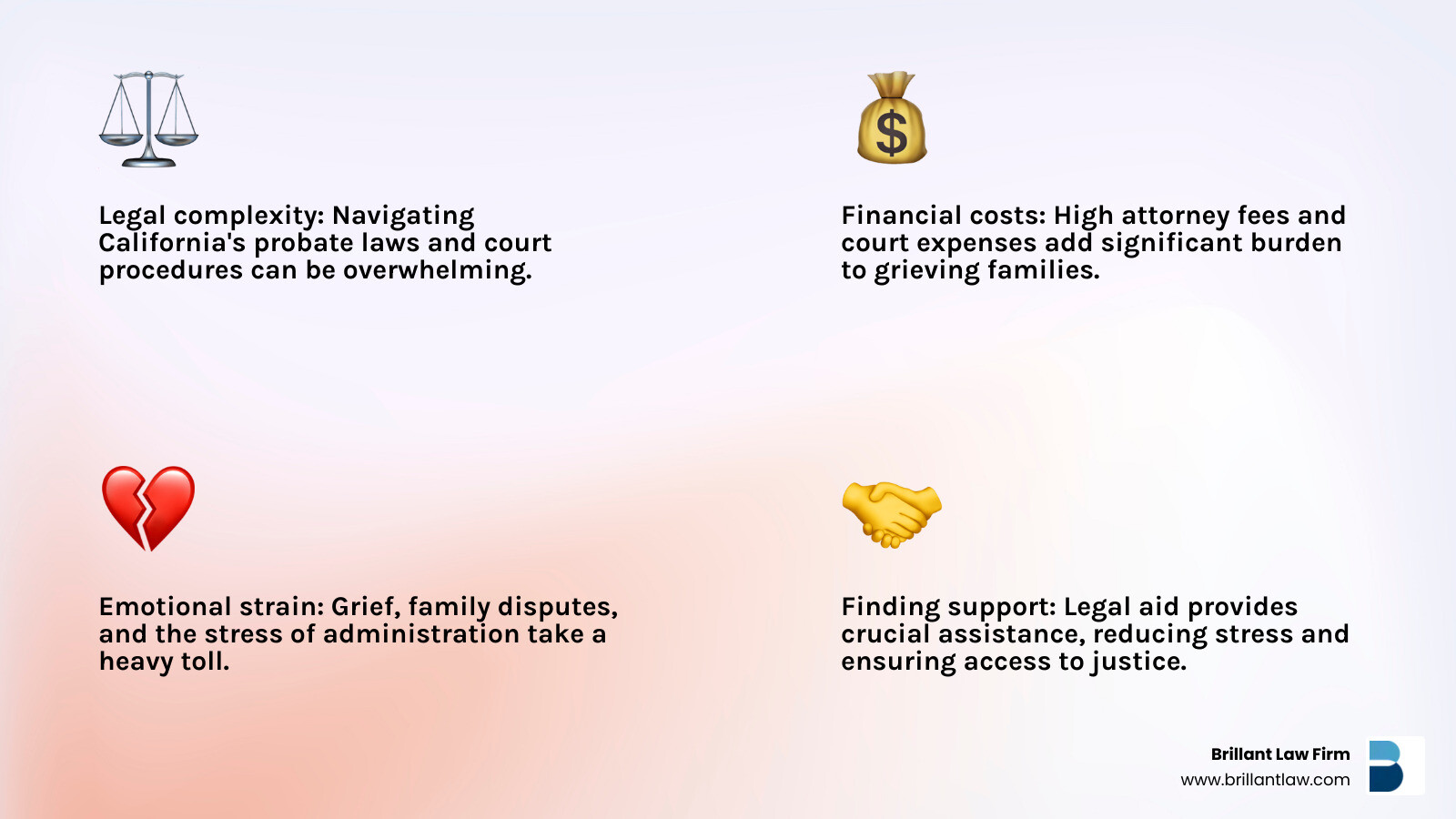
Handy legal aid deceased estates terms:
The Fundamentals: Understanding Estates, Wills, and Key Roles
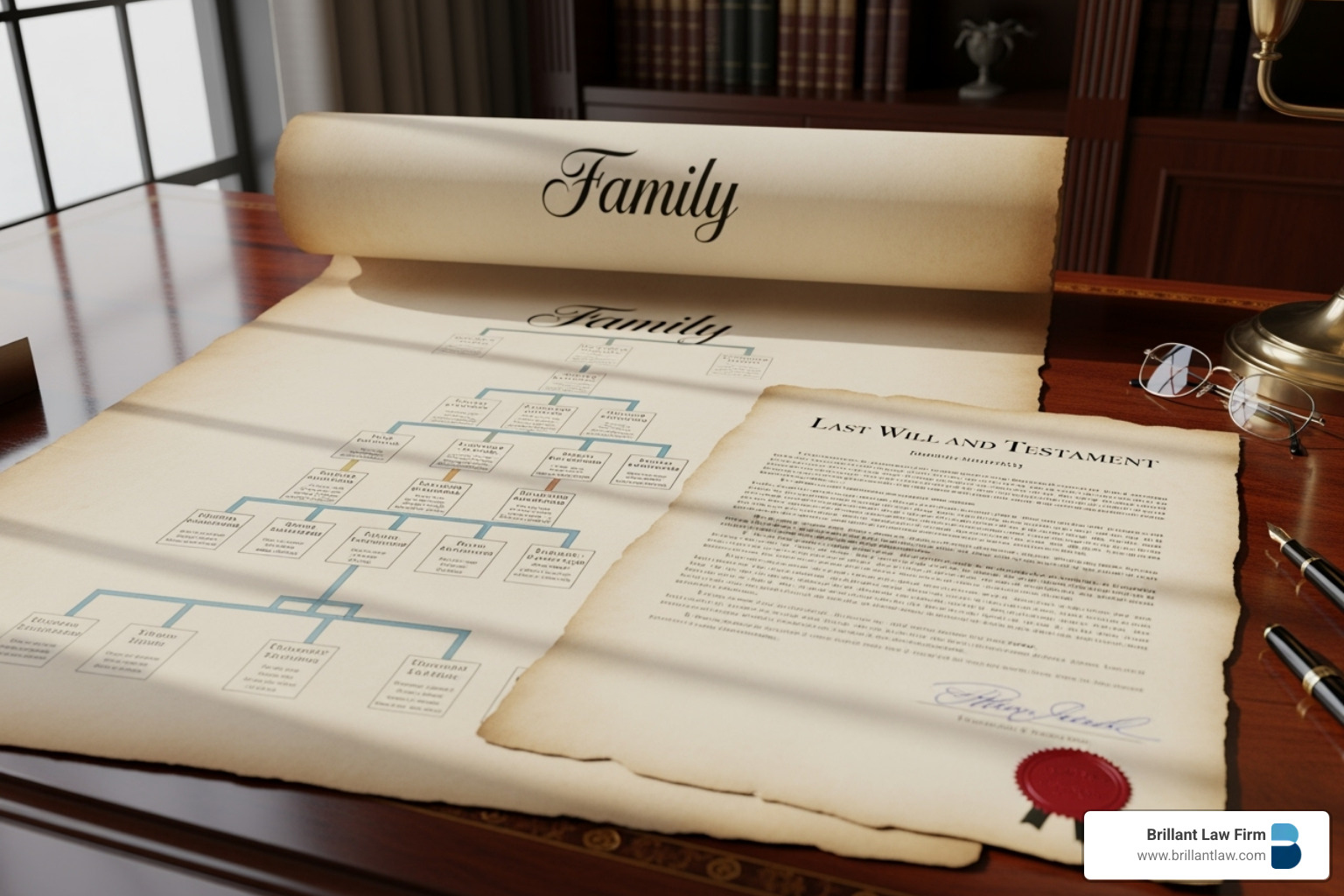
When someone dies, they leave a “deceased estate”—everything they owned and owed. This includes assets like a house, bank accounts, and personal items, as well as debts like mortgages and credit cards.
The person responsible for managing the estate is the executor (if there’s a will) or an administrator (if there isn’t). Their duties include inventorying assets, paying debts and taxes, and distributing the remainder to the beneficiaries—the people named to inherit property. This is a significant responsibility, and legal aid can be invaluable for those who cannot afford private attorneys charging $400-$700 per hour.
For more detailed information about planning ahead to make this process easier for your loved ones, check out more info about Estate Planning.
What Happens When There’s No Will? (Intestacy in California)
Dying without a valid will is called dying “intestate.” In this case, California’s intestate succession laws dictate who inherits the estate, which may not align with the deceased’s wishes. The law follows a family tree approach.
For example, a surviving spouse inherits all community property and a portion of separate property, with the children’s share covering the rest. Understanding the difference between community property (acquired during marriage) and separate property (owned before marriage, gifts, inheritances) is crucial. The court appoints an administrator who must follow state law precisely, and they receive Letters of Administration to act.
Will vs. Power of Attorney: What’s the Difference?
A Power of Attorney is for when you’re alive, allowing someone to make financial or healthcare decisions on your behalf if you’re unable. It becomes void upon death. A Will is your final instruction for asset distribution and is only effective after death. You likely need both to protect yourself during your lifetime and your wishes after you’re gone.
| Feature | Will | Power of Attorney |
|---|---|---|
| When they’re effective | After death | During lifetime |
| What they control | Asset distribution, guardianship | Financial/healthcare decisions |
| Who they appoint | Executor, guardian | Agent/attorney-in-fact |
Without these documents, your family may end up needing legal aid deceased estates services to sort through the resulting complications.
Navigating the California Probate Process

Probate is the court-supervised process of validating a will and distributing an estate. In California, formal probate is typically required if the deceased owned assets solely in their name worth more than $184,500 (for deaths on or after April 1, 2022). Assets in a trust, jointly owned property, or accounts with named beneficiaries can often skip probate. For smaller estates, a simplified small estate affidavit process is available.
In formal probate, the court issues Letters of Administration (no will) or Letters Testamentary (with a will), giving the representative legal authority. A key step is notifying beneficiaries and creditors as required by law. The representative must also handle paying debts and taxes, including filing final tax returns with the IRS. This complexity is why legal aid deceased estates services are so crucial. For more details, you can explore More info about Probate.
Key Steps in a California Probate Case
A probate case involves several key steps:
- Filing the petition with the Superior Court.
- Publishing notice to inform creditors.
- Appointing a representative (executor or administrator).
- Marshalling assets, which means inventorying and appraising all property.
- Paying creditors and valid debts.
- Filing taxes, including final income and potential estate tax returns.
- Distributing assets to the rightful heirs.
- Closing the estate with a final accounting to the court.
The entire process can take eight months to several years, depending on the estate’s complexity.
The Costs of Probate and Administration in California
Probate in California can be expensive. Statutory fees for both the attorney and executor are based on the estate’s gross value (e.g., $13,000 each for a $500,000 estate). Attorney fees for extraordinary services can add to the cost, often billed at $400-$700 per hour.
Other expenses include executor fees, court filing fees, and appraisal fees. These costs can consume a significant portion of an estate’s value, highlighting the need for affordable options like legal aid. California time limits for administration are not fixed, but courts expect progress, and delays can increase costs. This financial strain is a primary reason families seek legal aid deceased estates programs.
Your Complete Guide to Legal Aid for Deceased Estates

When facing an estate, high legal fees can feel like an impossible burden. Legal aid deceased estates services provide a lifeline, offering free or low-cost legal help from non-profits, government programs, or volunteer attorneys. The goal is to ensure everyone has access to justice, regardless of their financial situation.
To qualify, you generally must meet income limits (often based on federal poverty levels) and asset limits. Some programs also consider the merit of your case. Availability and services vary by county, but if you meet the financial guidelines, these organizations offer incredible support.
How can legal aid for deceased estates help you?
Legal aid deceased estates services can help in several ways. They provide cost assistance, removing the barrier of high attorney fees ($400-$700 per hour). They offer help with complex paperwork, ensuring forms are filled out correctly to avoid delays. You can receive expert legal advice on your rights, responsibilities, and the probate process. For more complex matters, some programs provide full court representation. They also serve as a resource for answering your questions, explaining confusing legal terms and procedures.
If you’re looking for more guidance on inheritance matters, you can always find More info on Legal Advice on Inheritance.
Resolving Disputes with Legal Aid Assistance
When conflicts arise, legal aid can be key to finding a resolution. They can assist with:
- Will contests, helping you challenge a will’s validity.
- Beneficiary disputes over asset distribution, often through mediation.
- Cases of executor misconduct, where the person in charge is mismanaging the estate.
- Inheritance challenges from individuals who believe they were wrongly excluded.
Many legal aid groups first attempt mediation to find an amicable solution, but may offer court representation if necessary. For more detailed information on handling these kinds of disagreements, you can always check out how an Estate Dispute Attorney can help.
How to Find and Access Deceased Estate Legal Aid in California

Finding legal aid deceased estates services in California is manageable if you know where to look. A strategic search can connect you with a network of organizations ready to help.
Key resources include:
- Local bar associations, which run pro bono programs and referral services.
- Legal aid societies, which are non-profits focused on helping low-income individuals.
- Law school clinics, where students supervised by professors provide free legal services.
- Pro bono programs, which connect you with private attorneys volunteering their time.
Start your search with the State Bar of California’s website: Find free legal help in California. LawHelpCA also has a searchable database: Search for legal aid organizations near you.
Where to Start Your Search
For a focused search, start with Superior Court Self-Help Centers, which offer guidance on local court procedures and forms. Also, look for county-specific resources, as they are custom to local rules. Use online directories like LawHelpCA.org to filter by location and practice area. Finally, look for Legal Services Corporation (LSC) grantees, which are federally funded and often have comprehensive services. When you contact an organization, be prepared with information about your income and the estate.
Are there special programs available?
Yes, California has specialized programs. Look for veterans programs that understand military benefits, senior citizen legal services with expertise in elder law issues, and programs for Indigenous communities that can steer unique tribal and state laws. Contact your local legal aid society to ask about these and other specialized resources in your area.
Frequently Asked Questions about Legal Aid and Deceased Estates
Here are answers to common questions about legal aid deceased estates services.
Can I get legal aid to create a Will before I die?
Yes. Many legal aid organizations offer basic estate planning and Will preparation for eligible low-income individuals. This proactive step can prevent future complications and the need for legal aid deceased estates services for your family later. These services are often part of elder law or community legal programs, but you must meet the income and asset requirements.
What if my case is too complex for legal aid?
Legal aid organizations have limited resources and may not be able to handle highly complex estates involving significant assets or disputes. In such cases, they typically provide initial advice and may refer you to a private attorney. While our firm’s rates in California range from $400-$700 per hour, we begin with a consultation to assess your situation, as some complex-seeming issues have straightforward solutions.
Does legal aid cover the executor’s bond or court filing fees?
Generally, no. Legal aid deceased estates services cover the attorney’s time and expertise, not other administrative costs. You will likely still be responsible for expenses like the executor’s bond, court filing fees, publication costs, and appraisal fees. However, a legal aid attorney can help you understand which costs are necessary and how to manage them.
Conclusion: Taking the Next Step with Confidence
Dealing with a loved one’s estate is a difficult process, filled with grief and complex legal challenges. However, you do not have to face it alone.
This guide has shown that legal aid deceased estates services in California provide a vital lifeline, offering expert guidance to those who qualify. Understanding your options, from navigating probate to finding low-cost help, is empowering and can significantly reduce stress and financial burdens. Seeking help is a sign of strength.
At Brillant Law Firm, we specialize in Trusts, Estates, Taxation, Business, Civil Litigation, and Appeals, providing bespoke, ironclad strategies for each client. While we don’t directly provide legal aid, we are committed to ensuring everyone has the information to make informed decisions. We can help you understand your unique situation and develop a strategy that works for you.
Take the next step with confidence. Contact an Estate and Trust Lawyer for a consultation today to get the clarity and support you deserve.


