

Free appeal lawyers can be a lifeline for those unable to afford steep legal fees but need to challenge a court decision. Whether you’re dealing with criminal or civil cases, understanding how to access this vital resource can be crucial.
Here’s a quick overview to get you started:
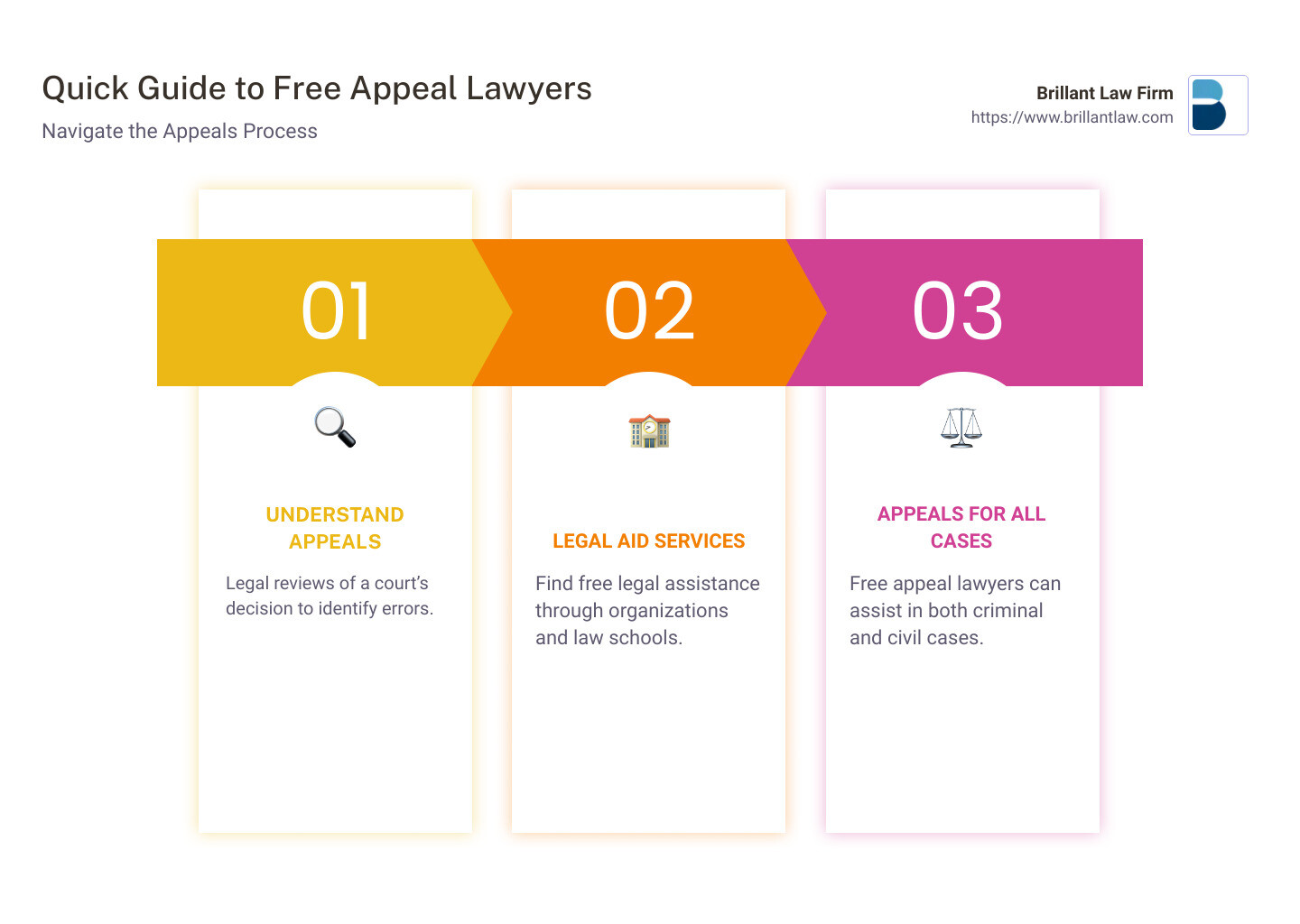
– What are appeals?: They are legal reviews of a court’s decision, aiming to identify errors and potentially secure a new trial.
– Legal Aid and Pro Bono Services: Organizations and law schools often provide free legal assistance to help you steer the appeals process.
– Criminal vs. Civil Cases: Free appeal lawyers can assist in both, but the support structures may differ.
Navigating an appeal can be complex and daunting, but the right support can make a difference. From legal aid societies to pro bono services, there are various routes to find a free appeal lawyer suited to your needs.
I’m David Brillant, and with substantial experience in handling appeals, especially in complex trust and estate matters, I know how essential expert advice can be.
Understanding Appeals
An appeal is a legal review of a court’s decision. Unlike a trial, which focuses on determining the facts of a case, an appeal examines whether legal errors were made that could have affected the outcome.
Higher Courts
In South Carolina, appeals are reviewed by higher courts like the South Carolina Court of Appeals and the South Carolina Supreme Court. These courts do not retry cases or hear new evidence. Instead, they review the trial court’s proceedings to ensure that the law was applied correctly.
Legal Errors
Legal errors can take many forms. Common examples include:
- Incorrect jury instructions: If a judge gives the jury wrong or misleading instructions, it can be grounds for an appeal.
- Improper admission of evidence: If evidence that should have been excluded influenced the trial’s outcome, this could be considered a legal error.
- Ineffective assistance of counsel: If your defense attorney did not competently represent you, this might be a reason to appeal.
The South Carolina Court of Appeals
The South Carolina Court of Appeals handles most appeals from the lower courts. It reviews cases for legal errors and can affirm, reverse, or modify the original decision.
The South Carolina Supreme Court
The South Carolina Supreme Court is the highest court in the state. It primarily handles cases with significant public interest or legal importance. This court has the final say in interpreting South Carolina law.
Understanding these basics can help you grasp the complexities of the appeals process and the importance of identifying legal errors. Next, we will explore how to find free appeal lawyers to assist you in this challenging journey.
How to Find Free Appeal Lawyers
Navigating an appeal can be daunting, especially if you can’t afford legal representation. But don’t worry—there are several resources available to help you find free appeal lawyers.
Free Consultations
Many law firms offer free consultations. This can be a great first step to understand your options without any financial commitment. During these consultations, an attorney can evaluate your case and determine if they can assist you on a pro bono basis.
Legal Aid Societies
Legal aid societies provide free legal services to those who qualify based on income and other factors. These organizations often have experienced lawyers who can help with appeals in both criminal and civil cases.
Law Schools
Law schools often have clinics where law students, supervised by experienced attorneys, provide free legal services. These clinics offer a valuable resource for those seeking help with appeals.
Bar Associations
Your state or local bar association can be a valuable resource. They often have programs that connect people with lawyers who offer free or reduced-cost services. These associations offer “Ask an Attorney” services where you can get free legal advice for a short period.
Small Claims Court
While small claims court is generally used for minor financial disputes, it can sometimes be a venue for resolving simpler legal issues without the need for a lawyer. However, this isn’t typically suitable for appeals, which are more complex and require specialized legal expertise.
By exploring these resources, you can find the assistance you need to steer the appeals process.
The Appeals Process
The appeals process is a complex journey that requires specialized legal expertise. Understanding the difference between a trial and an appeal is crucial, as the two are fundamentally different.
Complex Process
Appealing a criminal conviction or a civil judgment is not straightforward. Unlike a trial, where evidence is presented and witnesses are called, an appeal focuses on reviewing the legal aspects of the previous court decision. This involves looking for legal errors that may have affected the outcome of the trial.
Trial vs. Appeal
During a trial, the goal is to determine the facts of the case. The judge or jury listens to testimony, examines evidence, and makes a decision based on what they believe happened. In contrast, an appeal does not re-examine the facts. Instead, it questions whether the law was applied correctly.
For example, if a judge did not allow crucial evidence that could have exonerated the defendant, this might be considered a legal error. Similarly, if the defense attorney was ineffective, this could also be grounds for an appeal.
Legal Errors
The primary focus of an appeal is to identify and argue legal errors. These could be mistakes made by the judge, such as incorrect jury instructions, improper admission or exclusion of evidence, or other procedural errors.
In South Carolina, these legal errors are reviewed by higher courts, such as the South Carolina Court of Appeals or the South Carolina Supreme Court. The goal is to ensure that the trial was fair and that the law was applied correctly.
New Trial
One of the main objectives of an appeal is to secure a new trial. If the appellate court finds that a significant legal error occurred, it may overturn the original conviction or judgment and order a new trial. This gives the appellant another chance to present their case, this time without the legal mistakes that marred the initial trial.
Deadlines
Timing is critical in the appeals process. There are strict deadlines for filing an appeal, and missing these deadlines can result in losing the right to appeal. In South Carolina, the timeframe for filing an appeal is typically very short, so act quickly.
For instance, in federal cases, you usually have 14 days from the entry of judgment to file an appeal. Extensions are rare, so prompt action is necessary to ensure your appeal is considered.
By understanding these key aspects of the appeals process, you can better steer the complexities involved. Next, we’ll dig into the specifics of what you need to know about free appeal lawyers, including how they can help in civil and criminal cases.
Free Appeal Lawyers: What You Need to Know
If you’re facing an appeal in South Carolina, finding a free appeal lawyer can be a game-changer. Here’s what you need to know about pro bono services, legal aid, and how they apply to civil and criminal cases.
Pro Bono Services
Pro bono services are legal services provided for free. Many lawyers take on pro bono cases to give back to the community.
Legal Aid
Legal aid organizations offer free legal help to those who can’t afford it. These organizations often have lawyers who specialize in appeals.
Civil Cases
In civil cases, free appeal lawyers can help with various issues, such as debt collection defense and guardianship issues.
Criminal Cases
For criminal cases, having a free appeal lawyer can make a significant difference. They can help you appeal on grounds such as ineffective assistance of counsel or legal errors.
South Carolina Resources
In South Carolina, several resources can help you find a free appeal lawyer:
Law Schools: Law students, under the supervision of experienced professors, offer free legal services through clinics.
Bar Associations: The South Carolina Bar Association can connect you with free legal services. They offer consultations and can guide you to the right resources.
By understanding the options available for free appeal lawyers, you can better steer the legal system and increase your chances of a successful appeal.
Resources for Federal Appeals in South Carolina
Navigating the federal appeals process can be overwhelming, but several resources in South Carolina can help. Let’s explore some of the most valuable tools and services available to you.
Law Libraries
South Carolina boasts several law libraries that provide free access to legal resources. Notable ones include the University of South Carolina Law Library and the South Carolina Supreme Court Library. These libraries offer a wealth of information on federal appeals, from case law to legal journals. Knowledgeable staff are often available to help guide your research.
Tip: Using these resources can help you understand the complexities of federal law and strengthen your appeal case.
United States Courts Website
The United States Courts website is a crucial resource for anyone involved in a federal appeal. It provides detailed information about the federal judiciary, including the Eleventh Circuit Court of Appeals, which covers South Carolina. You can find court forms, rules, and procedures that are essential for navigating the appeals process.

Pro Tip: Bookmark the site for easy access to updates and important documents.
Federal Inmate Search
If you’re trying to locate an incarcerated loved one involved in a federal appeal, the Federal Bureau of Prisons (BOP) website offers a mobile-friendly search tool. By entering the inmate’s name or register number, you can find their current location, release date, and contact information for the institution where they are housed.
Example: This tool can be particularly helpful for families needing to coordinate with legal counsel or stay updated on their loved one’s status.
South Carolina Bar Association
The South Carolina Bar Association is another valuable resource. They offer consultations and can connect you with legal aid services. By leveraging their network, you can find attorneys experienced in federal appeals who may offer free or reduced-cost services.
Quick Tip: Reach out to the bar association early in your appeals process to get the best possible guidance.
By utilizing these resources, you can better steer the federal appeals process in South Carolina and improve your chances of a successful outcome. Up next, we’ll dive into frequently asked questions about free appeal lawyers.
Frequently Asked Questions about Free Appeal Lawyers
How do you call a lawyer who works for free?
A lawyer who works for free is often called a pro bono lawyer. Pro bono means “for the public good.” These lawyers volunteer their time to help people who can’t afford legal representation. Pro bono services are common in both civil and criminal cases. Organizations like the American Bar Association often support these efforts.
What is the deadline to file a federal appeal in South Carolina?
The deadline to file a federal appeal in South Carolina is typically 14 days from the entry of judgment. However, there can be extensions in certain situations. It’s crucial to consult with an attorney to determine your specific deadline. Missing this deadline can result in losing your right to appeal, so act quickly.
What can I appeal in a federal case?
In a federal case, you can appeal legal errors that occurred during your trial. Here are some examples:
- Judge Mistakes: If the judge made incorrect rulings on legal issues.
- Improper Jury Instructions: If the jury was given wrong or misleading instructions.
- Evidence Admission: If evidence was admitted that should have been excluded, or vice versa.
Working with an experienced federal appeals lawyer will help you identify these errors and build a strong case for your appeal.
Next, we will explore various resources available for federal appeals in South Carolina, including law libraries and online databases.
Conclusion
At Brillant Law Firm, we understand the life-altering impact a federal conviction can have. Our team is dedicated to providing experienced representation for federal appeals in South Carolina. With a deep knowledge of the law and a proven track record, we are committed to fighting for your rights and helping you steer the complex appeals process.
Whether you are dealing with a white-collar crime, drug offense, or any other federal conviction, our skilled appellate lawyers are here to guide you every step of the way. We focus on meticulous case analysis, exhaustive research, and persuasive argumentation to ensure the best possible outcome for our clients.
Take back control of your future. Contact us today to schedule a consultation and learn how Brillant Law Firm can help you with your federal appeal. Visit our Appeal Attorney Near Me page for more information.


