

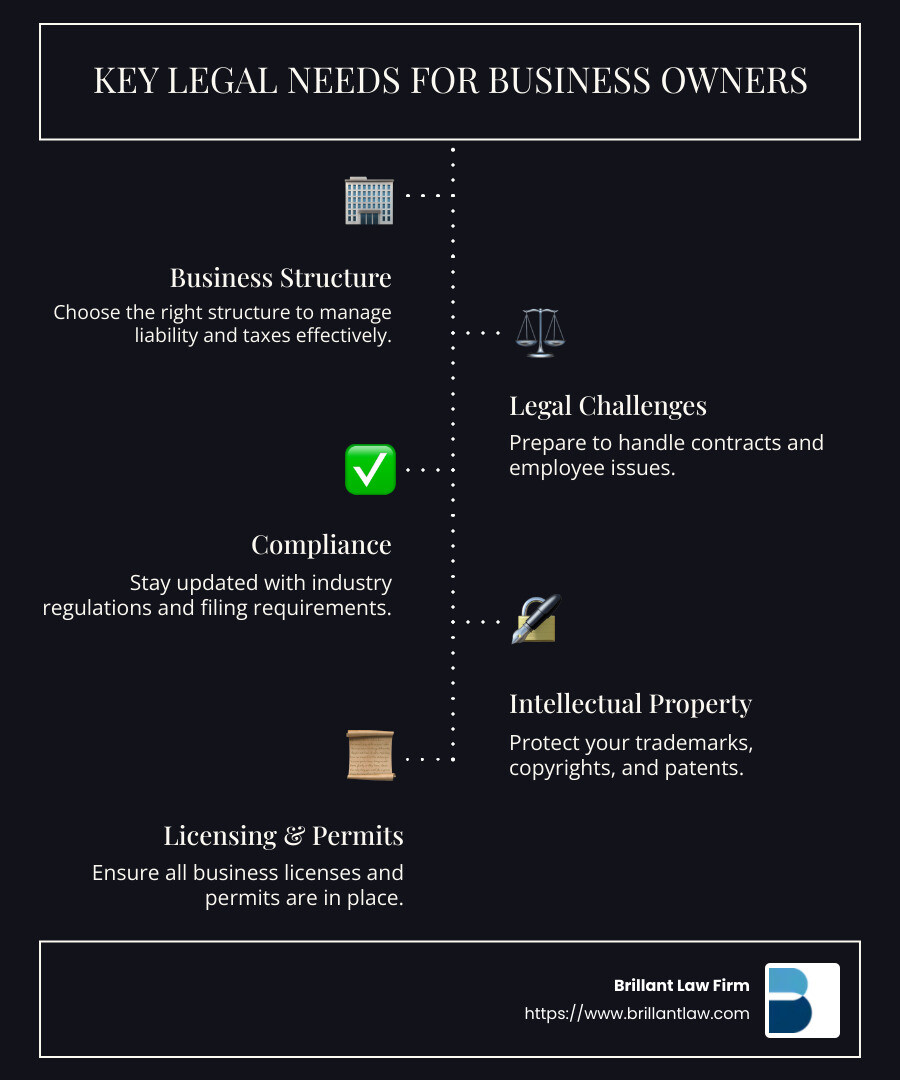
When starting on the journey of entrepreneurship, understanding Business Owner Legal Needs is crucial. These needs are about protecting your business from potential legal pitfalls and ensuring smooth operations. Here are the essential elements to consider:
- Business Structure: Choosing the right structure affects liability and taxes.
- Legal Challenges: From contracts to employee issues, be ready to steer them.
- Compliance: Stay updated with industry regulations and filing requirements.
Navigating these can seem daunting. Many businesses face problems in selecting the correct business structure and juggling ongoing compliance.
Based in California, my name is David Brillant. With deep expertise in Business Owner Legal Needs, I have guided numerous clients through intricate law challenges. My specialty lies in simplifying the legal maze, ensuring businesses thrive efficiently.
Understanding Business Owner Legal Needs
When you’re running a business, understanding your Business Owner Legal Needs is key to staying out of trouble and keeping things running smoothly. Legal needs cover everything from business structure to employment laws. Let’s break it down:
Business Legal
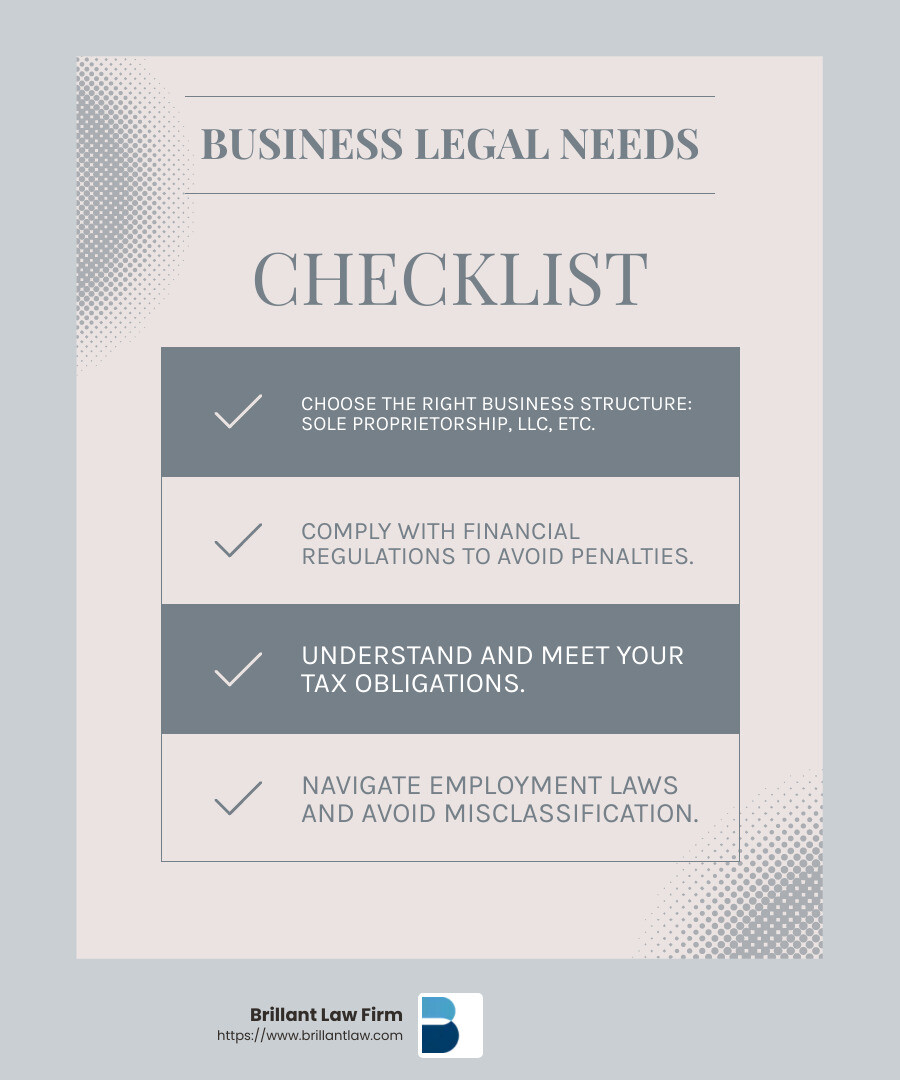
Choosing the right business structure is your first big legal decision. Whether you go for a sole proprietorship, partnership, LLC, or corporation, each has its own implications for liability and taxes. For example, an LLC can protect your personal assets if your business runs into legal trouble. It’s crucial to pick the right one for your goals.
Financial Regulations
Keeping your finances in order isn’t just smart—it’s required. You’ll need to comply with financial regulations to avoid penalties. This means keeping accurate records, filing taxes on time, and possibly undergoing audits. In California, businesses must also follow state-specific regulations, which can differ from federal ones.
Tax Obligations
Taxes can be tricky. You have to deal with income taxes, sales taxes, and sometimes even payroll taxes if you have employees. In California, the tax landscape can be complex, with state taxes adding another layer. It’s wise to consult with a tax professional to ensure you’re meeting all obligations and taking advantage of any available deductions.
Employment Laws
If you have employees, you must steer a web of employment laws. This includes wage and hour laws, discrimination regulations, and health and safety mandates. Misclassifying an employee as an independent contractor, for example, can lead to hefty fines. Staying updated on California’s specific employment laws is vital.
Pro Tip: Regularly review your compliance with an attorney specializing in business law to avoid surprises.
Understanding these elements of Business Owner Legal Needs can save you from costly mistakes. It’s about being proactive and informed, ensuring your business not only survives but thrives.
Choosing the Right Business Structure
Selecting the right business structure is a pivotal decision for any business owner. It shapes your legal responsibilities, tax obligations, and even the way your business operates day-to-day. Let’s explore the main types of business structures: sole proprietorship, partnership, LLC, and corporation.
Sole Proprietorship
This is the simplest and most common structure, especially for small business owners. As a sole proprietor, you are the business. This means you have complete control, but it also means you’re personally liable for all business debts and obligations. It’s easy to set up, but remember, there’s no legal distinction between you and your business.
Partnership
A partnership involves two or more people sharing ownership. There are two main types: general and limited partnerships. In a general partnership, all partners share equal responsibility for the business’s debts and operations. A limited partnership, on the other hand, includes both general and limited partners, where limited partners have less control and liability.
Did You Know? In California, partnerships must register with the state and may require additional licenses depending on the business type.
Limited Liability Company (LLC)
An LLC combines the best features of a corporation and a partnership. It offers liability protection, meaning your personal assets are generally safe if the business incurs debt or legal issues. Yet, it maintains the flexibility and simplicity of a partnership. LLCs are popular in California due to their balance of protection and operational ease.
Corporation
A corporation is a more complex structure, ideal for larger businesses or those looking to raise capital. It offers the strongest protection against personal liability, as it’s considered a separate legal entity. However, this comes with more regulations, higher costs, and double taxation unless you opt for an S corporation status, which allows profits to be passed directly to shareholders to avoid this.
Pro Tip: Corporations in California must adhere to specific state regulations, including regular board meetings and detailed record-keeping.
Choosing the right structure depends on your business goals, risk tolerance, and financial situation. It’s often wise to consult a legal professional to ensure your choice aligns with your long-term vision. Understanding these structures is a key step in addressing your Business Owner Legal Needs effectively.
Next, we’ll dig into the importance of Contracts and Agreements and how they form the backbone of your business operations.
Contracts and Agreements
Contracts are the backbone of any business operation, ensuring clarity and protection for all parties involved. Let’s explore the essentials of binding contracts, the differences between written and oral agreements, and the importance of dispute resolution.
Binding Contracts
A contract becomes binding when there is a “meeting of the minds” between the parties involved. This means both sides must clearly understand and agree to the terms. Ambiguities can lead to disagreements, so it’s crucial to be precise about what you’re agreeing to.
Quick Tip: Always have a lawyer review your contracts to ensure clarity and mutual understanding.
Written vs. Oral Contracts
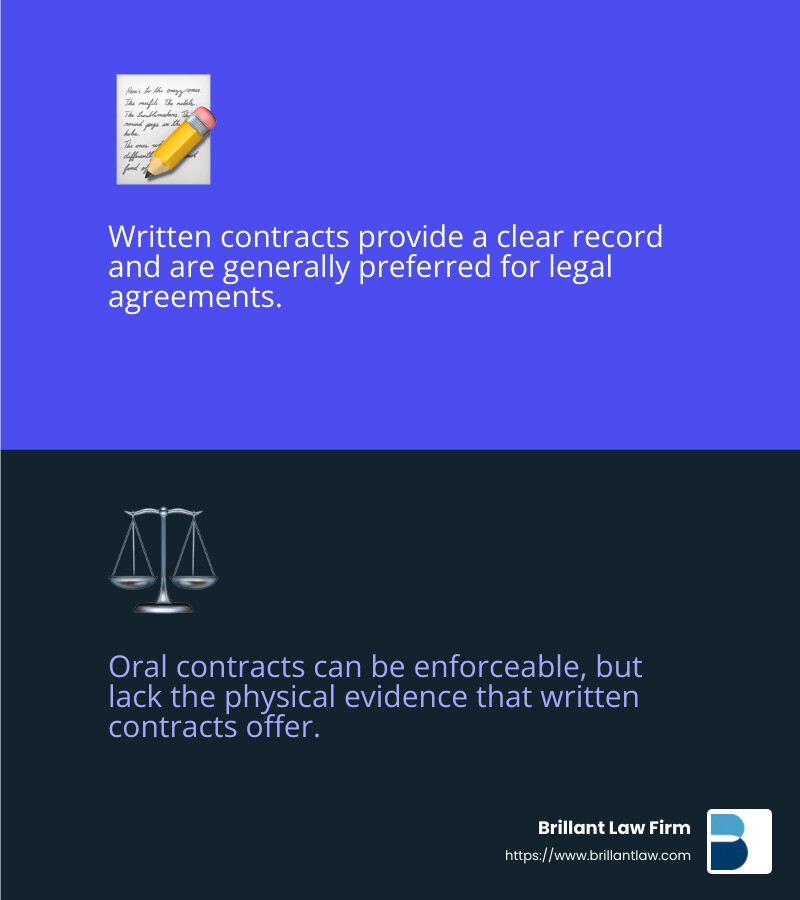
Surprisingly, oral contracts can be legally enforceable in California. However, they often lead to disputes since there’s no physical evidence of the terms. Written contracts, on the other hand, provide a clear record and are generally preferred. Some contracts, like those involving real estate or goods over $500, must be in writing to be valid.
Dispute Resolution
Even with the best intentions, disputes can arise. It’s wise to outline a dispute resolution process in your contracts. Options include mediation, arbitration, or litigation. Mediation and arbitration are often less costly and time-consuming than going to court.
Case Study: A local California business avoided a lengthy court battle by including an arbitration clause in their contracts, resolving a payment dispute swiftly and amicably.
Understanding and crafting solid contracts is a critical aspect of meeting your Business Owner Legal Needs. They not only protect your interests but also help maintain professional relationships. Next, we’ll explore how to safeguard your business through Protecting Intellectual Property.
Protecting Intellectual Property
Intellectual property (IP) is a valuable asset for any business. It includes your unique creations, ideas, and branding elements. Protecting these assets is crucial to maintaining your competitive edge and ensuring others don’t profit from your hard work. Let’s break down the essentials of trademarks, copyrights, and patents.
Trademarks
A trademark protects symbols, names, and slogans used to identify goods or services. In California, having a trademark means you can legally prevent others from using your brand’s identity. For instance, a small tech business in Walnut Creek might trademark its logo and product names to prevent competitors from using similar branding.
Quick Tip: Registering your trademark with the U.S. Patent and Trademark Office (USPTO) provides federal protection, giving you a stronger legal standing if disputes arise.
Copyrights
Copyrights protect creative works like music, art, and literature. If your business produces original content, like marketing videos or blog posts, copyright ensures that others can’t use your work without permission. For example, a Saranap-based design firm can copyright its digital artwork to prevent unauthorized use.
Fact: Copyright protection is automatic once your work is created and fixed in a tangible form, but registering it with the U.S. Copyright Office strengthens your claim.
Patents
Patents protect inventions and processes, granting exclusive rights to the inventor. If you’ve developed a new product or technology, a patent can stop others from making, using, or selling your invention. For a startup in San Miguel with a groundbreaking gadget, securing a patent is essential to safeguard their innovation.
Case Study: A Castle Hill entrepreneur patented a unique kitchen tool, preventing larger companies from copying the design and capturing the market share.
Business Owner Legal Needs often include safeguarding IP to secure a company’s future. By investing in trademarks, copyrights, and patents, you can protect your business’s identity, creativity, and inventions. Up next, we’ll dig into the importance of Regulatory Compliance and Licensing to ensure your business operates within legal boundaries.
Regulatory Compliance and Licensing
Running a business in California means navigating Regulatory Compliance and Licensing. These aren’t just bureaucratic problems; they’re essential steps to ensure your business operates legally and smoothly. Let’s unpack the essentials of business licenses, permits, and zoning regulations.
Business Licenses
Every business in California needs a basic business license. This license allows you to operate within your city or county legally. Whether you’re running a home-based business in Walnut Creek or a storefront in Castle Hill, securing a business license is a must.
Stat: In California, the cost of a business license can range from $50 to $500, depending on the city and type of business.
Permits
Permits are more specific than licenses. They relate to certain activities or industries. For example, if you’re opening a restaurant in Saranap, you’ll need a health permit. If you’re a contractor in San Miguel, a building permit is essential.
Permits often require renewal. Keep track of expiration dates to avoid fines or interruptions in your business operations.
Zoning Regulations
Zoning regulations dictate where certain businesses can operate. These rules ensure that business activities align with the designated use of an area. For instance, a residential area in Castle Hill might not allow commercial businesses without a special permit.
Tip: Always check with your local zoning office before signing a lease or purchasing property for your business. This step can save you from costly mistakes.
Stay Compliant
Compliance isn’t just about avoiding penalties. It’s about building trust with your customers and community. By adhering to licensing and zoning rules, you show that your business is responsible and reliable.
Quote: “Compliance is not a burden; it’s a commitment to quality and integrity,” says a successful Walnut Creek entrepreneur.
Understanding and fulfilling your Business Owner Legal Needs in terms of regulatory compliance and licensing is crucial for long-term success. Now, let’s move on to frequently asked questions about what it takes to meet your legal responsibilities as a business owner.
Frequently Asked Questions about Business Owner Legal Needs
What is the legal responsibility of a business owner?
As a business owner in California, your legal responsibilities begin with choosing the right business structure. This decision impacts your liability, taxes, and operational flexibility. Options include sole proprietorships, partnerships, LLCs, and corporations.
- Sole Proprietorship: Simple and cost-effective but offers no personal liability protection.
- Partnership: Shared ownership with shared risks and rewards.
- LLC: Offers personal liability protection while maintaining operational simplicity.
- Corporation: Provides the highest level of liability protection but involves more complexity.
Beyond structure, you must comply with financial regulations, tax obligations, and employment laws. This includes managing payroll taxes and adhering to the Fair Labor Standards Act (FLSA).
What are the basic requirements to start a business?
To start a business in California, you need to:
Register Your Business: Choose a unique name and register it. This step ensures your business is legally recognized and protects your brand.
Obtain a Tax ID: Also known as an Employer Identification Number (EIN), this is essential for tax purposes and is required for most businesses.
Secure Necessary Licenses and Permits: Depending on your industry, you may need specific permits. For example, restaurants require health permits, while contractors need building permits.
Understand Zoning Regulations: Make sure your business location complies with local zoning laws to avoid costly relocations or fines.
How can I protect my business from lawsuits?
Protecting your business from lawsuits involves several proactive steps:
Insurance: Obtain liability insurance to cover potential risks. This might include general liability insurance, professional liability insurance, or specific coverage like commercial auto insurance.
Asset Protection: Consider forming an LLC or corporation to shield personal assets from business liabilities. This legal separation can protect your home, car, and other personal properties if your business faces a lawsuit.
Contracts: Use well-drafted contracts to clearly outline terms and expectations with clients and partners. This can prevent misunderstandings that lead to legal disputes.
Legal Counsel: Retain an attorney familiar with California laws. They can provide guidance on compliance, contracts, and dispute resolution, ensuring you’re prepared for any legal challenges.
By understanding these Business Owner Legal Needs, you can steer the complexities of starting and running a business in California. With the right structure, registration, and protections in place, you’re setting the foundation for a successful and legally sound business.
Conclusion
Running a business in California requires navigating a maze of legal complexities. That’s where Brillant Law Firm steps in. Our legal expertise and custom strategies are designed to meet the unique needs of business owners like you.
When you partner with us, you gain access to a team that’s deeply committed to your success. We understand the intricacies of California business law and offer custom solutions that protect your interests. Whether you’re deciding on the right business structure, drafting contracts, or ensuring regulatory compliance, we provide the guidance you need.
Our approach is simple: we listen, we understand, and we act. Every strategy we design is bespoke, crafted to align with your business goals and the legal landscape. With locations across California, including Walnut Creek, Saranap, San Miguel, and Castle Hill, we are available to support you wherever you are.
Brillant Law Firm is more than just a legal service provider; we are your partners in navigating the legal challenges of business ownership. Our commitment to excellence ensures that you can focus on growing your business, while we handle the legal complexities. Reach out to us today and let us help you build a solid legal foundation for your business’s future.


