

Why Estate Planning is Essential
Trusts and Estates are essential components of effective estate planning. Whether you’re looking to secure your family’s future, protect your assets, or ensure your wishes are honored after you’re gone, understanding the basics is crucial. Here’s a quick breakdown:
- Trusts help manage and protect assets by transferring them to a trustee to benefit designated beneficiaries.
- Estates manage the distribution of your assets upon death, encompassing everything you own, including debts.
- An estate plan will likely include both trusts and other instruments like wills, power of attorney, and health care directives to ensure comprehensive management of your financial affairs in life and death.
At the Brillant Law Firm, we strive to make the estate planning process as simple and clear as possible. We provide individualized solutions that address the protection and distribution of assets, tax minimization, and more. Our goal? To ensure your estate plan serves your unique needs effectively for many years to come.
My name is David Brillant, and I specialize in Trusts and Estates with a deep knowledge in taxation and complex estate planning. With my background as a Certified Specialist in Estate Planning, Trust, and Probate Law by the State Bar of California, I have the expertise to steer even the most challenging situations.
Basic Trusts and Estates vocab:
– what is a living trust
– virginia estate and trust law
– estate and trust attorneys
What is Estate Planning?
Estate planning is the process of arranging how your assets will be managed and distributed after your death or if you become incapacitated. This involves creating legal documents that outline your wishes and ensure they are carried out effectively.
Key Components of Estate Planning
Estate planning isn’t just for the ultra-wealthy. It’s for anyone who wants to ensure their assets are handled according to their wishes. Here are the main components:
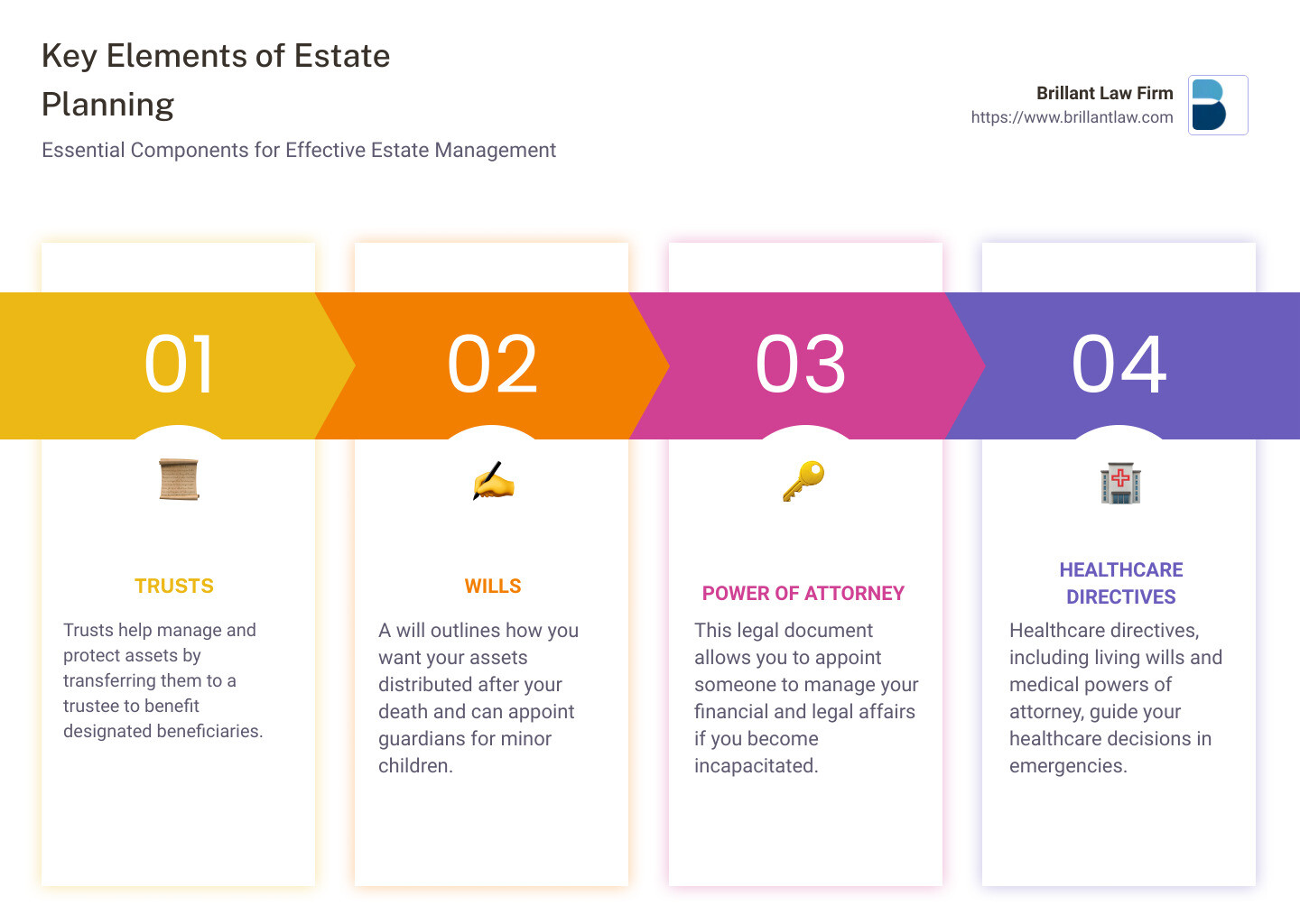
Wills
A will is a legal document that spells out how you want your assets distributed after you die. It can also name guardians for minor children and provide instructions for your funeral. A will goes through probate, which is a legal process to verify and execute the document.
Trusts
A trust allows a third party (the trustee) to hold and manage assets on behalf of beneficiaries. Trusts can bypass probate, offering quicker access to assets and potentially reducing taxes. They can be revocable (can be changed) or irrevocable (cannot be changed).
Power of Attorney
A power of attorney gives someone the legal authority to act on your behalf in financial or legal matters if you become unable to do so. You can grant broad or limited powers, depending on your needs.
Healthcare Directives
A healthcare directive (also known as a living will) outlines your wishes for medical treatment if you can’t communicate them yourself. You can also appoint a healthcare proxy to make decisions for you.
Why These Components Matter
Wills and trusts ensure your assets go to the right people without unnecessary delays or expenses. Power of attorney and healthcare directives make sure your financial and medical wishes are respected if you’re unable to express them.

To sum up, estate planning is about making sure your wishes are honored and your loved ones are taken care of. It involves a combination of documents and strategies custom to your unique situation. At Brillant Law Firm, we specialize in creating personalized estate plans that offer peace of mind and protection for your future.
Next, we’ll dive deeper into the differences between trusts and estates and how each plays a role in your overall estate plan.
Understanding Trusts and Estates
When it comes to estate planning, understanding the difference between trusts and estates is crucial. Both play vital roles in managing and distributing your assets, but they serve different purposes and offer distinct benefits.
Trusts
Trusts are legal arrangements where one party, known as the trustee, holds and manages assets for the benefit of another party, the beneficiary. The person who creates the trust is called the grantor or settlor.
Types of Trusts:
Revocable Trusts: These can be altered or revoked by the grantor during their lifetime. They offer flexibility and can help avoid probate, allowing quicker access to assets.
Irrevocable Trusts: Once established, these cannot be changed or revoked. They can provide significant tax advantages and asset protection.
Living Trusts: Created during the grantor’s lifetime, these trusts can manage assets both while the grantor is alive and after their death. They become irrevocable upon the grantor’s death.
Asset Protection Trusts: Designed to protect assets from creditors, these trusts can safeguard wealth for beneficiaries.
Benefits of Trusts:
- Avoid Probate: Trusts can bypass the lengthy and costly probate process.
- Tax Benefits: Certain trusts can reduce estate and gift taxes.
- Control and Flexibility: Trusts allow you to specify how and when assets are distributed.
- Privacy: Trusts are not public records, unlike wills, which go through probate.
Estates
An estate refers to all the assets and liabilities left by an individual at their death. This includes real estate, bank accounts, investments, personal belongings, and any debts.
Temporary Nature:
- Estates are temporary. They exist to manage and distribute the deceased’s assets and settle any debts.
- Once all assets are distributed and debts are paid, the estate is closed.
Probate and Asset Distribution:
- Probate is the legal process of validating a will and distributing an estate. It involves inventorying assets, paying debts and taxes, and distributing the remaining assets as the will specifies.
- Without a will, the estate is distributed according to state laws, which may not align with the deceased’s wishes.
Differences and Purposes
- Control: Trusts provide ongoing control over asset distribution, while estates are managed posthumously.
- Duration: Trusts can exist during and beyond the grantor’s lifetime. Estates are temporary and only exist to settle affairs after death.
- Probate: Trusts can avoid probate, offering privacy and efficiency. Estates must go through probate, which is public and can be time-consuming.
Understanding these differences helps you make informed decisions about your estate plan. Trusts offer flexibility, control, and privacy, while estates handle the final distribution of assets and settlement of debts.
Next, we’ll explore the various types of trusts in more detail and their specific benefits.
Types of Trusts
When it comes to estate planning, understanding the different types of trusts can help you make informed decisions about how to manage and protect your assets. Let’s explore the most common types of trusts: revocable trusts, irrevocable trusts, living trusts, and asset protection trusts.
Revocable Trusts
Revocable trusts, also known as living trusts, are flexible arrangements where the grantor maintains control over the trust assets. You can alter or revoke the trust at any time during your lifetime.
Benefits:
- Flexibility: You can change beneficiaries, trustees, or even dissolve the trust entirely.
- Avoid Probate: Assets in a revocable trust bypass the probate process, allowing quicker access for your beneficiaries.
- Incapacity Planning: If you become incapacitated, the successor trustee can manage the assets on your behalf.
Irrevocable Trusts
An irrevocable trust is a trust that cannot be modified or terminated without the permission of the beneficiaries once it is created. The grantor relinquishes control and ownership of the assets placed in the trust.
Benefits:
- Tax Advantages: Assets in an irrevocable trust are not considered part of your taxable estate, potentially reducing estate taxes.
- Asset Protection: These trusts can protect assets from creditors and lawsuits.
- Eligibility for Government Benefits: Assets in an irrevocable trust are not counted when determining eligibility for government programs like Medicaid.
Living Trusts
A living trust is a trust established during the grantor’s lifetime. It can be either revocable or irrevocable and is designed to manage the grantor’s assets during their life and distribute them after death.
Setup:
- Create the Trust Document: Outline the terms, beneficiaries, and trustee.
- Transfer Assets: Move your assets into the trust.
- Manage and Update: Continue to manage and update the trust as needed.
Benefits:
- Avoid Probate: Like revocable trusts, living trusts can help avoid the probate process.
- Incapacity Planning: The trust can provide for asset management if you become incapacitated.
- Privacy: Living trusts are not public records, unlike wills, which must go through probate.
Asset Protection Trusts
Asset protection trusts are designed to safeguard your assets from creditors and lawsuits. These trusts can be either domestic or offshore and are typically irrevocable.
Benefits:
- Creditor Protection: Assets in these trusts are protected from creditors and legal claims.
- Control: While you give up ownership, you can still have some level of indirect control over the assets.
- Tax Planning: These trusts can also offer tax benefits, depending on how they are structured.
By understanding these various types of trusts, you can better plan for your estate, ensuring that your assets are protected and distributed according to your wishes. Next, we’ll explore the benefits of trusts and estates in more detail.
Benefits of Trusts and Estates
Control of Wealth
One of the primary benefits of setting up a trust is the control it gives you over your wealth. You can specify exactly how and when your assets will be distributed to your beneficiaries. This is particularly useful in complex family situations, such as when you have children from multiple marriages.
For example, you can set up a revocable trust to ensure that your assets remain accessible to you during your lifetime. After your death, the remaining assets can be distributed according to your precise wishes. This level of control can help prevent disputes among heirs and ensure that your estate is managed according to your intentions.
Trustee Roles: The trustee plays a crucial role in managing the trust’s assets. Choosing the right trustee is essential for the smooth operation of the trust. A well-chosen trustee can help manage complex family dynamics and ensure that your assets are distributed as intended.
Protection of Legacy
A trust can also protect your legacy by safeguarding your assets from potential threats. For instance, a properly constructed trust can shield your estate from your heirs’ creditors. This is especially important if you have beneficiaries who are not adept at money management.
Creditor Protection: Irrevocable trusts are particularly effective at protecting assets from creditors. By transferring assets into an irrevocable trust, you relinquish ownership, making it more difficult for creditors to claim these assets.
Privacy and Probate Savings
Another significant advantage of trusts is the privacy they offer. Unlike wills, which must go through probate and become public records, trusts can transfer assets privately.
Public Record Avoidance: Since trusts do not go through probate, they do not become part of the public record. This means that the details of your estate and its distribution remain private.
Court Fees Reduction: Avoiding probate also means saving on court fees and legal expenses. Probate can be a lengthy and costly process. By using a trust, you can ensure that more of your estate goes to your beneficiaries rather than being consumed by fees.
Tax Minimization
Trusts can also offer significant tax benefits. For example, assets placed in an irrevocable trust are not considered part of your taxable estate. This can reduce the amount of estate taxes due upon your death.
Estate Taxes and Gift Taxes: Properly structured trusts can help minimize both estate and gift taxes. By transferring assets into a trust, you can reduce the taxable value of your estate, potentially saving your beneficiaries a significant amount of money.
Tax-Efficient Strategies: Trusts can be used to implement various tax-efficient strategies. For instance, a Qualified Domestic Trust (QDOT) allows non-citizen spouses to benefit from the marital deduction, which can significantly reduce estate taxes.
By understanding the benefits of trusts and estates, you can make informed decisions about how to manage and protect your assets. This ensures that your wealth is distributed according to your wishes, your legacy is protected, and your estate incurs minimal taxes and fees.
Next, we’ll address some frequently asked questions about trusts and estates to further clarify these concepts.
Frequently Asked Questions about Trusts and Estates
What is the difference between a trust and an estate?
Trusts and estates are both legal mechanisms for managing and distributing assets, but they serve different purposes and operate in distinct ways.
Trusts are fiduciary arrangements where a third party, known as the trustee, holds and manages assets on behalf of beneficiaries. Trusts can be set up during your lifetime (living trusts) or through your will (testamentary trusts). Trusts can be revocable or irrevocable, depending on whether you retain the ability to modify them.
Estates, on the other hand, refer to all the assets and debts left behind after a person dies. The estate is managed by an executor, who is responsible for distributing the assets according to the will or state law if there is no will. Estates are temporary and exist only until the assets are distributed.
Why do people put their estate in a trust?
People often place their estate in a trust to avoid probate, maintain control over asset distribution, and protect their assets.
Probate Avoidance: One of the main reasons for using a trust is to bypass the probate process. Probate can be lengthy and costly, involving court fees and legal expenses. By placing assets in a trust, they can be transferred directly to beneficiaries without going through probate.
Control: Trusts allow you to specify exactly how and when your assets will be distributed. This is particularly useful in complex family situations, such as blended families or beneficiaries with special needs.
Asset Protection: Trusts can protect your assets from creditors and legal claims. Irrevocable trusts are especially effective in this regard, as they remove assets from your ownership, making them less accessible to creditors.
What are the three types of trust?
There are many types of trusts, but three common ones are revocable trusts, irrevocable trusts, and asset protection trusts.
Revocable Trusts: These trusts can be altered or revoked by the grantor during their lifetime. They offer flexibility and control over the assets but do not provide the same level of asset protection as irrevocable trusts.
Irrevocable Trusts: Once established, these trusts cannot be changed or revoked. They are effective for asset protection and tax minimization, as the assets are no longer considered part of the grantor’s taxable estate.
Asset Protection Trusts: These trusts are specifically designed to protect assets from creditors. They can be either domestic or offshore and are useful for individuals who are at high risk of legal claims.
By understanding these key differences and purposes, you can better decide which type of trust or estate planning strategy is right for your needs. This ensures that your assets are managed and distributed according to your wishes, while also providing protection and tax benefits.
Conclusion
Planning for the future isn’t just about preparing for the inevitable; it’s about securing peace of mind for you and your loved ones. At Brillant Law Firm, we understand the complexities and emotional weight that come with estate planning. Our dedicated team is here to guide you through every step, ensuring that your wishes are honored and your assets are protected.
Summary
In this guide, we’ve explored the basics of Trusts and Estates. We’ve covered the definitions, types, and benefits of trusts, as well as the key components of estate planning. Whether it’s setting up a revocable trust for flexibility, an irrevocable trust for asset protection, or a living trust to manage your assets during your lifetime, each type of trust serves a specific purpose.
Importance of Planning
Proper estate planning is crucial for several reasons:
- Control of Wealth: You decide how and when your assets are distributed.
- Protection of Legacy: Safeguard your assets from creditors and legal claims.
- Privacy and Probate Savings: Avoid the public probate process and reduce associated costs.
- Tax Minimization: Implement strategies to minimize estate and gift taxes.
Failing to plan can lead to family conflicts, higher taxes, and unnecessary legal fees. As the saying goes, “An ounce of prevention is worth a pound of cure.”
Brillant Law Firm Services
At Brillant Law Firm, we provide bespoke, ironclad strategies custom specifically for your needs. Our services include:
- Estate Planning: Comprehensive plans to ensure your assets are managed and distributed according to your wishes.
- Trust Administration: Expertise in setting up and managing various types of trusts.
- Tax Minimization: Strategies to reduce your tax burden while maximizing the value of your estate.
- Business Succession Planning: Smooth transitions for business owners looking to pass on their legacy.
Our unparalleled expertise and unwavering dedication make us the ideal partner for all your estate planning needs. Don’t leave your future to chance—let us help you secure it.
For more information or to schedule a consultation, contact Brillant Law Firm today. Your peace of mind is just a plan away.


