

Trusts and Estate Law: 7 Powerful Reasons to Plan in 2025
Why Trusts and Estate Law Planning is Critical for California Families
Trusts and Estate Law governs how your assets are managed, protected, and transferred during your lifetime and after death. For California residents facing high property values and complex tax landscapes, proper estate planning isn’t just recommended—it’s essential.
Key Areas of Trusts and Estate Law:
– Trust Creation: Revocable and irrevocable trusts for asset management
– Estate Planning: Wills, powers of attorney, and healthcare directives
– Probate Process: Court supervision of asset distribution (can cost 3-7% of estate value)
– Tax Planning: Minimizing federal estate taxes on estates over $12.06 million
– Asset Protection: Shielding wealth from creditors and family disputes
Approximately 60% of Americans lack any estate plan, leaving their families vulnerable to lengthy probate processes that can take 9-24 months and cost thousands in legal fees.
In California, where median home values often exceed $800,000, even middle-class families risk probate complications. A properly structured trust can bypass this entire process, maintaining privacy while ensuring your wishes are honored.
As David Brillant, a Certified Specialist in Estate Planning, Trust and Probate Law with a Masters in Taxation, I’ve helped countless California families steer complex Trusts and Estate Law challenges that others deemed unsolvable.
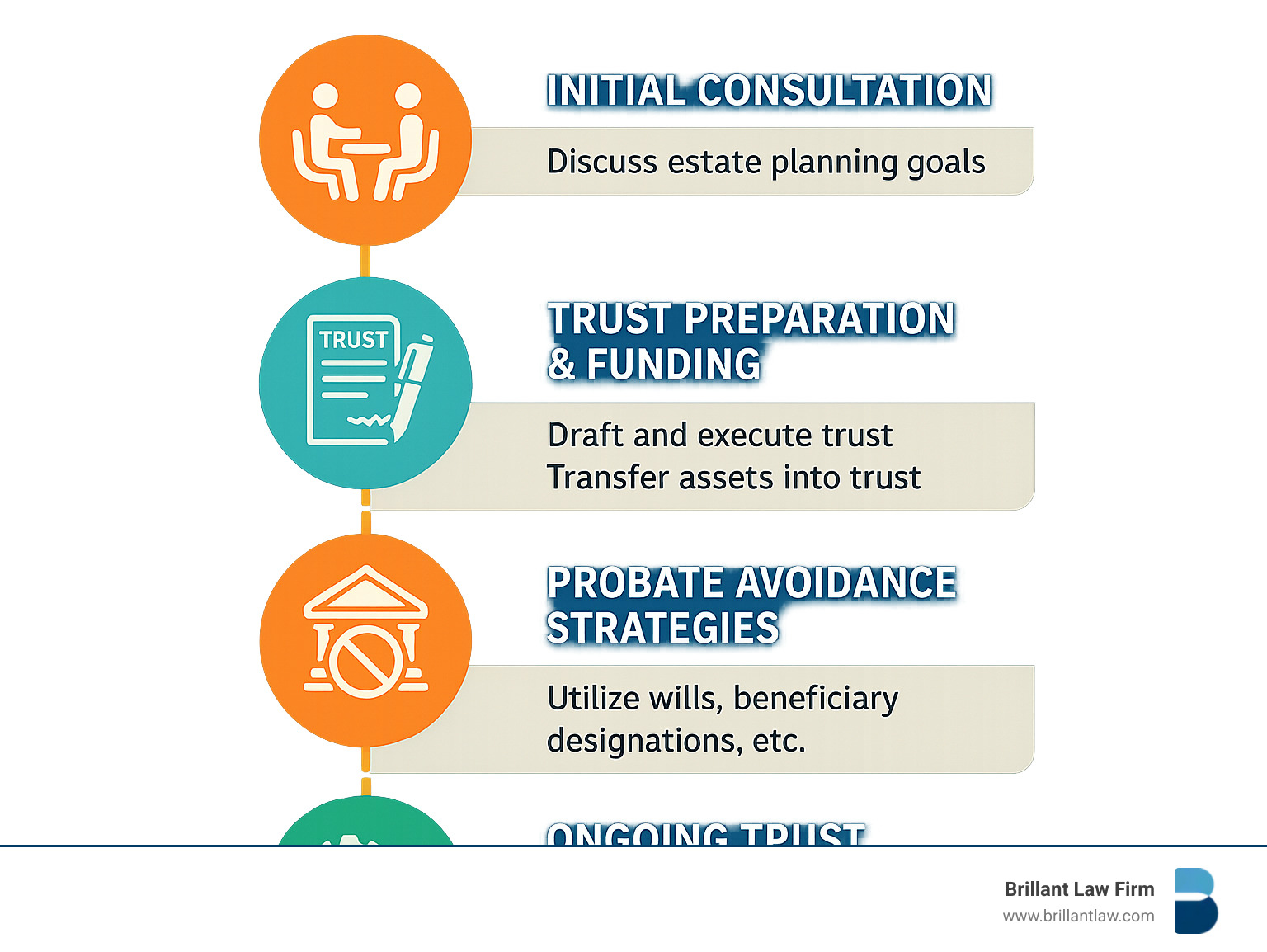
Understanding Trusts and Estate Law
Trusts and Estate Law has roots stretching back to medieval England, where wealthy landowners created the world’s first asset protection strategies by transferring legal title to trusted friends while keeping all the benefits for themselves.
Today’s trust law remains beautifully simple: a trust creates a fiduciary relationship where one person (the trustee) holds legal title to property for someone else’s benefit (the beneficiary).
California operates under its own California Probate Code, making our state different from the roughly 30% of states following the Uniform Probate Code. While California hasn’t fully adopted the Uniform Trust Code, many of its principles influence how we handle Trusts and Estate Law.
Trusts separate asset ownership from beneficial enjoyment, enabling privacy protection, probate avoidance, strategic tax planning, and asset protection.
Trusts and Estate Law Basics
Trusts versus estates: Your estate is everything you own when you die—temporary, lasting only until probate concludes. A trust can outlive you by generations, continuing to manage and protect assets.
Every trust has three key players: The grantor creates and funds the trust. The trustee manages trust assets and makes distributions. The beneficiaries receive the trust’s benefits.
Revocable versus irrevocable trusts represent the classic trade-off between flexibility and protection. Revocable trusts allow changes anytime, while irrevocable trusts lock in decisions but offer stronger asset protection and tax benefits.
Living trusts start working during your lifetime, while testamentary trusts activate after death. Most California families benefit from revocable living trusts for maximum flexibility.
Why Trusts and Estate Law Matters in California
California’s high property values make estate planning crucial for families who might not consider themselves wealthy. When your family home is worth $1.2 million, you face estate administration challenges that once affected only the ultra-rich.
California’s probate process is notoriously expensive. Statutory fees alone can consume 4-6% of your estate’s value, with total probate costs often reaching 7-10%. For a typical $2 million California estate, that could mean $200,000 in fees and expenses.
Beyond financial considerations, California’s diverse family structures create unique planning challenges requiring sophisticated trust strategies to maintain family harmony and ensure smooth real estate succession.

Key Components of a California Estate Plan
Your estate plan needs multiple layers to truly protect everyone you care about. A simple will won’t suffice in California, where high property values and complex laws demand sophisticated planning.
The heart of most California estate plans is a revocable living trust, allowing complete control during your lifetime while ensuring smooth asset transfer without probate complications.
Your trust needs backup through a pour-over will that catches assets not transferred into your trust. A durable power of attorney for finances authorizes someone to handle financial affairs if you become incapacitated, while your advance health care directive ensures medical wishes are honored.
Beneficiary designations on retirement accounts and life insurance often transfer more wealth than your will or trust, so keeping them current is essential. Guardianship nominations designate who should raise minor children.
Modern Trusts and Estate Law must address digital assets—from cryptocurrency to social media accounts. California has specific procedures for digital asset management.
Our Estate Planning Attorney services integrate these components into cohesive strategies, while our Estate Planning Strategies address California’s unique legal landscape.
Drafting Iron-Clad Wills & Trusts
The difference between solid estate planning and family disaster often comes down to fine print. Clear language prevents ambiguity that fuels family disputes. Your documents should read like instructions to a trusted friend—specific and understandable.
California requires strict capacity requirements and execution formalities. Wills need signing before two non-beneficiary witnesses. Careful execution procedures demonstrate understanding and absence of undue influence.
Iron-clad documents anticipate scenarios and provide clear backup plans for when chosen trustees can’t serve or beneficiaries predecease you.
Funding and Updating Your Plan
Even brilliantly crafted trusts are worthless if empty. Trust funding—transferring assets from individual name to trust—is where many estate plans fail.
Asset retitling involves changing ownership of real estate, bank accounts, and investments to your trust. Beneficiary updates on retirement accounts need regular attention since these designations override trust provisions.
Life changes demand estate plan reviews. Marriage, divorce, births, deaths, wealth changes, or relocations require corresponding updates. We recommend comprehensive reviews every three to five years.
California’s portability election preserves deceased spouses’ unused federal estate tax exemptions, but requires action within nine months of death.
Navigating Probate and Trust Administration
When someone passes away in California, families face either lengthy, expensive probate or streamlined trust administration. Understanding these differences saves both heartache and substantial money.
California’s probate requires court supervision at every step, making private family matters public proceedings. Typical probate takes 12-18 months for straightforward cases, with complex estates dragging on for years while assets remain frozen.
California’s statutory fees are calculated on gross estate value, not net. For a $1 million estate, attorney and executor fees alone total $46,000—before court costs, appraisals, and accounting expenses. Total probate costs often reach 7-10% of estate value.
Our Trust Administration services help families steer inherited trust assets efficiently, while our How to Avoid Probate strategies prevent these challenges entirely.
Streamlining or Avoiding Probate in California
California offers probate alternatives. Small estate procedures eliminate probate for estates under $166,250 (excluding real estate). Surviving spouses get simplified petition procedures.
Joint tenancy automatically transfers property to surviving owners but carries risks including unintended tax consequences and creditor exposure.
The gold standard remains revocable living trusts. When properly funded, trusts bypass probate entirely while maintaining privacy. Trust administration concludes in months rather than years, with costs in thousands rather than tens of thousands.
Trustees, Executors, and Beneficiaries: Roles & Fiduciary Duties
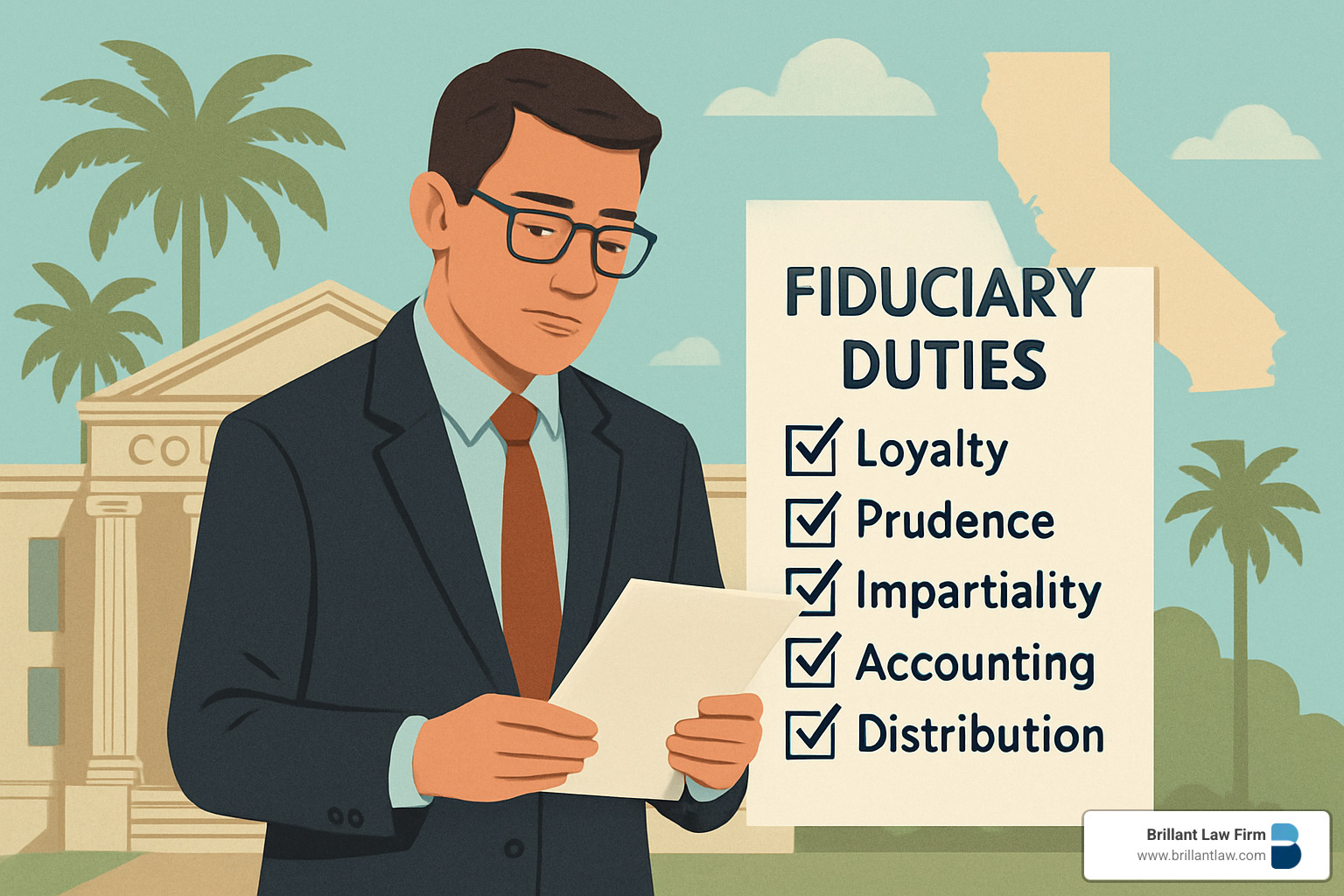
Serving as trustee or executor means accepting the highest legal responsibility. Fiduciary duties require absolute loyalty to beneficiaries’ interests, prohibiting self-dealing and requiring prudent investment management.
Record-keeping and accounting duties demand meticulous documentation. California requires annual accountings to beneficiaries. Poor records create administrative headaches and potential personal liability.
Beneficiaries can sue for breach of fiduciary duty, seeking trustee removal, loss recovery, and sometimes punitive damages. Professional guidance provides essential protection for both trustees and beneficiaries.
Advanced Trust Structures and Tax Strategies
Sophisticated California families use advanced trust structures addressing complex financial goals beyond basic estate planning.
Asset protection trusts shield wealth from future creditors while allowing continued benefits. Special needs trusts provide for disabled loved ones without jeopardizing government benefits. Charitable trusts support causes while generating tax deductions.
Life insurance trusts remove substantial proceeds from taxable estates. Grantor Retained Annuity Trusts (GRATs) transfer asset appreciation at minimal gift tax cost. Qualified Personal Residence Trusts (QPRTs) transfer family homes at discounted values.
Current federal rules offer attractive opportunities: $16,000 annual gift tax exclusion and $12.06 million federal estate tax exemption. However, these generous exemptions sunset in 2026, potentially cutting them in half.
For families with substantial retirement accounts, specialized planning becomes crucial. The IRA estate planning podcast offers insights into coordinating retirement distributions with Trusts and Estate Law strategies.
Using Trusts and Estate Law to Minimize Taxes
California families face complex tax challenges requiring strategic planning to save hundreds of thousands of dollars.
The step-up in basis rule provides valuable tax benefits—inherited assets receive stepped-up basis to fair market value at death, eliminating capital gains taxes on lifetime appreciation.
Credit shelter trusts help married couples maximize federal estate tax exemptions. Charitable deductions offer powerful benefits while supporting worthy causes. Disclaimer planning provides post-death flexibility for optimizing tax results.
Asset Protection and Creditor-Sheltering Tools
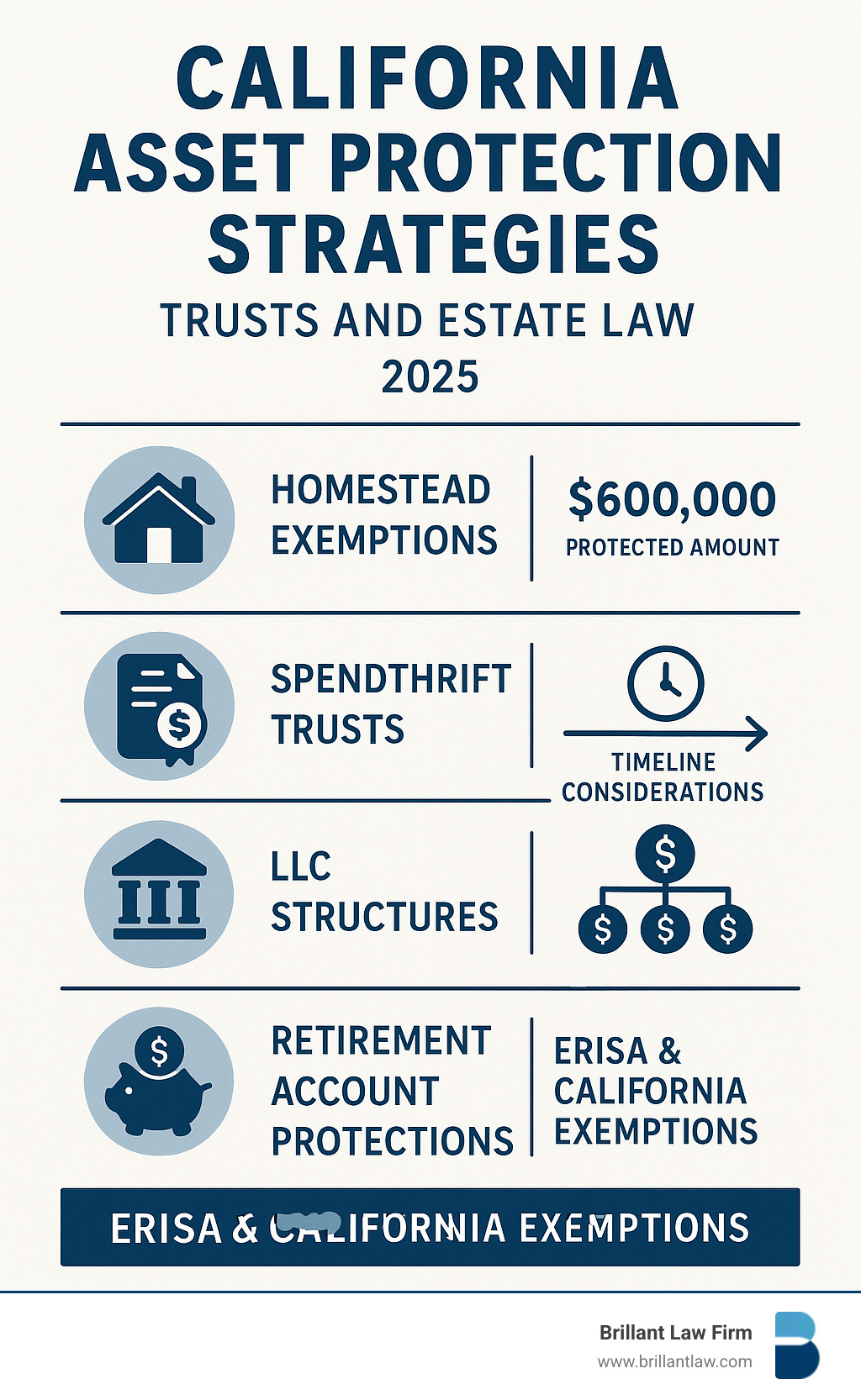
In our litigious society, asset protection has become essential. California’s homestead exemption protects up to $600,000 of home equity, but comprehensive protection requires sophisticated planning.
Spendthrift clauses prevent beneficiaries from assigning interests to creditors. LLC integration creates multiple protection layers. Domestic asset protection trusts allow self-beneficiary status while protecting assets from creditors.
Effective asset protection requires advance planning—courts view post-lawsuit strategies as potentially fraudulent.
Fiduciary Challenges and Practical Solutions
Even carefully crafted estate plans can hit unexpected bumps during administration. Most challenges are manageable with proper approach and professional guidance.
Family disputes often catch families off guard when siblings who got along well suddenly disagree as trust beneficiaries. Incapacity determination presents delicate challenges—when should successor trustees step in? Undue influence claims emerge when family members suspect manipulation.
Trustee fee disputes blindside families who never discussed compensation expectations. After months managing complex assets and difficult beneficiaries, trustees reasonably expect compensation.
Proactive planning prevents problems. Mediation clauses resolve disputes without expensive court battles. No-contest clauses discourage frivolous challenges. Independent trustees eliminate personal dynamics fueling disputes.
Our Estate Litigation Attorney services help families steer troubled waters while preserving relationships and estate value.
Common Pitfalls Under Trusts and Estate Law
Improper trust funding remains the most common mistake—spending thousands creating trust documents while leaving assets in individual names. Outdated documents create problems when life changes but estate plans don’t keep pace.
DIY errors have increased with online legal services. While fine for simple situations, complex California estates require professional expertise. Tax traps lurk everywhere—small mistakes can trigger massive tax bills.
Beneficiary designation conflicts cause confusion when retirement accounts and estate documents point in different directions.
Best-Practice Checklist for California Fiduciaries
Detailed record-keeping forms the foundation of successful fiduciary service. Timely notices aren’t just good practice—they’re legally required. Annual accountings keep everyone informed and reduce disputes.
Professional advice becomes essential for complex decisions. California attorneys specializing in Trusts and Estate Law typically charge $500-$900 per hour, but this investment often saves far more in avoided mistakes.
Regular communication with beneficiaries prevents small concerns from becoming major disputes. Following proven practices transforms fiduciary service from burden into rewarding family service.
Frequently Asked Questions about Trusts and Estate Law
What happens if I die without a will or trust in California?
When you pass away without any estate planning documents in California, the state steps in to make those important decisions for you. California’s intestate succession laws become your default “estate plan”—and they might not reflect what you actually wanted for your family.
Here’s how it typically works: if you’re married with children from your current marriage, your spouse gets everything. Sounds simple, right? But what if you have children from a previous relationship? In that case, your spouse receives only one-third to one-half of your estate, with the rest going to your children. This can create real financial hardship for a surviving spouse who suddenly can’t afford the mortgage, while potentially leaving stepchildren you intended to provide for completely out in the cold.
The bigger problem is that dying without proper planning guarantees your family will face the full probate process. That means 12 to 18 months (or longer) of court supervision, with all the expense and frustration that comes with it. Your loved ones will be stuck paying substantial legal fees and court costs while waiting to receive what you left them.
It’s like leaving your family to solve a puzzle without giving them the picture on the box. Trusts and Estate Law exists specifically to help you create that clear picture for the people you care about most.
Can a revocable living trust really avoid probate for my Bay Area home?
Absolutely—and this is where a properly funded revocable living trust really shines. When you transfer your home’s deed into your trust’s name, something almost magical happens from a legal perspective. Your house stops being a “probate asset” and becomes a “trust asset” instead.
What does this mean for your family? When you pass away, your successor trustee can immediately step in to manage or distribute your Bay Area home according to your instructions. No court involvement, no waiting for a judge’s approval, no public records showing your family’s business.
In the Bay Area, where home values routinely hit $1.5 million or more, this isn’t just convenient—it’s financially crucial. The statutory probate fees alone on a $1.5 million home would run about $35,000. Add in appraisals, accounting fees, and the inevitable complications that extend proceedings, and you’re looking at potentially $50,000 to $75,000 in costs.
A revocable trust eliminates all of that while keeping your family’s affairs private. Your neighbors won’t know the details of your estate from public court records, and your beneficiaries can focus on grieving and healing instead of dealing with legal bureaucracy.
What are the downsides of setting up an irrevocable trust?
Irrevocable trusts are powerful tools, but they come with some serious trade-offs that you need to understand upfront. Think of it like selling your house—once you sign those papers, you can’t just change your mind the next day.
Loss of control is the biggest hurdle for most people. When you put assets into an irrevocable trust, you’re essentially giving them away. You can’t wake up one morning and decide you want to change the terms or take the assets back. This can feel scary, especially if your financial situation changes or family circumstances shift.
Reduced flexibility goes hand-in-hand with this. Life has a way of throwing curveballs—maybe your intended beneficiary develops a substance abuse problem, or tax laws change dramatically. With a revocable trust, you can adjust. With an irrevocable trust, you might need to go to court and convince a judge that modifications are necessary.
The tax implications can also be tricky. Irrevocable trusts often pay income taxes at higher rates than individuals do, and the trust might need to file its own tax returns every year. Plus, transferring assets to an irrevocable trust might trigger gift tax obligations if you exceed annual exclusion limits.
Administrative complexity is another consideration. These trusts require ongoing maintenance, record-keeping, and compliance with various legal requirements. It’s not something you can set up and forget about.
Despite these challenges, irrevocable trusts remain incredibly valuable for families who need maximum asset protection or significant estate tax reduction. The key is making sure the benefits clearly outweigh the costs for your specific situation. That’s where working with experienced professionals who understand Trusts and Estate Law becomes essential—we can help you determine whether an irrevocable trust makes sense for your family’s unique circumstances.
Conclusion
You’ve worked your entire life building something meaningful for your family. Your California home has appreciated beyond expectations, but without proper planning, much of what you’ve built could vanish into probate fees, tax obligations, and family disputes.
Trusts and Estate Law bridges your hard work today with your family’s security tomorrow. Yet 60% of Americans lack basic estate plans, leaving loved ones to steer complex legal waters during vulnerable moments.
In California, the stakes are particularly high. Modest family homes trigger substantial probate costs, while growing businesses risk not surviving without succession planning. Even middle-class families face six-figure probate expenses.
Every problem is preventable. I’ve seen families completely avoid probate through well-structured revocable living trusts, watched multi-generational wealth transfer seamlessly through advanced tax planning, and helped families preserve harmony through clear, fair distribution plans.
Proper estate planning eliminates probate costs and delays, protects assets from unexpected creditors, ensures smooth incapacity management, and preserves family relationships during difficult times.
At Brillant Law Firm, we understand your family’s situation is unique. Young couples need different strategies than established business owners. Blended families face different challenges than couples building generational wealth. Our approach is always bespoke—crafted specifically for your circumstances.
The best estate plan works when your family needs it most. It’s about creating comprehensive strategies protecting what matters most—your family’s financial security, your business’s continuity, or your philanthropic legacy.
Don’t let procrastination become your family’s burden. The peace of mind from knowing your loved ones are protected is invaluable.
Your next step is simple: reach out to us. Let’s discuss your family’s unique situation and explore how our expertise in Trusts and Estate Law can provide the protection your loved ones deserve.
For more information about comprehensive trusts and estate services, find how our expertise and dedication can transform your family’s future. When protecting what you’ve built, good enough simply isn’t good enough.


