

Trustee Certification: 2 Key Types Explained
Why Trustee Certification Matters for Your Trust Administration
Trustee certification refers to two distinct concepts in trust administration, and understanding the difference is crucial for anyone involved in managing a trust.
The Two Types of Trustee Certification
- Certificate of Trust: A legal document proving a trustee’s authority to third parties like banks without revealing private trust details.
- Professional Trustee Certification: An educational credential for individuals pursuing a career as a professional fiduciary.
| Type | Purpose | Who Needs It | How to Obtain |
|---|---|---|---|
| Certificate of Trust | Prove trustee authority to third parties | Current trustees managing trust assets | Draft, sign, and notarize the document |
| Professional Certification | Demonstrate expertise in trust administration | Professional fiduciaries and trust officers | Complete educational programs and coursework |
The confusion between these two often leads to misunderstandings. A Certificate of Trust is a necessary tool for managing trust assets, while a professional certification is for career advancement in the trust industry.
California law specifically addresses Certificates of Trust under Probate Code Section 18100.5, making them vital for trustees in our state. These documents allow trustees to prove their authority while keeping sensitive trust information private—a critical balance in effective trust administration.
I’m David Brillant, a Certified Specialist in Estate Planning, Trust and Probate Law. My practice focuses on ensuring trustees have the proper documentation and authority to effectively manage trust assets while protecting beneficiary privacy.
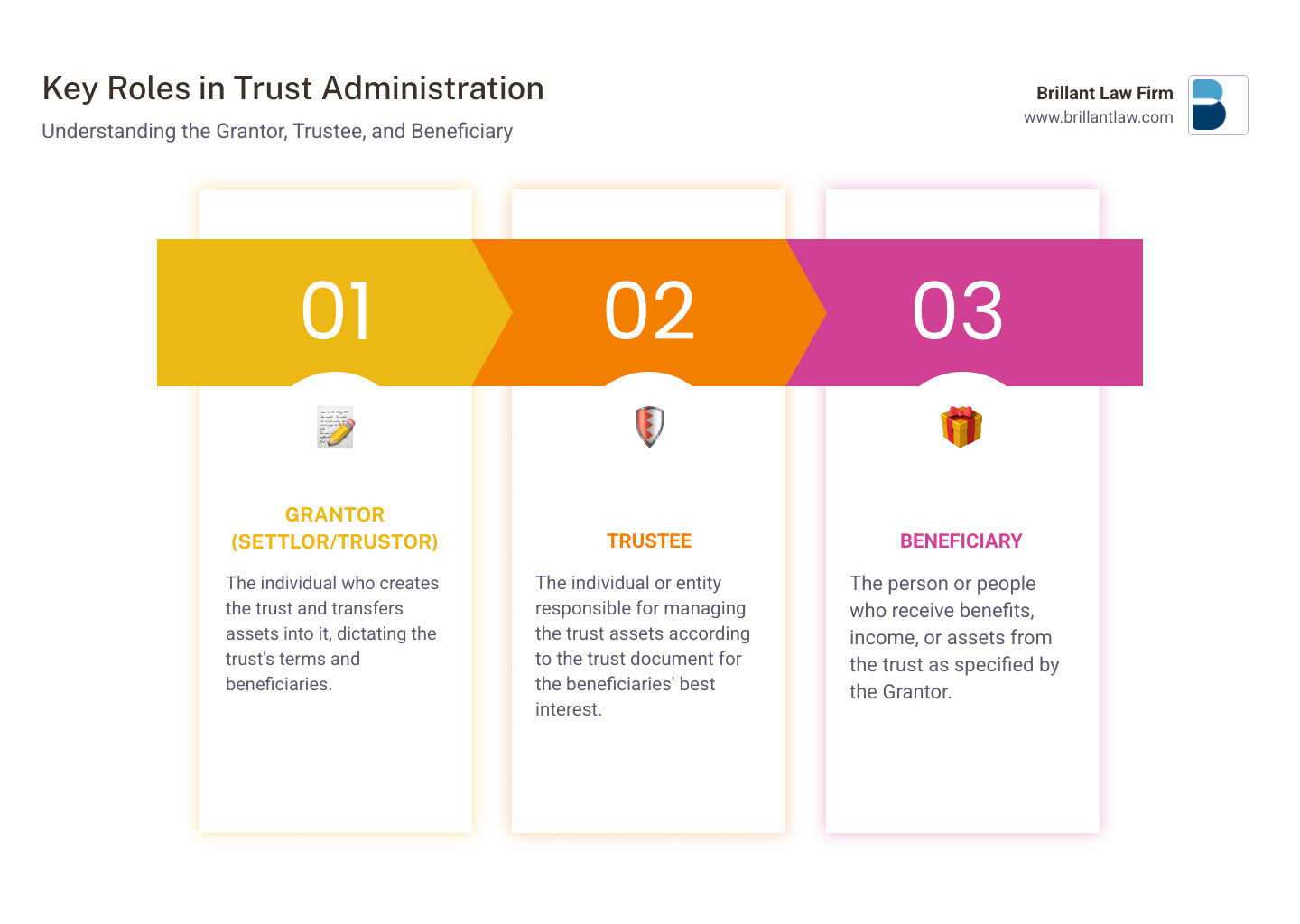
Understanding “Trustee Certification”: The Legal Document vs. The Professional Credential
The term “trustee certification” is often confusing because it describes two different things: a legal document for a specific trust and an educational credential for professionals. Let’s clarify the distinction.
What is a Certificate of Trust?
A Certificate of Trust is a legal document that summarizes a trust’s key details. It serves as proof of authority for a trustee to conduct business on behalf of the trust, such as at a bank or during a real estate transaction. Instead of providing the entire, private trust agreement, a trustee can present this streamlined certificate.
California Probate Code Section 18100.5 governs these certificates, outlining the required information to make them legally valid. This law provides privacy protection by allowing trustees to prove their power to manage financial transactions without disclosing sensitive family information. This efficiency allows banks, title companies, and investment firms to quickly verify a trustee’s authority, keeping private matters private while enabling the trustee to perform their duties.
For more detailed guidance on trust-related legal matters, you can explore our comprehensive Trust Law Attorney services.
What is a Professional Trustee Certification?
This is an educational credential earned by professionals to demonstrate their expertise in trust administration. It proves an individual has the knowledge and skills to manage trusts as part of their career, and it is not tied to any specific trust.
These certifications involve rigorous fiduciary training and are designed for the professional development of fiduciaries, trust officers, wealth managers, and paralegals. The American Bankers Association (ABA) and university certificate programs, such as the Fiduciary Trustees Certificate | CSUF program at California State University, Fullerton, offer respected training.
Earning a professional certification is a significant commitment to career advancement. It demonstrates credibility and a serious approach to fiduciary responsibilities, which is valuable for building a career in trust administration or wealth management.
The Certificate of Trust Explained: Your Key to Efficient Trust Management
Let’s dig deeper into the Certificate of Trust—the legal document that acts as a trustee’s official ID for managing trust assets. It provides a crucial balance between transparency and privacy, giving grantors peace of mind and trustees an efficient tool to interact with banks and title companies.

This efficiency is vital for avoiding the lengthy and expensive probate process. A Certificate of Trust helps ensure assets are managed smoothly, whether for incapacity planning or after a death.
Key Information Included in a Certificate of Trust
Under California Probate Code Section 18100.5, a Certificate of Trust must contain specific information to establish the trustee’s authority, including:
- The trust’s name and date of creation.
- The identity of the settlor(s) (creators) and the currently acting trustee(s).
- A description of the trustee’s powers relevant to the transaction.
- Whether the trust is revocable or irrevocable.
- The trust’s tax identification number (SSN or EIN).
- How title to trust assets should be held.
- An affirmation that the trust has not been revoked or modified in a way that would invalidate the trustee’s authority.
This summary allows institutions to verify authority without reviewing the entire complex trust document. For more on managing trust finances, see our Fiduciary Accounting and Trust Administration Guide.
Why You Need a Legal Trustee Certification
The primary benefits of a Certificate of Trust are privacy, convenience, and clarity.
- Privacy: Your full trust agreement contains sensitive family and financial details. A Certificate of Trust allows you to keep this information confidential, sharing only what is necessary for a transaction.
- Convenience: It prevents delays at banks or investment firms, where staff would otherwise have to review a lengthy trust document to confirm the trustee’s powers.
- Clarity: The certificate clearly states the trustee’s powers, eliminating ambiguity and protecting both the trustee and the third party.
The importance of having the right person in the trustee role cannot be overstated, which is why we’ve written about Choosing the Right Trustee: A Decision of Paramount Importance.
Certificate of Trust vs. The Full Trust Agreement
Think of the Certificate of Trust as a movie trailer and the full trust agreement as the entire film.
The full trust agreement is a comprehensive, often lengthy document detailing all your wishes, including beneficiary distributions, asset management instructions, and tax strategies. It is the complete blueprint for your estate.
The Certificate of Trust is a one- or two-page summary. It intentionally omits confidential details like beneficiary names and specific asset distributions, providing just enough information to satisfy third parties. This distinction protects your family’s privacy while allowing trust administration to proceed smoothly, which is the goal of effective Estate and Trust Law.
How to Create and Use a California Trustee Certification
Creating and using a Certificate of Trust in California is a straightforward process governed by California Probate Code Section 18100.5. This framework ensures the document will be accepted by financial institutions and other third parties.

Step 1: Drafting the Document
An estate planning attorney typically drafts the Certificate of Trust to ensure it complies with California law, though the trustee can also prepare it. The key is including all elements required by Probate Code Section 18100.5 to create a document that is clear, complete, and eliminates delays.
Step 2: Signing and Notarization
To be legally effective, the certificate must be signed by all currently acting trustees. The grantor’s signature is not required. Notarization is mandatory in California. A notary public verifies the identity of each signer and confirms they signed voluntarily. You can find a notary at banks, law offices, or through the National Notary Association.
Step 3: Using and Updating the Certificate
Once executed, the trustee presents the certificate to financial institutions to manage accounts and to title companies for real estate transactions. The document is not permanent and must be updated to remain effective.
An update is required for any change of trustee (e.g., a successor trustee takes over) or after trust amendments that alter the trustee’s powers or the trust’s revocability. Some financial institutions may also require a new certificate periodically. Keeping the certificate current is a key part of effective trust administration.
For comprehensive guidance, see our guide on How to Administer a Trust in California and our article on Successor Trustees.
Pursuing Professional Trustee Certification: Advancing Your Fiduciary Career
For those pursuing a career in trust administration, a professional trustee certification is an educational credential that demonstrates expertise and commitment. These programs are ideal for professional fiduciaries, trust officers, wealth managers, and paralegals.

These certifications represent a deep understanding of complex trust laws, ethics, and practical management skills. Many are offered online and require continuing education, ensuring professionals stay current with evolving laws. For more on this career path, see our guide on How to Become a Trust Administrator.
Types of Professional Programs Available
Several pathways exist for professional certification, catering to different career goals:
- American Bankers Association (ABA): Offers respected certifications like the ABA Certificate in Trust Administration, a comprehensive and efficient program for busy professionals.
- University Programs: California State University, Fullerton (CSUF) offers a fully online Fiduciary Trustees Certificate | CSUF program. It is approved by the California Professional Fiduciaries Bureau and meets pre-licensing educational requirements.
- Paralegal Certifications and Online Courses: These programs allow legal support staff and other professionals to specialize in specific areas of trust and estate law.
Core Skills and Knowledge Gained
Professional certification programs build a comprehensive skill set for fiduciary management, including:
- Trust Fundamentals: The legal requirements for creating and managing various types of trusts.
- Fiduciary Duties and Powers: A deep understanding of the duties of loyalty, prudence, and impartiality.
- Estate and Probate Administration: How trusts fit into the broader estate plan and help avoid probate.
- Discretionary Distributions: How to evaluate beneficiary needs and make appropriate distributions.
- Special Needs Trusts: Navigating the complex rules to protect a beneficiary’s government benefits.
- Taxation: Understanding trust tax implications and reporting requirements.
These programs equip professionals to handle the complex responsibilities of trust administration. Learn more about the role by reading What Does a Trust Administrator Do?.
Frequently Asked Questions About Trustee Certifications
Clients often have questions about the Certificate of Trust. Here are answers to the most common ones.
Is a Certificate of Trust legally required for all trusts in California?
No, a Certificate of Trust is not legally required for every trust in California. However, it is practically essential. Financial institutions like banks, title companies, and investment firms require proof of a trustee’s authority before allowing transactions. They will not review a lengthy, private trust agreement. A properly executed Certificate of Trust, authorized under California Probate Code Section 18100.5, provides this proof efficiently and is generally required to be accepted by these institutions.
Who signs the Certificate of Trust?
All currently acting trustees must sign the Certificate of Trust. If there are co-trustees, all must sign. If a successor trustee has taken over, only the current trustee signs. The signature of the grantor (the trust’s creator) is not required on the certificate itself, nor is an attorney’s signature. The legal weight comes from the trustee’s signature and proper notarization.
Does a Certificate of Trust need to be recorded?
Generally, no. A Certificate of Trust does not need to be recorded with a government office for transactions involving financial assets like bank accounts. The major exception is for real estate transactions. When a trust holds real property, the Certificate of Trust is typically recorded with the county recorder’s office where the property is located. This creates a public record proving the trustee’s authority to sell, buy, or mortgage the property, which is a requirement for title companies.
Secure Your Legacy with Expert Trust Administration
Understanding trustee certification—whether the legal document or the professional credential—is key to effective trust management. A Certificate of Trust is a vital tool that allows your trustee to manage assets efficiently while protecting your family’s privacy.
Proper documentation ensures your estate plan works as intended, preventing delays and complications when your family needs it most. A correctly executed Certificate of Trust carries your authority and secures your legacy.
The role of experienced legal counsel is critical. California’s trust laws are complex, and small oversights can cause significant problems. At Brillant Law Firm, we ensure our clients’ trusts are documented correctly from the start, providing peace of mind with Certificates of Trust that financial institutions readily accept.
We understand the unique requirements of California’s trust laws and create bespoke strategies for each client. Your legacy deserves the careful attention and expertise that comes from dedicated practice in California trust law. Don’t leave your family’s financial security to chance.
Get expert help with your Trust Administration and gain the confidence that comes with knowing your trust is properly structured, documented, and ready to serve your family for generations to come.


