

Trust tax attorney expertise is crucial when managing and safeguarding your wealth through trusts in California. Here’s why consulting a trust tax attorney is essential:
- Trusts Shelter Assets: They help in protecting your hard-earned assets from unnecessary taxes and legal disputes.
- Estate Planning Strategy: Trust tax attorneys craft comprehensive strategies to ensure that your estate is passed on smoothly to your beneficiaries.
- Tax Efficiency: They provide insights into minimizing tax liabilities, ensuring more of your estate is retained within the family.
Navigating through the complexities of trusts, taxes, and estate planning can be daunting. Trust tax attorneys are experts in this field, helping you protect assets while ensuring tax efficiency and effective estate planning. Trusts serve as powerful tools, not only to avoid lengthy probate but also to ease the transfer of wealth, making sure your loved ones are taken care of as you intended.
As David Brillant, a certified specialist in Estate Planning, Trust, and Probate Law with a Masters in Taxation, I bring my expertise and passion for tackling complex trust tax issues. At Brillant Law Firm, we offer bespoke strategies for high-net-worth individuals, ensuring your estate plan is custom and legally sound to protect your wealth. Let’s dive deeper into how trusts and their tax implications play a vital role in securing your legacy.
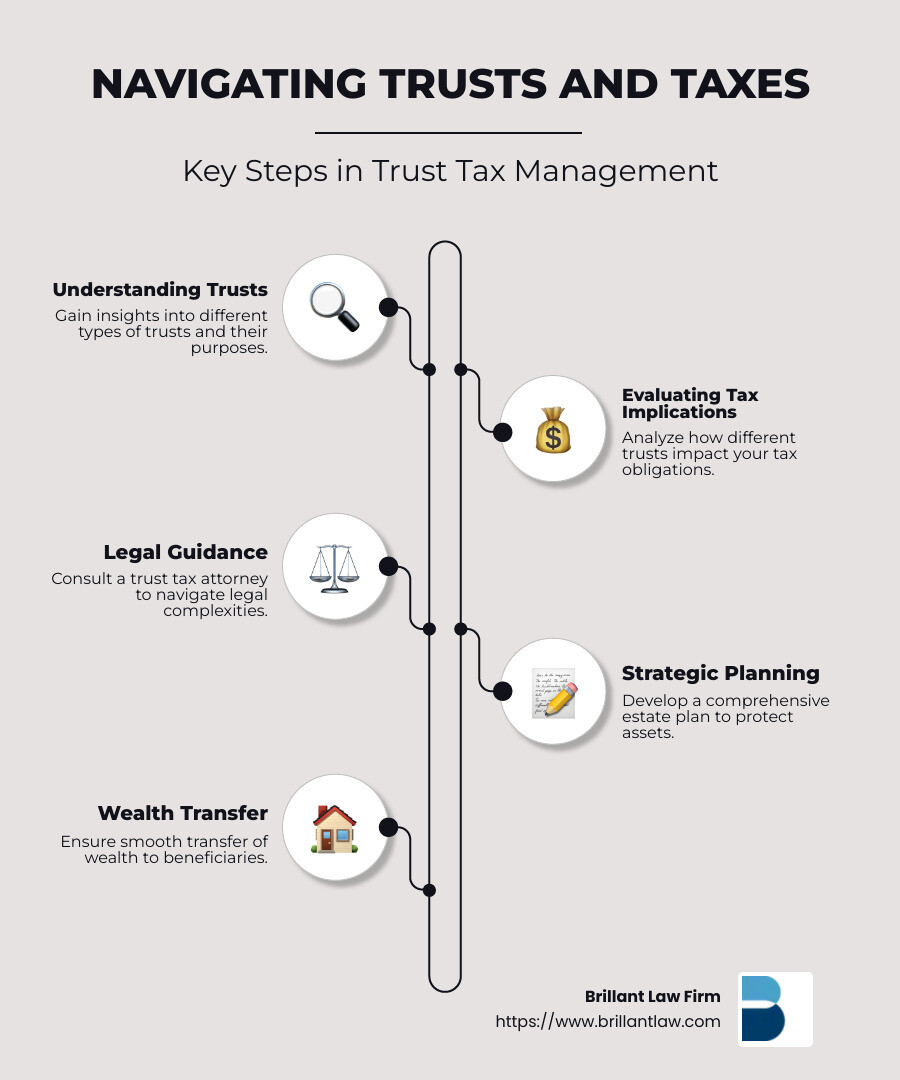
Simple Trust tax attorney glossary:
– Trust and estate planning
– estate planning attorney
– who does a trust attorney represent
Understanding Trusts and Their Tax Implications
In estate planning, trusts are essential tools. They help manage and protect assets for your beneficiaries. But understanding how they work, especially regarding taxes, can be a bit complex.
The Basics: Trustor, Trustee, and Beneficiaries
A trust is a legal arrangement involving three main parties:
- Trustor: This is the person who creates the trust. They place their assets into the trust for management and protection.
- Trustee: This individual or entity manages the trust. They ensure the trust operates according to the trustor’s wishes. Sometimes, the trustor can act as the trustee during their lifetime.
- Beneficiaries: These are the people or organizations that benefit from the trust. They receive the assets or income from the trust as outlined in the trust agreement.
Probate: What It Means and Why Trusts Help
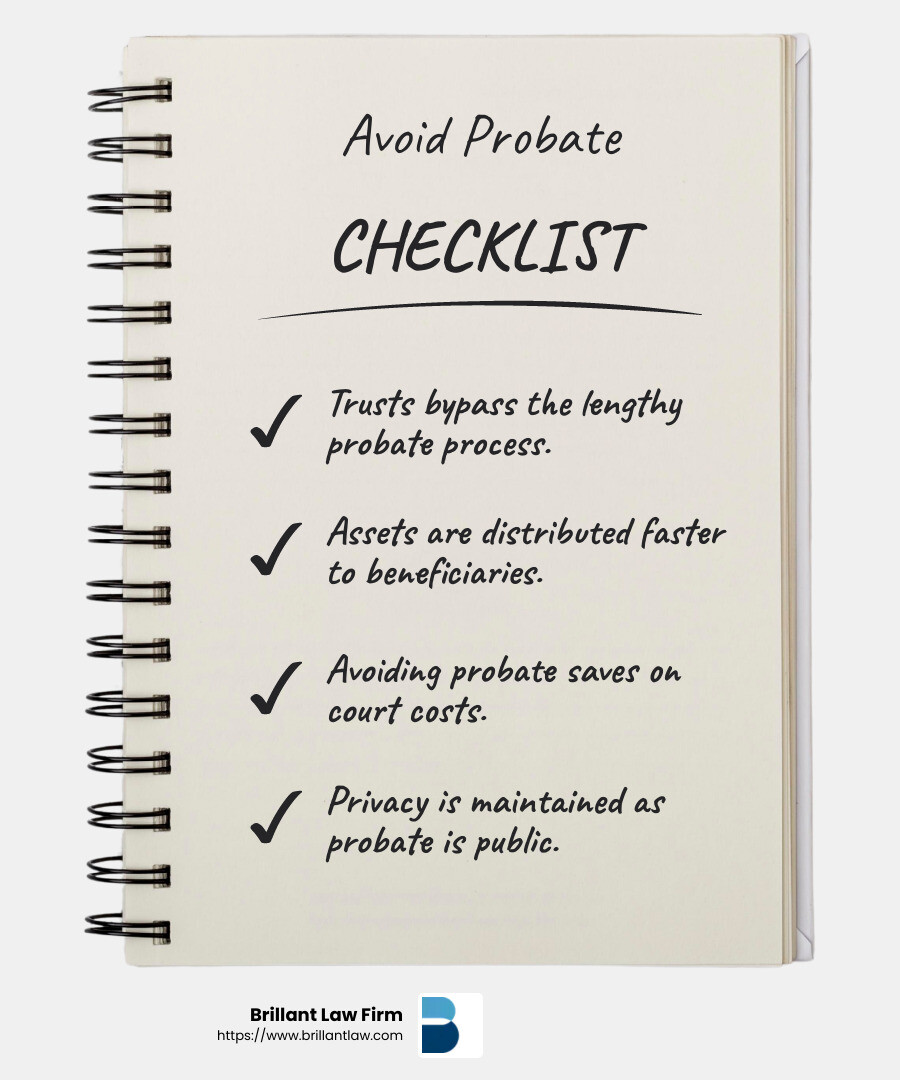
Probate is the legal process of distributing a deceased person’s estate. It can be lengthy and costly. Trusts can help avoid probate, allowing beneficiaries to access assets more quickly and without the hassle of court proceedings.
Estate Taxes and Trusts
Estate taxes are taxes on the transfer of the deceased’s estate. Trusts can play a crucial role in managing these taxes:
- Revocable Trusts: These can be altered during the trustor’s lifetime. They offer flexibility but may not reduce estate taxes.
- Irrevocable Trusts: Once set, these cannot be changed. They can help reduce estate taxes because the assets are no longer part of the trustor’s taxable estate.
Trust tax attorneys are vital in navigating these aspects. They help you understand which type of trust best fits your goals and how to structure it to minimize tax liabilities. At Brillant Law Firm, we specialize in creating strategies that preserve wealth and ensure your estate plan aligns with California’s legal landscape.
The Role of a Trust Tax Attorney
Navigating the complexities of trusts can be daunting. This is where a Trust Tax Attorney steps in. Their role is crucial in ensuring your assets are protected and your tax responsibilities are managed efficiently.
Tax Planning: A Strategic Approach
Tax planning is essential when managing trusts. A Trust Tax Attorney helps devise strategies to minimize tax liabilities. They know the ins and outs of California’s tax laws and can guide you in structuring your trust to take advantage of any available tax benefits.
For example, irrevocable trusts can help lower estate taxes. But setting them up correctly requires expertise. An attorney ensures everything is in place so your beneficiaries can benefit fully.
Asset Protection: Keeping What’s Yours Safe
Asset protection is another key service provided by a Trust Tax Attorney. Trusts are powerful tools for safeguarding your assets from creditors and lawsuits. By placing assets in a trust, you can protect them from unexpected financial threats.
Attorneys help design trusts that offer maximum protection while complying with legal requirements. This way, your wealth remains secure for future generations.
Fiduciary Responsibilities: Acting in the Best Interest
Trustees have significant responsibilities. They must manage the trust’s assets and act in the best interest of the beneficiaries. A Trust Tax Attorney provides guidance to ensure trustees fulfill their fiduciary duties correctly.
They offer advice on investment strategies, tax implications, and legal obligations. This support helps trustees avoid pitfalls and ensures the trust operates smoothly, maintaining the trustor’s intentions.
A Trust Tax Attorney is a valuable partner in managing trusts. They provide expertise in tax planning, asset protection, and fiduciary responsibilities, ensuring your trust is both effective and compliant.
Next, we’ll explore the various types of trusts and their benefits, helping you understand which might be the best fit for your estate planning needs.
Types of Trusts and Their Benefits
When it comes to estate planning, understanding the different types of trusts and their benefits is crucial. Each type serves a unique purpose and can offer specific advantages depending on your goals. Let’s explore some of the most common trusts and see how they can work for you.
Revocable Trusts: Flexibility and Control
A revocable trust, often called a living trust, allows the trustor to maintain control over their assets during their lifetime. This flexibility means you can change beneficiaries, modify terms, or even dissolve the trust if your circumstances change.
The primary benefit of a revocable trust is avoiding probate. This means your beneficiaries can access the assets more quickly and privately after your passing. However, it’s important to note that revocable trusts do not offer protection from creditors and do not reduce estate taxes.
Irrevocable Trusts: Tax Efficiency and Asset Protection
In contrast, an irrevocable trust cannot be easily altered once established. The assets placed in this trust are no longer under the trustor’s control, which can be a strategic move for reducing estate taxes and protecting assets from creditors.
Irrevocable trusts are particularly beneficial for those looking to minimize estate taxes. By removing assets from your taxable estate, you can significantly reduce the tax burden on your heirs. This type of trust is also ideal for shielding assets from legal claims, providing an added layer of security.
Charitable Trusts: Giving Back While Saving
A charitable trust is a fantastic option for those who want to support charitable causes while receiving tax benefits. By allocating assets to a charitable trust, you can reduce your taxable estate and potentially receive income tax deductions.
There are two main types of charitable trusts: charitable remainder trusts and charitable lead trusts. Each serves different purposes, but both allow you to contribute to causes you care about while enjoying tax advantages.
Generation-Skipping Trusts: Planning for the Future
A generation-skipping trust is designed to transfer wealth to beneficiaries who are at least two generations younger, such as grandchildren. This type of trust can help you avoid estate taxes that would typically apply if assets were passed from parent to child and then to grandchildren.
By skipping a generation, you can preserve more of your wealth for future generations. This strategy can be particularly effective for families looking to build a lasting financial legacy.
Understanding these different types of trusts and their benefits can help you make informed decisions about your estate planning. Whether you’re looking for flexibility, tax efficiency, or a way to give back, there’s a trust that can meet your needs.
Next, we’ll discuss how Trust Tax Attorneys at Brillant Law Firm can assist you in navigating these options to protect and grow your wealth.
How Trust Tax Attorneys Can Help You
When it comes to managing your wealth, Trust Tax Attorneys play a crucial role. They help you steer the complex world of tax laws and estate planning, ensuring your assets are protected and your legacy preserved.
Wealth Preservation
Preserving wealth is a top priority for many individuals. Trust tax attorneys at Brillant Law Firm understand this and work diligently to safeguard your assets. By setting up strategic trusts, they help you minimize estate taxes and protect your wealth from creditors. For instance, using irrevocable trusts can remove assets from your taxable estate, reducing the tax burden on your heirs.
Tax Liability Management
Managing tax liabilities can be daunting. However, with the right guidance, you can significantly reduce the taxes you owe. Trust tax attorneys are experts in tax planning. They use various strategies like gifting assets, setting up charitable trusts, and leveraging tax exemptions to minimize your tax obligations. This proactive approach ensures you keep more of your hard-earned money.
Business Succession Planning
If you own a business, planning for its future is essential. A trust tax attorney can help you create a business succession plan that ensures a smooth transition of ownership. This plan addresses key issues such as who will take over your business, how the transition will occur, and how to compensate other heirs. By doing so, it helps maintain business stability and continuity, even during challenging times.
In summary, trust tax attorneys at Brillant Law Firm are your partners in wealth preservation, tax liability management, and business succession planning. They offer custom strategies to protect your assets and ensure your financial legacy endures.
Next, we’ll dive into some frequently asked questions about trust tax attorneys and how they can further assist you.
Frequently Asked Questions about Trust Tax Attorneys
Who is responsible for paying taxes on a trust?
When it comes to trusts, understanding tax responsibilities is crucial. Generally, the trustee is responsible for ensuring that taxes on the trust are paid. The trustee must file Form 1041, the U.S. Income Tax Return for Estates and Trusts, to report the income, deductions, and credits of the trust. This form helps determine whether the trust itself or the beneficiaries are liable for taxes on the trust’s income.
Trustees must also ensure that any distributions to beneficiaries are accurately reported. Depending on the type of trust and its terms, beneficiaries may need to pay taxes on the income they receive. This makes it essential for trustees to work closely with a trust tax attorney to steer these responsibilities effectively.
Can trusts get tax refunds?
Yes, trusts can receive tax refunds under certain conditions. If a trust pays more in estimated taxes than it owes, it may be eligible for a refund. The trustee would need to file Form 1041 to claim this refund. Refunds are not automatic. The trust must meet specific criteria, and the trustee must ensure all necessary forms and documentation are correctly filed.
A trust tax attorney can assist in managing these filings, ensuring that the trust complies with tax laws and maximizes its refund potential. This expertise can be particularly valuable in complex situations where a trust’s income and deductions vary significantly from year to year.
Are trust legal fees tax deductible?
Legal fees related to trust administration can be tax-deductible, but it depends on the nature of the services provided. Fees that are necessary for the production or collection of income, or for tax advice or planning, may be deductible. However, personal legal expenses or those related to the distribution of assets are generally not deductible.
To determine which fees qualify, trustees should consult with a trust tax attorney. These professionals can help identify deductible expenses and ensure they are reported accurately on the trust’s tax return. This can result in significant tax savings and reduce the overall financial burden of managing a trust.
In conclusion, understanding the tax responsibilities and opportunities associated with trusts is essential for trustees. With the guidance of a trust tax attorney, trustees can effectively manage taxes, claim refunds, and take advantage of potential deductions to optimize the financial health of the trust.
Conclusion
At Brillant Law Firm, we understand that navigating the complexities of trust taxation requires not just expertise, but a personalized approach. That’s why we pride ourselves on offering bespoke strategies custom specifically to meet the unique needs of our clients in California.
Our team of trust tax attorneys is dedicated to providing top-notch service, ensuring that your wealth is protected and your financial legacy is secure. We leverage our deep understanding of trust and estate laws to help you manage tax liabilities, preserve wealth, and plan for the future.
Whether you are looking to establish a trust, optimize your tax strategy, or seek advice on fiduciary responsibilities, our attorneys are here to guide you every step of the way. We believe in crafting solutions that are as unique as the clients we serve, ensuring that your interests are always at the forefront of our efforts.
For those in California seeking a reliable partner in trust and estate management, look no further than Brillant Law Firm. Our commitment to excellence and custom solutions makes us the go-to choice for individuals and families looking to safeguard their assets and secure their financial future.
Explore our services and learn how we can assist you by visiting our Wills and Trusts Attorneys page. Let us help you protect what matters most.


