

Trust litigation lawyer services become essential when estate disputes arise, often leading to complex legal battles. When family members or other interested parties are involved in a disagreement over a trust’s terms or execution, a trust litigation lawyer can help steer these choppy legal waters. Their expertise is critical for resolving issues like breaches of fiduciary duty, interpretation of trust language, and allegations of undue influence or misconduct.
In the field of estate disputes, emotions run high, and financial stakes can be significant. Whether you suspect trustee misconduct, a violation of the trust’s terms, or require assistance in clarifying a trust’s language, these legal experts are indispensable. The right lawyer will provide strategic guidance and representation amidst these complexities, aiming to resolve disputes effectively.
As a seasoned trust litigation lawyer in California, I, David Brillant, bring extensive experience and a deep understanding of estate disputes. My proven track record in this field ensures that my clients receive comprehensive protection and bespoke legal strategies custom to their unique circumstances.
Learn more about Trust litigation lawyer:
– do i need an attorney to settle a trust
– who does a trust attorney represent
– trust and estate planning
Understanding Trust Litigation
Trust litigation can be a maze of legal complexities, but understanding the basics can help you steer it more effectively. At its core, trust litigation involves legal disputes over the management or distribution of a trust. These disputes often arise from disagreements among beneficiaries, trustees, or other interested parties.
Trust Disputes
Trust disputes can occur for various reasons. Common issues include disagreements over the interpretation of trust terms, allegations of improper management by trustees, or claims that the trust was created under undue influence. These disputes can lead to contentious legal battles, often requiring the expertise of a trust litigation lawyer to resolve.
A trust litigation lawyer can help clarify the trust’s language, address allegations of misconduct, and ensure that the trustor’s intentions are honored. Their role is to protect the interests of their clients, whether they are beneficiaries seeking their rightful inheritance or trustees defending their actions.
Probate Litigation
Probate litigation is another area where trust disputes often surface. This type of litigation deals with the administration of a deceased person’s estate, including the distribution of their assets according to their will or trust. Probate litigation can involve will contests, disputes over the validity of a trust, or challenges to the actions of executors and trustees.
In California, probate courts handle these disputes, and the process can be lengthy and complex. Having a knowledgeable attorney by your side can make a significant difference in navigating the intricacies of probate law and achieving a favorable outcome.
Fiduciary Duties
Central to many trust disputes are fiduciary duties. Trustees have a legal obligation to act in the best interests of the beneficiaries. This includes managing the trust’s assets prudently, avoiding conflicts of interest, and adhering to the trust’s terms. Breaches of fiduciary duty can lead to serious legal consequences and are a common trigger for trust litigation.
If a trustee fails to fulfill their fiduciary duties, beneficiaries may have grounds to take legal action. A trust litigation lawyer can help assess whether a breach has occurred and advise on the best course of action to protect the beneficiaries’ rights.
Understanding these key aspects of trust litigation is crucial for anyone involved in a trust dispute. Whether you’re a beneficiary seeking justice or a trustee facing allegations, having the right legal support can help you steer these challenges effectively.
When to Call a Trust Litigation Lawyer
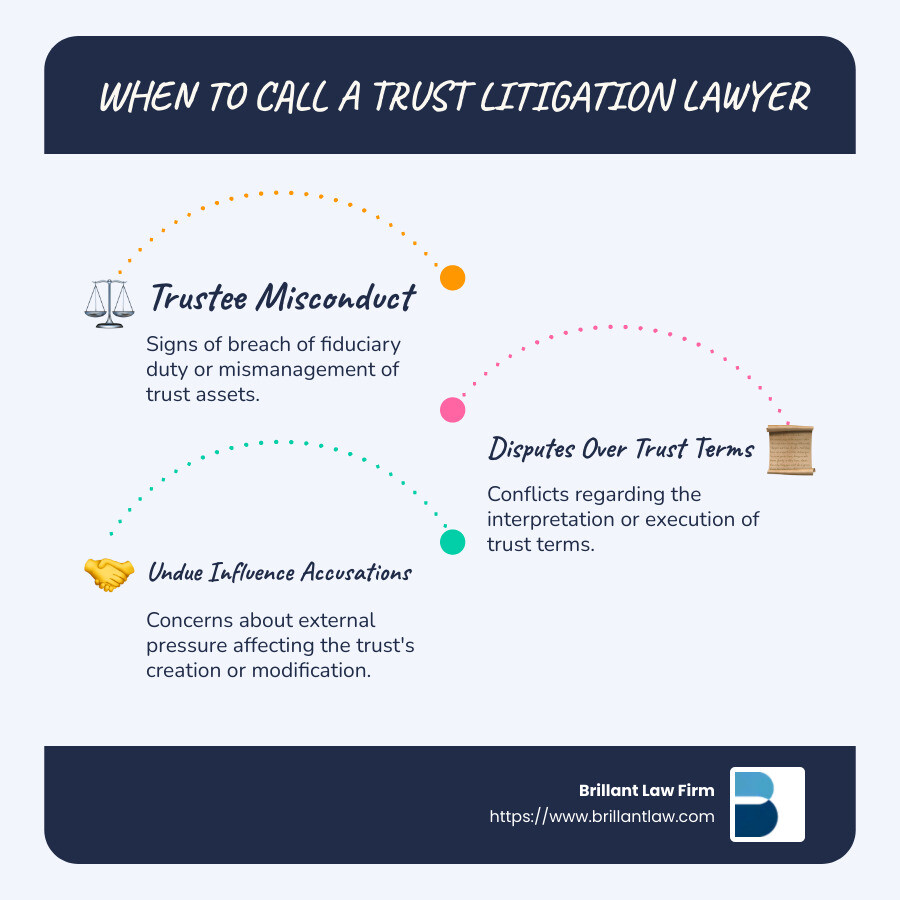
Knowing when to call a trust litigation lawyer can make all the difference in resolving disputes efficiently and effectively. Here are some key moments when you should consider seeking legal representation:
Disputes Over Trust Validity
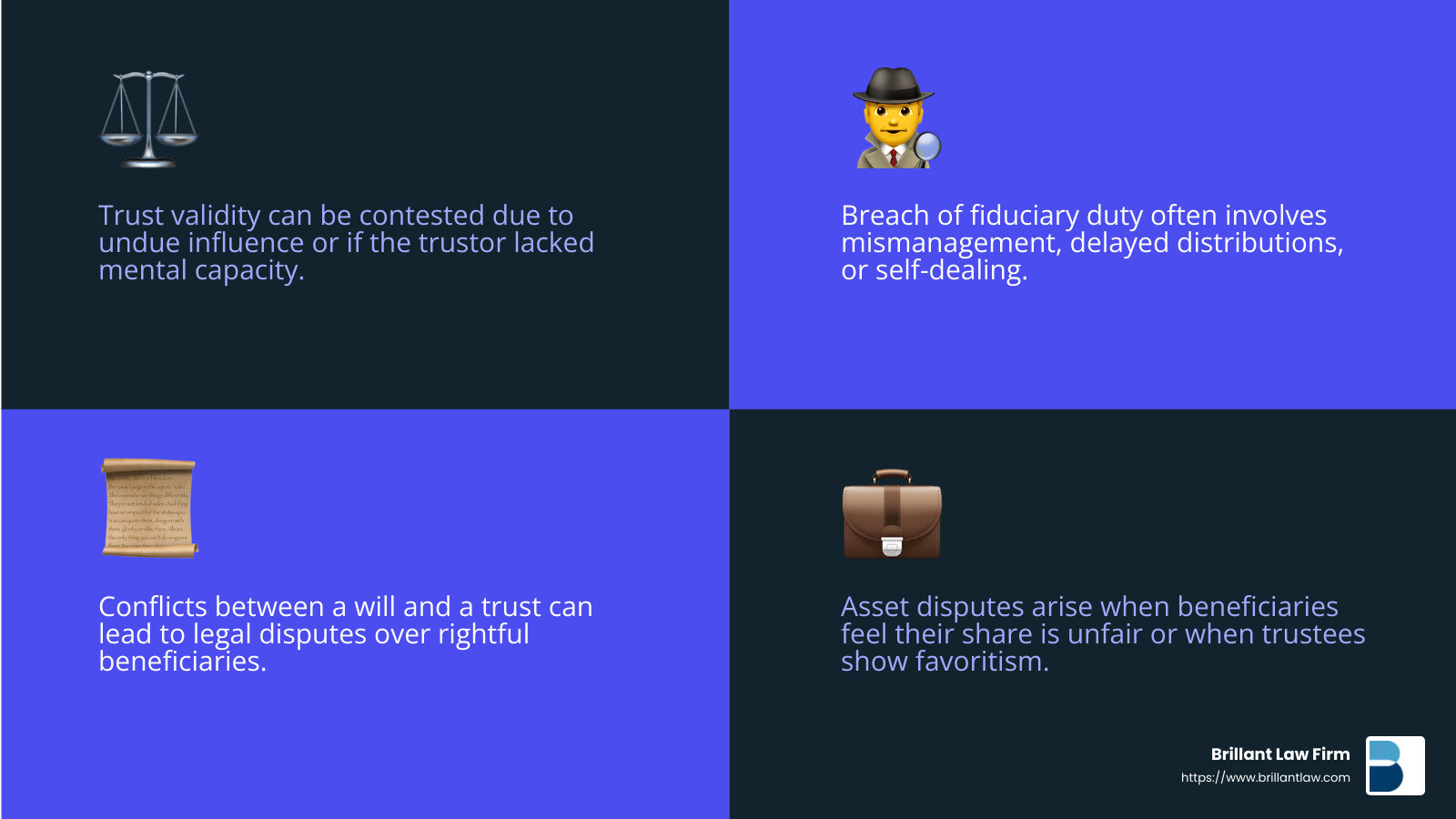
If you suspect that a trust was created under undue influence or that the trustor lacked the legal capacity to create the trust, it’s time to consult a lawyer. Trusts can be contested on these grounds, and a seasoned attorney can guide you through the necessary legal proceedings to challenge the trust’s validity.
Breach of Fiduciary Duty
Trustees are required to manage the trust in the best interests of the beneficiaries. If you believe a trustee has breached their fiduciary duty—by mismanaging assets, failing to distribute funds appropriately, or engaging in self-dealing—a trust litigation lawyer can help you address these violations in court.
Will and Trust Conflicts
Conflicts between a will and a trust can lead to complex legal battles. If the terms of a will contradict those of a trust, legal intervention may be necessary to determine which document takes precedence. A trust litigation lawyer can help clarify these conflicts and advocate for your interests in court.
Asset Disputes
Disagreements over the distribution of trust assets are common and can become contentious. Whether you’re a beneficiary who feels shortchanged or a trustee accused of unfair distribution, legal representation is crucial. A lawyer can help negotiate settlements or represent you in court proceedings to ensure a fair resolution.
Preparing for Court Proceedings
If informal negotiations fail and the dispute escalates to court, having a trust litigation lawyer is essential. They provide the expertise needed to steer court procedures, present evidence, and advocate on your behalf. Their goal is to achieve the best possible outcome for you, whether through a settlement or a court ruling.
In California, trust litigation can involve various legal nuances and complexities. Engaging a lawyer with experience in state-specific trust laws is vital to protecting your rights and interests throughout the legal process.
Common Issues in Trust Litigation
Trust litigation can be a maze of legal challenges. Here are some of the most common issues that arise:
Trust Validity
A trust’s validity can be contested if there are suspicions of undue influence or if the trustor was not of sound mind when creating it. For example, if an elderly person was coerced into changing their trust, beneficiaries might challenge its validity. Legal intervention can help ensure the trust reflects the true intentions of the trustor.
Breach of Fiduciary Duty
Trustees have a duty to act in the best interests of the beneficiaries. Breaches can include:
- Mismanaging trust assets
- Failing to distribute funds on time
- Engaging in self-dealing
These actions can lead to litigation. A trust litigation lawyer can assist in holding trustees accountable and seeking remedies for any misconduct.
Will Contests
Sometimes, a will and a trust might conflict, leading to disputes. For instance, if a will leaves property to one person but the trust specifies another, legal challenges can arise. Resolving these conflicts often requires legal expertise to interpret the documents and advocate for the rightful beneficiaries.
Asset Disputes
Disagreements over asset distribution are frequent in trust litigation. Beneficiaries may feel they haven’t received their fair share, or trustees may face accusations of favoritism. In such cases, a lawyer can help mediate disputes or represent parties in court to ensure a fair division of assets.
Navigating these complex issues requires a deep understanding of California trust laws. Engaging a trust litigation lawyer can provide the guidance and representation needed to resolve disputes effectively.
The Role of a Trust Litigation Lawyer
In trust litigation, the role of a trust litigation lawyer is crucial. They serve as the guide and advocate for their clients, navigating the often complex legal landscape.
Trial Advocacy
A trust litigation lawyer excels in trial advocacy. This means they are skilled at presenting cases in court, using evidence and legal arguments to support their client’s position. For instance, if a trustee mismanages assets, the lawyer will gather evidence to demonstrate this breach of fiduciary duty and advocate for the beneficiaries’ interests.
Legal Strategy
Crafting a sound legal strategy is another key role of a trust litigation lawyer. Each case is unique, and the lawyer must develop a custom approach. This might involve negotiating settlements to avoid lengthy court battles or preparing for trial if an agreement can’t be reached. The lawyer’s strategy will consider factors like the evidence available, the client’s goals, and the complexities of California trust law.
Client Representation
Representing clients effectively is at the heart of what a trust litigation lawyer does. This involves more than just arguing in court. It means being an advisor, explaining legal options, and helping clients make informed decisions. For example, if a beneficiary suspects undue influence in the creation of a trust, the lawyer will explain the legal process for contesting the trust and represent the client throughout the proceedings.
A trust litigation lawyer‘s role is multifaceted, requiring a blend of advocacy, strategy, and client-focused representation. Their expertise can make all the difference in resolving trust disputes efficiently and fairly.
Frequently Asked Questions about Trust Litigation
What is the difference between a litigator and an attorney?
In the legal world, the terms “litigator” and “attorney” are often used interchangeably, but they actually refer to different roles. An attorney is a broader term that encompasses anyone licensed to practice law, which includes giving legal advice, drafting documents, and representing clients. On the other hand, a litigator is a specific type of attorney who specializes in taking cases to court. They excel in trial advocacy, which involves presenting evidence and arguments effectively in front of a judge or jury.
In trust litigation, having a skilled litigator is crucial. They are adept at navigating the courtroom and can be pivotal in resolving disputes over trusts, especially when emotions and stakes are high.
Why do you need to trust your lawyer?
Trust is a cornerstone of the attorney-client relationship. When dealing with sensitive matters like trust litigation, have confidence in your lawyer’s abilities and ethics. A trustworthy lawyer will prioritize your best interests and uphold legal ethics throughout the process. They will explain your options clearly, keep you informed, and respect your decisions.
For instance, if there’s a dispute over the validity of a trust, you need to feel assured that your lawyer will handle the situation with integrity and diligence. This trust allows for open communication, enabling your lawyer to build a strong case on your behalf.
What happens when a will and a trust conflict?
Conflicts between a will and a trust can complicate an estate plan. Both documents serve to distribute assets, but they operate differently. A will takes effect after death and typically goes through probate, while a trust can manage assets both during life and after death, often avoiding probate.
When these documents conflict, it can lead to legal disputes. For example, if a will names a beneficiary for an asset that is already included in a trust, the terms of the trust usually take precedence. Resolving these conflicts may require court intervention to interpret the intent of the deceased and ensure assets are distributed according to their wishes.
In such cases, a trust litigation lawyer can help clarify the situation and advocate for a fair resolution, ensuring that the estate plan is honored as intended.
Conclusion
At Brillant Law Firm, we understand that trust litigation can be a complex and emotional journey. Our team, located in California, is dedicated to providing unparalleled expertise and personalized strategies to steer these challenges. Whether you’re dealing with disputes over trust validity, breaches of fiduciary duty, or conflicts between wills and trusts, we are here to help.
Our commitment to excellence means that we tailor our approach to each client’s unique needs, ensuring that you receive the best possible representation. We pride ourselves on our deep understanding of trust and estate law, which allows us to effectively advocate for our clients’ interests.
When you choose Brillant Law Firm, you’re not just hiring a lawyer; you’re gaining a partner dedicated to protecting your rights and achieving a fair outcome. Our team is ready to guide you through every step of the trust litigation process, providing clarity and peace of mind in even the most complicated cases.
For more information on how we can assist you with your trust and estate needs, visit our Wills and Trusts page. Let us put our expertise to work for you.


