

Trust Fund Attorney: Secure Your 2025 Legacy
Why Trust Fund Attorneys Are Essential for Protecting Your Legacy
A trust fund attorney designs, implements, and defends trusts so your hard-earned wealth reaches the right hands with minimal cost, delay, or conflict. In practical terms, that means:
- Crafting custom trust structures around your exact assets and family needs.
- Shielding assets from creditors, lawsuits, and unnecessary taxation.
- Bypassing probate and its public filings.
- Offering ongoing counsel as laws—and your life—change.
- Ensuring strict compliance with complex California trust and tax rules.
Contrary to myth, you don’t need eight-figure wealth to benefit. A properly funded trust can spare a family with a $500,000 home tens of thousands in probate fees and months of courtroom stress.
I’m David Brillant, a State Bar of California Certified Specialist in Estate Planning, Trust and Probate Law and the principal of Brillant Law Firm. Whether you need transactional planning or courtroom advocacy, we build ironclad strategies that keep your legacy intact.
Related reading:
The Foundation: Understanding Trusts and the Role of a Trust Fund Attorney
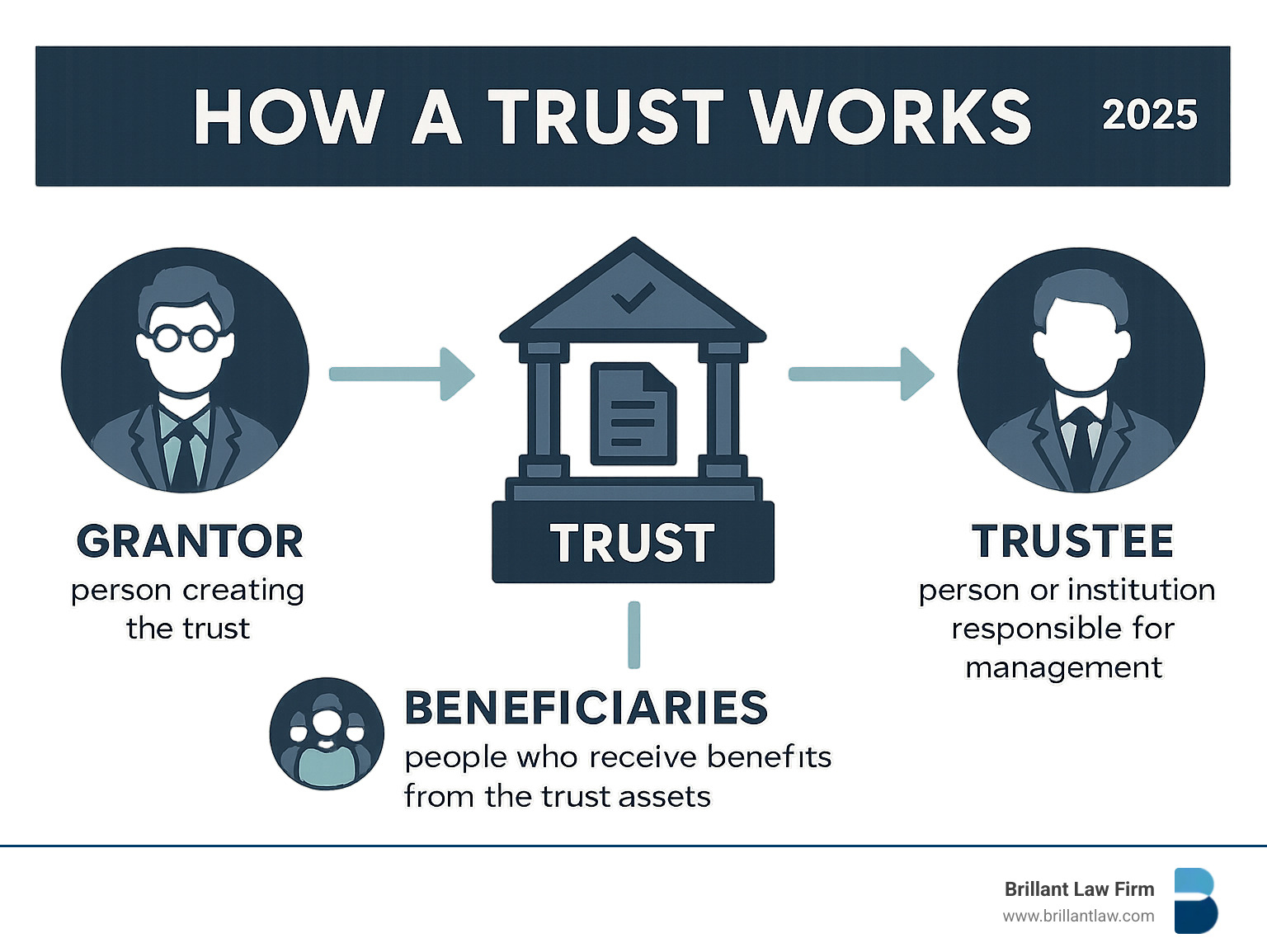
A trust is a legal container that holds assets for the people you choose. Think of it as a private contract that dictates how your wealth is managed during your life and after you’re gone. Every trust has three key players:
- Grantor – You, the creator of the trust. You transfer your assets into it and set the rules for how they should be managed and distributed.
- Trustee – The manager who holds legal title to the assets. This person or institution has a strict fiduciary duty to follow the trust’s instructions and act in the beneficiaries’ best interests. In a revocable living trust, you typically act as your own trustee initially.
- Beneficiaries – The people or entities who benefit from the trust’s assets. This can be you during your lifetime, and then your heirs, a charity, or others after your death.

What Does a Trust Fund Attorney Actually Do?
A trust fund attorney wears many hats, acting as your architect, guide, and defender throughout the estate planning process.
- Strategic advisor – We start by listening. We dig into your financial situation, family dynamics, long-term goals, and greatest concerns to map out a strategy that truly reflects your wishes.
- Estate planner & drafter – We translate those goals into precise, unambiguous, and court-resistant legal documents. Every word matters, and our job is to eliminate loopholes that could lead to future conflict.
- Asset-protection strategist – We analyze your assets and potential risks, then structure the trust to build legal walls around your wealth, shielding it from creditors, lawsuits, and other threats without unnecessarily locking you out.
- California law guide – State-specific rules governing trusts, taxes, and property are complex and change often. We ensure your plan remains compliant and effective under current California law.
Trusts vs. Wills at a Glance
While both are key estate planning tools, trusts and wills serve very different functions. This table highlights the primary distinctions:
| Feature | Trust | Will |
|---|---|---|
| Probate | Avoided | Mandatory |
| Privacy | Private | Public record |
| Incapacity plan | Yes | No |
| Up-front cost | Higher | Lower |
| Court oversight | None | Continuous |
Most Californians pair both documents: a living trust for the bulk of assets and a “pour-over” will to capture anything accidentally left outside the trust. Learn more: Difference Between a Will and a Trust.
The Strategic Advantages: How Trusts Protect Your Assets and Legacy

Key benefits of a well-drafted, fully funded trust:
- Probate avoidance – This is the most celebrated benefit. Assets held in a trust pass to your heirs outside of the court system, avoiding the typical 12- to 18-month delay and significant statutory fees associated with California probate.
- Seamless management if you become incapacitated. If you can no longer manage your affairs, your chosen successor trustee can step in immediately to pay bills and manage assets without needing a court to appoint a conservator, a process that is public, costly, and stressful.
- Privacy – A will becomes a public record once it enters probate. Anyone can see the details of your assets, debts, and who inherited what. A trust is a private document, keeping your family’s financial affairs confidential.
- Creditor & lawsuit shielding through spendthrift and other specialized provisions. Certain types of trusts can protect the inheritance you leave for your beneficiaries from their future creditors, divorces, or lawsuits.
- Tax efficiency – A trust can be structured to maximize federal estate tax exemptions and minimize other taxes, preserving more of your wealth for your intended heirs.
Why Californians Especially Hate Probate
Probate in California is notoriously expensive and slow. Statutory fees for the executor and attorney are calculated on the gross value of the estate, not the net value after debts. This means a $1 million home with an $800,000 mortgage is valued at $1 million for fee calculation purposes. These fees can easily consume 4%–7% of the estate’s value and tie up property for a year or more. If you own real estate in another state, your family faces an additional “ancillary” probate there. Titling all your assets in a living trust sidesteps this entire costly and public process. Details: How to Avoid Probate.
Asset Protection & Tax Minimization
Properly structured irrevocable or hybrid trusts can move assets beyond the reach of personal creditors and, for larger estates, reduce federal transfer taxes. Our team integrates Estate Planning with Trusts and Trust Tax Attorney strategies so your plan works on both legal and tax fronts.
Custom Solutions: A Guide to Different Types of Trust Funds
Like homes, trusts are not one-size-fits-all. An experienced attorney will help you select and customize the right structure for your specific situation. Common options include:
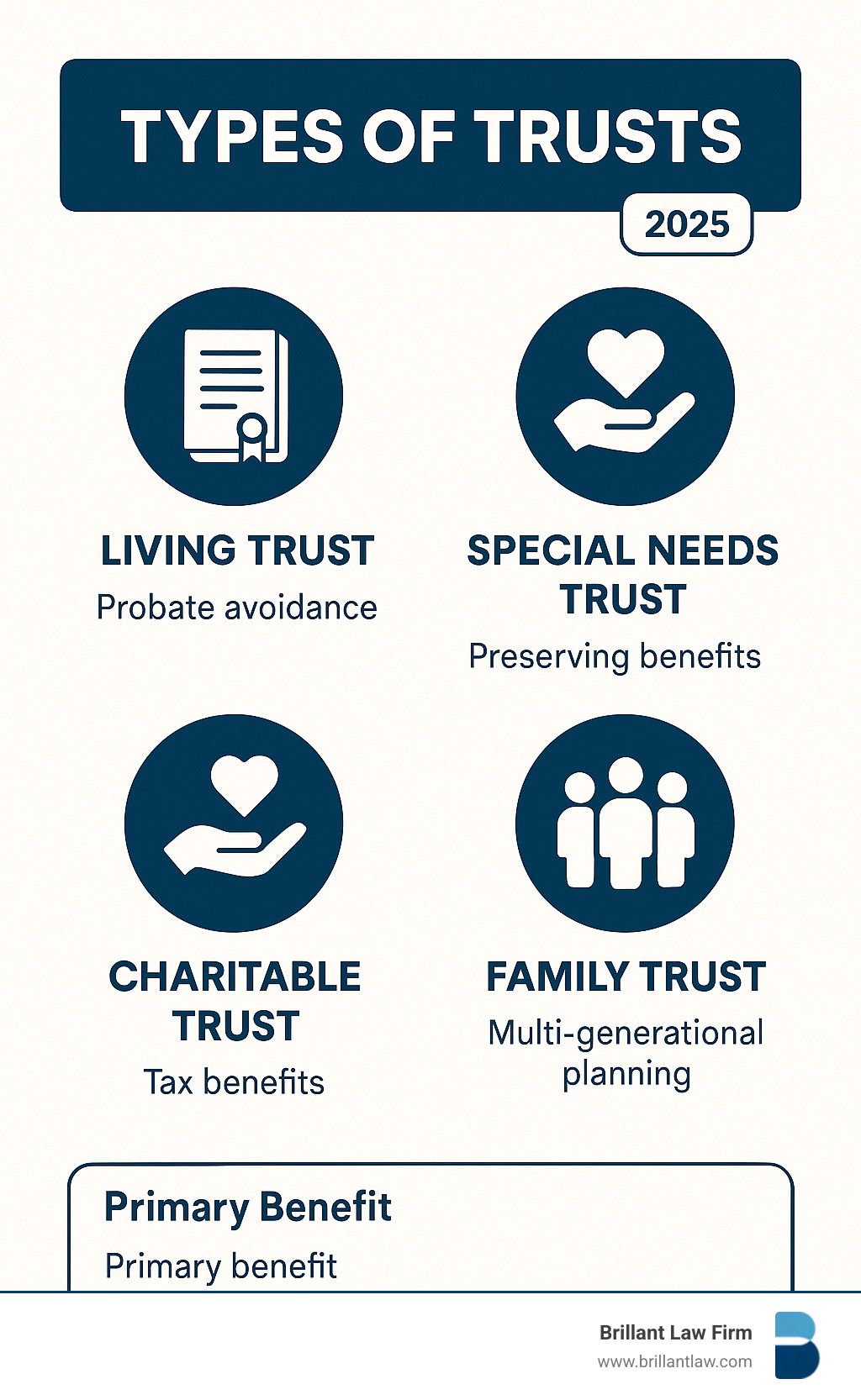
- Revocable living trust: The cornerstone of most California estate plans, this trust holds your assets for your benefit during your lifetime and allows you to amend or revoke it at any time. It provides excellent probate and incapacity protection with full flexibility.
- Irrevocable life-insurance trust (ILIT): This trust is created to own your life insurance policy, effectively removing the death benefit from your taxable estate and providing immediate liquidity to your heirs tax-free.
- Charitable remainder/lead trusts (CRTs/CLTs): These allow you to blend philanthropy with personal financial goals, providing an income stream to you or your heirs, a significant donation to a charity you support, and substantial tax savings.
- Special needs trust (SNT): This is a critical tool for providing for a disabled loved one without disqualifying them from essential government benefits like Supplemental Security Income (SSI) and Medicaid.
- Family or dynasty trust: Designed for multigenerational wealth stewardship, this trust can protect assets for your children, grandchildren, and future generations, often with built-in protections and tax advantages.
- Spendthrift & asset-protection trusts: These trusts contain special provisions that guard a beneficiary’s inheritance from their own poor financial management, creditors, or a future divorce settlement.
- Pet trust: This legally enforceable arrangement guarantees that your beloved pets will receive proper care, including funding for food, shelter, and veterinary services, according to your specific instructions.

Revocable vs. Irrevocable: Flexibility or Fortress?
Revocable = You maintain full control and can easily change or dissolve the trust. This offers no significant creditor or estate tax protection, as the assets are still considered yours.
Irrevocable = You generally cannot change or dissolve the trust without court permission. In exchange for giving up control, you gain powerful shields against creditors and can achieve significant estate-tax savings.
See our in-depth guide: Revocable and Irrevocable Trusts.
Specialized Trusts for Unique Needs
- Family trusts – coordinated plans for multiple generations.
- Special needs trusts – safeguard benefits.
- Living trusts – the backbone of most CA plans.
Beyond the Blueprint: Comprehensive Services a Trust Attorney Provides
Creating the trust is step one. Keeping it healthy is a lifelong project.

Trust Administration & Funding
- Guide successor trustees – explain duties, deadlines, and liabilities.
- Inventory & retitle assets – deeds, accounts, business interests.
- Notify beneficiaries & creditors – meet statutory requirements.
- Settle debts, then distribute – per the trust’s terms.
A trust that isn’t funded correctly forces heirs through probate anyway. Our Trust Administration resources—and answer to Do I Need an Attorney to Settle a Trust?—show why professional help matters.
Litigation & Modification
Even great plans can meet real-world friction. We handle:
- Defense or contest of trusts (capacity, undue influence, execution errors).
- Breach-of-duty claims against rogue trustees.
- Court-approved modifications when tax laws or family needs evolve.
More at: Trust Litigation Lawyer.
Selecting Your Advisor: How to Find and Hire a Qualified Trust Fund Attorney
Your legacy is too important to entrust to just any lawyer. Life events that should trigger a call to a specialist trust attorney include marriage, the birth of a child, a business launch or sale, a major real-estate purchase, or a sudden inheritance.
Will, Trust, and Estate Lawyers Near Me
Key Qualifications for a California Trust Fund Attorney
When vetting potential attorneys, look for these critical qualifications:
- State-bar certified specialist: This is a crucial distinction. A Certified Specialist in Estate Planning, Trust and Probate Law has passed a rigorous exam, demonstrated a high level of experience, fulfilled ongoing education requirements, and received favorable evaluations from other attorneys and judges. It’s the State Bar’s highest mark of expertise.
- Dedicated focus on estates: Avoid general practitioners who “dabble” in estate planning. This area of law has too many nuances and tax implications for a non-specialist.
- 10+ years of relevant experience and a history of positive client reviews.
- Strong grasp of California and federal tax rules: A great legal plan that is a poor tax plan is not a great plan. Your attorney must be fluent in tax law.
- Litigation background for extra protection: An attorney who has experience defending trusts in court knows how to draft documents that are built to withstand challenges.
Links: Attorneys Specializing in Trusts | California Trust Attorney
Understanding Costs & Fee Structures
Most trust attorneys work on a flat-fee basis for creating an estate plan, so you know the full cost upfront. Hourly rates are typically reserved for trust administration, modification, or litigation.
| Service | Typical CA Range |
|---|---|
| Basic revocable-trust package | $3,000–$5,000 flat |
| Complex/multi-trust plan | $6,000–$12,000 flat |
| Hourly work (administration, litigation) | $450–$850 per hour |
Always insist on a clear, written fee agreement that spells out exactly what services are covered to avoid any surprises.
Frequently Asked Questions about Trust Fund Attorneys
How much does it cost to set up a trust in California?
The cost varies based on complexity. Here are some general ranges:
- Simple plan: $3k–$5k. This typically covers a revocable living trust, pour-over will, and powers of attorney for a single person or couple with straightforward assets.
- Complex plan: $6k–$12k. This may involve more advanced tax planning, trusts for children from a previous marriage, or business succession provisions.
- High-net-worth strategies: $12k+. These plans often include multiple irrevocable trusts, sophisticated tax strategies, and asset protection structures.
Factors like asset mix, family dynamics, and tax planning goals all affect the final price. Always insist on a written fee agreement.
Do I still need a will if I have a trust?
Yes, absolutely. A will is still essential for two key reasons. First, it acts as a safety net called a pour-over will, which directs any assets accidentally left out of your trust to be “poured over” into it after your death. Second, and most importantly for parents, a will is the only document where you can legally name guardians for your minor children. A trust cannot perform this function.
Who does a trust attorney represent?
This is a critical ethical question. During the trust creation process, the attorney represents the grantor(s)—the person or people creating the trust. After the grantor’s incapacity or death, the attorney is often hired by the successor trustee to advise them on their duties during the trust administration process. Because the trustee’s duties are to the beneficiaries, it can create potential conflicts. Ethical rules require a clear, written engagement letter so everyone involved understands who the client is and what the scope of the representation is. More: Who Does a Trust Attorney Represent?.
Conclusion: Secure Your Legacy with Expert Guidance
A professionally crafted trust delivers probate avoidance, creditor protection, tax efficiency, and privacy—benefits no boilerplate form can match.
Brillant Law Firm’s bespoke strategies preserve what you’ve built and honor the people you love. Ready to begin? Contact our expert trust and estate attorneys to build your legacy today.


