

Estate Planning Made Easy: Find Your Trust and Will Attorney
Why a Trust and will attorney Matters for Your Family’s Future
Trust and will attorney services are essential for protecting your assets and ensuring your loved ones are cared for according to your wishes. Here’s what you need to know:
Quick Answer: What Does a Trust and Will Attorney Do?
- Drafts legally valid wills and trusts custom to California law
- Helps you avoid probate court and its associated time and costs
- Protects your privacy by keeping estate details confidential
- Minimizes estate taxes through strategic planning
- Ensures proper guardianship for minor children
- Prevents family disputes with clear, enforceable documents
Most Americans are leaving their families vulnerable. According to a recent Gallup poll, less than half of Americans have a will. Even more concerning, a Caring.com survey revealed that 47% of people simply haven’t gotten around to creating one.
This procrastination can lead to devastating consequences. Without proper estate planning documents, California’s intestacy laws will decide who inherits your assets—and those decisions might not align with your wishes at all.
Your family deserves better.
Estate planning doesn’t have to be complicated or intimidating. With the right legal guidance, you can secure your legacy, protect your loved ones, and gain genuine peace of mind. Whether you own a home in Walnut Creek, run a business in San Miguel, or are raising a family in Saranap, a comprehensive estate plan is one of the most important gifts you can give to those you love.
I’m David Brillant, a Certified Specialist in Estate Planning, Trust and Probate Law by the State Bar of California Board of Legal Specialization, with a Masters in Taxation. As a trust and will attorney, I’ve dedicated my career to crafting ironclad estate plans that protect families and preserve legacies across the Bay Area.
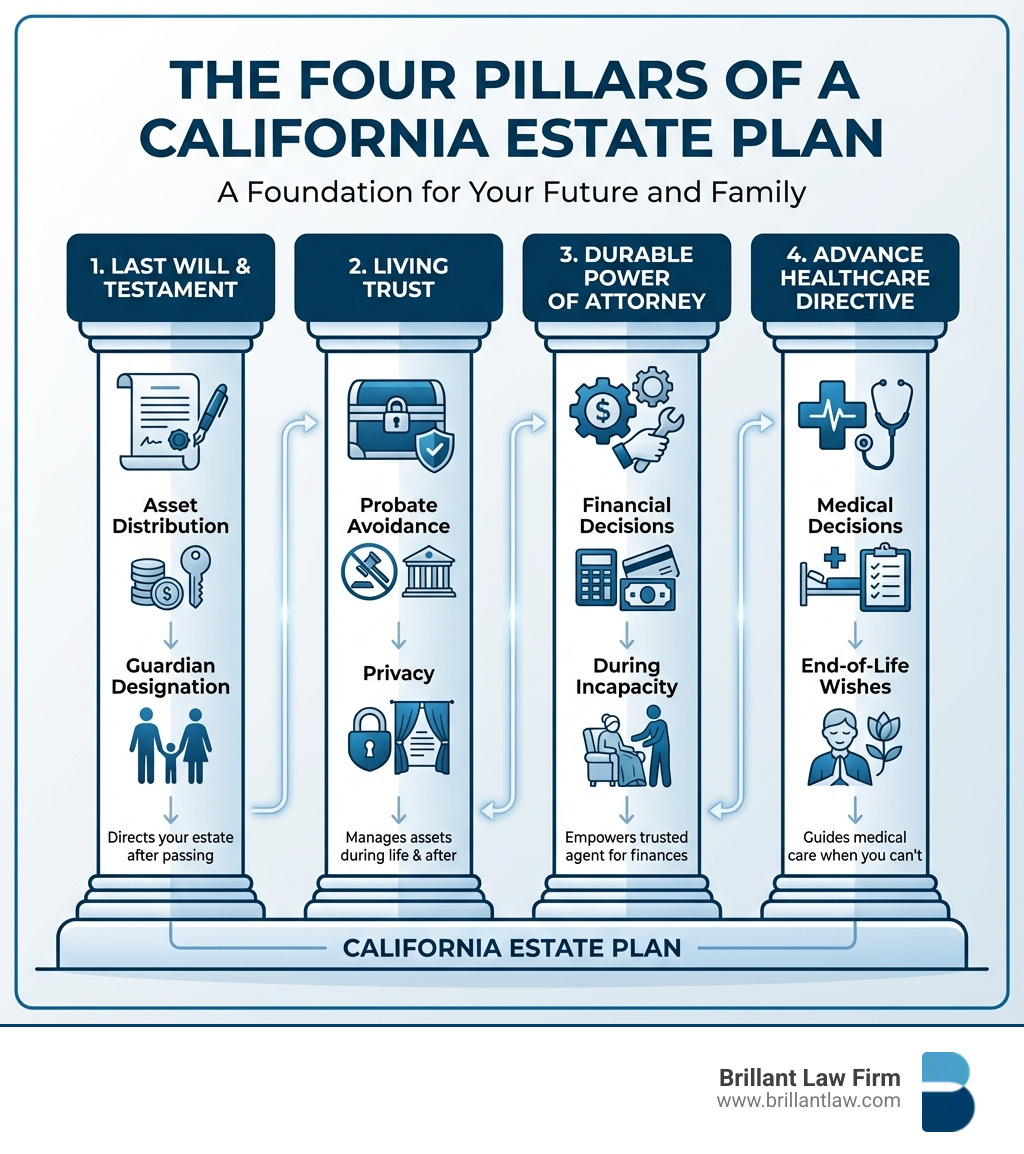
Trust and will attorney terms at a glance:
Wills vs. Trusts: The Cornerstones of Your Estate Plan

When we talk about estate planning, the two most fundamental legal tools that come to mind are wills and trusts. Both are designed to manage the distribution of your assets and provide for your loved ones, but they operate quite differently. Understanding these differences is crucial for building an effective estate plan here in California. It’s not just about deciding who gets what; it’s about making sure your wishes are honored efficiently, privately, and with minimal stress for your family.
The core distinction often lies in how they handle the probate process. A will generally guides assets through probate, while a trust is typically designed to bypass it entirely. We’ll dig into why this matters shortly, but for now, let’s explore each tool individually. For a deeper dive into their differences, you can also explore our page on the Difference Between a Will and a Trust.
What is a Will?
A Last Will and Testament is a legal document that outlines your instructions for distributing your assets after you pass away. It’s a foundational piece of any estate plan, no matter how simple or complex your affairs may be. A will only goes into effect after your death.
In your will, you appoint an “executor” (also known as a personal representative in some states, though in California, “executor” is commonly used) who will be responsible for managing your estate, paying off any debts, and distributing your assets according to your wishes. If you have minor children, a will is the only place where you can legally name guardians for them, ensuring they are cared for by someone you trust.
One important aspect of a will is that once it’s submitted to the court for validation (a process called probate), it becomes a public record. This means anyone can access information about your assets, debts, and beneficiaries. To learn more about how we can help with this, visit our Wills Lawyer page.
What is a Trust?
A trust, on the other hand, is a legal arrangement where you (the “grantor” or “settlor”) transfer assets to a “trustee” (who can be you initially) to hold and manage for the benefit of designated “beneficiaries.” Unlike a will, a trust can go into effect immediately upon its creation, meaning it can manage your assets during your lifetime, in the event of your incapacity, and after your death.
One of the most significant advantages of a trust is that it generally remains a private document. Assets held within a trust typically bypass the public and often lengthy probate process, allowing for quicker and more confidential distribution to your beneficiaries. This privacy is a huge draw for many of our clients in Walnut Creek, Saranap, and beyond. If you’re considering a trust, our Living Trust Attorney services can guide you through the process.
Why You Need an Estate Plan in California
Why is it so important to have a will or trust, especially here in California? Because without one, you’re leaving critical decisions about your future, your assets, and your family in the hands of the state.
If you die without a valid will or trust, your assets will be distributed according to California’s intestacy laws. These laws follow a rigid formula, which may not reflect your true wishes. For instance, if you have a partner but aren’t married, they might receive nothing. Or if you have specific family heirlooms you want to go to a particular person, the state’s rules won’t account for that. This can lead to unintended beneficiaries, significant delays, and unnecessary legal battles among your loved ones.
Beyond asset distribution, a well-crafted estate plan prevents state intervention in other crucial areas. It ensures that your chosen guardians care for your minor children, rather than a court deciding. It also allows you to make provisions for your own care if you become incapacitated, rather than a court appointing a conservator.
For our clients in communities like Walnut Creek, Saranap, San Miguel, and Castle Hill, an estate plan is not just about legal documents; it’s about protecting your specific wishes and ensuring peace of mind for your family. We specialize in Estate Planning California and understand the unique needs of our local residents.
Opening up Advanced Protection with Trusts
Trusts offer a level of protection and control that wills alone cannot. They are powerful tools for managing your wealth, protecting your privacy, and ensuring your legacy endures exactly as you intend. The benefits extend beyond simple asset distribution, providing a robust framework for your financial future and the well-being of your beneficiaries. For a comprehensive look at how trusts can improve your plans, see our page on Estate Planning with Trusts.
How Trusts Help Minimize Estate Taxes and Avoid Probate
One of the most compelling reasons individuals and families in California choose a trust is its ability to minimize estate taxes and avoid the often-dreaded probate process.
Probate in California can be a lengthy, public, and expensive affair. It’s the court-supervised legal process of validating a will, inventorying assets, paying debts and taxes, and finally distributing the remaining assets to heirs. The statutory fees for attorneys and executors in California are based on a percentage of the gross estate value, which can quickly add up. For example, on a $1 million estate, the statutory fees alone could be tens of thousands of dollars, not including court costs, appraisal fees, and other expenses. This process can easily take a year or more, leaving your loved ones in limbo.
Assets held within a properly funded trust, however, bypass probate entirely. This means your beneficiaries can access their inheritance much faster and without the public scrutiny and high costs associated with probate. This is a significant relief for families already grieving. We can help you understand the intricacies of Probate and how to avoid it.
Beyond probate, certain types of trusts can also be instrumental in minimizing estate taxes. While federal estate tax exemptions are quite high, strategic planning can still offer significant advantages, especially for larger estates or in anticipation of future tax law changes. As a trust and will attorney with a Masters in Taxation, we specialize in advanced strategies to optimize your financial outcomes through Estate Tax Planning.
Common Types of Trusts
The world of trusts is diverse, with various types designed to meet specific needs and goals. Understanding these can help you determine which might be suitable for your particular situation.
Here are some common types of trusts we frequently use for our clients in California:
- Revocable Living Trusts: These are the most common type of trust. You, as the grantor, typically serve as the initial trustee and beneficiary, retaining full control over your assets during your lifetime. You can modify or revoke the trust at any time. Its primary benefit is avoiding probate and providing for asset management if you become incapacitated.
- Irrevocable Trusts: Once established, an irrevocable trust generally cannot be changed or revoked. While this means giving up control of the assets placed within it, it offers significant advantages, such as asset protection from creditors and potential reductions in estate taxes.
- Special Needs Trusts (SNTs): These trusts are crucial for families with loved ones who have disabilities. An SNT allows you to provide financial support for a person with special needs without jeopardizing their eligibility for government benefits like Medi-Cal or Supplemental Security Income (SSI).
- Charitable Trusts: For those with philanthropic goals, charitable trusts allow you to support a favorite charity while often receiving tax benefits. These can be structured to provide income to you during your lifetime (Charitable Remainder Trust) or to the charity for a period, with the remainder going to your heirs (Charitable Lead Trust).
For a detailed comparison of options, explore our page on Revocable and Irrevocable Trusts. If you’re looking to establish a trust for your family, we can assist you with Setting Up a Family Trust.
Which Trust Is Right for You?
Choosing the right type of trust depends entirely on your unique circumstances, assets, and goals. As your trust and will attorney, we dig deep into your situation to recommend the most suitable solutions.
- For Homeowners: If you own a home in Walnut Creek, Saranap, or any of our service areas, a revocable living trust is often a popular choice. It ensures your property can be transferred to your beneficiaries without going through probate, saving them significant time and expense.
- For Blended Families: Trusts can be incredibly valuable for blended families, allowing you to provide for a current spouse while ensuring assets eventually pass to children from a previous marriage, preventing potential disputes.
- For Business Owners: If you own a business in San Miguel or Castle Hill, a trust can provide for seamless succession planning, ensuring the continuity of your business without interruption if you become incapacitated or pass away.
- For Achieving Philanthropic Goals: Charitable trusts allow you to leave a lasting legacy to causes you care about while potentially reducing your tax burden.
- For Protecting Beneficiaries with Special Needs: As mentioned, Special Needs Trusts are vital for ensuring continued care and support without impacting government benefits.
Our Family Trust Attorney services are designed to help you steer these complex decisions and craft a trust that perfectly aligns with your vision.
Why You Need a Professional Trust and will attorney

While the idea of handling your estate planning yourself might seem appealing, especially with online templates readily available, the complexity of California law makes professional guidance invaluable. An experienced trust and will attorney doesn’t just fill out forms; we craft a personalized, ironclad strategy that secures your legacy and ensures long-term security for your family. This is why we provide comprehensive Estate Planning Guidance to all our clients.
The Dangers of DIY Estate Planning
The allure of “do-it-yourself” wills and trusts is understandable. Online services promise quick, affordable solutions. However, the potential pitfalls far outweigh the perceived savings.
Generic, one-size-fits-all forms often fail to account for the nuances of California law and your unique personal and financial situation. What might seem like a simple error can render your documents invalid, leading to unintended consequences, probate, and potentially years of legal battles for your loved ones. We’ve seen cases where a small oversight in wording or execution has cost families far more than what a professional trust and will attorney would have charged initially.
These platforms also often miss crucial opportunities for tax savings or fail to address specific scenarios like blended families, special needs beneficiaries, or business succession. Estate planning isn’t just about drafting documents; it’s about strategic foresight and ensuring compliance with state-specific requirements.
How a Local Trust and will attorney Can Help
A local trust and will attorney brings unparalleled expertise and a personalized approach that online services simply cannot match. We understand the intricacies of California law and the unique needs of residents in Walnut Creek, Saranap, San Miguel, and Castle Hill.
Our role involves:
- Drafting Ironclad Legal Documents: We ensure your will and trust are legally valid, clearly reflect your intentions, and are structured to withstand challenges.
- Properly Funding the Trust: A trust is only effective if assets are properly transferred into it, a process called “funding.” We guide you through this critical step to ensure your trust functions as intended.
- Explaining Complex California Laws: We explain complex legal jargon and explain how various laws impact your estate, empowering you to make informed decisions.
- Tailoring Plans for Local Residents: We consider local property laws, community specific needs, and other factors relevant to our Bay Area clients.
- Navigating Complex Situations: Whether you have complex family dynamics, significant assets, or unique philanthropic goals, we craft solutions that address every detail.
As your Estate Planning Walnut Creek CA firm, our commitment is to provide bespoke strategies that protect your interests.
Costs: Attorney vs. Online Services
When considering the cost of estate planning, look beyond the initial price tag. While online services might appear cheaper upfront (sometimes as low as a few hundred dollars), they often come with hidden costs down the line if errors lead to probate or litigation.
| Feature | Dedicated Attorney (Brillant Law Firm) | DIY Online Service |
|---|---|---|
| Cost Structure | Flat fees for comprehensive plans; hourly rates for complex issues. | Subscription fees or one-time document purchases; optional attorney support may be available for an extra fee. |
| Legal Expertise | Personalized advice from a Certified Specialist in California law. | General templates; limited or no personalized legal advice. |
| Customization | Bespoke strategies custom to your unique assets, family, and goals. | Standard forms; limited ability to adapt to complex situations. |
| Probate Avoidance | Strategic planning to ensure assets are properly titled and funded. | Documents may not fully avoid probate if not correctly funded or drafted. |
| Tax Planning | Advanced strategies to minimize estate and other relevant taxes. | Generally basic, limited tax planning advice. |
| Error Protection | Minimizes errors through expert drafting and review. | High risk of errors due to lack of personalization and legal guidance. |
| Peace of Mind | Comprehensive security, knowing your plan is ironclad. | Potential for future complications and stress for beneficiaries. |
In California, hourly rates for an experienced trust and will attorney typically range from $400 to $700 per hour, or a flat fee for a comprehensive plan can range from a few thousand to tens of thousands depending on complexity. While this is an investment, it’s an investment in certainty and protection. The priceless value of expertise and peace of mind, especially when dealing with the complexities of California estate law, far outweighs the potential long-term costs of a flawed DIY plan. Our Estate Attorney Fees are transparent and reflect the meticulous care we put into every client’s plan.
Administering and Maintaining Your Estate Plan
An estate plan isn’t a “set it and forget it” document. It’s a living, breathing set of instructions that needs to evolve with your life, your family, and the ever-changing legal landscape. Regularly reviewing and updating your plan ensures it remains effective and aligned with your current wishes. This ongoing process is part of what we call California Estate Administration.
The Role of an Executor and Trustee
Both executors (for wills) and trustees (for trusts) play critical roles in administering your estate after your passing or during your incapacity. These are significant fiduciary responsibilities that require diligence, integrity, and often, legal guidance.
- Executor: The executor is responsible for carrying out the terms of your will. This includes locating and inventorying your assets, paying final debts and taxes, and ultimately distributing the remaining assets to your beneficiaries. In California, this process is supervised by the probate court.
- Trustee: The trustee manages the assets held within your trust according to its terms. This role can begin during your lifetime if you become incapacitated, or after your death. The trustee’s duties include investing assets prudently, making distributions to beneficiaries as specified, maintaining detailed records, and filing necessary tax returns. Because trusts generally avoid probate, the trustee can often act more quickly and privately than an executor.
Choosing the right individuals for these roles is paramount. They should be trustworthy, organized, and capable of handling financial and legal matters. Our Trust Administration services can assist your chosen fiduciaries in understanding and fulfilling their duties.
Essential Supporting Documents: Power of Attorney and Digital Assets
Beyond wills and trusts, a comprehensive estate plan in California includes other vital documents.
A Power of Attorney (POA) is a legal document that grants a trusted person (your “agent”) the authority to make financial or healthcare decisions on your behalf if you become unable to do so yourself. A Durable Power of Attorney California remains effective even if you become incapacitated, ensuring your finances and medical care are managed seamlessly without court intervention. This is distinct from a will or trust, which primarily deal with asset distribution after death. A healthcare directive (or advance directive) is another crucial document, allowing you to specify your wishes regarding medical treatment.
In our increasingly digital world, digital assets also factor heavily into estate planning. This includes everything from online bank accounts and cryptocurrency to social media profiles, email accounts, and digital photos. Without proper planning, your digital legacy can be lost or become inaccessible to your loved ones. We help you integrate instructions for managing your digital assets into your estate plan, ensuring your online presence and valuable digital property are handled according to your wishes.
Reviewing, Updating, and Contesting Your Plan
Your estate plan should be reviewed and updated regularly. We recommend a review every 3-5 years, or immediately after any significant life event. These events include:
- Marriage or divorce
- Birth or adoption of a child
- Death of a beneficiary or executor/trustee
- Significant changes in your financial situation (e.g., buying a new home, starting a business, receiving a large inheritance)
- Changes in state or federal tax laws
Updating your will typically involves creating a “codicil,” while trust modifications are usually done through “amendments.” Our Changing Your Will page offers more insights into this process.
While the goal of a well-drafted plan is to prevent disputes, wills and trusts can sometimes be contested in California. Grounds for contesting a will or trust typically include:
- Lack of Testamentary Capacity: Arguing that the person making the will or trust was not of sound mind.
- Undue Influence: Alleging that the person was coerced or manipulated into creating the document.
- Fraud: Claiming that the document was created based on false representations.
- Improper Execution: Asserting that the document was not signed or witnessed according to California legal requirements.
If you find yourself in a situation where a will or trust is being contested, our firm offers robust Trust Estate Litigation services to protect your interests.
Frequently Asked Questions about Finding a Trust and will attorney
How do I choose the right trust and will attorney in the Walnut Creek area?
Choosing the right trust and will attorney is a crucial decision. We recommend looking for a certified specialist in estate planning, trust, and probate law by the State Bar of California Board of Legal Specialization. This designation signifies advanced knowledge and experience. Confirm their experience with California trust and probate law, as laws vary significantly by state. Ask about their process for clients in local areas like Saranap and San Miguel, ensuring they understand community-specific nuances. Always verify credentials with the State Bar of California, read client reviews, and schedule a consultation to ensure a good personal and professional fit.
How often should I review my will or trust?
It’s wise to review your estate plan every 3-5 years, or immediately after any major life event. This includes significant changes like a marriage, divorce, the birth or adoption of a child, the death of a family member or beneficiary, or a substantial change in your financial situation. Regular reviews ensure your documents remain current, legally sound, and accurately reflect your wishes and California’s legal landscape.
What is a Power of Attorney and is it part of a trust package?
A Power of Attorney (POA) is a separate legal document that grants a trusted person (your “agent”) the authority to make financial or healthcare decisions on your behalf if you become incapacitated. It is a critical component of a comprehensive Estate plan and is almost always created alongside a will and trust documents. While not technically part of the trust itself, it works in tandem with your will and trust to provide complete protection during your lifetime and after your passing.
Conclusion: Secure Your Legacy in California
As we’ve explored, a comprehensive estate plan, carefully crafted by an experienced trust and will attorney, is an invaluable gift to yourself and your loved ones. It’s about more than just assets; it’s about peace of mind, privacy, and ensuring your legacy endures exactly as you envision. Taking proactive steps today can save your family immeasurable stress, expense, and potential conflict tomorrow.
At Brillant Law Firm, we pride ourselves on our unparalleled expertise, unwavering dedication, and commitment to excellence. We understand the unique needs of families and individuals throughout Walnut Creek, Saranap, San Miguel, and Castle Hill, and we are dedicated to crafting bespoke, ironclad strategies custom specifically for our clients.
Don’t leave your family’s future to chance. Contact our Walnut Creek estate and trust attorneys today to schedule a consultation and begin securing your legacy.


