

Trust and estate planning is your roadmap to securing a legacy that lasts beyond your lifetime. At its core, it involves making thoughtful decisions about how your assets will be managed and distributed, not just after your passing, but also during your lifetime in case of incapacity.
Here’s a quick breakdown of why trust and estate planning is crucial:
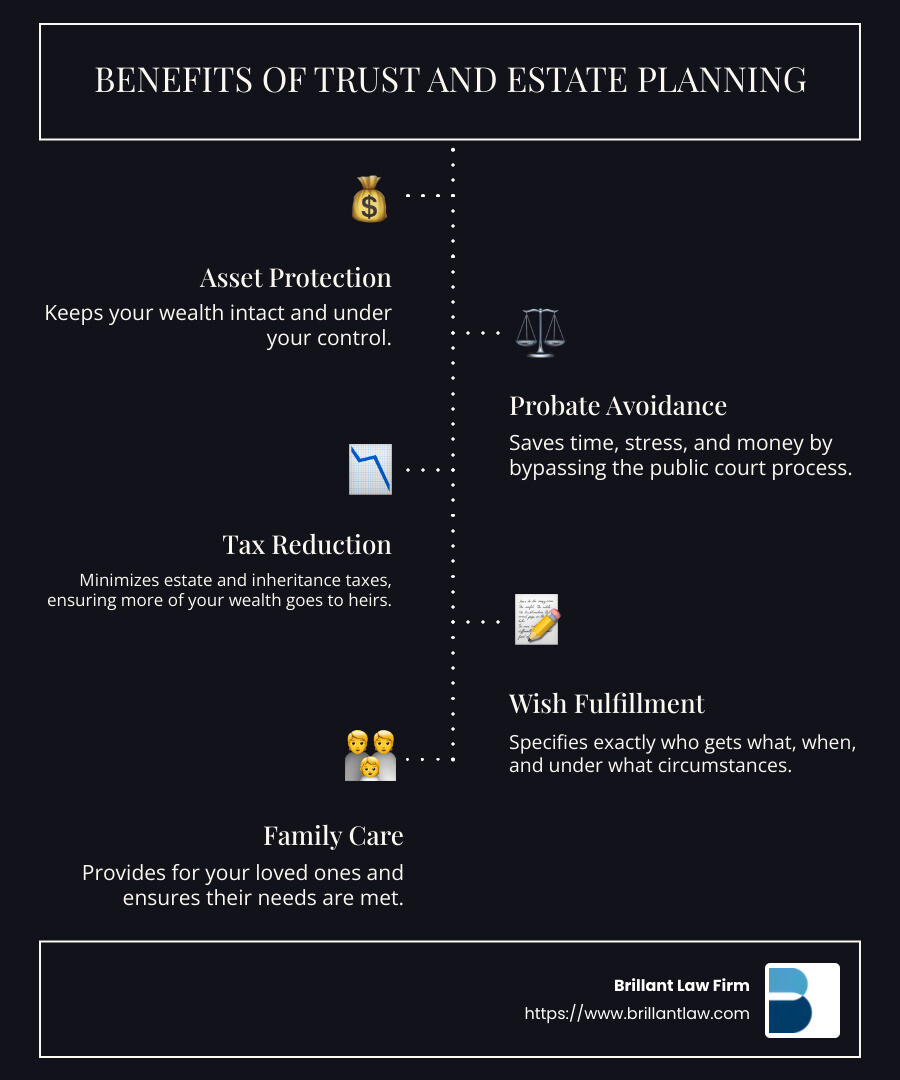
- Protects and manages your assets: Keeps your wealth intact and under your control.
- Avoids probate court: Saves time, stress, and money by bypassing the public court process.
- Reduces taxes: Minimizes estate and inheritance taxes, ensuring more of your wealth goes to heirs.
- Ensures your wishes: Specifies exactly who gets what, when, and under what circumstances.
- Provides for your loved ones: Takes care of family and others who depend on you.
My name is David Brillant. With a specialization in tax, trust, and estate law in California, I bring years of expertise to help clients steer complex estate planning strategies. This introduction sets the stage for understanding how trust and estate planning can serve as a powerful tool for asset management and securing your legacy.
Trust and estate planning vocab explained:
– estate planning attorney
– best trust and estate law firms
– do i need an attorney to settle a trust
Understanding Trusts
When it comes to securing your legacy, understanding the ins and outs of trusts is vital. A trust is a legal entity that allows you to manage and distribute your assets according to your wishes. This tool is part of a fiduciary arrangement where a trustee holds and manages assets for the benefit of your chosen beneficiaries.
Types of Trusts
Trusts come in various forms, each designed to meet specific needs and goals. Let’s explore the main types:
Revocable Trusts
Revocable trusts, often referred to as living trusts, allow you to maintain control over your assets during your lifetime. You can modify or revoke them as your circumstances change. They are a popular choice for those who want flexibility in their estate planning.Irrevocable Trusts
Unlike revocable trusts, irrevocable trusts cannot be altered once established. These trusts offer significant tax benefits because the assets are no longer considered part of your estate, potentially reducing estate taxes.Living Trusts
A living trust is established during your lifetime and can be either revocable or irrevocable. It provides a seamless transition of asset management in the event of incapacity, ensuring your wealth is handled according to your instructions.Testamentary Trusts
Created through a will, testamentary trusts come into effect upon your passing. They are often used to manage assets for minors or dependents, ensuring they are cared for as intended.
Benefits of Trusts
Trusts offer several advantages that make them a cornerstone of trust and estate planning:
Asset Protection
Trusts can shield your assets from creditors and lawsuits, safeguarding your wealth for your heirs.Probate Avoidance
By bypassing the probate process, trusts save time and money, allowing beneficiaries to access assets more quickly and privately.Tax Benefits
Certain trusts, like irrevocable trusts, can reduce or eliminate estate taxes, preserving more wealth for your beneficiaries.Privacy
Unlike wills, which become public record, trusts offer a level of privacy, keeping your estate matters confidential.
Trusts are not just for the wealthy. They are versatile tools that can be custom to fit estates of all sizes, ensuring your wishes are honored and your legacy is secure. With the right trust in place, you can have peace of mind knowing your assets are protected and your loved ones are provided for.
Next, we’ll dig into the essentials of estate planning, including key documents and tax considerations that are crucial for a comprehensive plan.
Estate Planning Essentials
When it comes to trust and estate planning, having the right documents in place is crucial. These documents ensure your wishes are honored and your assets are managed according to your plan. Let’s explore the essentials:
Key Documents
Wills
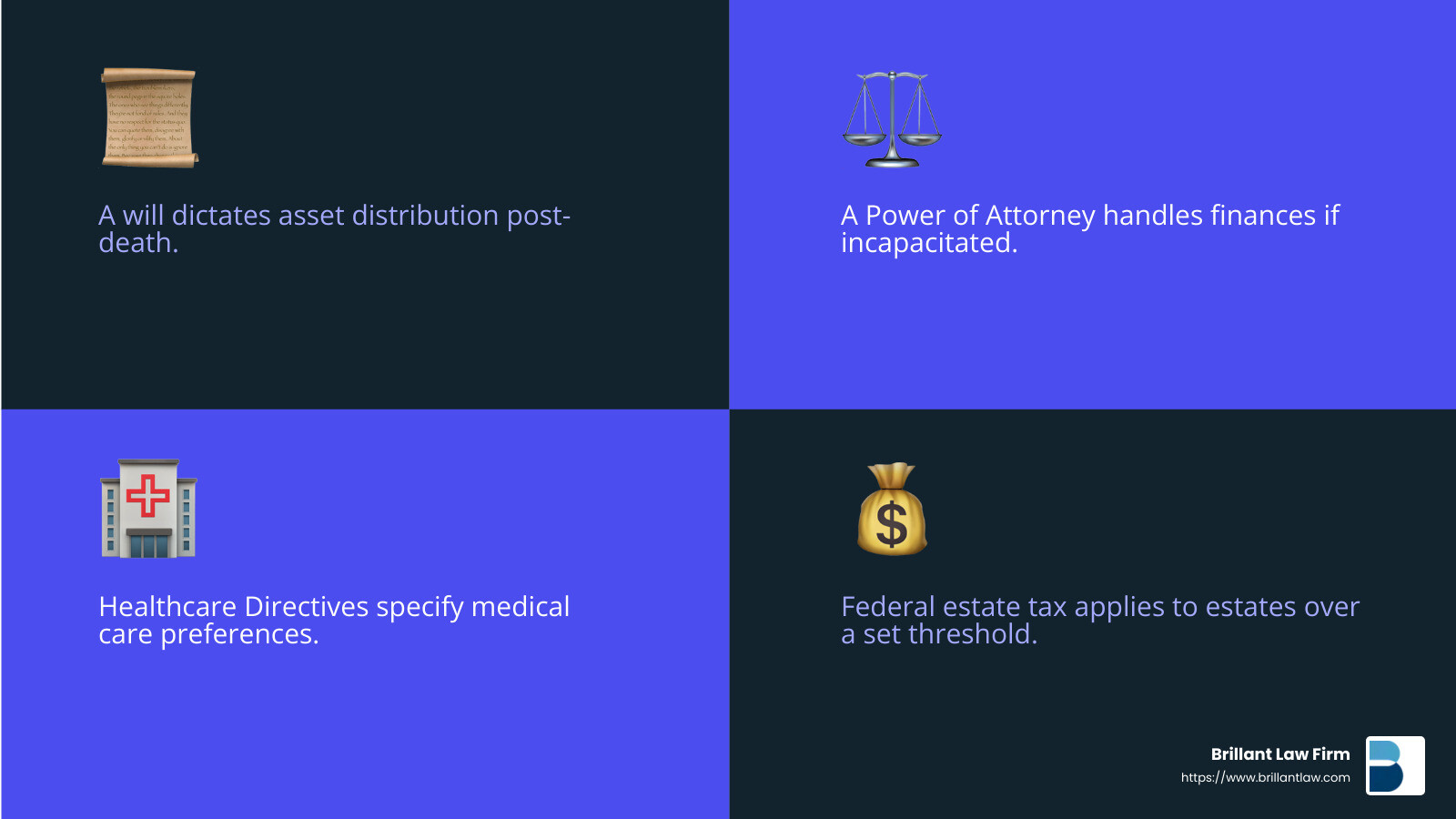
A will is a foundational document in estate planning. It outlines how your assets will be distributed after your death. In California, creating a valid will requires you to be at least 18 years old and of sound mind. The will must be in writing and signed by you and two witnesses who are not beneficiaries.Power of Attorney (POA)
This document allows you to appoint someone to make financial decisions on your behalf if you become incapacitated. It’s a key part of planning for unexpected events.Healthcare Directives
Also known as advance healthcare directives, these documents specify your wishes for medical care if you cannot communicate them yourself. This includes decisions about life support and other critical care choices.Trust Agreements
Trust agreements outline how the assets in a trust are to be managed and distributed. They specify the roles of the trustee and beneficiaries and can be custom to meet your specific goals.Beneficiary Designations
These are critical for accounts like life insurance and retirement plans. They ensure that your assets go directly to your chosen beneficiaries, bypassing probate.Living Wills
A type of healthcare directive, a living will states your preferences for end-of-life care. It provides guidance to healthcare providers and loved ones during difficult times.
Estate Tax Considerations
Understanding taxes is vital in trust and estate planning. Here’s what you need to know about taxes that could affect your estate:
Federal Estate Tax
The federal estate tax applies to estates exceeding a certain threshold. As of now, the exemption is quite high, but it’s important to stay informed as these laws can change. Proper planning can help minimize the impact of this tax.Gift Tax
The gift tax applies to transfers of wealth during your lifetime. You can give up to a certain amount each year without incurring taxes. This can be a strategic way to reduce your taxable estate.Tax Planning
Effective tax planning can preserve more of your estate for your beneficiaries. This might include setting up trusts that offer tax advantages or making charitable donations to reduce taxable income.
With these documents and tax considerations in place, you are well on your way to securing your legacy. Next, we’ll explore how Brillant Law Firm can help you craft a bespoke estate plan custom to your unique needs and circumstances.
Trust and Estate Planning with Brillant Law Firm
At Brillant Law Firm, we understand that trust and estate planning is not a one-size-fits-all process. Our bespoke strategies are designed to meet the unique needs of each client, ensuring that your legacy is protected and your wishes are honored.
Bespoke Strategies
Every estate is different, and so are the goals and concerns of those planning them. Whether it’s protecting assets, minimizing taxes, or ensuring smooth wealth distribution, we craft personalized plans that address your specific objectives. Our team takes the time to understand your situation, offering solutions that align with your values and long-term aspirations.
Client-Focused Approach
Our client-focused approach means that you are at the center of everything we do. We believe in clear communication, transparency, and collaboration. From the initial consultation to the execution of your estate plan, we keep you informed and involved every step of the way. We also provide ongoing support, ensuring your plan evolves as your life circumstances change.
California Expertise
Operating exclusively in California, we have extensive knowledge of the state’s laws and regulations regarding trust and estate planning. This local expertise allows us to steer the complexities of California estate law with confidence. We stay up-to-date with any legal changes that might impact your estate, ensuring your plan remains compliant and effective.
Our team at Brillant Law Firm is dedicated to providing you with the resources and guidance needed to secure your legacy.
Next, we’ll answer some common questions about trust and estate planning, helping you understand the key differences between a trust and an estate plan, and why a trust might be beneficial for your estate.
Frequently Asked Questions about Trust and Estate Planning
What is the difference between a trust and an estate plan?
A trust is a legal entity that holds and manages assets for beneficiaries. It involves appointing a trustee to oversee the assets according to your wishes. Trusts can be custom to various needs, like avoiding probate or providing for a special needs child.
An estate plan, on the other hand, is a broader strategy that includes all the legal documents and decisions about managing your assets and healthcare if you’re unable to. It often includes a will, trusts, power of attorney, and healthcare directives.
Think of a trust as one tool in the toolbox of estate planning. While a trust focuses on asset management and distribution, an estate plan covers a wide range of end-of-life considerations, ensuring your wishes are respected in all areas.
Why use a trust for estate planning?
Using a trust in your estate planning can offer several benefits:
Asset Protection: Trusts can safeguard your assets from creditors and legal claims, ensuring they reach your beneficiaries as intended.
Probate Avoidance: Assets in a trust typically bypass the probate process, allowing for quicker and more private distribution to beneficiaries.
Wealth Distribution: Trusts enable you to specify how and when your assets are distributed. You can set conditions, like releasing funds when a beneficiary reaches a certain age or achieves a milestone.
These features make trusts a powerful component of a comprehensive estate plan, providing control and peace of mind.
What are the disadvantages of a trust?
While trusts offer many advantages, they also come with some challenges:
Competency Requirements: Setting up a trust requires legal competency and a clear understanding of how you want your assets managed. This can be complex and may require legal assistance.
Trustee Control: When you create a trust, you entrust asset management to a trustee. This means relinquishing some control over your assets. Choosing a reliable trustee is crucial to ensure your wishes are followed.
Costs and Maintenance: Establishing and maintaining a trust can be more expensive than simply writing a will. There are costs involved in setting up the trust and potentially ongoing fees if you use a professional trustee.
Understanding these disadvantages is essential in deciding if a trust is the right choice for your estate planning needs.
Conclusion
At Brillant Law Firm, we understand that trust and estate planning is about more than just legal documents—it’s about securing your legacy and ensuring peace of mind for you and your loved ones. Our approach is bespoke, ensuring that every strategy is custom to meet your unique needs and goals.
With our expert guidance, you can steer the complexities of trusts and estate planning with confidence. Our team is dedicated to providing the highest level of service, leveraging our extensive expertise in California estate law to craft ironclad plans that protect your assets and honor your wishes.
By choosing Brillant Law Firm, you’re not just planning for the future—you’re taking proactive steps to preserve your family’s legacy. We’ll work closely with you to understand your objectives, whether it’s avoiding probate, ensuring tax efficiency, or protecting your assets from unforeseen challenges.
Secure your legacy with a partner who is committed to excellence and client-focused solutions. Find how our custom strategies can benefit you by visiting our Trusts and Estates page.
Let us help you take control of your estate planning journey, ensuring that your legacy is protected for generations to come.


