

Trust Administrator: The 2025 Essential Guide
Understanding the Trust Administrator’s Essential Role in Estate Planning
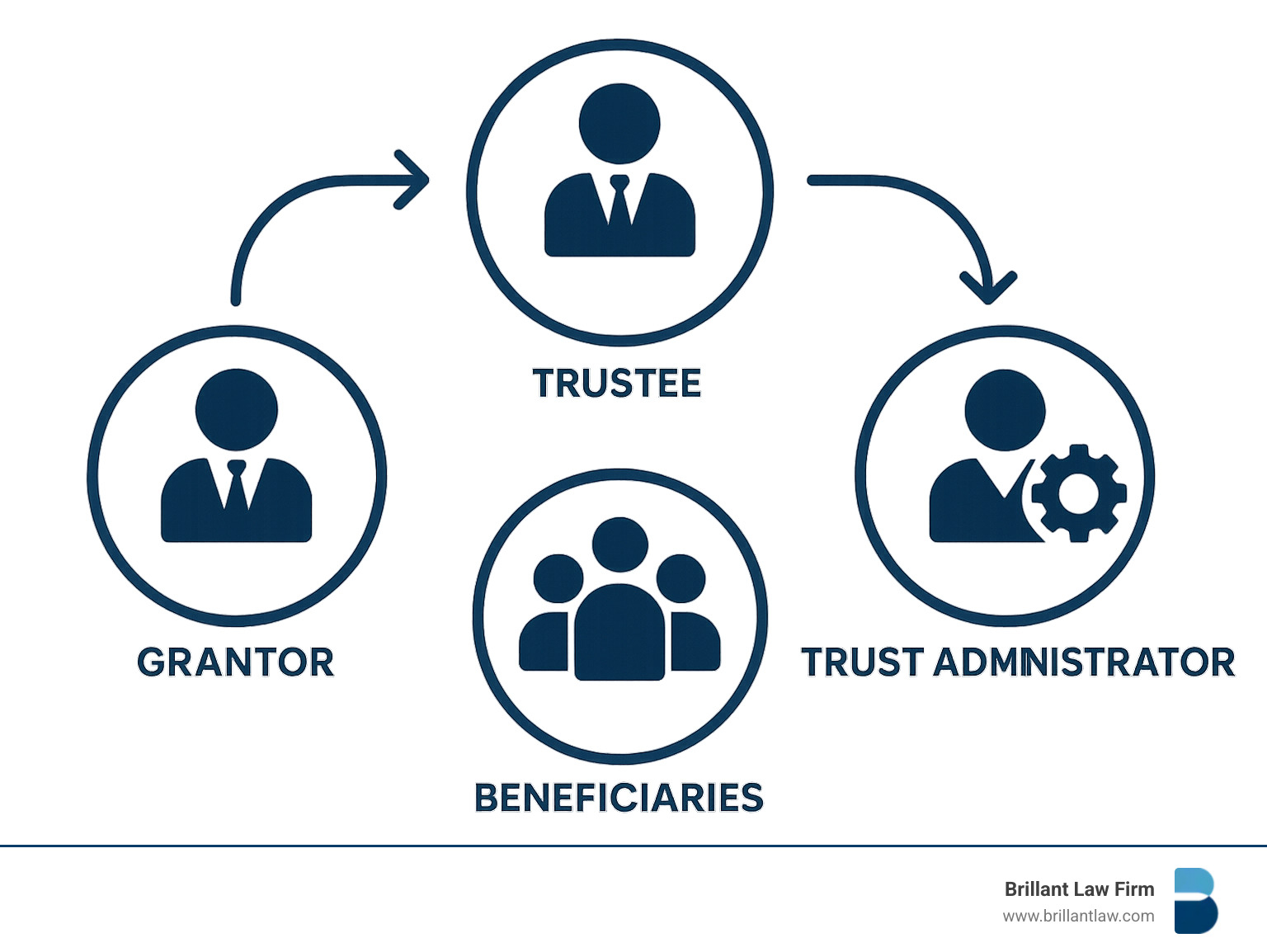
A Trust Administrator is a professional who manages the day-to-day operations of a trust, ensuring compliance with legal requirements and the grantor’s wishes while protecting beneficiary interests.
Key responsibilities of a Trust Administrator include:
- Asset Management – Safeguarding and managing trust property
- Beneficiary Communication – Keeping beneficiaries informed about trust status and distributions
- Tax Compliance – Filing required tax returns and maintaining accurate records
- Record-Keeping – Documenting all trust transactions and decisions
- Distribution Management – Processing payments to beneficiaries according to trust terms
- Legal Compliance – Ensuring all actions follow California trust law and the trust document
Many families underestimate the complexity of ongoing trust management. A trust requires careful oversight, detailed record-keeping, and expertise in both legal and financial matters to function correctly.
The role of a trust administrator has become increasingly important as trust structures grow more sophisticated and regulatory requirements become more stringent. Whether supporting a family trustee or serving as the primary administrator, these professionals are the operational backbone that keeps trusts functioning smoothly.
I’m David Brillant, a Certified Specialist in Estate Planning, Trust and Probate Law with a Masters in Taxation. In my experience helping California families with trust administration, I’ve seen how a skilled Trust Administrator prevents family conflict and legal complications, ensuring a trust fulfills its intended purpose.
What is the Primary Role of a Trust Administrator?
The primary role of a Trust Administrator is to serve as the guardian of the grantor’s intentions. Every trust document outlines what the grantor wanted to accomplish and how assets should be managed. The administrator’s job is to ensure that plan unfolds exactly as written.
This role requires both technical expertise and genuine care. One moment, an administrator might be reviewing investment performance; the next, they could be fielding a call from a beneficiary about a distribution. They must handle intricate details while keeping the big picture in focus.
A Trust Administrator is valuable for ensuring the smooth operation of the trust by managing everything from tax filings to beneficiary communications. They provide legal compliance expertise that protects everyone involved from costly mistakes.
The administrator also plays a crucial supporting role to the trustee. While the trustee holds legal title to trust assets and makes major decisions, the administrator handles the day-to-day operations. This partnership is especially important in California, where trust laws are complex. For families, having a skilled professional in this role can mean the difference between a trust that fulfills its purpose and one that becomes a source of stress. You can learn more about these essential functions at What does a Trust Administrator do?.
The Core Responsibilities of a Trust Administrator
The work of a Trust Administrator touches every aspect of trust management, requiring both precision and care.
Asset management is foundational. It involves actively protecting and nurturing trust assets by monitoring investments, coordinating property maintenance, and ensuring proper insurance.
Beneficiary communication is one of the most human aspects of the role. A skilled administrator provides clear updates, answers questions patiently, and maintains the transparency that builds trust among family members.
Tax compliance is critical. Trust taxation involves intricate, changing rules, and mistakes can be expensive. The administrator ensures all returns are filed correctly and on time, maintaining detailed records to support every tax position.
Record-keeping is paramount. Every decision, transaction, and communication needs proper documentation to protect the trust, the beneficiaries, and the administrator. These records form the basis of accounting reports that keep everyone informed.
Distribution of assets to beneficiaries requires careful attention to the trust’s specific terms. The administrator ensures each distribution, whether mandatory or discretionary, follows the grantor’s wishes precisely.
When debt settlement is necessary, the administrator handles the process of identifying creditors, negotiating payments, and protecting the trust’s assets.
For those interested in the financial intricacies of this work, our guide on Trust Administration Accounting provides deeper insights.
Daily Duties in Trust Administration
The daily rhythm of trust administration involves a constant flow of varied tasks.
Responding to inquiries from beneficiaries, attorneys, and financial advisors about trust terms, updates, and distributions is a key daily task requiring excellent communication.
Processing distributions requires careful verification of trust terms and beneficiary eligibility. Each transaction must be handled with precision.
Paying trust expenses, such as property taxes or investment fees, keeps the trust’s operations running. Each payment requires proper authorization and documentation.
Maintaining financial records is a continuous process. The administrator updates the trust’s records as transactions occur to ensure accuracy.
Preparing reports for trustees and beneficiaries involves compiling financial information into clear, understandable formats to provide transparency.
Coordinating with legal and financial advisors ensures the trust benefits from professional expertise when needed, which may involve scheduling meetings or preparing documents.
The complexity of these duties highlights why many families work with experienced professionals. For practical guidance, explore our resource on How to manage a trust.
Trustee vs. Trust Administrator: A Critical Distinction

Clients often ask about the difference between a trustee and a Trust Administrator. While closely related, these roles serve distinct functions in trust management.
A simple analogy is a restaurant: the trustee is the owner making major strategic decisions, while the Trust Administrator is the manager handling daily operations to ensure everything runs smoothly.
The trustee holds legal title to trust assets and has ultimate decision-making authority. They interpret the trust document and bear full fiduciary responsibility. The Trust Administrator, in contrast, focuses on the administrative function—managing paperwork, coordinating communications, and executing the detailed tasks that support the trustee.
This distinction is critical regarding liability differences. The trustee can be held personally liable for their decisions. The administrator’s liability is typically limited to the proper execution of their assigned administrative tasks. The scope of duties also differs: the trustee has a broad, strategic focus, while the administrator’s is narrower and operational. For guidance on this crucial selection process, explore our insights on Choosing the right trustee: a decision of paramount importance.
Key Differences Explained
Examining their key distinctions side-by-side makes the roles clearer:
| Feature | Trustee | Trust Administrator |
|---|---|---|
| Legal Title | Holds legal title to trust assets. | Does not hold legal title to trust assets. |
| Primary Role | Oversees the trust, makes discretionary decisions, interprets trust document, acts in beneficiaries’ best interest. | Provides administrative support, manages day-to-day operations, handles paperwork, coordinates with professionals. |
| Decision-Making | Has broad discretionary powers and makes final decisions regarding asset management and distributions. | Executes specific tasks as directed by the trustee or as outlined in administrative procedures; limited discretionary power. |
| Fiduciary Duty | Has a direct, overarching fiduciary duty to the beneficiaries, personally liable for actions. | May have a fiduciary duty in an advisory or supportive capacity, but generally not personally liable for the trust’s overall management unless negligence or fraud is committed. |
| Scope of Duties | Broader, strategic, long-term focus; ensures trust purposes are met. | Narrower, tactical, day-to-day focus; ensures smooth execution of administrative tasks and compliance. |
| Appointment | Appointed by the grantor in the trust document or by court. | Hired or appointed by the trustee or a professional firm to assist the trustee. |
In my experience, the most successful trust arrangements involve both roles working in harmony. The fiduciary liability distinction is particularly important for families in California. A collaborative approach—combining the trustee’s decision-making power with a Trust Administrator’s operational expertise—often provides the best of both worlds. As this insightful analysis explains: Trustee vs. Trust Administrator: They sound similar, but their roles are quite different.
Understanding these distinctions helps families make informed decisions about structuring their trust management for long-term success.
The Legal and Fiduciary Duties of a Trust Administrator

While a Trust Administrator may not carry the same legal liability as a trustee, their role comes with serious legal and fiduciary responsibilities. Their duties are rooted in California’s strict fiduciary standards, requiring them to act with complete honesty, loyalty, and good faith.
The fiduciary standard of care requires administrators to manage trust affairs with the diligence they would use for their own important matters. They must exercise prudent judgment in all their tasks.
Loyalty is non-negotiable. A Trust Administrator cannot engage in self-dealing or use their position for personal gain. Any potential conflict of interest must be disclosed immediately to the trustee and beneficiaries.
The duty of impartiality can be challenging amid family dynamics. Every beneficiary deserves fair treatment, regardless of their relationship with the administrator.
Confidentiality is another cornerstone. The financial and personal information an administrator handles must be protected with the utmost care as a legal requirement.
Most importantly, the Trust Administrator must follow the trust document to the letter while ensuring compliance with California law. This requires careful interpretation of the grantor’s wishes and adherence to state regulations. For detailed guidance on these complex financial obligations, our Fiduciary Accounting and Trust Administration Guide offers comprehensive insights.
Upholding the Grantor’s Wishes and Protecting Beneficiaries
At the heart of a Trust Administrator’s work is honoring the grantor’s intent while protecting beneficiary interests. This dual obligation requires both attention to detail and empathy.
Interpreting trust terms accurately is essential. A skilled administrator works with the trustee and legal counsel to ensure the grantor’s intentions are implemented correctly.
Acting in beneficiaries’ best interests means considering the long-term impact of administrative actions and anticipating potential problems.
Avoiding conflicts of interest requires constant vigilance. Professional administrators maintain strict boundaries to ensure their judgment remains uncompromised.
Transparent communication is where many trust administrations succeed or fail. As one expert noted, Reporting is all about keeping the beneficiaries in the loop. Regular updates and clear financial statements build trust and prevent misunderstandings. This transparency is a legal requirement under California law.
Understanding the broader legal framework is essential. California’s trust laws are comprehensive and evolving, which is why staying current with California Estate and Trust Law is crucial for anyone involved in trust management.
Choosing the Right Professional and Understanding the Costs

Selecting the right Trust Administrator is a critical decision for your family’s financial future. The ideal professional combines several key skills.
Expertise in trust law is the foundation. They must understand California’s complex trust regulations to avoid costly mistakes.
Financial acumen is equally crucial. Your administrator should be comfortable navigating investment portfolios, understanding tax implications, and stewarding your family’s legacy.
Exceptional communication skills are vital. The administrator must clearly explain complex financial concepts, listen to concerns, and diplomatically manage relationships with all beneficiaries.
Attention to detail cannot be overstated. The best administrators are meticulous, treating every document and transaction with the care it deserves.
Above all, integrity must be non-negotiable. This person will have access to sensitive family and financial information and must be completely trustworthy.
If you’re wondering whether professional legal guidance is necessary, our article Do I need an attorney to settle a trust can help clarify your options.
Typical Fees for Trust Administration Services
Trust Administrator fees in California reflect the complexity of state laws and the high cost of doing business. While the fees may seem substantial, professional administration often saves money by preventing costly errors.
Most administrators use one of three fee structures. Hourly rates are common, and in California, you can expect to pay between $250 to $500+ per hour depending on the administrator’s experience and trust complexity.
Percentage-based fees offer predictability for larger trusts, typically ranging from 1% to 2% of the trust’s annual asset value. Many use a sliding scale, with the percentage decreasing as asset values increase. This aligns the administrator’s compensation with the trust’s performance.
Flat fees are less common for ongoing administration but may be used for specific projects like initial trust setup or reporting.
Several factors influence these costs. Trust complexity is the biggest factor; a trust with diverse assets like businesses or real estate costs more to administer than one with simple liquid assets. The trust’s size and the level of required expertise also affect pricing.
We believe in complete transparency about our fee structures. For detailed information, explore our guides on the Cost of Administering a Trust and Attorney Fees for Trust Administration.
Frequently Asked Questions about Trust Administration
Over my years of practice, I’ve noticed the same questions come up time and again from families navigating this process. Here are answers to the most common concerns.
How does a trust administrator ensure legal compliance?
A Trust Administrator ensures legal compliance through a meticulous, step-by-step process. They start by following the trust document—the legal roadmap—precisely. They must also stay current with California’s probate and trust codes, which dictate how trusts are managed and how beneficiaries are informed.
Tax compliance is another critical piece. The administrator ensures all required federal and state tax returns are filed accurately and on time, maintaining detailed records to support every filing. This comprehensive documentation provides the transparency and accountability that beneficiaries deserve and courts may require. When complex legal issues arise, a skilled administrator knows when to collaborate with a Trust Law Attorney to ensure all actions are legally sound.
What is the career path for a trust administrator?
The journey to becoming a Trust Administrator typically starts with a bachelor’s degree in a related field like finance or business. Many begin in entry-level roles at law firms or trust companies, gaining hands-on experience as paralegals or administrative assistants.
As they gain experience, professionals often pursue certifications like the Certified Trust and Fiduciary Advisor (CTFA) to improve their expertise. Career advancement can lead from a junior administrator to a senior Trust Administrator, trust officer, or department manager. The earning potential in California is competitive, reflecting the specialized skills required and the complexity of the trusts managed here. The field shows strong job growth in California, with robust demand for skilled professionals who can steer the state’s complex trust administration landscape.
Can a beneficiary also be a trust administrator?
While California law allows a beneficiary to serve as a Trust Administrator or trustee, I generally advise against it due to the high potential for conflicts of interest. When a beneficiary is also an administrator, their personal financial interests can clash with their duty to act impartially for all beneficiaries.
These conflicts can create serious problems. Other beneficiaries may question whether decisions are fair, leading to damaged family relationships and costly disputes. Even if the beneficiary-administrator acts with complete integrity, the appearance of impropriety can sow seeds of mistrust.
To prevent these issues, it is usually wise to appoint a neutral, professional third party as the Trust Administrator. A professional brings objectivity, expertise, and the ability to steer complex situations without personal bias. This approach helps preserve family harmony while ensuring the grantor’s wishes are carried out as intended.
Conclusion
As we’ve seen, the Trust Administrator is an essential cornerstone of effective estate planning. These dedicated professionals transform the intentions outlined in trust documents into smoothly functioning realities, ensuring a grantor’s legacy is honored and protected.
The Trust Administrator’s role is multifaceted, involving meticulous asset oversight, strict tax compliance, and compassionate beneficiary communication. They work hand-in-hand with trustees, handling the intricate day-to-day operations and upholding unwavering fiduciary duties of loyalty, prudence, and impartiality.
When selecting a Trust Administrator, qualities like legal expertise, financial acumen, communication skills, and uncompromising integrity are essential. These attributes determine whether your trust will thrive.
The investment in professional trust administration provides invaluable peace of mind and protection. In California’s complex legal landscape, this expertise is not just a benefit—it’s a necessity.
At Brillant Law Firm, we understand that your trust represents your care for the people you love most. Our commitment to unparalleled expertise, unwavering dedication, and excellence means we don’t just manage your trust—we safeguard your legacy with the respect and diligence it deserves.
For expert guidance on managing your trust with the care your family deserves, we invite you to explore our comprehensive Trust Administration services.


