

Trust administration accounting is critical for those managing trusts, ensuring the responsible and transparent handling of assets. At its core, this process involves adhering to fiduciary responsibility, which requires trustees to act in the best interests of the beneficiaries. Here’s a quick look at why it matters:
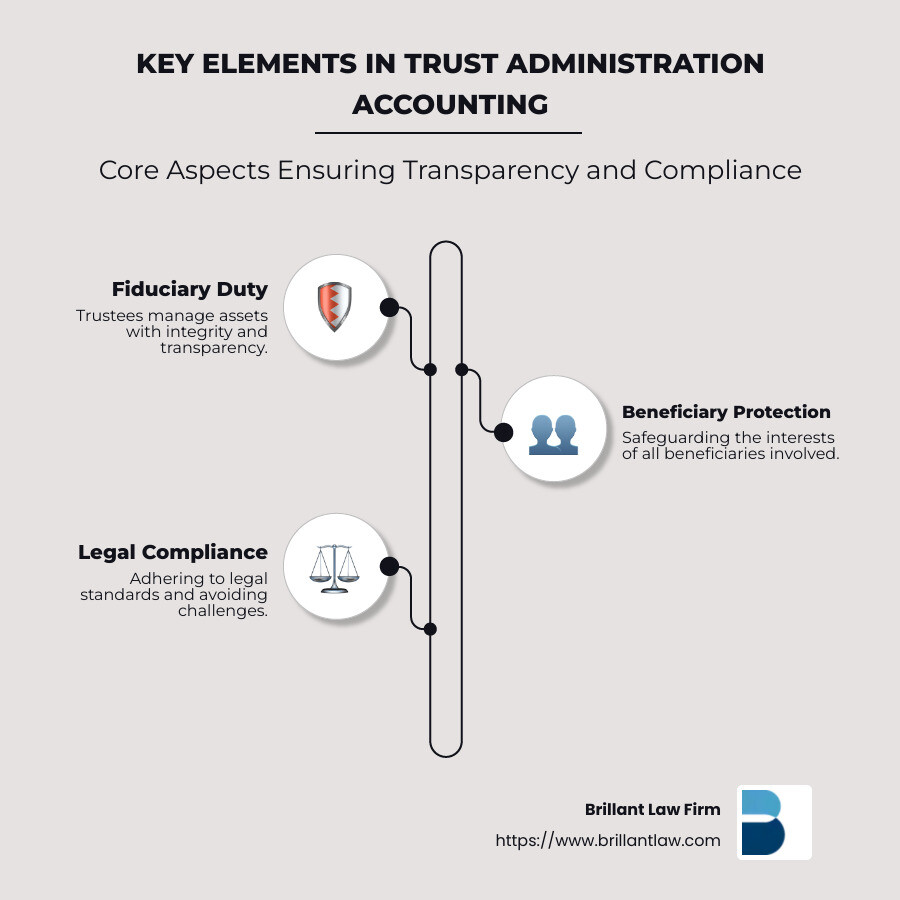
- Fiduciary Duty: Trustees must manage assets with integrity and transparency.
- Protect Beneficiaries: Good trust administration safeguards the interests of beneficiaries.
- Legal Compliance: Proper practices help avoid legal challenges and ensure adherence to California law.
In trust administration, it’s crucial for trustees to maintain a fiduciary relationship by managing assets ethically and according to the grantor’s wishes. Understanding and implementing effective trust administration accounting ensures that all parties involved—especially beneficiaries—are protected and reassured.
As David Brillant, a seasoned expert in trust administration accounting, I bring nuanced insights from experience in the field. My focus is always on solving complex problems and offering custom strategies that ensure compliance and instill confidence in the processes of trust administration accounting.
Understanding Trust Administration Accounting
When it comes to trust administration accounting, it’s all about ensuring that every dollar is accounted for and every action is transparent. This process is essential for trustees who are responsible for managing someone else’s assets. Let’s break down the key components:
Trust Accounting
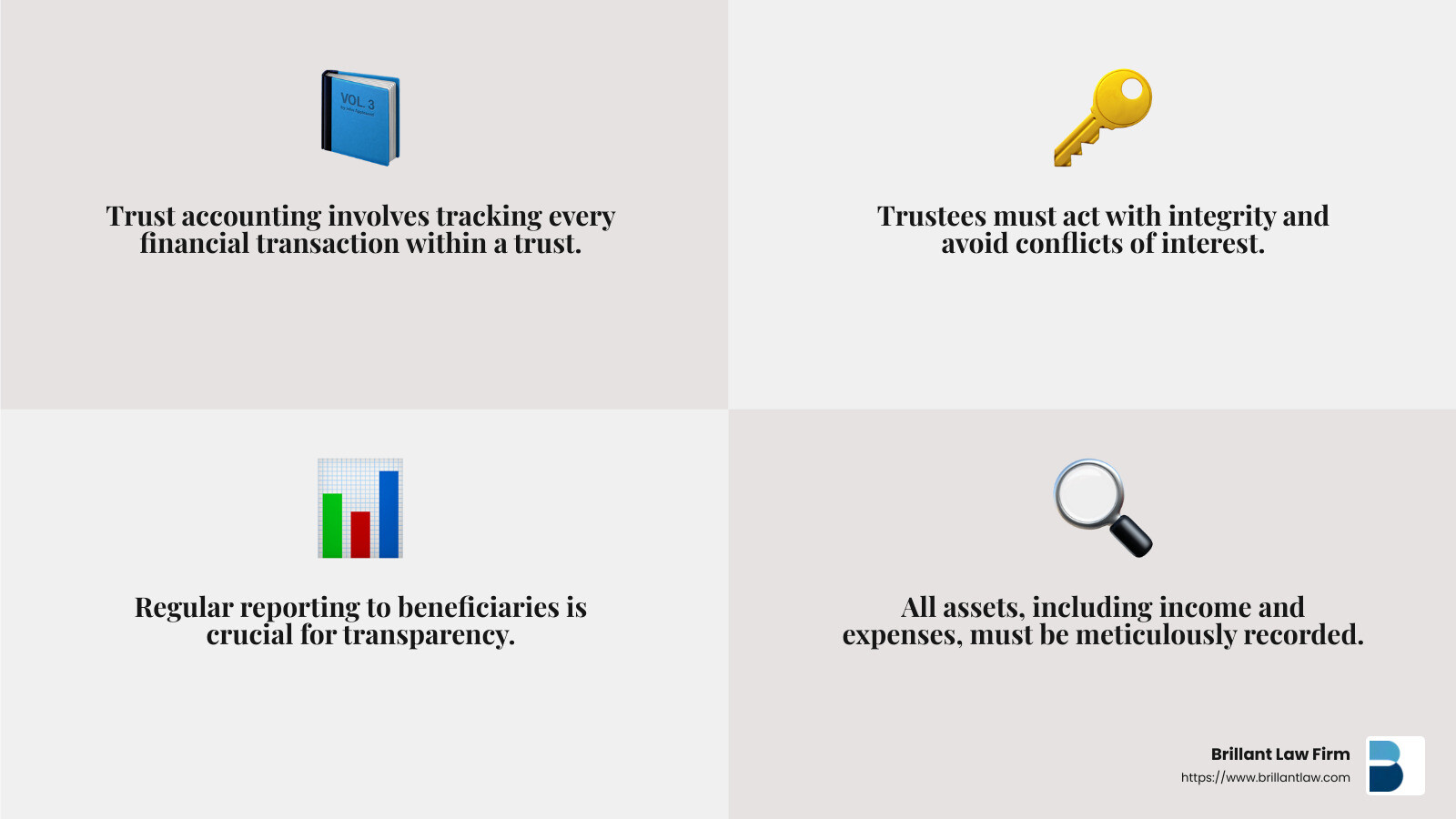
Trust accounting is the process of keeping detailed records of all financial transactions related to a trust. This involves:
- Recording Income and Expenses: Every penny that comes in or goes out must be documented. This ensures transparency and accountability.
- Tracking Assets: Whether it’s stocks, real estate, or cash, the assets within a trust need to be tracked carefully.
- Regular Reporting: Trustees should provide regular updates to beneficiaries, so they know exactly what is happening with the trust’s assets.
Fiduciary Arrangement
In a fiduciary arrangement, the trustee has a legal duty to act in the best interests of the beneficiaries. This means:
- Acting with Integrity: Trustees must handle the trust’s assets honestly and with care.
- Avoiding Conflicts of Interest: Trustees should not benefit personally from their position unless explicitly allowed by the trust’s terms.
- Maintaining Transparency: Open communication with beneficiaries is vital to maintain trust and prevent misunderstandings.
Financial Transactions
Every financial transaction within a trust must be carefully documented. This includes:
- Deposits and Withdrawals: Each transaction should be recorded with details like date, amount, and purpose.
- Investment Activities: If the trust’s assets are being invested, all related transactions must be logged.
- Expense Payments: Any expenses paid from the trust’s funds must be justified and documented.
By understanding these aspects of trust administration accounting, trustees can manage trusts more effectively, ensuring they meet their fiduciary responsibilities and protect the interests of beneficiaries. This meticulous approach prevents legal issues and fosters trust among all parties involved.
Key Principles of Trust Administration Accounting
Navigating trust administration accounting demands precision and integrity. Here, we’ll focus on the core principles that guide this process.
No Commingling
One of the golden rules in trust accounting is the strict prohibition against commingling funds. This means client funds must never mix with personal or business funds. Violating this rule can lead to severe consequences, such as disbarment for attorneys. Imagine mistakenly using a trust account for personal expenses—it could spell disaster.
How to Avoid Commingling:
- Separate Accounts: Always maintain distinct trust accounts.
- Unique Checks: Use checks specific to each trust account to prevent mix-ups.
Detailed Record-Keeping
Accurate and detailed records are the backbone of effective trust administration. Whether it’s a deposit or a withdrawal, every transaction must be carefully recorded. This ensures that every dollar is tracked and accounted for.
Tips for Detailed Record-Keeping:
- Use Ledgers: Keep a separate ledger for each client or trust.
- Leverage Software: Consider legal-specific software to automate and simplify record-keeping.
Regular Reconciliation
Regular reconciliation is key to maintaining the accuracy of trust accounts. This process involves comparing the bank statements with the trust’s ledger to ensure everything matches. Any discrepancies should be addressed immediately to maintain compliance.
Steps for Regular Reconciliation:
- Monthly Checks: Perform reconciliations at least monthly.
- Immediate Corrections: Resolve any mismatches as soon as they are identified.
Transparency
Transparency builds trust. Trustees should provide regular updates and detailed statements to beneficiaries. This open communication helps prevent misunderstandings and ensures that beneficiaries are fully informed about how their funds are managed.
Promoting Transparency:
- Regular Statements: Offer detailed statements of account activity.
- Open Communication: Encourage beneficiaries to ask questions and provide them with clear answers.
Fiduciary Responsibility
At the heart of trust administration is the fiduciary responsibility to act in the best interests of the beneficiaries. This means handling the trust’s assets with integrity and avoiding conflicts of interest.
Upholding Fiduciary Responsibility:
- Integrity First: Always act honestly and with the beneficiaries’ best interests in mind.
- Avoid Self-Dealing: Do not benefit personally from the trust unless expressly permitted.
By adhering to these principles, trustees can effectively manage trust assets, ensuring compliance and fostering trust among beneficiaries. This approach not only protects the trustee from legal issues but also supports the smooth operation of the trust.
Types of Trusts and Their Accounting Needs
Understanding the different types of trusts and their unique accounting needs is crucial for effective trust administration accounting. Each type of trust has specific requirements and complexities that must be managed carefully.
Living Trusts
A living trust is created during the grantor’s lifetime and can be either revocable or irrevocable. These trusts are popular for estate planning because they allow assets to pass to beneficiaries without going through probate.
Accounting Needs:
- Regular Updates: Since the grantor can modify a revocable living trust, regular updates to the trust documents and accounting records are essential.
- Asset Tracking: All assets within the trust must be carefully tracked and reported to ensure they align with the grantor’s instructions.
Testamentary Trusts
A testamentary trust is established through a will and takes effect upon the grantor’s death. These trusts are often used to manage assets for minors or beneficiaries who need financial oversight.
Accounting Needs:
- Post-Mortem Setup: Accounting begins after the grantor’s death, requiring careful setup and initial asset valuation.
- Beneficiary Reporting: Regular financial reports must be provided to beneficiaries, detailing how the assets are managed and distributed.
Special Needs Trusts
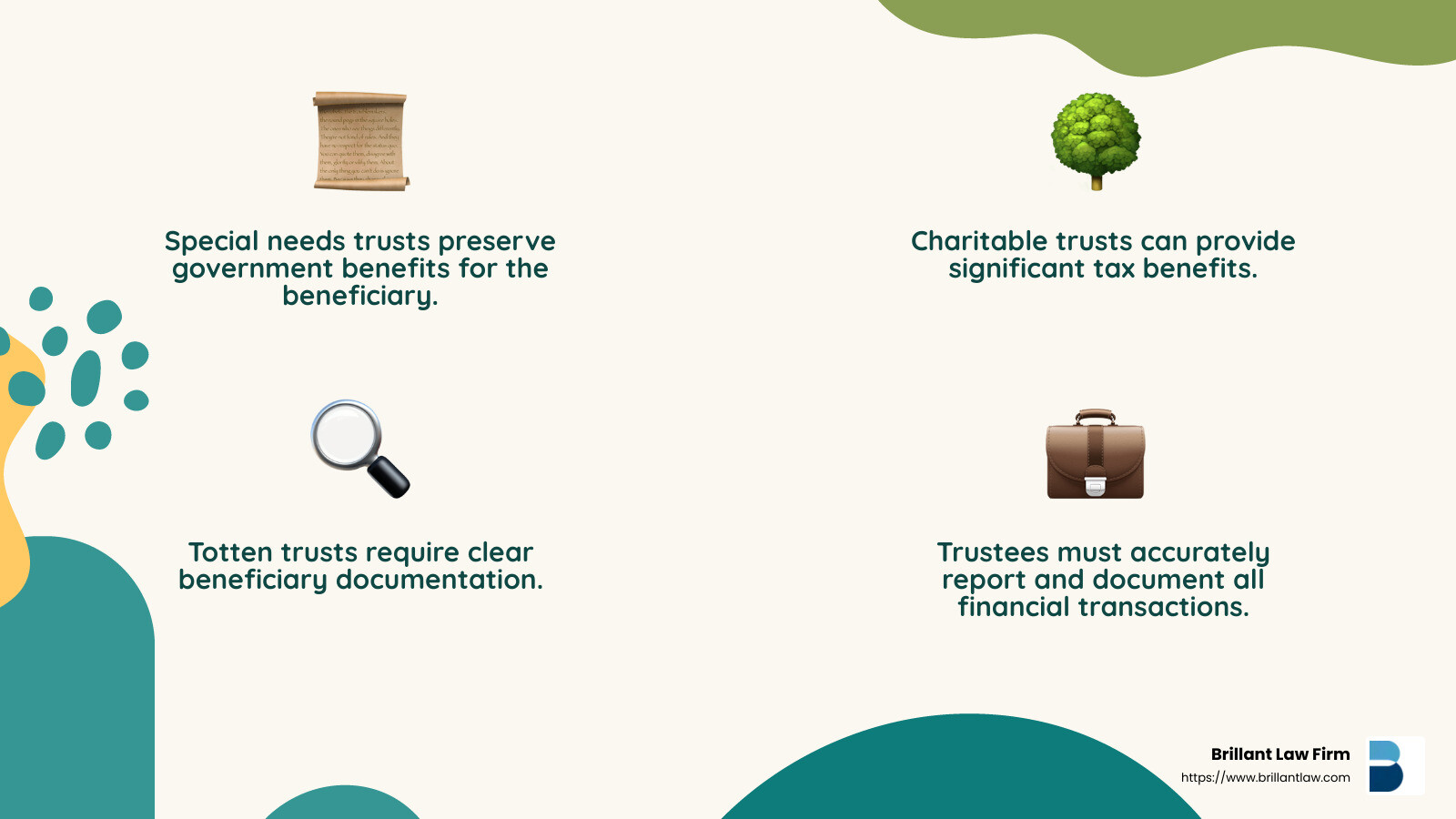
Designed to provide for individuals with disabilities, special needs trusts ensure that beneficiaries receive financial support without jeopardizing their eligibility for government benefits.
Accounting Needs:
- Benefit Compliance: Trustees must manage funds in a way that complies with government regulations to preserve the beneficiary’s access to benefits.
- Detailed Expenditures: Every expenditure must be documented to demonstrate that funds are used solely for the beneficiary’s needs.
Charitable Trusts
Charitable trusts are established to donate assets to charity, either immediately or over time. They can offer significant tax benefits and are often used as part of philanthropic strategies.
Accounting Needs:
- Tax Reporting: Accurate tax reporting is crucial, as these trusts often involve complex tax implications.
- Charity Disbursements: Trustees must ensure that disbursements align with the trust’s charitable purpose and legal requirements.
Totten Trusts
A Totten trust, also known as a Payable on Death (POD) account, is a simple arrangement where the account holder names a beneficiary to receive the assets upon their death. These trusts are straightforward but still require careful management.
Accounting Needs:
- Beneficiary Designation: Clear documentation of the beneficiary is essential to ensure the trust is executed correctly.
- Simplified Management: While less complex, trustees must still maintain accurate records to facilitate a smooth transfer of assets upon the account holder’s death.
By understanding these trust types and their accounting needs, trustees can better manage their responsibilities and ensure compliance with legal and fiduciary standards. This knowledge is key to successful trust administration and fosters trust and transparency with beneficiaries.
Importance of Accurate Trust Administration Accounting
Accurate trust administration accounting is vital for several reasons, from ensuring compliance to building trust with beneficiaries. Let’s explore why precision in this area is non-negotiable:
Compliance
In California, trustees must adhere to strict standards set by the probate code. Accurate accounting ensures compliance with these legal requirements. Failure to comply can lead to court orders for revised accountings, potentially resulting in fines or other penalties. By keeping precise records, trustees can avoid these costly pitfalls and demonstrate their commitment to fulfilling their fiduciary duties.
Beneficiary Trust
Trustees are responsible for managing assets on behalf of beneficiaries. Transparent and accurate accounting helps build trust with beneficiaries by providing a clear view of how the trust is being managed. Regularly shared financial reports demonstrate that trustees are acting in the beneficiaries’ best interests, fostering confidence and reducing the potential for disputes.
Risk Management
Proper accounting is a cornerstone of effective risk management. Trustees who maintain detailed records can quickly identify and address discrepancies, reducing the risk of financial mismanagement. Regular audits further help catch errors early, ensuring that the trust’s assets are safeguarded and managed wisely.
Tax Compliance
Trusts can offer significant tax advantages, but they also come with complex tax obligations. Accurate accounting helps trustees manage these obligations efficiently. By keeping meticulous records, trustees can ensure that they meet all tax reporting requirements and make the most of available tax benefits, ultimately maximizing the value of the trust for beneficiaries.
Litigation Protection
Inaccurate or incomplete accounting can lead to disputes and litigation, which can be both costly and time-consuming. Trustees who maintain precise records provide a strong defense against claims of mismanagement. By demonstrating their adherence to fiduciary duties through thorough accounting, trustees can protect themselves from potential legal challenges and preserve the trust’s assets for its intended purposes.
By prioritizing accuracy in trust administration accounting, trustees can steer their responsibilities with confidence, ensuring compliance, maintaining beneficiary trust, managing risks, and safeguarding against litigation. This careful approach not only protects the trust and its assets but also honors the intentions of the settlor and the interests of the beneficiaries.
Common Mistakes in Trust Administration Accounting
Even with the best intentions, trustees can stumble into pitfalls when handling trust administration accounting. Let’s explore some common mistakes and how to avoid them:
Commingling Funds
One of the biggest errors is mixing trust funds with personal or business accounts. This is known as commingling and it’s a major no-no. In California, the rules are clear: client funds must stay separate. Mixing them up can lead to severe penalties, including legal trouble for the trustee.
How to Avoid It: Always use a dedicated trust account for client funds. Keep personal finances far away from trust money. Use distinct checks and accounting software to prevent mix-ups.
Inaccurate Records
Poor record-keeping can create chaos. Without accurate records, it’s hard to track where money is going or who it belongs to. Imagine trying to explain a missing entry to a beneficiary or an auditor. It’s stressful and can damage trust.
How to Avoid It: Keep detailed records of every transaction. Use separate ledgers for each client. Legal-specific accounting software can help automate this process, making it easier to stay organized.
Early Withdrawals
Taking funds from the trust before they’re earned or authorized is another common mistake. This can happen if there’s confusion about billing or if funds are needed elsewhere.
How to Avoid It: Establish clear protocols for withdrawals. Ensure funds are only moved with proper documentation and approval. Regularly review the trust’s financial status to prevent unauthorized withdrawals.
Lack of Audits
Skipping audits can lead to unnoticed discrepancies. Regular audits catch mistakes early and ensure everything is in order.
How to Avoid It: Conduct regular audits, ideally a three-way reconciliation monthly. This means matching the bank balance with the trust liability account balance and individual client balances. Regular audits help catch errors before they become big problems.
By steering clear of these common pitfalls, trustees can ensure smooth and compliant trust administration accounting. This careful approach protects the trust’s assets and builds confidence with beneficiaries.
Frequently Asked Questions about Trust Administration Accounting
What is an administrative trust account?
An administrative trust account is a special account used to manage and oversee the assets of a trust. The trustee is in charge of this account and must follow strict legal formalities to ensure everything is handled properly. This includes keeping detailed records of all financial transactions and ensuring the trust’s assets are used according to the grantor’s wishes.
The trustee’s role is critical. They must act in the best interest of the beneficiaries and maintain transparency throughout the process. This means regularly updating beneficiaries about the trust’s status and any financial decisions made.
How do you manage trust in accounting?
Managing a trust involves a few key practices to ensure everything is organized and transparent:
Separate Ledgers: Each trust must have its own ledger. This keeps financial records clear and prevents any mix-ups with other funds. Imagine each ledger as a unique storybook for that trust’s financial journey.
Client Transparency: Regular communication with beneficiaries is vital. Trustees should provide detailed updates and statements. This builds trust and keeps everyone informed about how assets are being managed.
Regular Reconciliation: Compare the trust’s ledger with bank statements often. This ensures everything matches up and any discrepancies are quickly addressed.
By following these practices, trustees can manage trust accounts effectively, ensuring compliance and maintaining beneficiary confidence.
What are the expenses for trust administration?
Administering a trust does come with costs, which generally include:
Management Fees: Trustees often receive compensation for their work. In California, these fees can vary widely, but they typically range from 1% to 2% of the trust’s assets annually. It’s important to clearly outline these fees in the trust document to avoid misunderstandings.
Legal Costs: Legal assistance is often necessary to steer the complexities of trust administration. Attorneys in California might charge between $300 and $600 per hour, depending on their expertise and the complexity of the trust.
Both management fees and legal costs should be transparently communicated to beneficiaries. This ensures everyone understands where the money is going and why these expenses are necessary for proper trust administration.
By addressing these frequently asked questions, trustees can better steer the intricacies of trust administration accounting. Understanding these key elements helps maintain a smooth and transparent process, ensuring the trust’s assets are managed correctly and beneficiaries remain informed.
Conclusion
In the complex world of trust administration accounting, having a reliable partner is crucial. That’s where Brillant Law Firm comes in. Based in California, we specialize in providing custom strategies for managing trusts and estates. Our expertise ensures that every financial transaction is handled with precision and transparency.
Our team understands the importance of maintaining trust with beneficiaries. That’s why we focus on bespoke strategies that align with the unique needs of each client. Whether it’s managing living trusts, special needs trusts, or charitable trusts, we have the knowledge and experience to guide you through every step.
At Brillant Law Firm, we pride ourselves on our commitment to excellence. We offer comprehensive services that include regular reconciliation, detailed record-keeping, and compliance with all legal requirements. Our goal is to protect your interests and provide peace of mind.
If you’re looking for expert guidance in trust administration accounting, contact us today to learn more about how our bespoke strategies can benefit you. Let us help you steer the complexities of trust management with confidence.


