

The Importance of Trust and Estate Law: A Beginner’s Guide
Trust and estate law is a legal field dealing with how people manage and distribute their assets during their lifetime and after death. Here’s a quick overview:
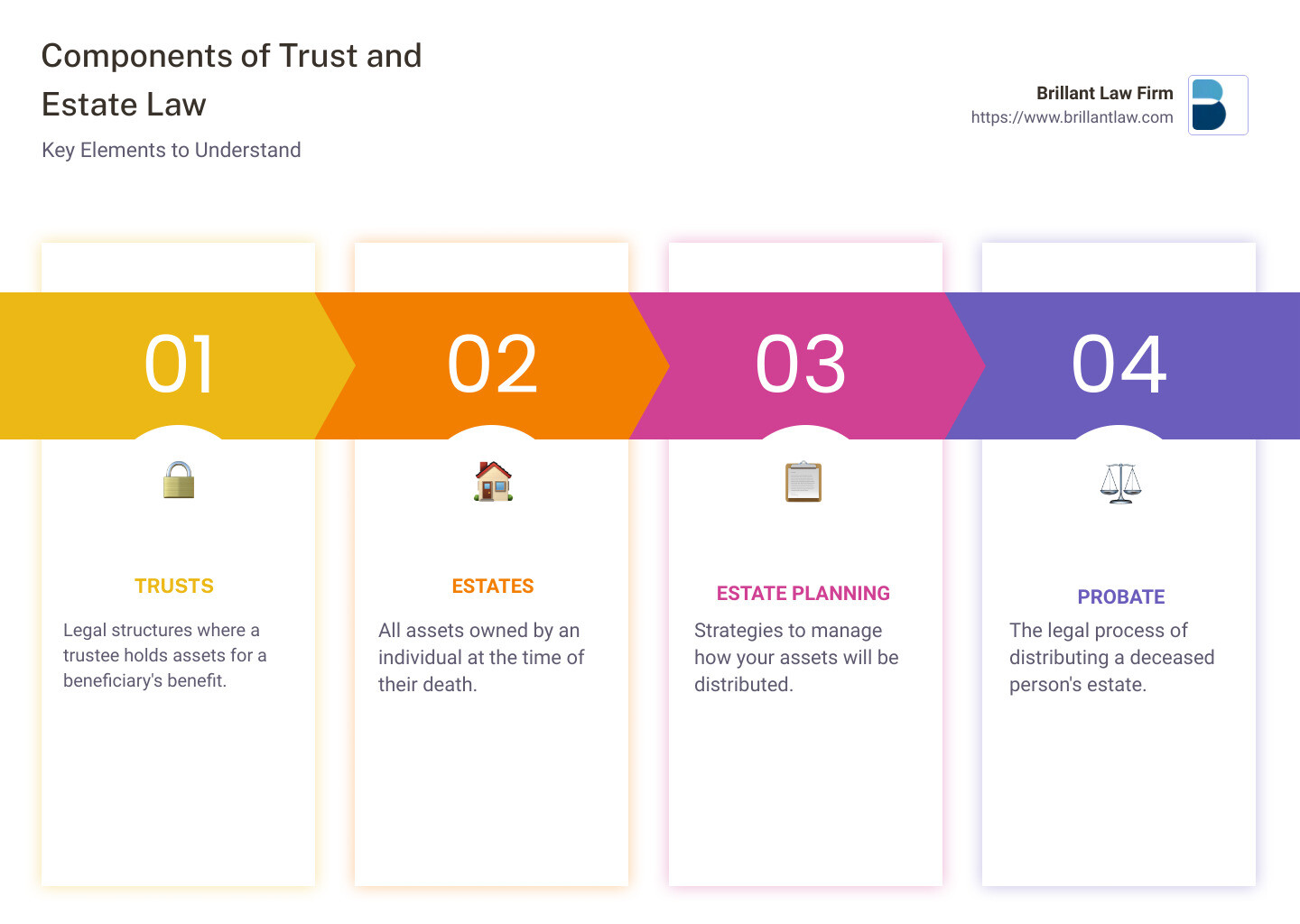
- Trusts: Legal structures where a trustee holds assets for a beneficiary’s benefit.
- Estates: All assets owned by an individual at the time of their death.
- Estate Planning: Strategies to manage how your assets will be distributed.
- Probate: The legal process of distributing a deceased person’s estate.
Trust and estate law is essential because it helps safeguard your wealth, minimizes tax liability, and ensures your wishes are fulfilled. For example, by creating a trust, you can protect your assets from creditors and manage them efficiently for your beneficiaries. Estate planning provides peace of mind by making sure your family understands your wishes and reducing the chance of disputes.
I am David Brillant, a certified specialist in Trust and Estate Law and a holder of a Masters in Taxation. With over two decades of experience, I assist clients in navigating the complexities of trust and estate law, ensuring their assets are protected and efficiently managed.
Next, let’s dive into the basics of Understanding Trusts to see how these legal tools can benefit you.
Understanding Trusts
A trust is a legal arrangement where one party, known as the grantor, transfers assets to another party, the trustee, who manages those assets for the benefit of a third party, the beneficiary. This setup creates a fiduciary relationship where the trustee must act in the best interests of the beneficiary.
Types of Trusts
Trusts come in various forms, each serving different purposes. Here are some common types:
Revocable Trusts: These can be altered or revoked by the grantor during their lifetime. They offer flexibility but do not provide protection from creditors.
Irrevocable Trusts: Once established, these cannot be changed or revoked. They offer strong asset protection and potential tax benefits.
Living Trusts: Also known as inter-vivos trusts, these are created during the grantor’s lifetime. They help manage assets and avoid probate.
Testamentary Trusts: These are established through a will and only take effect after the grantor’s death. They are typically used to manage how assets are distributed to beneficiaries.
Benefits of Trusts
Trusts offer several advantages, making them a valuable tool in estate planning:
Asset Protection: Trusts can shield assets from creditors, especially if they are irrevocable.
Tax Benefits: Trusts can help reduce estate and gift taxes, particularly with irrevocable trusts.
Privacy: Unlike wills, which go through probate and become public record, trusts can keep your financial affairs private.
Probate Avoidance: Assets in a trust generally do not go through the probate process, allowing for quicker and more efficient distribution to beneficiaries.

For example, a living trust can be particularly beneficial for business owners or those with out-of-state real estate. By placing these assets in a trust, you can ensure they are managed according to your wishes, both during your lifetime and after your passing. This can also help avoid the lengthy and public probate process.
In summary, understanding the different types of trusts and their benefits can help you make informed decisions about your estate planning. Next, we will explore the components of an estate plan to give you a comprehensive view of how to protect your assets and ensure your wishes are honored.
Understanding Estates
When we talk about estates, we’re referring to everything you own—your home, car, bank accounts, investments, and even your personal items. Estate planning is all about making sure these assets are managed and distributed according to your wishes after you pass away or if you become incapacitated.
Components of an Estate Plan
An effective estate plan typically includes several key documents:
Will: This is the cornerstone of any estate plan. It outlines how your assets should be distributed and can name guardians for minor children. Without a will, the state decides who gets what, which can lead to unintended consequences.
Power of Attorney: This document allows someone you trust to manage your financial affairs if you become unable to do so yourself. This could include paying bills, managing investments, or selling property.
Healthcare Directive: Also known as a living will, this document spells out your wishes regarding medical treatment if you are unable to communicate them yourself. It can also designate someone to make healthcare decisions on your behalf.
Beneficiary Designations: These are essential for accounts like life insurance, retirement plans, and bank accounts. Make sure these are up-to-date to ensure the right people receive your assets.
Estate Administration
Once a person passes away, their estate goes through a process called probate.
Executor: The person named in the will to manage the estate. Their job includes gathering assets, paying debts, and distributing the remaining assets according to the will.
Probate Court: This court oversees the probate process to ensure everything is done legally and according to the deceased’s wishes.
Asset Distribution: After debts and taxes are paid, the remaining assets are distributed to the beneficiaries named in the will.
Debt Settlement: Any outstanding debts must be paid before assets can be distributed. This can include mortgages, credit card debt, and medical bills.
Intestate Succession comes into play if someone dies without a will. State laws determine how assets are distributed, usually prioritizing spouses, children, and other close relatives. This process can be complicated and may not align with what the deceased would have wanted.
Understanding these components can help you see the bigger picture of estate planning. Next, we’ll dive into the key concepts of trust and estate law to provide a deeper understanding of how these legal frameworks operate.
Trust and Estate Law: Key Concepts
Trust and Estate Law in New York
New York has its own set of rules for trust and estate law. Knowing these rules can help you make better decisions for your estate plan.
Fiduciary Duty: This is a legal obligation for one party to act in the best interest of another. A trustee has a fiduciary duty to manage the trust’s assets for the benefit of the beneficiaries. This means they must act with honesty, integrity, and in good faith.
Uniform Probate Code: The Uniform Probate Code (UPC) aims to simplify the probate process and make it uniform across states. However, New York has not adopted the UPC. Instead, it follows its own set of probate laws. This means that the probate process in New York can be different from other states.
Uniform Trust Code: The Uniform Trust Code (UTC) provides a standard set of rules for the creation and administration of trusts. New York has adopted some parts of the UTC, but not all. This means that while some rules are consistent with other states, there are still unique aspects to New York’s trust laws.
State Laws and Federal Laws: Trust and estate law in New York is governed by both state and federal laws. State laws cover the creation and administration of trusts and estates, while federal laws primarily deal with taxes. For example, the U.S. Code: 26 U.S.C., Subtitle B outlines federal estate and gift tax regulations.
State-Specific Regulations: New York has specific regulations that impact trust and estate planning. For instance, the New York Estates, Powers, and Trusts Law (EPTL) governs wills, trusts, and estates in the state. This law outlines how to create a valid will, the duties of an executor, and the rules for distributing assets.
Will vs. Trust: Both wills and trusts are essential tools in estate planning, but they serve different purposes. A will takes effect upon death and must go through probate, a legal process where the court oversees the distribution of assets. On the other hand, a trust can be used during your lifetime and after your death, often avoiding the probate process. Trusts can provide more privacy and quicker distribution of assets.
Probate Process in NY: The probate process in New York involves several steps:
- Filing the Will: The executor files the will with the Surrogate’s Court in the county where the deceased lived.
- Validating the Will: The court verifies the will’s authenticity.
- Appointing the Executor: The court formally appoints the executor to manage the estate.
- Notifying Creditors and Beneficiaries: The executor must notify all creditors and beneficiaries about the probate process.
- Paying Debts and Taxes: The executor pays off any debts and taxes owed by the estate.
- Distributing Assets: Finally, the remaining assets are distributed to the beneficiaries according to the will.
Understanding these key concepts can help you steer the complexities of trust and estate law in New York. Next, we’ll explore common challenges and solutions in trust and estate planning.
Common Challenges and Solutions
Navigating trust and estate law can be tricky. Here are some common challenges and how to handle them.
Protecting Your Assets
Creditor Claims: Creditors can come after your estate or trust assets. To protect your assets, consider setting up an irrevocable trust. Once assets are transferred to this type of trust, they are no longer yours, making it harder for creditors to reach them.
Family Disputes: When money is involved, family disputes can arise. Clear communication and detailed estate planning documents are essential. Naming a neutral third-party trustee can also help prevent conflicts.
Legal Complexities: Trust and estate laws vary by state and can be complex. Working with a knowledgeable attorney can help you steer these laws and ensure your plan is legally sound.
Asset Protection Strategies: Besides trusts, other strategies include joint ownership, life insurance policies, and retirement accounts with designated beneficiaries. These can help keep your assets safe and ensure they go to your intended heirs.
Legal Tools: Tools like power of attorney and healthcare directives can ensure your wishes are followed if you become incapacitated. These documents should be part of your overall estate plan.
Insurance: Life insurance can provide financial support to your beneficiaries and help cover any estate taxes or debts. Regularly review your policies to ensure they meet your current needs.
Tax Considerations
Estate Tax: The federal estate tax can take a big bite out of your estate. As of 2022, estates worth more than $12.06 million are subject to this tax. However, this threshold changes, so stay updated on current laws.
Gift Tax: Giving away assets during your lifetime can reduce the size of your taxable estate. The annual gift tax exclusion lets you give up to $16,000 per person without incurring gift tax. Larger gifts may require you to file a gift tax return.
Income Tax Implications: Trusts and estates can generate income, which is subject to income tax. Certain trusts, like irrevocable trusts, can help manage these taxes by distributing income to beneficiaries, who may be in a lower tax bracket.
Understanding these challenges and solutions can help you make informed decisions about your estate planning. Next, we’ll answer some frequently asked questions about trust and estate law.
Frequently Asked Questions about Trust and Estate Law
What is the difference between a trust and an estate?
A trust is a legal arrangement where a person (the grantor) transfers property to a trustee to manage for the benefit of beneficiaries. Trusts can be revocable or irrevocable and can be set up during the grantor’s lifetime (living trust) or after their death (testamentary trust).
An estate, on the other hand, refers to all the assets and liabilities left by a person at their death. The estate goes through a legal process called probate, where a court oversees the distribution of assets according to the deceased’s will or state law if there’s no will.
Duration: Trusts can last for many years, sometimes even generations, depending on their terms. Estates are temporary and exist only until the probate process is completed and assets are distributed.
What are the disadvantages of an estate trust?
While trusts offer many benefits, they also come with some downsides:
Creditor Protection: Not all trusts protect assets from creditors. For example, revocable trusts do not offer creditor protection because the grantor retains control over the assets.
Tax Burdens: Trusts can have complicated tax implications. Irrevocable trusts, while offering tax benefits, are subject to their own tax rules, and income generated by the trust may be taxed at higher rates.
Cost and Complexity: Setting up and maintaining a trust can be expensive and complicated, requiring legal and administrative fees.
What is the law of trust?
The law of trust is a fiduciary relationship where the trustee holds title to property for the benefit of the beneficiaries. This relationship is governed by a set of rules and principles that define the rights and duties of all parties involved.
Fiduciary Duty: Trustees have a legal obligation to act in the best interest of the beneficiaries, managing the trust assets prudently and in accordance with the trust terms.
Property Rights: The trust property is legally owned by the trustee, but the beneficiaries have the right to benefit from the property as specified in the trust agreement.
These laws ensure that trusts are managed properly and that the beneficiaries’ interests are protected.
Next, we’ll dive into the specific regulations and processes related to trust and estate law in New York.
Conclusion
Navigating the complexities of trust and estate law can feel overwhelming. But you don’t have to do it alone. At Brillant Law Firm, we offer expert guidance and personalized strategies to help you manage your assets and plan for the future.
Our team of attorneys brings years of focused experience to the table. We stay ahead of the curve, continuously updating our knowledge to leverage the latest legal trends and technologies. This specialization means we are not just familiar with the law; we have a deep understanding of the intricacies and strategies that make a difference.
Bespoke Strategies
We believe that every client is unique, and so are their needs. Whether you require assistance with drafting a will, setting up a trust, or navigating the probate process, we craft bespoke strategies that align with your overall objectives. Our commitment is to protect your interests now and into the future.
Peace of Mind
Our approach is not just about addressing the immediate issue at hand; it’s about looking at the bigger picture. We aim to provide you with peace of mind, knowing that your loved ones will receive your assets without hassle or undue delay after your death.
In the complex world of legal disputes, specialization is key. And at Brillant Law Firm, we bring specialized knowledge, strategic thinking, and a relentless commitment to your success. With us, you’re not just getting a lawyer; you’re getting a dedicated team ready to defend your interests with best expertise and zeal.
Let us help you secure your financial future and that of your family. Contact us today for a consultation and take the first step towards a well-planned estate.


