

When it comes to estate planning, understanding the role of successor trustees is crucial. A successor trustee is a person or entity appointed to take control of a trust if the original trustee becomes incapacitated or passes away. This role is vital in managing a trust fund or living trust, ensuring your assets are handled according to your wishes without court involvement. Here’s a quick breakdown of what you need to consider:
- Role: Manages and distributes trust assets when the original trustee cannot.
- Responsibilities: Pay bills, oversee investments, and distribute assets as dictated by the trust document.
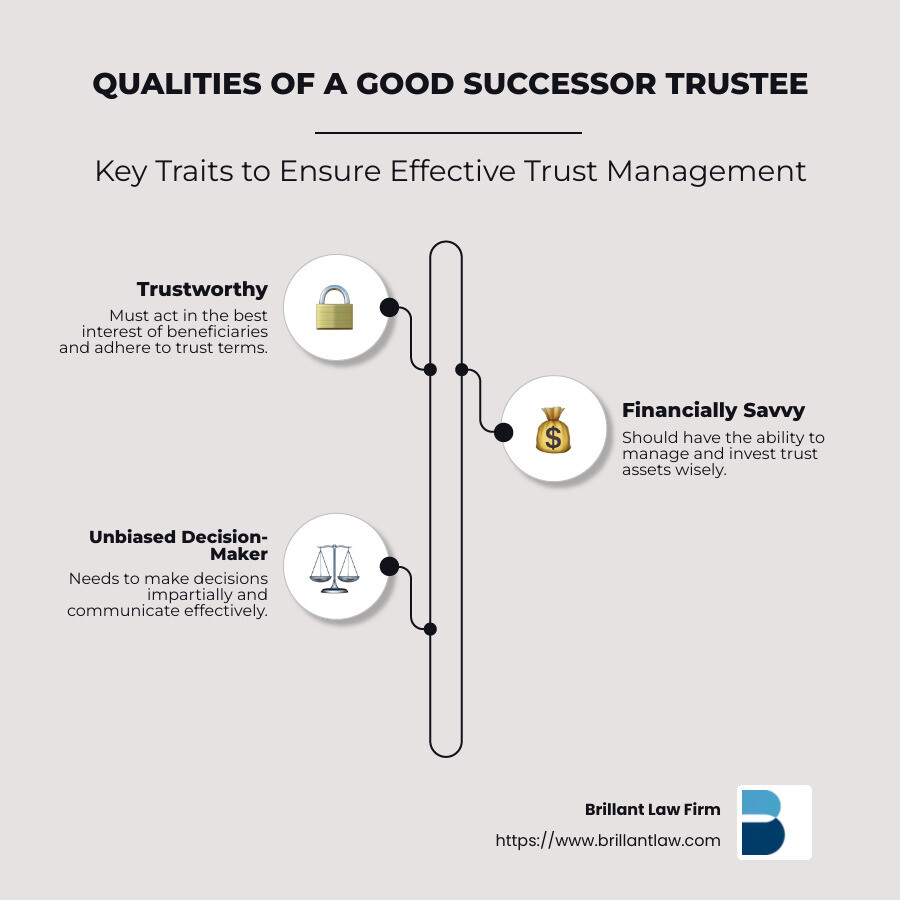
- Qualities to Look For: Trustworthiness, financial savvy, and impartiality.
Choosing the right successor trustee ensures the smooth transition and management of your trust, providing peace of mind for you and your beneficiaries. Making the right choice involves assessing the potential trustee’s ability to handle your financial matters, communicate effectively, and steer complexities that might arise.
I’m David Brillant, a seasoned Tax and Trust & Estate attorney. My expertise includes guiding high-net-worth clients through the intricacies of estate planning, including selecting trustworthy successor trustees.
Understanding Successor Trustees
When planning your estate, understand the distinction between a trustee and a successor trustee. While both play crucial roles in managing a trust, their responsibilities kick in at different times.
Trustee vs. Successor Trustee
Trustee: The person or institution initially responsible for managing the trust. They handle the day-to-day operations, such as paying bills, overseeing investments, and distributing assets according to the trust document.
Successor Trustee: Steps in when the original trustee is no longer able to fulfill their duties due to incapacitation or death. This transition is pre-planned and ensures that the trust continues to be managed smoothly without court intervention.
Responsibilities of a Successor Trustee
A successor trustee takes on many responsibilities, which can vary depending on the trust’s terms. Here’s what they typically handle:
Financial Management: Overseeing the trust’s assets, including investments and real estate, to ensure they are managed wisely and in the beneficiaries’ best interest.
Asset Distribution: Ensuring that assets are distributed according to the grantor’s wishes. This involves understanding the trust document thoroughly and acting impartially.
Fiduciary Duty: Acting in the best interests of the beneficiaries, maintaining transparency, and avoiding conflicts of interest.
Incapacitated or Deceased Trustee
The successor trustee’s role becomes active under specific conditions:
Incapacitation: If the original trustee becomes unable to manage the trust due to physical or mental incapacity, the successor trustee steps in. This transition is typically outlined in the trust document, specifying how incapacity is determined.
Deceased: Upon the death of the original trustee, the successor trustee assumes control. This ensures that the trust remains active and continues to function as intended.
Choosing a successor trustee is a significant decision. It’s crucial to select someone who is financially savvy, trustworthy, and capable of handling complex situations. This choice not only affects how your assets are managed but also impacts the peace of mind of your beneficiaries.
Duties and Powers of a Successor Trustee
Once the successor trustee takes over, they are entrusted with several important duties and powers. These responsibilities ensure that the trust is managed effectively and that the beneficiaries’ interests are protected.
Financial Management
A key duty of a successor trustee is to manage the trust’s finances. This involves:
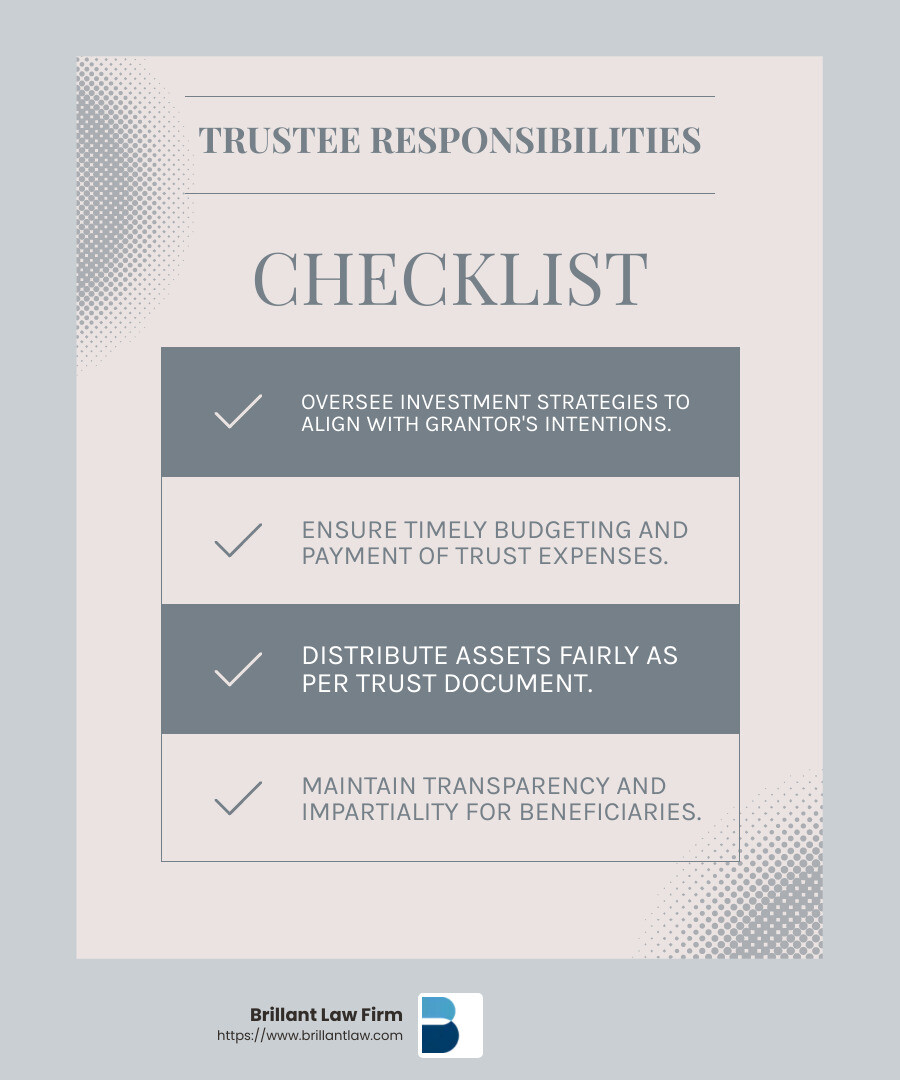
Overseeing Investments: Ensuring that the trust’s investments are sound and align with the grantor’s intentions. This might mean consulting with financial advisors or adjusting investment strategies as needed.
Budgeting and Paying Expenses: Keeping track of the trust’s income and expenses. The trustee must pay any debts or bills that the trust owes and ensure that there is enough liquidity to meet the beneficiaries’ needs.
Asset Distribution
Asset distribution is another crucial responsibility. The successor trustee must:
Follow the Trust Document: Distribute assets according to the detailed instructions in the trust document. This could involve transferring property, stocks, or other assets to the beneficiaries.
Act Impartially: The trustee must not show favoritism or bias towards any beneficiary. They must ensure that all distributions are fair and equitable, as outlined in the trust.
Fiduciary Duty
The successor trustee has a fiduciary duty to act in the best interests of the beneficiaries. This means:
Maintaining Transparency: Keeping clear and accurate records of all transactions and decisions. Beneficiaries should have access to these records to understand how the trust is being managed.
Avoiding Conflicts of Interest: The trustee should not engage in activities that could benefit them personally at the expense of the trust or its beneficiaries.
Seeking Professional Advice: When necessary, the trustee should consult with legal, tax, or financial professionals to make informed decisions. This ensures that all actions taken are in line with legal and financial best practices.
By fulfilling these duties, a successor trustee helps preserve the trust’s assets and ensures that the grantor’s wishes are honored. This role requires diligence, integrity, and a commitment to acting in the beneficiaries’ best interests.
Next, we’ll explore how to choose the right successor trustee to ensure your trust is in capable hands.
Choosing the Right Successor Trustee
Choosing the right successor trustee is a crucial decision that can impact the future of your trust and its beneficiaries. Here are some key considerations to guide you in making this important choice:
Qualifications
The ideal successor trustee should possess a blend of skills and characteristics:
Financial Acumen: They should be comfortable managing finances, including investments and taxes. This ensures the trust’s assets are handled wisely.
Integrity and Impartiality: Trustworthiness is non-negotiable. They must act fairly and independently, without bias or personal gain.
Communication Skills: Effective communication with beneficiaries and professionals is essential. This helps prevent misunderstandings and keeps everyone informed.
Availability: They should have the time and willingness to devote to managing the trust, which can be a significant commitment.
Family or Friend
Many people consider appointing a family member or close friend as their successor trustee. This option has its pros and cons:
Pros: They are likely to be familiar with your wishes and the needs of your beneficiaries. Their personal connection can foster trust and understanding.
Cons: Emotional ties might complicate decision-making. They may also lack the necessary financial expertise, potentially leading to mismanagement.
Corporate Trustee
Alternatively, a corporate trustee, such as a bank or trust company, can be appointed:
Pros: They offer professional expertise and experience in managing trusts. Their impartiality and structured processes can prevent conflicts of interest.
Cons: They may lack the personal touch of a family member or friend. Additionally, their services often come with fees, which can reduce the trust’s value.
Making the Decision
When selecting a successor trustee, consider your unique situation and priorities. You might even choose a combination, such as a family member and a professional co-trustee, to balance personal insight and professional expertise.
The right successor trustee will ensure your trust is managed according to your wishes and in the best interests of your beneficiaries.
Next, we’ll compare the roles of successor trustees and executors to further clarify their distinct responsibilities.
Successor Trustees vs Executors
Now that we’ve explored how to choose the right successor trustee, let’s dive into the differences between successor trustees and executors. Understanding these roles is essential for effective estate planning.
Executor Responsibilities
An executor is appointed through a will to manage and settle an estate after someone passes away. Their main duties include:
Probate Process: Executors are responsible for initiating the probate process, which involves validating the will in court.
Asset Management: They must inventory and safeguard the deceased’s assets, ensuring everything is accounted for.
Debt and Taxes: Executors pay off any debts and taxes owed by the estate. This step is crucial before distributing assets to beneficiaries.
Distribution of Assets: Once debts and taxes are settled, executors distribute the remaining assets according to the will’s instructions.
Trust vs Estate
While both successor trustees and executors manage assets, the key difference lies in what they manage: trusts and estates.
Trusts: A successor trustee manages a trust, which can be set up during the grantor’s lifetime (living trust) or after their death (testamentary trust). Trusts often avoid probate, allowing for a more private and efficient distribution of assets.
Estates: An executor handles the deceased’s estate, which includes all assets not placed in a trust. Estates generally go through probate, a public process that can be time-consuming and costly.
Asset Management
Both roles require careful asset management, but the context differs:
Successor Trustees focus on managing trust assets over time, ensuring they are invested wisely and distributed according to the trust’s terms. This role continues until the trust is dissolved.
Executors focus on settling the estate quickly and efficiently, wrapping up financial affairs and distributing assets as specified in the will.
In summary, while successor trustees and executors both play vital roles in managing and distributing assets, they operate within different frameworks and with distinct responsibilities. Understanding these differences can help you make informed decisions about your estate planning needs.
Next, we’ll address some frequently asked questions about successor trustees to clarify any remaining uncertainties.
Frequently Asked Questions about Successor Trustees
Navigating trusts and estates can be tricky. Let’s tackle some common questions about successor trustees to clear up any confusion.
What is the Difference Between a Trustee and a Successor Trustee?
A trustee is the person responsible for managing a trust’s assets according to the trust’s terms. They’re in charge from the time the trust is created.
A successor trustee steps in when the original trustee can no longer fulfill their duties. This might happen if the trustee becomes incapacitated or passes away. The successor trustee then takes over the same responsibilities, ensuring the trust is managed and assets are distributed as intended by the grantor.
Can a Successor Trustee Be a Beneficiary?
Yes, a successor trustee can also be a beneficiary of the trust. However, it’s important to ensure that the trust’s provisions allow for this arrangement.
Being both a trustee and a beneficiary can sometimes lead to conflicts of interest. It’s crucial for the successor trustee to act impartially and in the best interest of all beneficiaries. They must adhere to their fiduciary duty, which means acting with honesty and integrity at all times.
How Does a Successor Trustee Take Over When the Trustee is Incapacitated?
The process for a successor trustee to take over is usually outlined in the trust document itself.
Here’s a typical step-by-step guide:
Review the Trust Document: The document will detail the conditions under which a successor trustee should step in. It may require proof of the current trustee’s incapacity, such as a doctor’s statement.
Notification: The successor trustee should notify all relevant parties, including beneficiaries and financial institutions, about the change in trusteeship.
Asset Management: Once in place, the successor trustee assumes control of the trust’s assets. They must manage these assets according to the trust’s terms, just like the original trustee.
Communication: Keeping open lines of communication with beneficiaries is key. The successor trustee should provide updates and be transparent about their actions.
In summary, the transition process for a successor trustee is typically straightforward, provided the trust document is clear and all necessary steps are followed.
This section should help explain some aspects of successor trustees. Understanding these roles and processes is vital for effective trust management and estate planning.
Conclusion
Choosing the right successor trustee is a crucial step in effective estate planning. At Brillant Law Firm, we understand that trust administration can be complex and emotionally charged. Our expertise in trusts and estates ensures that your assets are managed and distributed according to your wishes, providing peace of mind for you and your loved ones.
Estate planning is not just about managing assets; it’s about securing your family’s future. By setting up a clear and well-structured trust, you can avoid the lengthy and costly probate process. This ensures that your beneficiaries receive their inheritance smoothly and without unnecessary delays.
Our team at Brillant Law Firm is dedicated to providing personalized strategies custom to your unique needs. We take pride in our commitment to excellence and our ability to steer the intricate landscape of trust administration.
If you’re considering setting up a trust or need help with trust administration, we’re here to assist you every step of the way. Whether you need guidance on selecting a successor trustee or have questions about your estate plan, reach out to us for expert advice.
Get in touch with Brillant Law Firm for all your trust administration needs.
By planning today, you can protect your family’s tomorrow. Let Brillant Law Firm help you create a legacy that lasts.


