

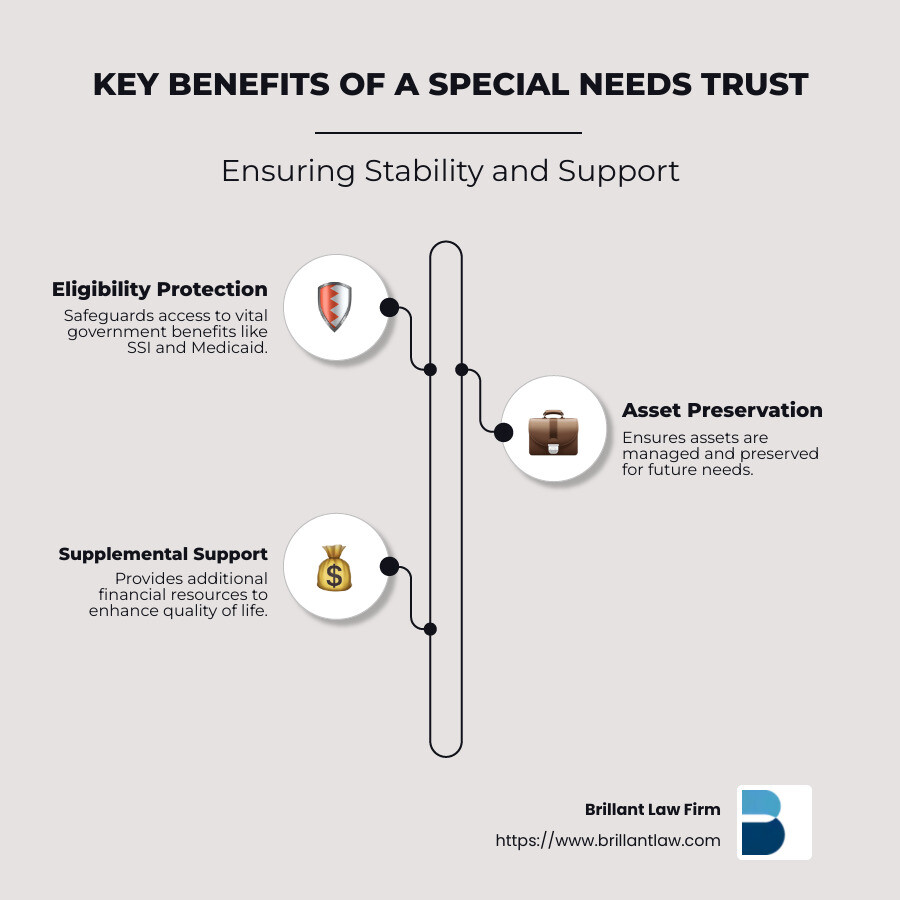
Special needs trust attorneys play a crucial role in securing the future for loved ones with disabilities. These legal experts help establish special needs trusts, which are essential components of estate planning. Special needs trusts ensure that individuals with disabilities receive supplemental financial support without jeopardizing their eligibility for critical government benefits like SSI and Medicaid.
Here’s what you need to know up front:
- Special Needs Trusts: Protect benefits and provide extra financial support
- Estate Planning: Essential for managing and distributing assets
- Legal Arrangement: Helps define roles and distribute funds clearly
With a special needs trust, you can safeguard your loved one’s access to resources, ensuring they lead a quality life. As parents consider financial futures, avoiding pitfalls and complexities is vital. Consulting a specialized attorney ensures legal documents are correctly drafted and that beneficiaries are adequately provided for without loss of public assistance.
I am David Brillant, a seasoned special needs trust attorney with expertise in crafting comprehensive legal strategies custom to unique needs. My extensive background allows me to steer complex trust and estate planning matters to meet your specific goals effectively.
Essential Special needs trust attorney terms:
– attorneys for living trusts
– estate planning attorney
– who does a trust attorney represent
Understanding Special Needs Trusts
Special needs trusts are powerful tools designed to provide financial support to individuals with disabilities without affecting their eligibility for public benefits. These trusts ensure that government assistance programs, such as SSI and Medicaid, remain intact while supplementing the beneficiary’s needs.
Financial Support and Public Benefits
A special needs trust allows a beneficiary to receive financial support from the trust without these funds counting against the income and asset limits set by public benefits programs. This is crucial because exceeding these limits can lead to a reduction or loss of benefits. Instead, the trust’s assets are used to pay for things like medical expenses, therapy, education, and other quality-of-life improvements that government programs might not cover.
Trustee Discretion
One of the key features of a special needs trust is the trustee’s discretion. The trustee is responsible for managing the trust assets and making distributions to the beneficiary as needed. This discretion is essential because it ensures that funds are used in a way that maximizes the beneficiary’s well-being without triggering a reduction in public benefits.
The trustee must be someone who understands the complex rules governing special needs trusts and can make informed decisions. They must balance providing for the beneficiary’s immediate needs with preserving the trust’s assets for future use.
Why Trustee Selection Matters
Choosing the right trustee is critical. A well-chosen trustee will have the financial acumen and integrity to manage the trust effectively. They should also have a deep understanding of the beneficiary’s needs and the legal requirements of a special needs trust.
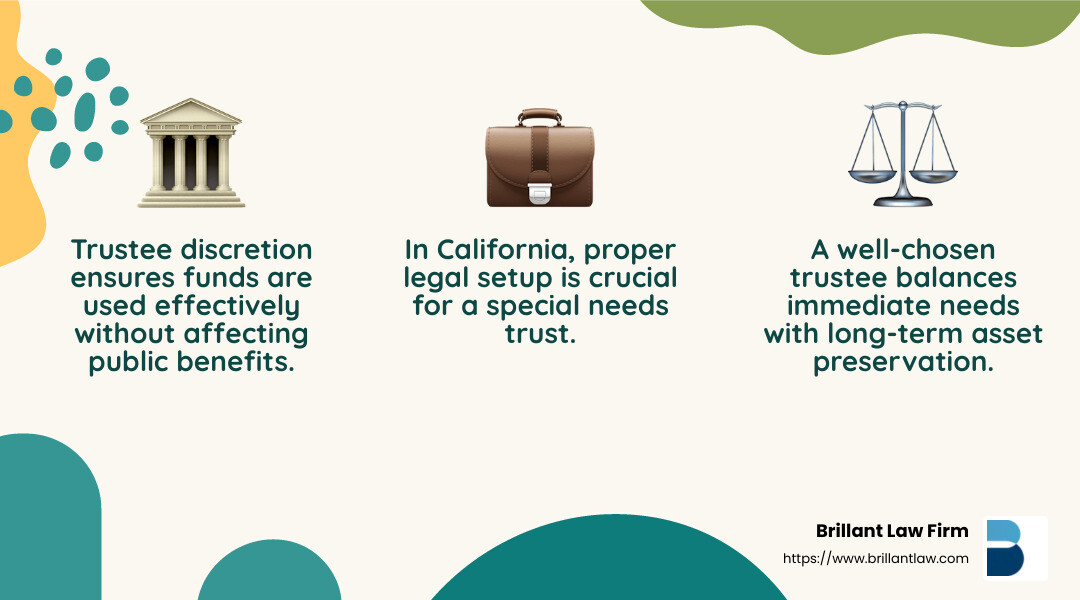
In California, the process of setting up a special needs trust involves careful planning and legal expertise. Working with an experienced special needs trust attorney ensures that all legal documents are correctly drafted and that the trust is set up to protect the beneficiary’s interests fully.
In summary, a special needs trust offers a way to provide financial security for a loved one with disabilities while maintaining their access to essential public benefits. By understanding the importance of trustee discretion and the role of a special needs trust, families can ensure their loved ones are well cared for now and in the future.
Types of Special Needs Trusts
When planning for the future of a loved one with disabilities, understanding the different types of special needs trusts is essential. Each type has unique features and benefits, allowing families to choose the best option based on their specific circumstances.
Third-Party Trust
A third-party trust, also known as a supplemental needs trust, is funded with assets from someone other than the beneficiary, like a parent or grandparent. This trust is ideal for estate planning because it protects the beneficiary’s eligibility for government benefits while providing additional resources.
How it Works: The grantor (usually a family member) sets up the trust and funds it with their own assets. These might include gifts, inheritances, or life insurance policies.
Benefits: The beneficiary can receive financial support without losing access to public benefits. Importantly, these assets are not subject to Medicaid’s repayment rules.
Self-Funded Trust
A self-funded trust, also known as a first-party trust, is created using the beneficiary’s own assets. This might happen if the individual receives a personal injury settlement or an unexpected inheritance.
How it Works: The beneficiary places their own assets into the trust to maintain eligibility for government programs like SSI and Medicaid.
Considerations: While this trust helps preserve benefits, it may be subject to Medicaid’s repayment rules. This means that upon the beneficiary’s death, remaining assets might be used to reimburse Medicaid for services provided.
Supplemental Needs Trust
The term “supplemental needs trust” is often used interchangeably with third-party trusts. However, it can also refer more broadly to any trust designed to supplement, rather than replace, government benefits.
Focus: These trusts are crafted to improve the beneficiary’s quality of life by covering expenses not typically funded by public assistance. This could include things like education, transportation, or recreational activities.
Flexibility: They offer the flexibility to address a wide range of needs, ensuring the beneficiary has access to both essential and enriching resources.
In California, establishing any of these trusts requires careful consideration and legal guidance. Working with a knowledgeable special needs trust attorney can help ensure that the trust aligns with the family’s goals and complies with state laws.
By understanding these types of special needs trusts, families can make informed decisions to secure the financial future of their loved ones while protecting access to vital public benefits.
The Role of a Special Needs Trust Attorney
When it comes to setting up a special needs trust, legal expertise is crucial. A special needs trust attorney knows the ins and outs of creating a trust that complies with California laws while meeting the unique needs of the beneficiary.
Legal Expertise
Special needs trust attorneys specialize in this complex area of law. They help families steer the legal process of establishing a trust that safeguards a disabled person’s access to government benefits. Their expertise ensures that the trust documents are crafted to meet legal requirements and the family’s specific goals.
Why It’s Important: Without proper legal guidance, a trust could inadvertently disqualify a beneficiary from receiving essential public benefits like SSI or Medicaid.
What They Do: Attorneys handle everything from drafting the trust documents to advising on the best type of trust for the family’s situation.
Asset Protection
One of the main benefits of a special needs trust is asset protection. By placing assets in a trust, families can provide for their loved ones without jeopardizing their eligibility for government assistance.
How It Works: The trust holds assets for the beneficiary, which are managed by a trustee. These assets are not counted as personal assets of the beneficiary, helping them maintain eligibility for needs-based programs.
Key Benefit: Protecting assets in a trust means they are safe from creditors and lawsuits, ensuring they are used solely for the beneficiary’s needs.
Government Benefits
Maintaining access to government benefits is often a top priority for families setting up a special needs trust. A knowledgeable attorney can structure the trust to supplement these benefits without replacing them.
Why It Matters: Public benefits provide essential support for individuals with disabilities, covering costs like medical care and basic living expenses.
Attorney’s Role: They ensure that the trust is set up in a way that complies with regulations around public assistance programs, allowing the beneficiary to receive both trust distributions and government benefits.
In short, a special needs trust attorney plays a vital role in securing the financial future of a loved one with disabilities. They provide the legal knowledge, asset protection strategies, and benefit preservation techniques needed to create a comprehensive plan that supports the beneficiary’s long-term well-being.
How to Establish a Special Needs Trust in California
Setting up a special needs trust in California involves several key steps, each designed to ensure the trust works as intended to protect your loved one’s financial future without jeopardizing their public benefits.
Trust Creation
Creating a special needs trust begins with drafting a detailed legal document. This document outlines the trust’s purpose, the beneficiary’s needs, and how the funds will be used.
Drafting the Trust: A special needs trust attorney will help you draft a trust that meets California’s legal requirements. This includes specifying how the trust assets can be used to supplement, but not replace, government benefits.
Funding the Trust: The trust can be funded with various assets, such as gifts, inheritances, or life insurance proceeds. It’s crucial that these funds are managed correctly to avoid affecting the beneficiary’s eligibility for public assistance programs.
Legal Process
Navigating the legal process of establishing a special needs trust can be complex. An experienced attorney will guide you through each step to ensure compliance with all applicable laws.
Legal Compliance: The trust must adhere to California state laws and federal regulations to ensure it doesn’t disqualify the beneficiary from receiving government benefits like SSI or Medicaid.
Documentation: Proper documentation is essential. Your attorney will ensure all necessary paperwork is completed accurately and submitted to the appropriate authorities.
Trustee Selection
Choosing the right trustee is a critical decision. The trustee will manage the trust assets and make distributions according to the trust’s terms.
Who Can Be a Trustee: A trustee can be a family member, friend, or a professional trustee. It’s important to select someone who is trustworthy, capable, and understands the beneficiary’s needs.
Trustee Responsibilities: The trustee’s role includes managing the trust assets, making financial decisions, and ensuring the funds are used in a way that benefits the beneficiary without affecting their eligibility for public benefits.
Establishing a special needs trust in California requires careful planning and expert legal guidance. By working with a special needs trust attorney, you can create a trust that provides financial security for your loved one while preserving their access to essential public benefits.
Frequently Asked Questions about Special Needs Trusts
What are the disadvantages of a special needs trust?
While special needs trusts offer many benefits, they also come with some downsides. One of the primary concerns is management costs. These trusts require ongoing administration, which can involve legal fees, trustee fees, and other expenses. Over time, these costs can add up, potentially reducing the funds available for the beneficiary.
Another disadvantage is the potential for financial difficulty if the trust is not properly managed. A poorly drafted trust or an inexperienced trustee can lead to mismanagement of assets, which might jeopardize the beneficiary’s access to public assistance programs.
How does a special needs trust work?
A special needs trust is designed to provide financial support to a disabled individual without affecting their eligibility for public assistance programs like Medicaid or SSI. The trust holds assets that are used to cover expenses not provided by these programs, such as medical care, therapy, and recreational activities.
The trustee plays a crucial role by managing the trust assets and ensuring they are used in a way that benefits the beneficiary. The trustee must be careful not to distribute funds directly to the beneficiary, as this could disqualify them from receiving government benefits.
What is the best trust for a disabled person?
The choice of trust depends on individual circumstances, but a third-party trust is often considered the best option for many families. This type of trust is funded with assets from someone other than the beneficiary, such as parents or grandparents. Because the funds never belonged to the beneficiary, they are not subject to Medicaid’s repayment rules upon the beneficiary’s death.
A third-party trust can be an integral part of an estate plan, providing long-term financial security for the disabled individual without compromising their eligibility for public benefits. This type of trust offers flexibility and protection, ensuring that the beneficiary’s needs are met while safeguarding their access to essential services.
Conclusion
At Brillant Law Firm, we pride ourselves on offering bespoke strategies that cater to the unique needs of each client. Our dedicated team understands the complexities of legal arrangements like special needs trusts and is committed to providing custom solutions that protect your loved ones.
We know that navigating the intricacies of special needs planning can be daunting. That’s why our experienced attorneys are here to guide you every step of the way. From establishing a trust to ensuring ongoing compliance with government regulations, we offer the support and expertise you need.
Our unwavering dedication to client satisfaction sets us apart. We take the time to understand your specific circumstances and objectives, crafting strategies that align perfectly with your goals. Whether you’re planning for a loved one’s future or managing an existing trust, you can count on us to deliver exceptional service and results.
Ready to secure your loved one’s future? Contact Brillant Law Firm today to learn how our team can help you with expert guidance and personalized care.


