

Real estate litigation is crucial in resolving disputes that can arise from property transactions, which are often complex and high-stakes. Whether you’re dealing with boundary disagreements, contract breaches, or zoning challenges, having experienced legal guidance ensures your interests remain protected. Here’s a quick overview of what you need to know:
- Types of Disputes: These can include anything from contract issues and construction defects to landlord-tenant conflicts and zoning problems.
- Why Legal Help Matters: A skilled attorney can provide clarity, represent your case effectively, and steer the intricacies of California’s unique real estate laws.
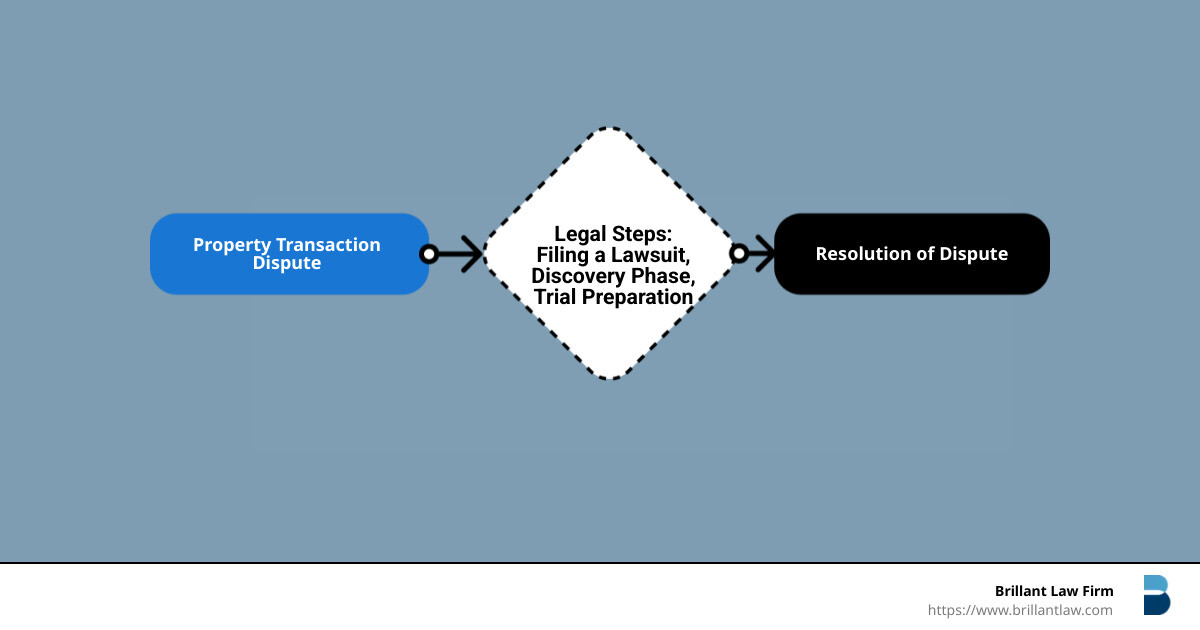
- The Legal Process: Understand key steps such as filing a lawsuit, the findy phase, and trial preparation.
Real estate disputes in California demand precise legal expertise due to the state’s specific regulations and property laws. I’m David Brillant, a Certified Specialist in Estate Planning, Trust, and Probate Law with experience in real estate litigation. My goal is to provide clients with custom solutions to protect their investments.
Easy real estate litigation glossary:
– estate dispute attorney
– estate litigation attorney
– civil lawsuit lawyer cost
Understanding Real Estate Litigation
Real estate litigation involves various disputes that can occur during property transactions. These disputes are not only complex but also require a keen understanding of California’s specific laws and regulations. Let’s explore the common causes and the critical role a litigation attorney plays in these matters.
Common Causes of Real Estate Disputes
Real estate disputes can arise from several issues, each with its own set of challenges:
Contract Issues: Often, disputes stem from breaches of contract. This could involve disagreements over the terms of a sale or lease agreement. Misunderstandings about contract obligations can lead to legal battles.
Boundary Disputes: These occur when property lines are unclear or disputed. Neighbors might disagree on where one property ends and another begins, leading to conflicts that require legal intervention.
Zoning Laws: Zoning disputes involve disagreements with local government regulations about land use. For example, a property owner might wish to build a structure that current zoning laws do not permit.
The Role of a Litigation Attorney
In any of these disputes, having a seasoned litigation attorney is invaluable. Here’s how they can help:
Legal Representation: A litigation attorney represents your interests in court. They ensure that your side of the story is heard and that your rights are protected throughout the legal process.
Case Strategy: Developing a strong case strategy is crucial. An attorney will analyze the situation, gather evidence, and create a plan to achieve the best possible outcome for you.
Negotiation: Often, disputes can be resolved outside of court through negotiation. A skilled attorney can negotiate on your behalf, aiming for a settlement that meets your needs without the time and expense of a trial.
Navigating these disputes requires a thorough understanding of property rights and legal processes. In California, where real estate laws are particularly complex, having the right legal support can make all the difference.

Whether you’re dealing with a contract dispute, a boundary issue, or a zoning challenge, having a knowledgeable attorney by your side is crucial. They provide clarity, protect your interests, and guide you through the intricacies of real estate litigation in California.
Navigating Real Estate Litigation in California
Navigating real estate litigation in California requires understanding the state’s unique property laws and regulations. California’s legal landscape is intricate, and knowing the ins and outs can be the difference between a smooth process and a legal headache.
Key California Real Estate Laws
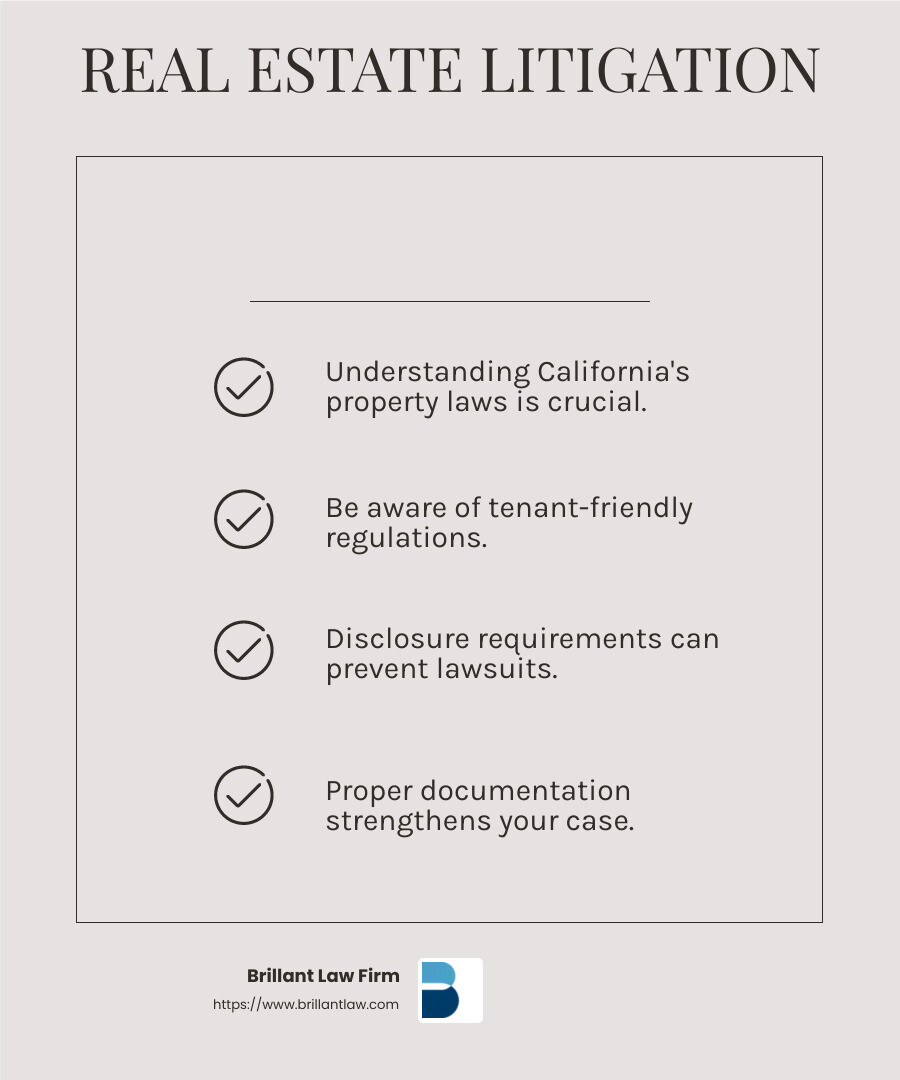
Property Law: In California, property law encompasses everything from land ownership rights to the use of the property. It’s essential to understand these rights to avoid disputes or resolve them effectively.
Tenant Rights: California is known for its tenant-friendly laws. Landlords must comply with strict regulations regarding rent control, eviction processes, and habitability standards. Knowing these rights can help avoid costly litigation.
Disclosure Requirements: Sellers in California must disclose any known issues with the property to potential buyers. This includes problems like water damage or pest infestations. Failure to disclose can lead to lawsuits and financial penalties.
Preparing for Litigation
Preparation is key when facing real estate litigation. Here’s what you need to focus on:
Documentation: Gather all relevant documents, including contracts, emails, and property records. Proper documentation can support your case and provide evidence of your claims.
Evidence Gathering: Collect any additional evidence that might strengthen your position. This could include photographs of property damage, witness statements, or expert reports.
Legal Consultation: Consulting with a real estate attorney is crucial. They can provide guidance on the legal process, help you understand your rights, and develop a strategy custom to your situation.
Understanding local regulations and court procedures can also make a significant impact. California courts have specific rules and timelines that must be followed, and any misstep can delay or jeopardize your case.
Navigating real estate litigation in California involves more than just knowing the law—it’s about being prepared and having the right legal support. This ensures you can effectively manage disputes and protect your property rights.
Strategies for Successful Real Estate Litigation
When it comes to real estate litigation, having a clear strategy can make all the difference. Whether you’re dealing with a contract issue or a boundary dispute, knowing the right steps to take can save time, money, and stress. Let’s break down the essential strategies.
Alternative Dispute Resolution
Before jumping into a courtroom battle, consider Alternative Dispute Resolution (ADR) methods like mediation and arbitration. These options can often resolve disputes faster and more amicably.
Mediation involves a neutral third party who helps both sides reach a voluntary agreement. It’s less formal and can preserve relationships, which is especially valuable in real estate, where parties might continue to interact.
Arbitration is a bit more formal than mediation. An arbitrator hears both sides and makes a binding decision. It’s quicker than going to court and offers privacy, which can be crucial when sensitive property issues are involved.
Negotiation techniques, such as direct discussions between parties, can also be effective. With the guidance of skilled attorneys, negotiation can lead to a satisfactory settlement without the need for further legal action.
Litigation Process Steps
If ADR doesn’t resolve the issue, understanding the litigation process is vital. Here’s a simple breakdown:
Filing a Lawsuit: This is the official start of the legal process. You’ll need to submit a complaint detailing the dispute and what you want the court to do.
Findy Phase: Think of this as gathering all the puzzle pieces to see the full picture. Both sides exchange documents and information to build their cases. This phase includes depositions and interrogatories, where parties answer questions under oath.
Trial Preparation: If the case goes to trial, preparation is key. This includes reviewing evidence, organizing witness testimonies, and formulating legal arguments. It’s like getting ready for a big game—every detail matters.
Throughout these steps, case analysis is crucial. Evaluating the strengths and weaknesses of your case can guide decisions on whether to settle or proceed to trial. Settlement options remain open at any stage, and many cases resolve through a mutually agreed-upon settlement to avoid the uncertainty of a trial.
In California, where Brillant Law Firm is based, real estate litigation requires navigating specific state laws and regulations. Having a knowledgeable attorney by your side ensures you’re well-prepared for any twists and turns in the process.
In the next section, we’ll explore frequently asked questions about real estate litigation to further explain this complex field.
Frequently Asked Questions about Real Estate Litigation
What is the typical duration of a real estate lawsuit?
The duration of a real estate lawsuit can vary significantly, depending on the complexity of the case and the court’s schedule. Generally, you can expect a real estate lawsuit in California to last anywhere from several months to a few years.
Factors influencing the timeline include the nature of the dispute, whether the case goes to trial, and the willingness of parties to settle. For instance, cases involving straightforward contract issues might resolve faster than those with complex boundary disputes or zoning law challenges.
How can I avoid real estate disputes?
Avoiding real estate disputes often starts with thorough preparation and clear communication. Here are some strategies:
Detailed Contracts: Ensure all agreements are documented clearly. A well-drafted contract can prevent misunderstandings and disputes down the line.
Due Diligence: Conduct thorough research before any transaction. This includes title searches, property inspections, and reviewing zoning laws.
Legal Consultation: Consulting with a real estate attorney before entering into agreements can help identify potential issues. An attorney can review contracts and advise on legal rights and obligations.
Open Communication: Maintain clear and open communication with all parties involved. Misunderstandings often lead to disputes, so clarifying expectations early can prevent conflicts.
What should I do if I am sued in a real estate matter?
Being sued in a real estate matter can be daunting, but taking the right steps can help protect your interests:
Consult an Attorney: As soon as you receive a lawsuit notice, consult with a real estate attorney. They can guide you on the appropriate legal strategy and represent your interests.
Gather Documentation: Collect all relevant documents, such as contracts, correspondence, and property records. These will be crucial for your defense.
Respond Promptly: Ensure you respond to the lawsuit within the required timeframe. Failing to do so can result in a default judgment against you.
Evaluate Settlement Options: Consider whether settling the dispute out of court might be a viable option. A settlement can save time and legal expenses.
With expert guidance from a firm like Brillant Law Firm, navigating a lawsuit becomes more manageable. Their understanding of California’s real estate laws ensures you’re well-equipped to handle the situation effectively.
In the next section, we’ll explore key California real estate laws that every property owner should be aware of.
Conclusion
At Brillant Law Firm, we understand that real estate litigation can be complex and overwhelming. Our team is dedicated to providing expert guidance and crafting custom strategies to help you steer these challenges effectively.
Our Expertise: With a deep understanding of California’s real estate laws, we offer unparalleled legal expertise to protect your interests. Whether you’re facing contract disputes, boundary issues, or zoning law challenges, our team is equipped to handle it all.
Custom Strategies: We believe that no two cases are the same. That’s why we tailor our approach to meet the unique needs of each client. By developing bespoke legal strategies, we ensure that your case is handled with the utmost care and precision.
Commitment to Excellence: At Brillant Law Firm, we pride ourselves on our unwavering dedication to excellence. From the initial consultation to the final resolution, we are committed to delivering the highest level of service and achieving favorable outcomes for our clients.
Navigating real estate disputes requires more than just legal knowledge; it demands a partner who is committed to your success. Find how our certified specialists can assist you in resolving real estate disputes and safeguarding your property interests.
With Brillant Law Firm by your side, you can move forward with confidence, knowing that your case is in capable hands.


