

real estate law walnut creek: Trustworthy 2025
Why Professional Legal Guidance is Essential for Walnut Creek Property Matters
Real estate law walnut creek encompasses a complex web of California regulations, local ordinances, and specialized procedures that can make or break your property investment. Whether you’re buying your first home, developing commercial property, or managing real estate within a trust, the stakes are simply too high to steer alone.
Key Real Estate Legal Services in Walnut Creek:
- Property transactions – Purchase agreements, due diligence, title review
- Trust and estate matters – Probate sales, Proposition 19 compliance, succession planning
- Dispute resolution – Breach of contract, boundary disputes, landlord-tenant conflicts
- Commercial real estate – Lease negotiations, development projects, zoning issues
- HOA services – Governing documents, architectural review, dispute resolution
The Walnut Creek real estate market presents unique challenges that require local expertise. From navigating Contra Costa County regulations to understanding California’s ever-changing property tax laws, having the right legal counsel can save you thousands of dollars and countless headaches.
Real estate transactions often play a critical role in trust and estate management, as noted by local practitioners who specialize in this intersection of law. With California’s Proposition 19 significantly altering parent-child property tax exclusions, the need for integrated legal advice has never been greater.
I’m David Brillant, a Certified Specialist in Estate Planning, Trust and Probate Law with a Masters in Taxation. My practice focuses on solving complex real estate law walnut creek matters, particularly where property intersects with trust administration and tax planning. I enjoy tackling cases where clients initially believe no solution exists, bringing both transactional expertise and litigation experience to protect your interests.
The Comprehensive Scope of Real Estate Law in Walnut Creek

Real estate law walnut creek is more comprehensive than many realize. It extends beyond buying and selling homes to include two main branches: the transactional side (getting deals done) and the litigation side (resolving disputes). Our practice also covers land use and zoning, landlord-tenant law, and complex HOA law.
The difference between commercial and residential real estate law is significant. Commercial deals involve intricate lease negotiations, environmental assessments, and regulatory compliance. While simpler, residential transactions still require careful attention to unique Contra Costa County regulations. Navigating Walnut Creek’s market, with its mix of state, county, and city rules, requires deep local expertise.
Navigating Transactions with a real estate law walnut creek Attorney
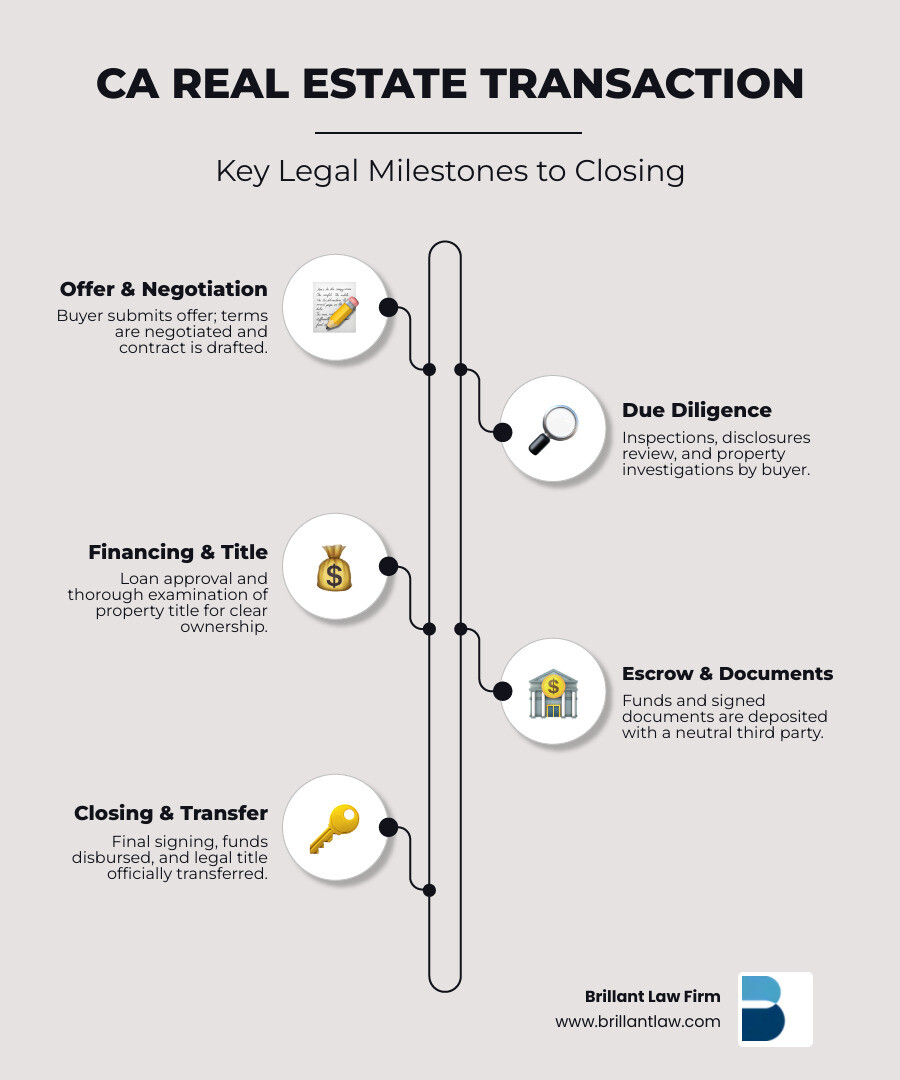
Real estate transactions require precise execution to avoid costly errors. The process begins with purchase and sale agreements custom to the specific risks and opportunities of your deal, not just boilerplate templates. We emphasize a thorough due diligence process to uncover hidden issues before they become problems.
Title review and insurance are crucial for preventing surprises after closing, such as unexpected liens, easements, or ownership claims. During escrow and closing procedures, legal counsel ensures all details are handled correctly.
For business clients, we provide significant value in commercial lease negotiation, scrutinizing lengthy agreements that dictate long-term rights and responsibilities. We also handle drafting option agreements, a powerful tool for securing future property purchases in a competitive market.
Resolving Disputes: Common Litigation Handled by Local Attorneys
When real estate disputes arise, experienced litigation counsel is essential. Breach of contract cases are common, often triggered by changing market conditions or financing issues. Failure to disclose defects is another frequent source of litigation, as California has strict disclosure laws that sellers sometimes neglect. When a hidden defect surfaces after closing, legal action may be necessary.
Boundary and easement disputes over issues like fence lines or access rights can escalate quickly and require legal intervention. Partition actions are necessary when co-owners, such as heirs or business partners, cannot agree on the sale or use of a shared property.
Our common litigation areas also include construction defect claims and landlord-tenant evictions and conflicts, both of which demand swift action and knowledge of California law.
Specialized Legal Services for Property Stakeholders
Different players in the real estate market need different types of legal support. We’ve custom our services to meet the unique needs of various stakeholders:
- Homeowners’ Associations (HOAs) need help with everything from updating governing documents to handling architectural review disputes and managing difficult residents
- Real Estate Developers require comprehensive support from initial land acquisition through final sales, including navigating complex zoning and environmental regulations
- Landlords and Tenants benefit from carefully drafted lease agreements and swift resolution of conflicts when they arise
- Property Investors need strategic advice on acquisitions, tax-efficient ownership structures, and portfolio management strategies
Each of these groups faces distinct challenges in California’s regulatory environment. What works for a residential landlord won’t necessarily work for a commercial developer, and HOA governance issues require a completely different approach than investment property management.
The key is understanding not just the law, but how it applies to your specific situation and goals. That’s where local expertise in real estate law walnut creek becomes invaluable—we know the players, the processes, and the potential pitfalls that are unique to our market.
Real Estate in Trusts & Estates: A Critical Walnut Creek Focus

When real estate is part of a trust or estate, you enter a specialized area where real estate law walnut creek intersects with complex estate planning. This creates unique challenges that require specialized expertise. A family property in a trust is subject to trust rules, beneficiary rights, and evolving tax laws, making decisions about it critical for future generations.
Trust administration with real estate involves complex decisions about whether to sell or retain property, manage maintenance, and balance the competing interests of beneficiaries. Probate sales follow a strict set of California procedures, and errors can lead to costly delays or legal challenges. Succession planning for real property involves determining how property will transfer to the next generation, considering tax implications, and protecting the asset.
A critical step is transferring title into a trust—a strategic move that impacts property taxes and asset protection. The fiduciary duties of a trustee are significant with real estate, requiring active management beyond what is needed for financial assets. Finally, asset protection for real estate in trusts demands careful planning to use the protections available under California law.
Understanding California’s Proposition 19 and Its Impact
California’s Proposition 19 fundamentally changed how families can pass real estate to children while preserving favorable property tax treatment. Before Prop 19, parents could transfer a primary residence and up to $1 million in assessed value of other properties to their children without a property tax reassessment, allowing children to inherit a low property tax base.
Proposition 19 made these parent-child transfer rules much more restrictive. Now, to maintain a low tax assessment on a family home, the child must use it as their primary residence. Additionally, a partial reassessment occurs if the property’s market value exceeds the assessed value by more than $1 million. For other properties like vacation or rental homes, the parent-child exclusion was eliminated. These properties are now fully reassessed at current market value upon transfer, creating significant property tax reassessment triggers.
However, with proper planning, families can still achieve significant tax benefits and successful intergenerational wealth transfer. Implementing proactive tax planning strategies is key. We help families steer these rules by analyzing tax impacts, exploring beneficial trust structures, and strategically timing transfers to work within Proposition 19’s framework.
For the complete details on these changes, you can Learn more about Prop 19 from the CA Board of Equalization.
Financing and Loan Agreements for Trust-Held Properties
Securing a loan for a trust-owned property is more complex than a standard mortgage. Lenders have different requirements, creating challenges in securing loans for trusts. Key issues include determining who has the authority to sign, how to handle trustee changes, and how the lender assesses the trust’s creditworthiness.
Structuring loan agreements for flexibility is crucial to accommodate the trust’s objectives and multiple parties. The agreement must include ensuring trustee succession provisions to prevent loan defaults or demands for immediate repayment if a trustee becomes incapacitated or dies. Protecting beneficiary interests is also paramount, requiring careful negotiation of terms that affect the trust’s assets and the beneficiaries’ inheritance.
We work with lenders to create financing that suits all parties, potentially using personal guarantees or creative collateral arrangements. This intersection of finance and trust administration requires the dual expertise in real estate law walnut creek and estate matters that our firm provides.
For more information on how we integrate real estate and financial planning into our comprehensive estate planning services, please visit our page dedicated to More info about our estate planning services.
How to Choose the Right Real Estate Attorney in Walnut Creek

Choosing the right real estate law walnut creek attorney is critical for navigating California’s complex legal landscape. To find the right professional, focus on several key factors. First, prioritize experience and specialization. Seek an attorney who focuses specifically on real estate matters, whether residential, commercial, or trust-related.
Local Walnut Creek knowledge is also crucial. A lawyer familiar with Contra Costa County regulations, market trends, and the local legal community offers a distinct advantage. Next, research client reviews and testimonials, looking for consistent patterns of good communication, successful outcomes, and responsiveness.
Finally, assess the attorney’s communication style during your initial consultation. They should explain concepts clearly, show genuine interest in your goals, and ask thoughtful questions. A good rapport from the start is essential for a successful working relationship.
Key Questions to Ask a Potential Attorney
Before you commit to working with any attorney, come prepared with specific questions that will help you make an informed decision. Start by asking about their experience with cases like yours. If you’re dealing with a trust-related property sale, you want someone who’s handled dozens of these transactions, not someone who’s learning on your dime.
Get crystal clear on typical legal fees and billing structure upfront. Don’t be shy about this – it’s your money, and you have every right to understand how it will be spent. Ask for specific examples of what different services might cost.
Discuss communication frequency and methods. Some clients prefer detailed email updates, while others want quick phone calls. Make sure your attorney’s communication style matches your preferences and that they’re committed to keeping you informed throughout the process.
Ask about potential strategies and outcomes for your specific situation. A good attorney should be able to outline different approaches and help you understand the pros and cons of each. They should also be honest about potential challenges or risks you might face.
If you’re concerned about an attorney’s professional standing, you can Check an attorney’s professional standing through official bar association resources.
Understanding Legal Fees for real estate law walnut creek
Understanding legal fees upfront prevents surprises. Real estate law walnut creek attorneys use several fee structures depending on the case.
Hourly rates in California typically range from $400 to $800+ per hour, varying with experience and case complexity. Experienced attorneys may have higher rates but often work more efficiently. Many offer flat fees for specific services, such as contract reviews or simple closings, which provides cost certainty. Retainer agreements, where you pay an upfront sum for the attorney to bill against, are common for ongoing representation. Contingency fees (a percentage of the recovery) are sometimes used for litigation but are less common in real estate law.
| Fee Structure | Typical Range | Best For |
|---|---|---|
| Hourly Rates | $400-$800+ per hour | Complex transactions, litigation |
| Flat Fees | $1,500-$5,000+ | Contract review, simple closings |
| Retainer Agreements | $5,000-$25,000+ | Ongoing representation |
| Contingency Fees | 25-40% of recovery | Certain litigation matters |
The cheapest option isn’t always the best value. An experienced attorney who resolves your matter efficiently can be more cost-effective than a less expensive lawyer who takes longer or makes mistakes.
Frequently Asked Questions about Walnut Creek Real Estate Law
Here, we address some common questions that arise when navigating real estate matters in Walnut Creek. These are the questions I hear most often from clients who are trying to understand when they need legal help beyond what their real estate agent can provide.
When should I hire a real estate attorney instead of just a real estate agent?
While real estate agents manage the sale, an attorney protects your legal and financial interests. An agent facilitates the transaction, but an attorney ensures you avoid future legal trouble.
You should hire a real estate attorney in Walnut Creek when:
- Disputes arise: An attorney is essential for litigation involving breach of contract, boundary disputes, or landlord-tenant conflicts, as agents cannot provide legal advice or representation in court.
- Transactions are complex: Legal expertise is needed for deals involving properties in trusts or estates, intricate commercial leases, or title problems. An attorney ensures compliance and proper title transfers.
- Risk mitigation is critical: An attorney can identify potential legal pitfalls in contracts, disclosures, or zoning that an agent might miss, protecting you from costly future issues.
What are the most common legal pitfalls in a Walnut Creek property transaction?
Many common legal pitfalls in Walnut Creek property transactions are preventable with proper legal guidance. Key issues include:
- Failure to conduct proper due diligence: This involves skipping thorough investigations into a property’s condition, legal history, and zoning restrictions.
- Ambiguous or unclear contracts: Poorly drafted purchase agreements or leases lead to misunderstandings, disputes, and failed transactions.
- Misrepresentation or non-disclosure: Sellers failing to disclose known property defects is a common cause of litigation.
- Financing complications: Unexpected changes in loan terms or difficulties securing financing, especially for trust-held properties, can derail a deal.
- Boundary and easement disputes: Disagreements over property lines and access rights are frequent problems that can lead to legal conflict.
How is a commercial real estate transaction legally different from a residential one?
Commercial and residential real estate transactions differ significantly in complexity and legal requirements.
- Contract Complexity: Commercial contracts, especially leases, are heavily negotiated and far more detailed than residential agreements, covering permitted uses, operating expenses, and liability.
- Due Diligence: Commercial due diligence is more extensive, including environmental assessments, zoning analyses, and financial reviews, beyond the standard residential property inspection.
- Financing Structures: Commercial financing is more complex, with varied loan types, rigorous underwriting, and different collateral arrangements than standard residential mortgages.
- Regulatory Oversight: Commercial properties face stricter zoning, environmental, and building code regulations. Development projects have unique legal requirements.
- Tax Implications: Commercial transactions involve more nuanced tax strategies, such as 1031 exchanges for tax-deferred investments, which are not typically used for primary residences.
These differences underscore the need for specialized real estate law walnut creek expertise for any business or investor.
Secure Your Investment with Expert Legal Guidance
The real estate law walnut creek landscape is complex, shaped by state regulations, Contra Costa County ordinances, and unique local challenges. Whether you are navigating Proposition 19, a property dispute, or a commercial transaction, the stakes are too high to proceed without expert guidance.
Real estate issues often involve overlapping areas of law, such as trust administration and tax planning. At Brillant Law Firm, our approach is to provide comprehensive legal strategies that protect your property and assets by considering your broader financial and estate planning goals.
The benefit of integrated estate and tax planning is crucial in California. For example, understanding the nuances of Proposition 19 can prevent costly tax reassessments and preserve family wealth. Our commitment is to provide bespoke, ironclad strategies custom to your unique situation. We excel at tackling complex cases, bringing both transactional and litigation experience to protect your interests.
The value of proactive legal counsel is immense. Involving an attorney early allows for the proper structuring of transactions and the prevention of future crises. Don’t let legal complexities hinder your goals. Whether you are buying, managing, or developing property, experienced guidance is essential.
Contact us for a comprehensive consultation to learn how our integrated approach can protect your interests and help you move forward with confidence.


