

Probate appeals attorney California is a critical service when navigating the often complex and challenging world of probate law. If you’re confronting a probate decision you believe is flawed, understanding when and how to appeal is vital. Here’s a quick insight:
- What are probate appeals? These involve challenging decisions made by a probate court.
- When can you appeal? Only when there is a legal error that affected the outcome.
- Legal grounds for appeal: Refer to California Probate Code sections 1300, 1303, and 1304 for specifics on appealable decisions.
California stands as a unique hub for probate disputes due to its intricate legal fabric and significant assets often involved. Legal errors in probate court decisions can be daunting, but addressing them is crucial to ensure fairness and proper asset management.
My name is David Brillant, and with certifications in Estate Planning, Trust, and Probate Law in California, I have honed my expertise in handling convoluted probate matters effectively. My experience as a probate appeals attorney California positions me to solve complex legal errors for clients, ensuring peace of mind as we transition into the deeper intricacies of probate appeals.
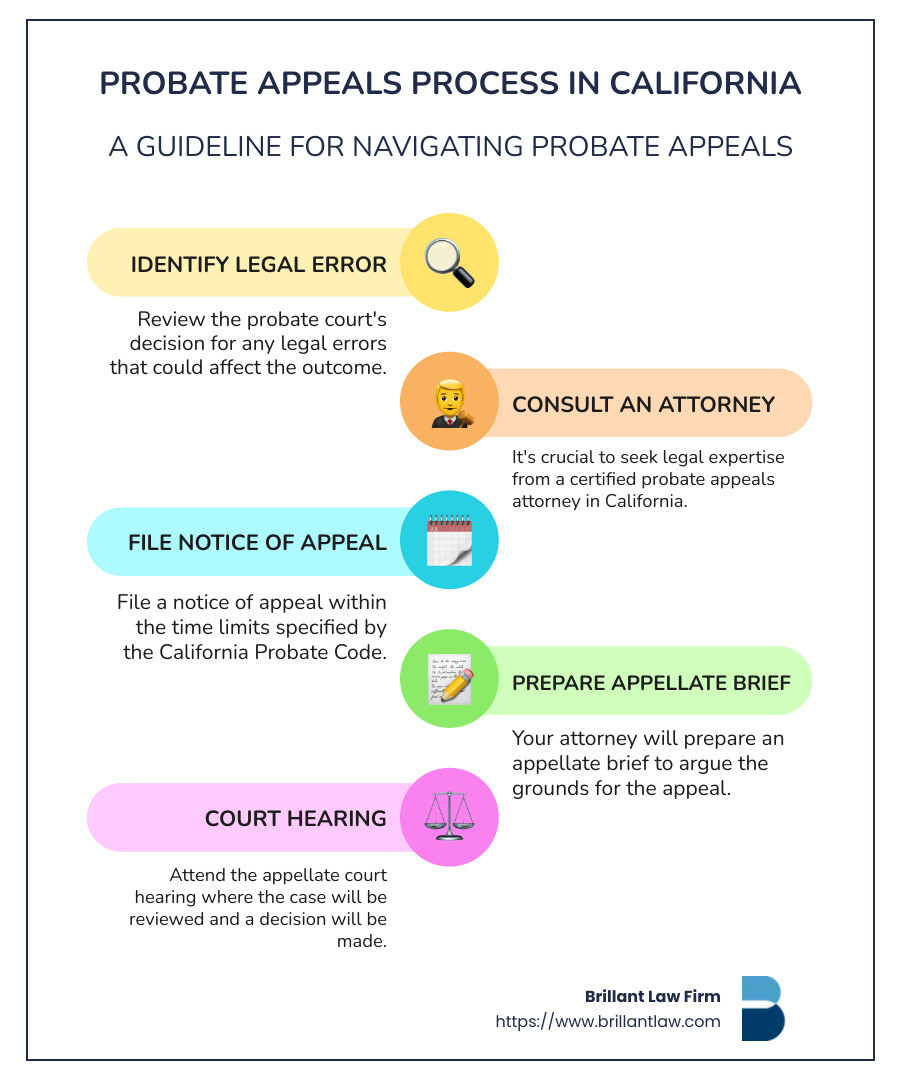
Understanding Probate Appeals
Probate appeals are a specialized area of law where an appellate court reviews decisions made by a lower probate court. These appeals are not about retrying the case but rather examining if legal errors were made that could have impacted the outcome.
Definition
A probate appeal is a request to a higher court to review and change the decision of a probate court. This process is crucial when you believe a legal mistake affected the fairness or correctness of the decision regarding a decedent’s estate.
Role of the Appellate Court
The appellate court’s job is to scrutinize the probate court’s decision for errors. They look at legal interpretations, evidence admissibility, and procedural correctness. However, they do not consider new evidence or re-evaluate the case facts. Their focus is solely on the legal basis of the original decision.
Legal Grounds for Appeal
Not every disagreement with a probate decision qualifies for an appeal. According to California Probate Code sections 1300, 1303, and 1304, you need specific legal grounds, such as:
- Improper legal interpretation: If the court misapplied the law.
- Sufficiency of the evidence: If the decision was not supported by the evidence presented.
- Procedural errors: Mistakes in the court’s process that might have influenced the decision.
Fiduciary Misconduct
Fiduciaries, like executors or trustees, have a duty to manage estate assets responsibly. However, when they misuse their power for personal gain or neglect their duties, it constitutes fiduciary misconduct. This can be a basis for an appeal if their actions affected the probate court’s decision.

Understanding these elements is crucial when considering a probate appeal. With a knowledgeable probate appeals attorney California, you can steer this complex process and ensure that any errors in the original probate decision are addressed.
The Probate Appeals Process in California
Navigating the probate appeals process in California involves understanding strict deadlines and specific legal grounds. Let’s break down the essentials to ensure you are well-prepared.
Time Limits
Time is of the essence in probate appeals. According to California Rule of Court 8.104(a)(1), you generally have 60 days from when the probate court enters its final order to file an appeal. Missing this deadline can bar you from appealing, no matter how strong your case might be. Therefore, swift action is crucial. Engaging a probate appeals attorney in California early can help you meet these tight deadlines and prepare your case efficiently.
California Probate Code
The California Probate Code outlines what decisions can be appealed. Sections 1300, 1303, and 1304 are key. They specify that appealable decisions include:
- Property transactions: Orders related to the sale, lease, or transfer of estate property.
- Fiduciary actions: Approvals or denials of a fiduciary’s actions or compensation.
- Estate administration: Decisions about the distribution of property or the validity of a will.
These sections of the Probate Code ensure that only specific probate court decisions can be challenged, focusing on those that may have been legally flawed.
Appealable Decisions
Understanding which decisions can be appealed is vital. Not every unfavorable outcome is eligible. For instance, if a probate court authorizes a property sale or approves a fiduciary’s conduct, these decisions can be appealed if you believe there was an error. However, the appeal must demonstrate a legal mistake, such as a misinterpretation of the law or procedural errors that impacted the decision.
When preparing to appeal, the appellate court will not re-evaluate facts or hear new evidence. Their focus is strictly on whether the probate court made a legal error. This makes selecting the right probate appeals attorney in California crucial, as they can identify and argue these legal nuances effectively.
In summary, the probate appeals process in California is governed by specific rules and deadlines. Understanding these, along with having a skilled attorney, can significantly impact the success of your appeal.
Why You Need a Probate Appeals Attorney in California
Navigating the murky waters of probate appeals requires more than just a basic understanding of the law. It demands legal expertise and procedural knowledge specific to California’s probate system. This is where a skilled probate appeals attorney in California becomes invaluable.
Legal Expertise
Probate law is complex. It involves intricate legal principles and specific statutes that dictate what can be appealed. For instance, only certain probate decisions, like those related to fiduciary actions or property transactions, are eligible for appeal under California Probate Code sections 1300 and 1303. An attorney specializing in probate appeals can pinpoint these appealable issues and craft a compelling legal argument.
Moreover, an experienced attorney knows how to identify prejudicial errors—errors that materially affect the outcome of a case. This is crucial, as the appellate court’s role is to determine if such errors occurred, not to rehash facts or evidence. A knowledgeable attorney can highlight these errors effectively, increasing the chances of a successful appeal.
Procedural Knowledge
The probate appeals process is laden with procedural problems, from strict filing deadlines to specific documentation requirements. Missing a deadline, like the 60-day window for filing an appeal, can derail your entire case. An attorney well-versed in California’s probate procedures ensures that all boxes are checked and deadlines are met, safeguarding your appeal from procedural pitfalls.
They also handle the preparation and submission of complex legal briefs and motions, which are crucial in the appellate process. This meticulous attention to procedural detail can make or break an appeal.
Brillant Law Firm
While the Brillant Law Firm is a known entity in probate law, your focus should be on finding a local attorney with a proven track record in probate appeals. This attorney will be your guide, helping you steer the complexities of the appeals process and ensuring that your case receives the attention it deserves.
A probate appeals attorney in California provides the legal acumen and procedural savvy needed to challenge probate court decisions effectively. By entrusting your case to an expert, you position yourself for the best possible outcome in the appellate court.
Key Considerations for Filing a Probate Appeal
When considering a probate appeal in California, understanding key factors like prejudicial error, evidence, and compliance with procedures is crucial. Let’s break these down.
Prejudicial Error
A prejudicial error is a mistake made by the probate court that affects the outcome of a case. It’s not enough to disagree with the court’s decision; you must show that the error had a significant impact on the case’s result. For example, if the court misinterpreted the law or improperly admitted evidence, these could be grounds for an appeal.
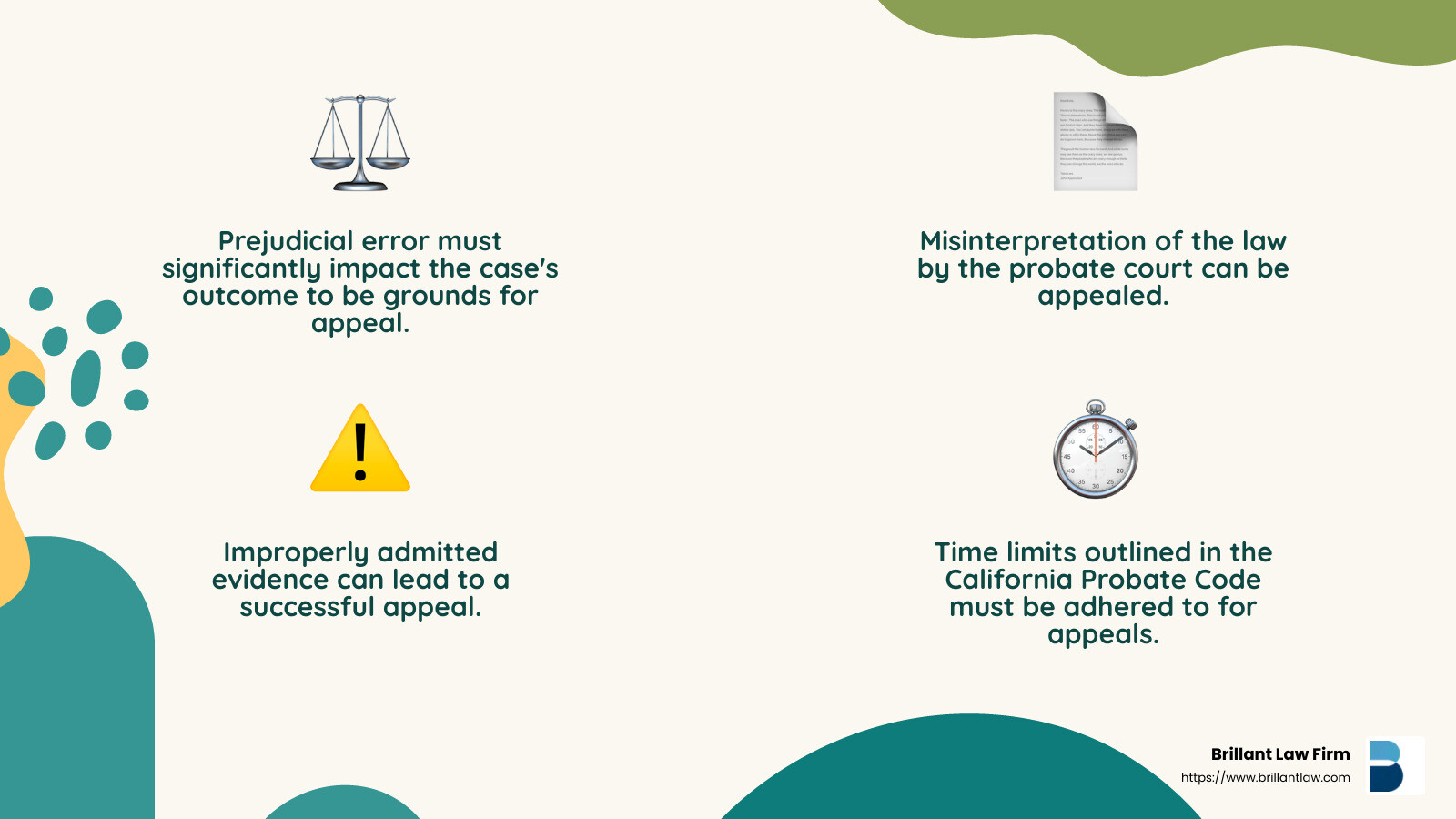
Case Study: In Sefton v. Sefton, the court’s misapplication of the law regarding a power of appointment was a prejudicial error that led to a successful appeal. This highlights the importance of identifying such errors in your case.
Evidence
For a successful probate appeal, presenting clear and compelling evidence is essential. The appellate court reviews the case based on the existing record; it does not consider new evidence. Therefore, ensure that all relevant evidence was presented during the initial trial, and any errors in its admission or exclusion are clearly documented.
Tip: Work with your attorney to carefully review the trial record to identify any evidentiary issues that could support your appeal.
Compliance with Procedures
Compliance with procedural rules is non-negotiable in probate appeals. California law sets strict time limits for filing an appeal—usually within 60 days of the probate court’s final order. Missing this deadline can result in your appeal being dismissed before it’s even heard.
Checklist for Compliance:
- Timely Filing: Ensure all documents are filed within the specified deadlines.
- Correct Documentation: Submit all necessary paperwork, including a notice of appeal and briefs, in the correct format.
- Adherence to Court Rules: Follow all court rules regarding the presentation and submission of documents.
By focusing on these key considerations, you can better steer the complexities of filing a probate appeal in California. With the right approach and the guidance of a seasoned probate appeals attorney in California, you can effectively challenge a probate court decision and work towards a favorable outcome.
Frequently Asked Questions about Probate Appeals
Can you appeal a probate decision in California?
Yes, you can appeal a probate decision in California. However, it’s crucial to understand that not every decision can be appealed. To have grounds for an appeal, you must demonstrate a legal error that affected the outcome of the case. This could include errors in interpreting the law or mishandling evidence. The 4th District Court of Appeal is one of the courts that handles probate appeals in California. They review the case to determine if the probate court made a mistake that warrants a reversal or modification of the decision.
How much can an attorney charge for a probate in California?
Attorney fees for probate cases in California are often based on a percentage fee structure outlined in the California Probate Code. This means the fees are calculated as a percentage of the estate’s value. The typical fee structure is:
- 4% of the first $100,000 of the estate
- 3% of the next $100,000
- 2% of the next $800,000
- 1% of the next $9 million
These fees can add up, making it important to discuss costs with your attorney upfront to understand what you might expect to pay.
Is a probate attorney required in California?
While it’s not legally required to hire a probate attorney in California, having one can be highly beneficial. Probate involves complex legal processes and numerous court documents. An experienced attorney can help steer these challenges, ensuring compliance with all legal requirements and helping to avoid costly mistakes. The benefits of hiring a probate attorney include expert guidance through the legal maze, efficient handling of paperwork, and representation in court if disputes arise.
Conclusion
Navigating the complexities of probate appeals in California requires expertise, dedication, and a deep understanding of the legal landscape. At Brillant Law Firm, we pride ourselves on offering unparalleled expertise in probate law. Our team is committed to providing bespoke, ironclad strategies custom specifically to each client’s needs.
Probate appeals are not just about understanding the law; they require meticulous attention to detail and a strategic approach to ensure the best possible outcome. With our deep knowledge of California probate appeals, we guide our clients through every step of the process, from identifying appealable decisions to presenting compelling arguments in court.
Our dedication to excellence means that we don’t just represent you; we advocate passionately for your interests. Whether you’re facing fiduciary misconduct, legal errors, or procedural missteps, our team is equipped to handle even the most challenging probate appeals with confidence and precision.
If you find yourself in need of a probate appeals attorney in California, look no further than Brillant Law Firm. Our commitment to your success is unwavering, and we are here to support you every step of the way. For more information on how we can assist you with your probate appeal, visit our Appeals Lawyers Near Me page. Let us be your trusted partner in achieving the justice you deserve.


