

Living Trust Setup: 5 Powerful Steps for Easy Success 2025
Why Proper Living Trust Setup Protects Your California Legacy
Living Trust Setup is a powerful estate planning strategy that allows you to transfer your assets to beneficiaries while avoiding the costly and time-consuming probate process. Here’s what you need to know:
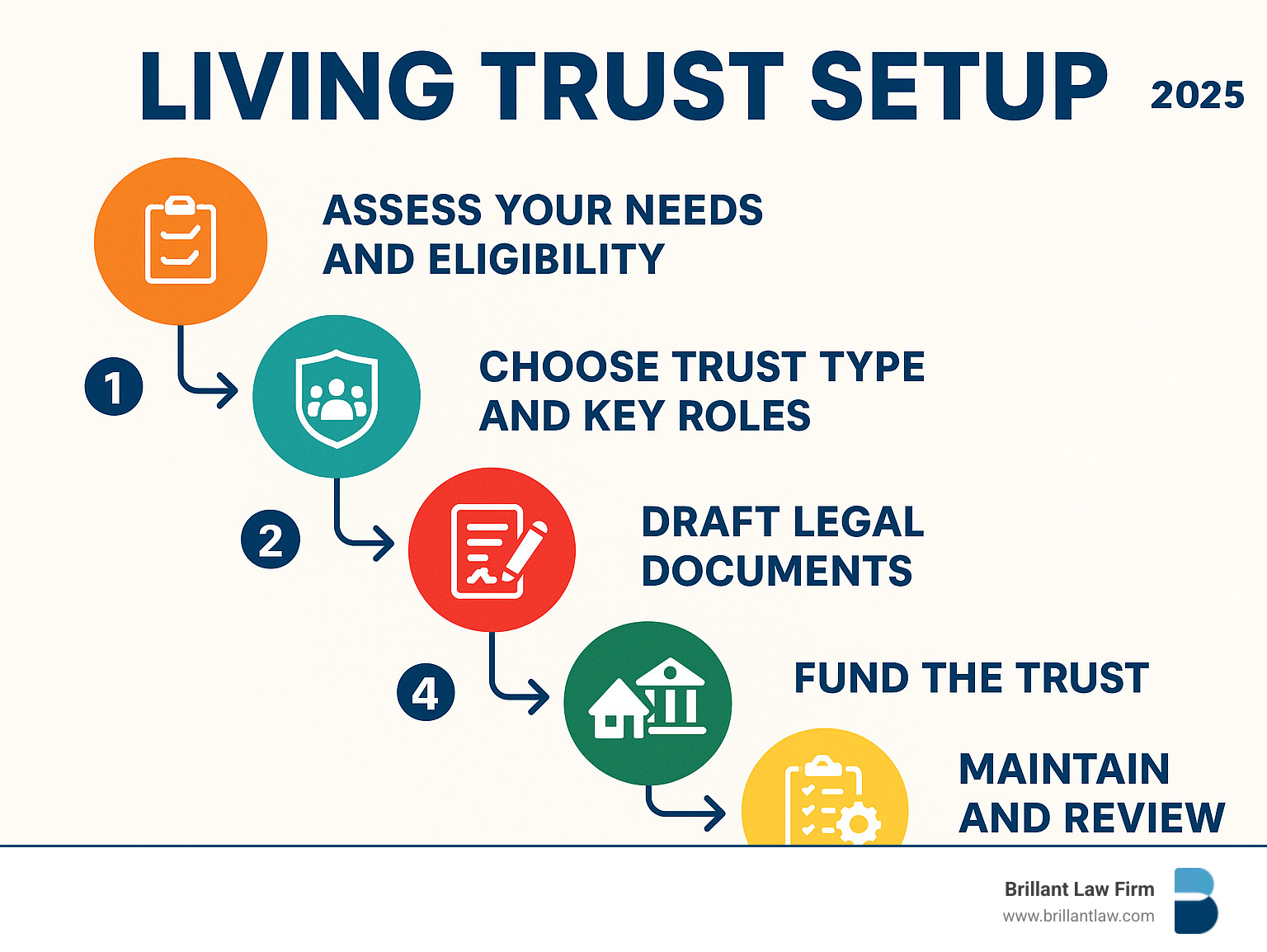
Quick Living Trust Setup Guide:
- Determine eligibility – Best for homeowners, business owners, and high-net-worth individuals
- Choose trust type – Revocable (changeable) or irrevocable (permanent)
- Draft legal documents – Trust agreement, deeds, and supporting forms
- Fund the trust – Transfer assets like real estate, bank accounts, and investments
- Maintain and review – Update regularly and ensure compliance with California law
In California, probate fees can reach up to 1.5% of your estate’s gross value – meaning a $2 million estate could face $30,000 in probate costs alone. A properly structured living trust eliminates these fees while maintaining your privacy and providing seamless asset management if you become incapacitated.
Why California families choose living trusts:
- Avoid probate court and associated delays (9-18 months typical)
- Maintain privacy – trust distributions stay out of public records
- Plan for incapacity – successor trustees manage assets without court intervention
- Protect minor children – structured distributions until they reach maturity
- Reduce family conflicts – clear instructions prevent disputes
I’m David Brillant, a Certified Specialist in Estate Planning, Trust and Probate Law by the State Bar of California, with a Masters in Taxation. I’ve guided countless California families through the Living Trust Setup process.
Handy Living Trust Setup terms:
Step 1 – Decide If a Living Trust Is Right for You
A living trust is a legal container you create during your lifetime to hold your assets. When you pass away, those assets flow directly to your beneficiaries without probate court.
Key benefits include:
Probate avoidance – California’s probate process can take 9 months to 2 years, costing 3-8% of your estate’s value. A $1 million estate faces $30,000-$80,000 in probate costs.
Incapacity planning – Your successor trustee can immediately manage your affairs if you become unable to do so, without court-appointed guardianship.
Privacy protection – Trust distributions stay confidential, unlike wills which become public record during probate.
Minor children protection – Set specific conditions for when children receive their inheritance, such as graduating college or reaching age 25.
Who Should Consider One?
California homeowners benefit most due to high property values. Real estate typically requires probate unless held in a trust.
Business owners need continuity planning. Without proper planning, your business could be frozen during probate.
Aging parents benefit from incapacity planning aspects, ensuring smooth financial management if health issues arise.
Single professionals avoid having distant relatives make decisions by appointing trusted individuals as successor trustees.
The choice between revocable and irrevocable trusts depends on your goals. Revocable trusts offer flexibility – you can change beneficiaries or revoke entirely. Irrevocable trusts provide stronger asset protection and tax benefits but sacrifice control.
California’s probate threshold is $184,500. If your estate exceeds this amount, a living trust becomes increasingly valuable.
Step 2 – Choose Your Trust Type & Key Roles

Most California families choose a revocable living trust for its balance of control and protection. As the grantor, you keep complete control during your lifetime while providing seamless asset management after death or incapacity.
Irrevocable living trusts permanently remove assets from your control but offer powerful benefits: estate tax reduction, creditor protection, and potential Medicaid planning advantages.
Choosing your trustee is crucial. You’ll typically serve as your own trustee initially, but selecting a successor trustee requires careful consideration. This person will manage investments, pay bills, and make distributions to beneficiaries.
Consider whether your chosen successor is financially savvy, lives nearby, and won’t create family conflicts. Corporate trustees offer professional expertise and neutrality but charge 1-1.5% of trust assets annually.
Beneficiary planning includes primary beneficiaries (your intended recipients) and contingent beneficiaries (your backup plan). Don’t forget incapacity triggers – the conditions that activate your successor trustee’s authority, usually requiring physician certification.
Revocable vs. Irrevocable: The Core Decision
Revocable trusts maintain your complete control and flexibility. You can modify terms, change beneficiaries, or dissolve the trust entirely. Assets remain in your taxable estate but avoid probate.
Irrevocable trusts remove assets from your taxable estate and provide creditor protection, but you sacrifice control and flexibility. They require separate tax returns and make changes extremely difficult.
Living Trust Setup vs. Will
Understanding the Difference Between a Will and a Trust shows why Living Trust Setup offers superior advantages.
Living trusts take effect immediately and bypass probate entirely, allowing private, efficient distribution. Wills only activate after death and require probate court supervision, creating public records and delays.
While trust setup costs more initially ($3,000-$8,500 in California), avoiding probate typically saves thousands in fees and months of delays.
Step 3 – Draft the Document: The Heart of Your Living Trust Setup
Creating your trust document transforms your Living Trust Setup from planning to reality. This legal agreement becomes the roadmap for managing your assets during your lifetime and distributing them after death.
Professional drafting ensures California law compliance and proper tax planning provisions. While online forms seem cheaper, mistakes can invalidate your entire plan or create costly tax consequences.
California notarization is mandatory. You’ll sign the trust agreement before a notary public who verifies your identity and mental capacity.
Your trust agreement contains essential components: grantor identification, trustee powers and limitations, beneficiary designations, successor trustee appointments, incapacity provisions, and administrative clauses.
Supporting documents include grant deeds for real estate transfers, assignment of personal property for tangible assets, and change of beneficiary forms for life insurance and retirement accounts.
The certification of trust proves your trust exists without revealing private details to institutions. Your pour-over will catches any assets not transferred to the trust during your lifetime.
For comprehensive guidance, check our Checklist for Creating a Trust and this helpful resource: Make a Living Trust: A Quick Checklist.
Living Trust Setup Checklist
Start with grantor information – full legal name, address, marital status, and mental capacity statement. Trustee clauses designate yourself as initial trustee, name successors with alternates, and define powers and compensation.
Distribution terms specify particular bequests for special items and residuary distributions for everything else. Include age or condition requirements for minor children and special needs considerations.
Required Documents
A complete Living Trust Setup requires your trust agreement (15-30 pages typically), grant deed for real estate (must be recorded), change-of-beneficiary forms for accounts with existing beneficiaries, assignment of personal property for tangible assets, and your pour-over will as the ultimate safety net.
Step 4 – Fund the Trust: Transferring Assets Correctly
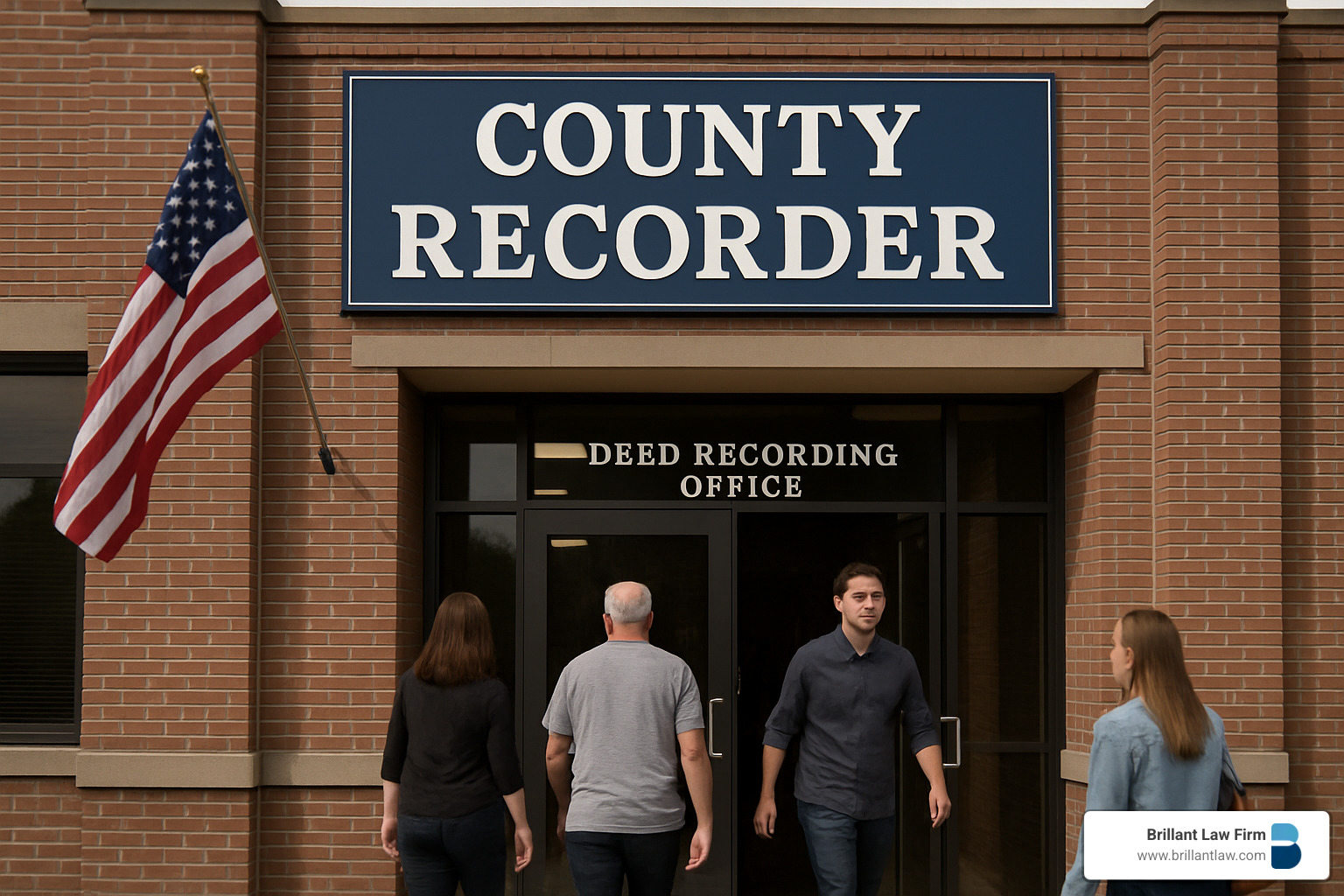
Creating your trust document is like building a safe – but it’s useless unless you put your valuables inside. Living Trust Setup isn’t complete until you properly fund your trust by transferring asset ownership.
Real estate transfer requires preparing and recording a new grant deed transferring your property from your individual name to yourself as trustee. If Sarah Johnson owns a home, the new deed shows “Sarah Johnson, Trustee of the Sarah Johnson Living Trust dated March 15, 2024” as owner.
Bank and brokerage account retitling requires visiting institutions or calling their trust departments. Most have specific procedures, and some require closing existing accounts and opening new ones in the trust name.
Business interests need operating agreement updates and membership record changes to reflect trust ownership, preventing business freezing during probate.
Life insurance beneficiary updates should typically name your trust as beneficiary for structured distributions and better tax planning.
Warning about retirement accounts – never transfer these directly into your trust during your lifetime! This triggers immediate taxation and penalties. Instead, name your trust as the beneficiary.
Digital assets require a secure log of online accounts, cryptocurrency wallets, and digital property for your successor trustee’s access.
For detailed guidance, see our comprehensive guide How to Setup a Revocable Living Trust.
Putting Your California Home in the Trust
County recorder fees range from $15-$50 to record your new deed – a small price for potentially saving thousands in probate costs.
Property tax reassessment won’t occur – Proposition 13 protections remain intact when transferring to your own revocable living trust. The county considers this a legal title change only, not beneficial ownership change.
Due-on-sale clause concerns are protected by federal law. The Garn-St. Germain Act prohibits lenders from calling your loan due when transferring property to your own revocable living trust.
Avoiding Common Funding Mistakes
Forgotten assets like small accounts or collections can still trigger probate. Create a comprehensive inventory and review annually.
Refinance oversights occur when lenders require temporary trust removal during refinancing. Always transfer property back to the trust after closing.
Step 5 – Maintain, Review & Comply with California Rules
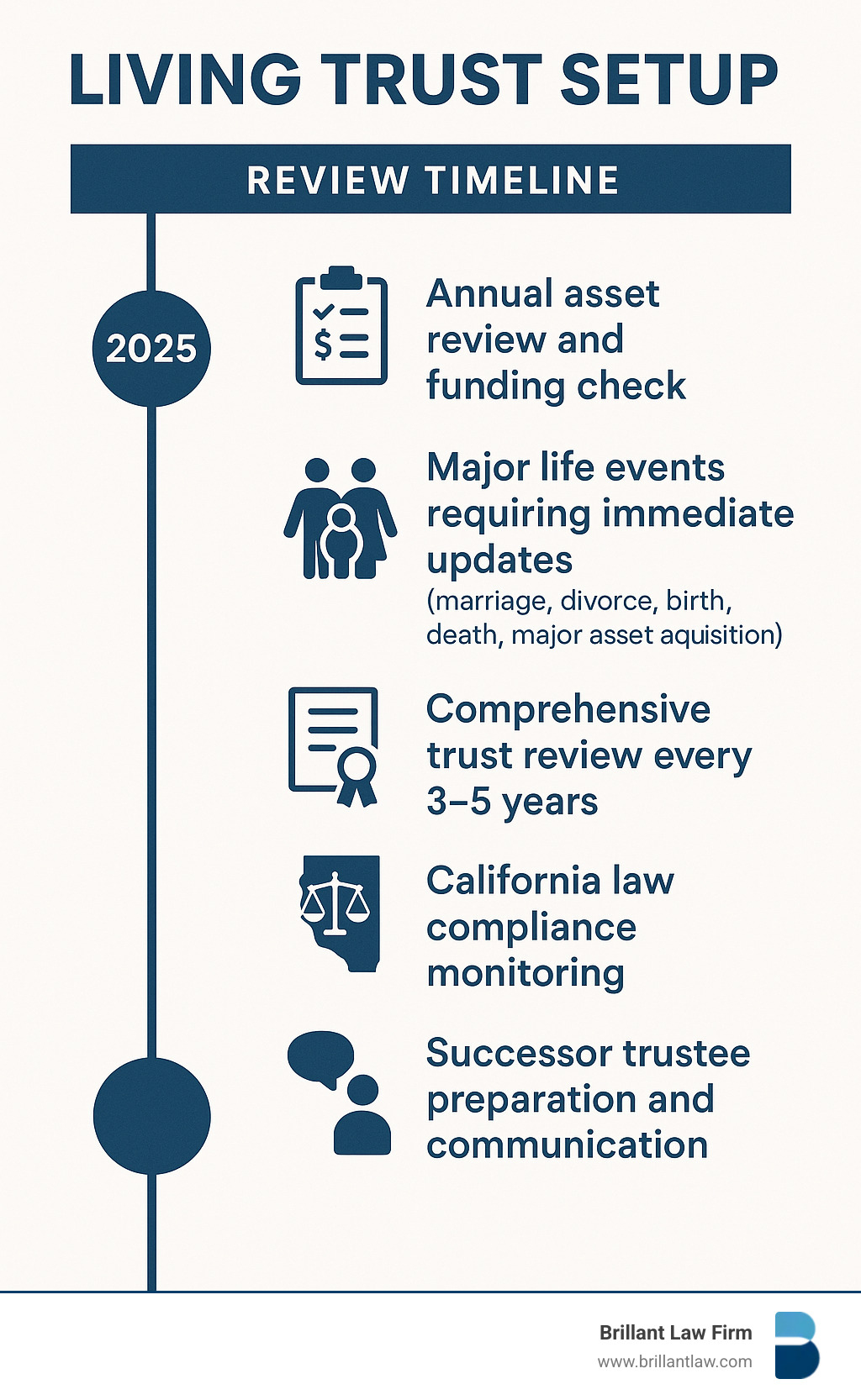
Your Living Trust Setup requires ongoing care like tending a garden. Many families mistakenly believe signing documents completes the process forever.
Annual reviews should verify all assets remain properly titled in the trust name. Update asset values for insurance and review beneficiary designations on retirement accounts and life insurance.
Life events require immediate attention. Marriage brings spousal rights considerations. Divorce requires removing ex-spouses from trustee and beneficiary roles. Birth or adoption creates new beneficiaries needing protection.
California statutory requirements become important after death or incapacity. Successor trustees must provide specific notices to beneficiaries within strict timeframes.
Record-keeping and organized document storage help successor trustees during difficult times. Maintain files with original documents, asset transfer records, and amendments.
Ongoing Costs & Taxes
Legal tune-ups with experienced California estate planning attorneys cost $500-$800 per hour. Annual reviews might take 1-2 hours, while major changes require several hours.
Trustee fees apply only with professional trustees, typically 1-1.5% of trust assets annually. Many families choose adult children who often serve without compensation.
Tax implications remain simple while you’re alive – the trust uses your Social Security number and you report income on your personal return. After death, successor trustees must obtain separate EIN and file annual Form 1041 returns costing $800-$2,500 annually.
Living Trust Setup Best Practices
Update beneficiaries whenever family situations change, including trust beneficiaries and beneficiary designations on retirement accounts and life insurance.
Backup trustees provide protection against unexpected circumstances. Name at least two backup trustees to prevent family conflicts.
Family communication about basic intentions can prevent problems. Let your successor trustee know they’ve been chosen and where to find important documents.
Costs, Drawbacks & How to Avoid Pitfalls

Living trusts aren’t perfect for everyone. Understanding real costs and potential drawbacks helps you make the smartest decision for your family’s Living Trust Setup.
Setup fees in California range from $3,000-$8,500 for comprehensive packages including trust agreement, pour-over will, powers of attorney, healthcare directive, and initial funding assistance.
Costs vary based on complexity factors like multiple beneficiaries, special needs provisions, business interests, or sophisticated tax planning requirements.
Retitling workload surprises many families. You’ll spend considerable time contacting banks, brokers, and insurance companies to transfer assets into your trust name – a process stretching weeks or months.
Creditor protection limitations – your revocable living trust provides zero creditor protection during your lifetime since you retain complete control. Trust assets remain available to satisfy debts and legal judgments.
Estate tax thresholds for 2024 stand at $13.61 million per person or $27.22 million for married couples, though these generous thresholds drop significantly in 2026.
For detailed expense breakdown, see: How Much Does It Cost to Setup a Living Trust?.
When a Trust Might Not Be Necessary
Small estates under California’s $184,500 threshold can use simplified probate through Small Estate Affidavit process.
Single beneficiaries with straightforward situations might find well-drafted wills adequate if leaving everything to one capable adult child.
Simple asset mixes of joint accounts, retirement accounts with named beneficiaries, and life insurance already avoid probate through existing mechanisms.
Young families with limited assets might prioritize guardian nominations through simple wills initially, adding trust planning as wealth grows.
For additional perspective: Living Trust FAQ.
Frequently Asked Questions about California Living Trusts
Why can’t I just use joint tenancy to avoid probate?
Joint tenancy creates more problems than it solves. Joint tenancy limitations include loss of control – once you add someone as joint tenant, they legally own half your property and can sell their share or lose it to creditors without your permission.
Creditor exposure becomes real when your joint tenant faces financial trouble. Their creditors can place liens on your property or force sales.
Simultaneous death scenarios defeat joint tenancy’s purpose – if both parties die in the same accident, property still goes through probate.
Tax complications often surprise families. Adding someone to your deed might trigger gift tax issues, and you lose valuable stepped-up basis benefits.
Do I still need a will if I have a living trust?
Absolutely yes. Your will serves as a safety net working alongside your trust.
Pour-over function catches assets not transferred to your trust, directing them according to your wishes.
Guardianship clauses can only be included in wills, never trusts. Without a will, courts decide who raises your minor children.
Backup planning covers anything your trust might have missed, though properly funded trusts should handle most property with minimal probate.
How often should I update my trust?
Review your trust every 3-5 years minimum, but major life changes require immediate attention.
Marriage or divorce completely changes your beneficiary picture and requires professional guidance due to California’s community property laws.
Birth or adoption means new beneficiaries needing protection and structured distributions.
Death of beneficiaries or trustees requires immediate replacement appointments.
Major asset acquisitions like real estate or business interests need integration into your trust.
Regular updates cost far less than problems from outdated trusts.
Conclusion
Creating a Living Trust Setup is one of the most important steps you can take to protect your California family’s future. It’s about creating a comprehensive safety net that works whether you’re managing your own affairs or need someone else to step in.
Your living trust serves as the cornerstone of your estate plan, working seamlessly with your will, powers of attorney, and healthcare directives to create estate plan synergy. Everything works together to protect your family from unnecessary stress during difficult times.
Professional guidance makes the difference between a trust that truly protects your family and one that creates problems. California trust law is complex and constantly evolving. Small mistakes in drafting or funding can cost your family dearly.
At Brillant Law Firm, we’ve witnessed the peace of mind that comes from properly organized affairs. Our clients know their homes won’t get tied up in probate, their businesses will continue operating smoothly, and their children will be cared for according to their wishes.
The Living Trust Setup process might seem overwhelming, but you’re not just creating legal documents – you’re building a legacy. You’re ensuring the wealth you’ve worked hard to accumulate will benefit the people you love most, not the court system.
Every California family’s situation is unique. Whether you’re a young couple buying your first home, seasoned business owners planning retirement, or empty nesters thinking about grandchildren’s futures, a properly structured living trust can adapt to serve your specific needs.
Ready to take the next step? Our experienced Estate Planning Attorney team guides you through every aspect of your Living Trust Setup. We’ll understand your goals and create a plan that protects your family’s future while giving you complete peace of mind today.
Don’t wait until it’s too late. Contact us today for a personalized consultation, and let’s build your California legacy together.


