

living trust administration checklist: 7 Powerful Steps for Success 2025
What Is a Living Trust Administration Checklist and Why Does It Matter?
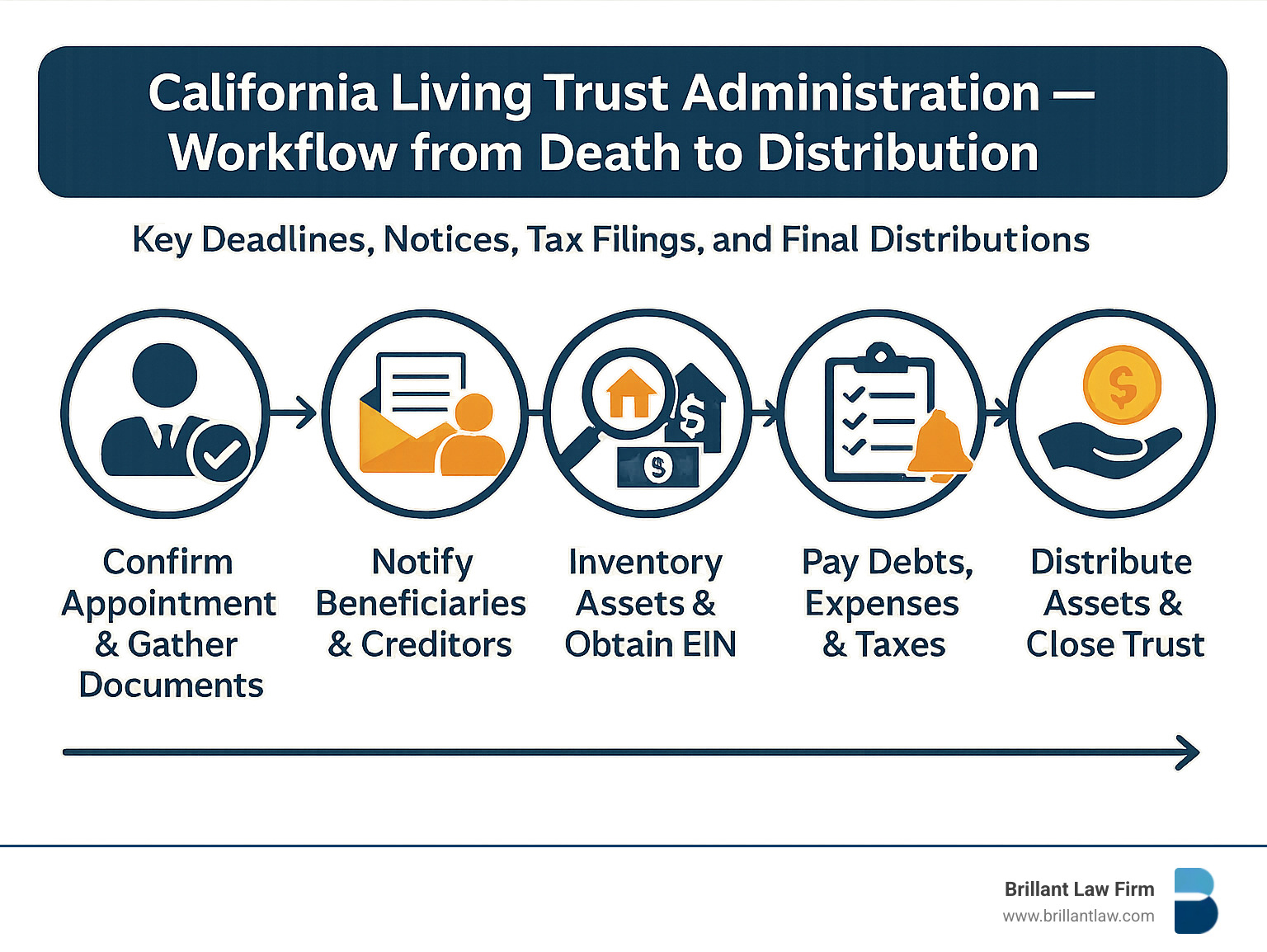
The living trust administration checklist is your step-by-step guide to navigating the critical duties required after the creator of a California living trust passes away. If you just want the core checklist, here it is:
Living Trust Administration Checklist (California)
- Confirm your appointment as trustee and collect all essential documents (trust deed, death certificate, pour-over will).
- Notify all beneficiaries and legal heirs within 60 days, and send required notices to creditors (Probate Code §16061.7).
- Inventory, secure, and get date-of-death values for all trust assets (real estate, investments, bank accounts, digital assets).
- Apply for a trust EIN (IRS Form SS-4) and open a trust checking account.
- Identify, pay, and document all valid debts, expenses, and taxes (property tax, income tax, estate tax).
- Send regular accountings and updates to beneficiaries; handle any disputes or questions.
- Make final distributions to beneficiaries, obtain signed receipts, and formally close the trust.
Administering a trust isn’t just paperwork. It’s about fulfilling your legal fiduciary duties—protecting estate assets, keeping detailed records, communicating clearly, following California timelines and tax rules, and making sure heirs receive what they’re entitled to. Most California trust administrations are completed in about six months, but complex estates, asset sales, or disputes can take longer.
As David Brillant, a Certified Specialist in Estate Planning, Trust, and Probate Law (CA State Bar), I’ve spent decades guiding clients through every step of the living trust administration checklist. My extensive experience means I know how to spot issues, solve complex problems, and keep your trust administration on track.
Living trust administration checklist terminology:
– administration of a living trust
– living trust administration after death
1. Confirm Your Role & Gather Core Documents
The first step on your living trust administration checklist is understanding and confirming your role as trustee. When a loved one passes away with a living trust in California, you (as the successor trustee) need to step into your new responsibilities with clarity and purpose.
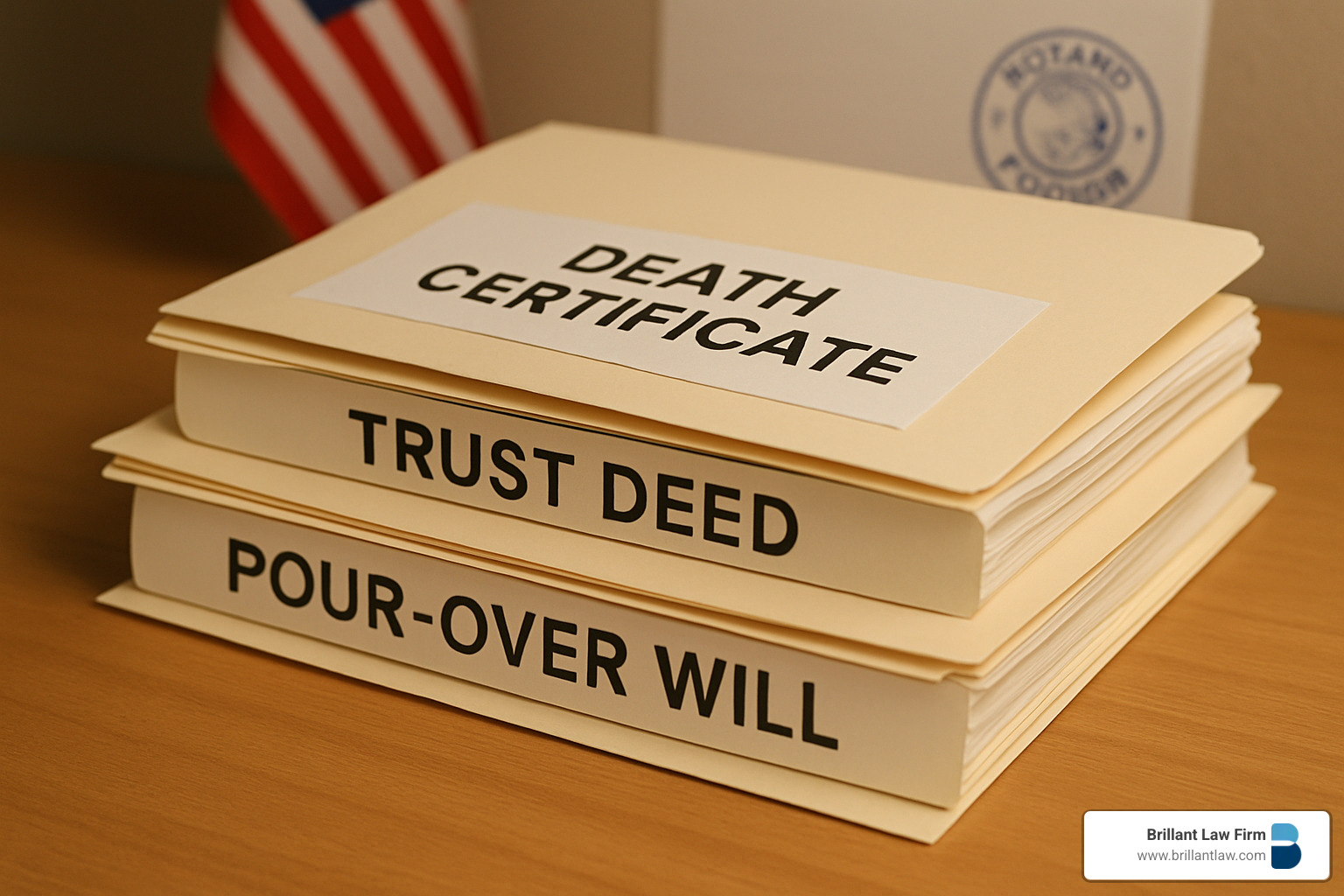
Essential Documents to Gather:
Before you dive into administration tasks, take a deep breath and start collecting the paperwork you’ll need. Think of this as gathering your tools before beginning a project.
First, you’ll need death certificates – about 5-10 certified copies from the county health department or funeral home. I always tell my clients to get more than they think they’ll need because banks, investment companies, and government agencies typically want original certified copies, not photocopies.
Next, locate the trust document and all amendments. This isn’t just another piece of paper – it’s your roadmap through the entire process. Read it thoroughly, maybe even twice. I’ve had clients tell me, “I thought I knew what Mom wanted until I actually read her trust line by line. There were specific instructions about her jewelry collection I would have completely missed.”
Don’t forget the pour-over will. This crucial document ensures any assets not already in the trust “pour over” into it after death. And heads up – California Probate Code §8200 requires you to file the original will with the Superior Court in the county where the decedent lived within 30 days of death, even if you don’t expect probate.
While powers of attorney typically terminate at death, keep these documents for your records – they help complete the picture of the deceased’s legal arrangements.
Finally, start building an inventory of assets by collecting statements, deeds, titles, and other documentation showing what the trust owns. This preliminary list will evolve as you find more assets.
Trustee Acceptance
While many trustees simply begin acting in their role informally, I strongly recommend executing a formal Trustee Acceptance document. This small step can save huge headaches later by clearly establishing when your fiduciary responsibilities began. It can protect you from claims about actions taken before you officially accepted the role.
If you’re feeling overwhelmed or unable to serve as trustee, check the trust document for named alternates. You have the right to formally decline so the next person in line can step up. There’s no shame in recognizing when a task might be too much – the trust creator named alternates for exactly this reason.
Accepting the trustee role means stepping into a position of significant legal responsibility with fiduciary duties to the beneficiaries. Taking these first steps carefully sets the tone for a successful trust administration process.
2. Notify Beneficiaries, Heirs, and Creditors
Proper notification isn’t just checking a box—it’s a legal requirement in California and a crucial part of your living trust administration checklist. As one trustee finded: “I thought sending regular emails would be enough. Thank goodness my attorney stopped me before I created a legal nightmare!”
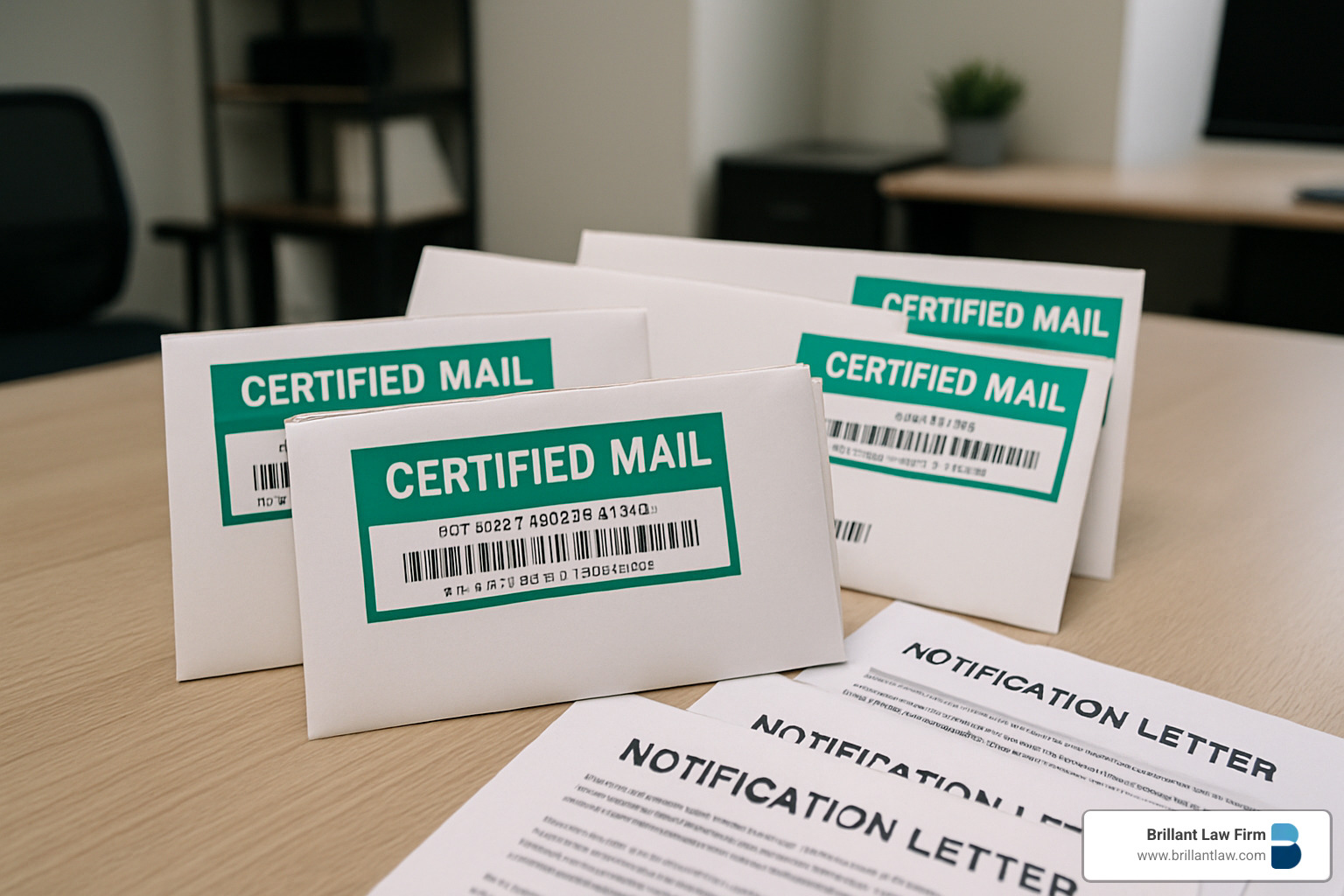
Beneficiary and Heir Notification
California takes beneficiary notification seriously. Under Probate Code §16061.7, you must notify all beneficiaries and legal heirs within 60 days of the trust becoming irrevocable (usually when the grantor passes away). Don’t cut corners here—this notification must be done by certified mail or personal delivery.
Your notification needs to include a copy of the trust document (or at least inform recipients they can request one), and clearly state they have 120 days from receipt to contest the trust. The language must follow specific California requirements.
“The 120-day statute of limitations is like an insurance policy for everyone involved,” explains David Brillant. “But it only starts ticking when proper notice is given.”
For more detailed guidance on this process, our Living Trust Administration After Death resource walks you through each step.
Creditor Notification
While living trusts generally bypass probate, they don’t magically erase debts. Proper creditor notification involves several steps:
First, if the deceased was over 55 and received Medi-Cal benefits, you must notify the California Department of Health Care Services within 90 days. Missing this deadline can create significant complications.
Second, publish a notice in a local newspaper for two consecutive weeks. This simple step limits the creditor claim period to four months—potentially saving months of waiting before distributions can be made.
Finally, send direct notices to all known creditors. Being proactive here prevents surprises later when you’re ready to distribute assets.
Why a living trust administration checklist prevents asset loss
Following proper notification procedures protects trust assets in powerful ways. It starts the 120-day contest clock, providing certainty about the trust’s validity. It also creates deadlines after which creditors can’t make claims against the trust.
Perhaps most importantly, proper notification establishes transparency from day one. I’ve seen countless situations where clear communication from the beginning prevented disputes that would have drained trust assets through litigation.
As one satisfied client told me: “The $200 I spent on certified mail was the best insurance policy I ever bought. One beneficiary later admitted they were thinking about contesting until they saw how professionally everything was being handled.”
The small upfront cost of proper notification is protection against potentially massive costs of litigation later. Your diligence now creates a smoother path for everyone involved.
3. Inventory, Secure, and Value Trust Assets
A comprehensive inventory is the foundation of effective trust administration. This step in the living trust administration checklist requires attention to detail and often professional assistance.
Creating a Complete Asset Inventory
Your inventory should include:
- Real Property: Homes, rental properties, land, and any other real estate
- Financial Accounts: Bank accounts, brokerage accounts, CDs, money market accounts
- Business Interests: Ownership in businesses, partnerships, LLCs
- Personal Property: Vehicles, jewelry, art, collections, furniture
- Digital Assets: Cryptocurrency, online accounts, intellectual property
- Life Insurance and Retirement Accounts: Even if these pass outside the trust via beneficiary designations
For each asset, document:
– Description and location
– Ownership structure (solely owned by trust, partial interest, etc.)
– Date-of-death value
– Supporting documentation (deeds, statements, titles)
Securing Assets
Protect trust assets by:
- Changing locks on properties
- Securing valuable personal property
- Updating insurance coverage
- Monitoring vacant properties
- Ensuring digital assets are protected from unauthorized access
Valuation Methods
Accurate valuation as of the date of death is critical for several reasons:
– Establishes new tax basis (“stepped-up basis”) for capital gains purposes
– Determines potential estate tax liability
– Forms the starting point for accounting to beneficiaries
Different assets require different valuation methods:
- Real Estate: Professional appraisal as of date of death
- Publicly Traded Securities: Closing price on date of death (or alternative valuation date)
- Business Interests: Business valuation by qualified appraiser
- Personal Property: Professional appraisals for valuable items
“The most common mistake I see trustees make is underestimating the importance of professional appraisals,” notes David Brillant. “The cost of an appraisal is minimal compared to potential tax issues or beneficiary disputes over valuation.”
Special Consideration for Digital Assets
Cryptocurrency, online businesses, and digital collections require special attention. These assets can be easily overlooked or difficult to value. Consider consulting with specialists in digital asset valuation and management.
4. Set Up Trust Finances & Obtain EIN
Proper financial management is a cornerstone of your fiduciary duty as trustee. This section of the living trust administration checklist ensures you’re managing trust finances correctly.
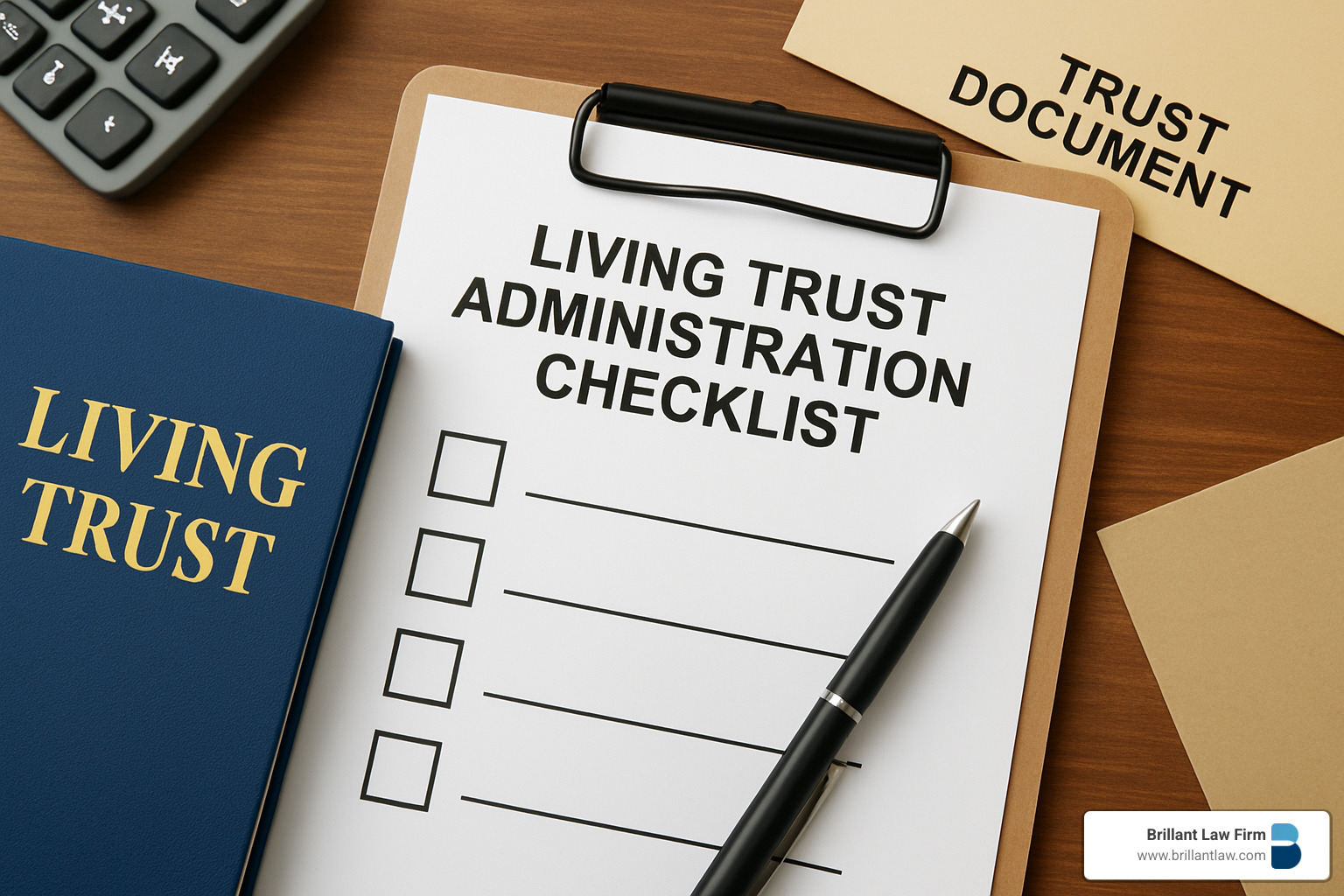
Obtaining a Tax Identification Number (EIN)
When someone passes away, their living trust transforms from revocable to irrevocable—and that means it needs its own tax identity. Think of an EIN as the trust’s Social Security number. Getting one is fairly straightforward:
Complete IRS Form SS-4 through the IRS website for immediate issuance. You’ll include basic information about the trust and your role as trustee. Within minutes, you’ll have the magic number needed for all future trust financial dealings.
“The EIN becomes the trust’s financial fingerprint,” explains David Brillant. “Financial institutions won’t even talk to you without it, so make this your priority.”
Setting Up Trust Bank Accounts
With EIN in hand, your next stop is the bank. Opening a dedicated trust checking account keeps everything clean and organized. The account should be properly titled as: “[Your Name], Trustee of the [Name of Trust] dated [Date of Trust].”
This separation of funds isn’t just good practice—it’s a fundamental fiduciary obligation. Mixing personal and trust money (commingling) is one of the quickest ways to find yourself in hot water with beneficiaries and the courts.
One client shared: “I almost deposited a rent check from my mom’s property into my personal account just to keep things moving along. Thank goodness my attorney warned me about commingling—that simple mistake could have caused serious problems.”
Implementing Financial Systems
Good record-keeping saves countless headaches down the road. Consider using dedicated trust accounting software or even hiring professional bookkeeping services for complex estates. Whatever system you choose, make sure it tracks every penny coming in and going out.
A Certification of Trust (sometimes called an Abstract of Trust) will become your best friend during this process. This streamlined document confirms your authority without revealing the trust’s private details—perfect for banks and financial institutions that need verification but don’t need to see the entire trust document.
For more detailed guidance on managing trust finances, our Trust Administration Accounting resource provides in-depth information.
How this living trust administration checklist keeps you IRS-compliant
Tax compliance isn’t optional, and the rules for trusts can be particularly tricky. Here’s what you need to know:
Form 1041 must be filed annually if the trust has more than $600 in income or any taxable income. California trustees must also file California Form 541. Missing these filings can result in penalties and interest.
You’ll need to decide between a fiscal or calendar year for tax reporting. Many trustees find advantages in selecting a fiscal year that ends shortly after the date of death.
The 65-day rule is a valuable tax planning tool that allows distributions made within 65 days after the tax year’s end to be treated as if made during the previous tax year. This flexibility can significantly impact the trust’s tax situation.
“Most trustees I work with are shocked by the complexity of trust taxation,” notes David Brillant. “This is definitely not DIY territory for most people. The $350-$650 hourly rate for professional guidance in California is a bargain compared to the potential tax penalties and beneficiary disputes that can arise from mistakes.”
Good financial management doesn’t just satisfy the IRS—it also builds trust with beneficiaries and creates a solid foundation for the entire administration process. For more information on specific tax forms, the estate tax requirements may apply to larger estates.
5. Manage Debts, Expenses, and Taxes
Handling the financial obligations of a trust is perhaps the most detail-oriented part of your living trust administration checklist. As a trustee, you’re responsible for making sure all legitimate debts are paid and tax obligations are met before beneficiaries receive their inheritances.
Identifying and Paying Debts
When someone passes away, their financial obligations don’t simply disappear. You’ll need to carefully review all outstanding debts, including mortgages, credit cards, medical bills, personal loans, and ongoing utilities. Not all claims against the trust are legitimate, so verify each one before payment.
“The question I hear most often from new trustees is ‘Which bills should I pay first?'” says David Brillant. “While each situation is unique, secured debts like mortgages typically take priority, followed by expenses necessary to preserve trust assets—like property insurance and utilities.”
Continuing to pay the mortgage is usually essential to prevent foreclosure, even if the property will eventually be sold. For rental properties, maintaining insurance coverage and addressing urgent repairs ensures the assets retain their value while in your care.
Trust Administration Expenses
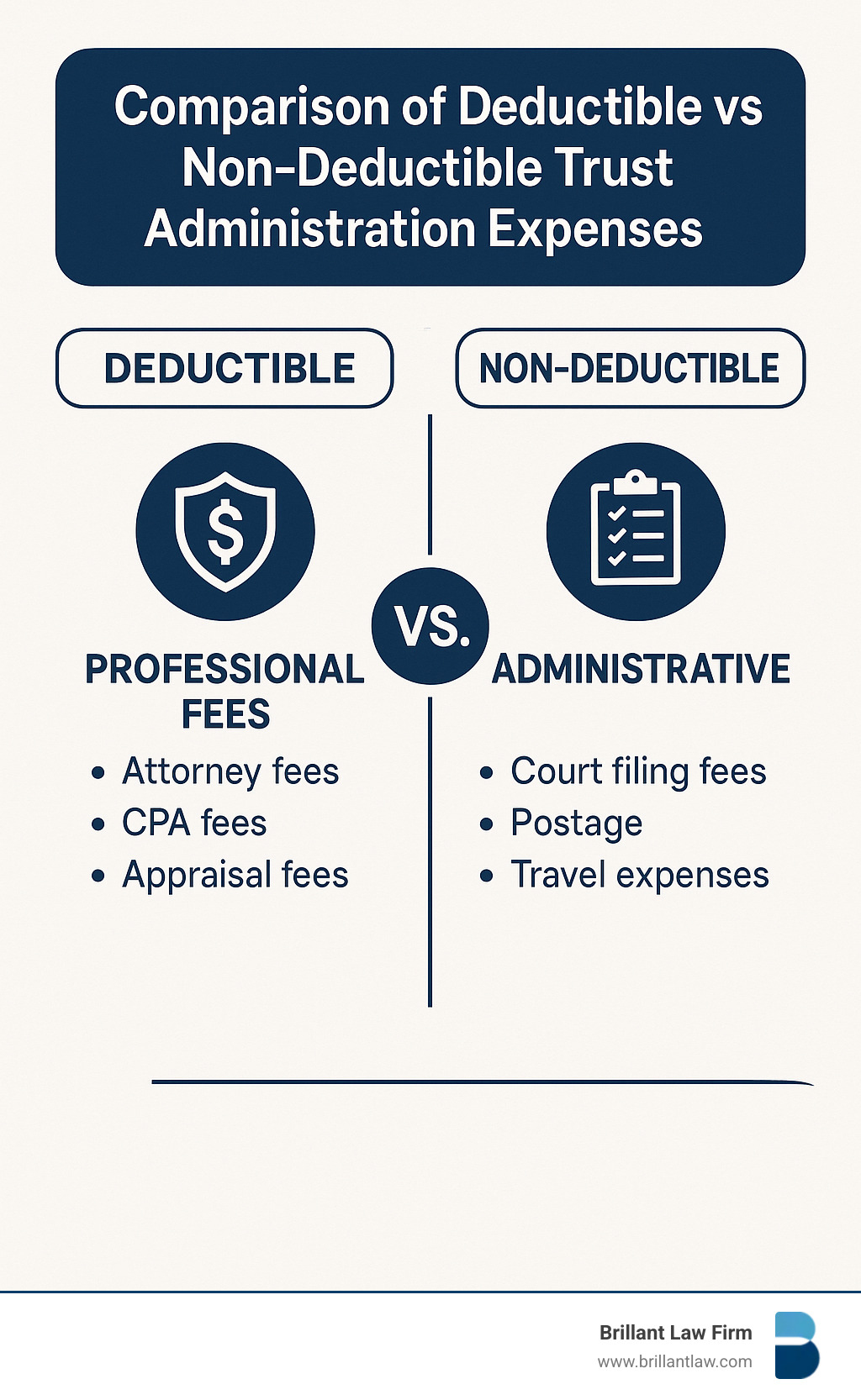
Being a trustee involves costs that are properly paid from trust assets:
Professional fees form a significant portion of administration expenses. In California, attorney fees typically range from $350-$650 per hour depending on experience and location. You’ll likely also need a CPA for tax filings, professional appraisers for proper valuations, and possibly property managers for real estate.
Administrative costs add up quickly too—court filing fees, newspaper publication notices, postage for certified letters to beneficiaries, and even travel expenses related to managing trust property all qualify as legitimate expenses.
As for trustee compensation, California law entitles you to “reasonable compensation” for your time and effort. While corporate trustees often charge 1-2% of trust assets annually, individual trustees typically charge hourly rates similar to attorneys ($350-$650 in California). The complexity of the trust, size of the estate, and your professional expertise all factor into appropriate compensation.
Tax Obligations
The tax landscape for trusts can be surprisingly complex. Your responsibilities include:
Final personal income tax returns for the deceased—both the federal Form 1040 and California state return. These are due by April 15th of the year following death, though extensions are available.
Trust income tax returns become your responsibility once the trust becomes its own tax entity. You’ll need to file federal Form 1041 if income exceeds $600, along with California’s Form 541. Depending on the trust’s income, you may also need to make quarterly estimated tax payments.
Estate tax considerations apply to larger estates. If the estate exceeds the federal exemption amount, you’ll need to file Form 706 within 9 months of death (though extensions are possible). Given the current high exemption amount, this affects relatively few California estates, but when it does apply, the stakes are high.
Property tax issues are particularly important in California due to Proposition 19, which affects property tax reassessments when real estate changes hands. Parent-to-child transfers now have limited exclusions from reassessment, so filing the necessary exclusion claims with the county assessor is crucial to preserve favorable property tax treatment.
“Smart tax planning during trust administration can save beneficiaries thousands,” notes David Brillant. “For example, strategically timing distributions to beneficiaries in lower tax brackets than the trust can significantly reduce the overall tax burden.”
Creating a Reserve
Before distributing assets to beneficiaries, establish a reasonable financial reserve to cover potential tax liabilities, contested creditor claims, final administration expenses, and any contingent obligations. This prudent step prevents the awkward (and legally complicated) situation of having to ask beneficiaries to return distributions if unexpected expenses arise later.
A good rule of thumb is to reserve 10-15% of the total estate value until you’re confident all obligations have been identified and addressed. Your beneficiaries may be eager to receive their distributions, but they’ll appreciate your thoroughness in protecting the estate from unforeseen claims.
6. Ongoing Reporting & Beneficiary Communication
Clear, consistent communication with beneficiaries is both a legal obligation and a practical necessity on your living trust administration checklist. It builds trust, prevents disputes, and fulfills your fiduciary duty of transparency.
Required Accountings
California law requires trustees to provide periodic accountings to beneficiaries unless the trust document explicitly waives this requirement. Think of these accountings as your report card – they show you’re doing your job properly.
“The level of detail in accountings should be sufficient for beneficiaries to protect their interests,” I often tell my clients. “When in doubt, more information is better than less.”
Your accountings need to cover three main areas: assets and liabilities (what the trust owns and owes), income and expenses (money coming in and going out), and gains and losses (how investments are performing). This transparency isn’t just legally required – it’s the foundation of trust between you and the beneficiaries.
Frequency of Communication
At minimum, you should provide an initial notification within 60 days of becoming trustee, annual accountings, and a final accounting before distribution. But in my experience, more frequent updates lead to smoother administrations.
Consider sending quarterly investment summaries or updates after significant transactions. When you sell the family home or liquidate a large investment, a quick email explaining what happened and why can prevent a flood of concerned calls from beneficiaries.
Format and Delivery
Your accountings don’t need to look like they were prepared by a Big Four accounting firm, but they should be clear enough that someone without financial expertise can understand them. Consistency in format helps beneficiaries track changes over time.
While formal written accountings were once the standard, many trustees now use email when beneficiaries consent. Just be sure to maintain copies of everything you send – your record-keeping obligations don’t disappear just because communication has gone digital.
Addressing Beneficiary Questions and Concerns
Questions are inevitable – and they’re actually a good sign that beneficiaries are engaged. When they come in, respond with patience and respect. A prompt, thorough explanation often prevents minor concerns from escalating into major problems.
“The most common source of trust litigation is poor communication,” I’ve observed over my years of practice. “Beneficiaries who feel informed and respected rarely sue, even when administration takes longer than expected.”
Investment Policy Statement
For trusts with substantial assets that will be administered over time, creating a formal Investment Policy Statement demonstrates your thoughtful approach to managing the trust. This document outlines investment objectives, defines asset allocation strategy, establishes risk tolerance, and sets performance benchmarks.
Sharing this policy with beneficiaries shows you’re not making investment decisions on a whim, but following a carefully considered plan that aligns with the trust’s purpose and the grantor’s intentions.
Conflict Management
When disagreements arise – and they often do in family situations – address them promptly. Listen actively to concerns, provide clear explanations for your decisions, and document your reasoning. Sometimes, a simple conversation can resolve what initially seemed like a major dispute.
If tensions escalate, consider mediation before litigation. As one client told me after a successful mediation: “I wish we’d done this six months ago instead of exchanging angry emails.”
As trustee, your duty is to follow the trust terms, not necessarily to make all beneficiaries happy. Sometimes the most important communication is simply explaining that distinction.
For more detailed guidance on beneficiary communication, visit our resource on How to Administer a Trust in California.
7. Distribute Assets and Close the Trust — Living Trust Administration Checklist Finale
The final stretch of your living trust administration checklist journey has arrived—distributing assets and formally closing the trust. This is where all your careful work pays off as beneficiaries receive their inheritances and you complete your trustee responsibilities.
Preparing for Final Distribution
Before you start writing checks or transferring property, take a moment to ensure everything is truly ready:
First, verify all obligations have been satisfied. This means all legitimate creditor claims paid, tax returns filed (and taxes paid), administration expenses covered, and appropriate reserves set aside for any last-minute surprises. Nothing derails a smooth closing like finding an unpaid bill after distributions.
Next, prepare that final accounting. This should include a complete record of all transactions during your administration, a clear summary of the remaining assets ready for distribution, and a transparent explanation of any trustee fees you’ve taken. This final accounting isn’t just good practice—it’s your protection.
“Distribution is where your months of behind-the-scenes work finally becomes visible to beneficiaries,” notes David Brillant. “This is why clear, organized preparation makes all the difference in how your service as trustee will be remembered.”
Distribution Process
For each distribution, you’ll need to prepare the appropriate transfer documents. This might include deeds for real property, stock transfer instructions for securities, or assignment documents for other assets. Each recipient should sign receipts acknowledging what they’ve received.
Always obtain signed receipts and releases from beneficiaries. These documents should acknowledge:
– Receipt of their specific inheritance
– Approval of your administration
– Release of you as trustee from further liability
Document everything—the delivery method, date, and confirmation of receipt. In the trust world, if it isn’t documented, it might as well not have happened.
Special Situations
Sometimes distribution isn’t straightforward. If you find assets that should have been in the trust but weren’t properly titled, you may need to file a Heggstad petition with California courts. This legal process confirms these assets as trust property despite the titling oversight.
Beneficiaries occasionally choose to disclaim (refuse) their inheritance, which can have tax advantages in some situations. If this happens, you’ll need to document the disclaimer properly and distribute according to the trust’s alternate provisions.
When beneficiaries can’t agree on who gets specific items (like family heirlooms or artwork), you might need mediation, independent appraisals, or even drawing lots. Sometimes selling contested items and dividing the proceeds is the fairest solution.
Formal Trust Closure
To properly close the trust and complete your living trust administration checklist:
File those final tax returns—both the federal Form 1041 and California Form 541—marked as “Final Return.” Then formally cancel the trust’s EIN with the IRS and close all trust accounts.
Notify relevant agencies of the trust’s termination and distribute any remaining assets after these final expenses are paid. Many trustees keep a small reserve until the final tax returns are processed, then distribute that last bit once all is clear.
Living trust administration checklist sign-off for California trustees
Before you consider your duties complete:
Double-check that you have signed receipts from every beneficiary. These are your proof that you fulfilled the trust’s distribution requirements.
Organize and preserve all trust records for at least three years—longer if there are any unresolved issues or potential disputes. These records are your protection if questions arise later.
If possible, obtain a formal discharge from beneficiaries. This document explicitly releases you from further responsibility as trustee.
“The biggest mistake I see trustees make is thinking their job ends when the last check is written,” cautions David Brillant. “Without proper documentation of the trust’s closure, questions or claims could surface years later when memories have faded and records are harder to find.”
By following this comprehensive living trust administration checklist through to completion, you’ll have fulfilled your fiduciary duties with the care and attention they deserve, honoring both the trust creator’s wishes and your responsibilities to the beneficiaries.
Frequently Asked Questions about Living Trust Administration
What happens if an asset wasn’t titled to the trust?
Finding assets that should have been in the trust but weren’t properly transferred is actually quite common. Don’t panic—you have several options:
The pour-over will is your first line of defense. If the deceased had one (most do), these overlooked assets may need to go through probate before joining the trust. In California, you can also file what’s called a Heggstad petition, asking the court to confirm these assets were intended to be part of the trust. This can be a real lifesaver when it comes to avoiding lengthy probate proceedings.
For smaller estates (under $166,250 as of 2022), California offers simplified procedures that can transfer assets without going through full probate.
I recently worked with a family who finded their father’s valuable classic car collection wasn’t formally transferred to his trust,” shares David Brillant. “Using a Heggstad petition, we successfully demonstrated the collection was referenced in trust documents and should be considered trust property. This saved them months of probate proceedings and thousands in additional costs.”
How long does California trust administration usually take?
Most California trusts take about six months to administer, but I always tell my clients to be prepared for variables that might extend this timeline.
Estate complexity is the biggest factor—larger estates with diverse assets typically take longer to sort through. If you need to sell real estate or business interests, you’re at the mercy of the market and potential buyers. And let’s be honest—family dynamics matter too. When beneficiaries cooperate, things move much more smoothly than when disputes arise.
For estates requiring federal estate tax returns (Form 706), plan on 12-18 months for complete administration. The IRS moves at its own pace!
“Be wary of anyone promising extremely quick trust administration,” I often warn clients. “Proper administration is like a good California cabernet—it can’t be rushed without sacrificing quality. Cutting corners almost always leads to problems down the road.”
When should a trustee hire a CPA or attorney?
While some straightforward trusts can be administered without professional help, most trustees benefit from expert guidance at key points in the process.
Consider working with an attorney when the trust contains complex provisions, beneficiaries aren’t seeing eye-to-eye, or real estate and business interests are involved. Estate tax questions, improperly titled assets, and uncertainty about legal requirements are also good reasons to seek legal counsel.
A CPA becomes valuable when the trust has significant income, requires multiple tax returns, or owns complex investments or business interests. Many trustees also appreciate professional help with trust accounting to ensure everything is properly tracked and reported.
“The cost of professional advice is typically far less than the cost of mistakes,” I remind trustees. “Think of it as an insurance policy against problems that could cost much more to fix later.”
Many of my clients find that selective use of professionals for complex matters provides the best balance of cost control and risk management. For example, you might handle routine bill payments yourself but bring in a CPA for tax planning and an attorney for real estate transfers.
In California, professional fees are generally higher than national averages, but the expertise you get—especially with complex estates—is well worth the investment in protecting both the trust assets and yourself as trustee.
Conclusion
Administering a living trust is both an honor and a significant responsibility. The living trust administration checklist we’ve provided offers a roadmap through this complex process, but every trust has its own unique quirks and challenges that might require a professional’s guiding hand.
At Brillant Law Firm, we understand you’re likely facing this responsibility for the first time, often while processing grief from losing someone dear to you. That’s why our approach blends technical expertise with genuine compassion – we want to help you steer these waters with confidence and peace of mind.
Most trustees tell us the same thing: “I want to do this right, but I don’t even know what I don’t know.” That’s perfectly normal. Trust administration involves intricate legal, financial, and interpersonal elements that can feel overwhelming when combined. Following the proper procedures protects both you as the trustee and the beneficiaries who are counting on you.
Your primary duties are loyalty to the beneficiaries and faithful adherence to the trust terms. Keeping detailed records, maintaining open communication, and meeting all legal requirements aren’t just good practices – they’re your best protection against potential disputes down the road.
We’ve seen how proper trust administration brings families peace during difficult times, while rushed or incomplete administration can create problems that last for years. Whether you need comprehensive support throughout the entire process or just targeted advice on specific issues, our team of California trust specialists is here to help.
For personalized guidance custom to your specific situation, we invite you to reach out to Brillant Law Firm for a consultation. Our experienced team can help you steer the complexities of Trust Administration with confidence, ensuring you fulfill this important responsibility with skill and care.
Brillant Law Firm is your California partner for custom trust solutions – because when it comes to honoring a loved one’s final wishes, you deserve expert guidance every step of the way.


