

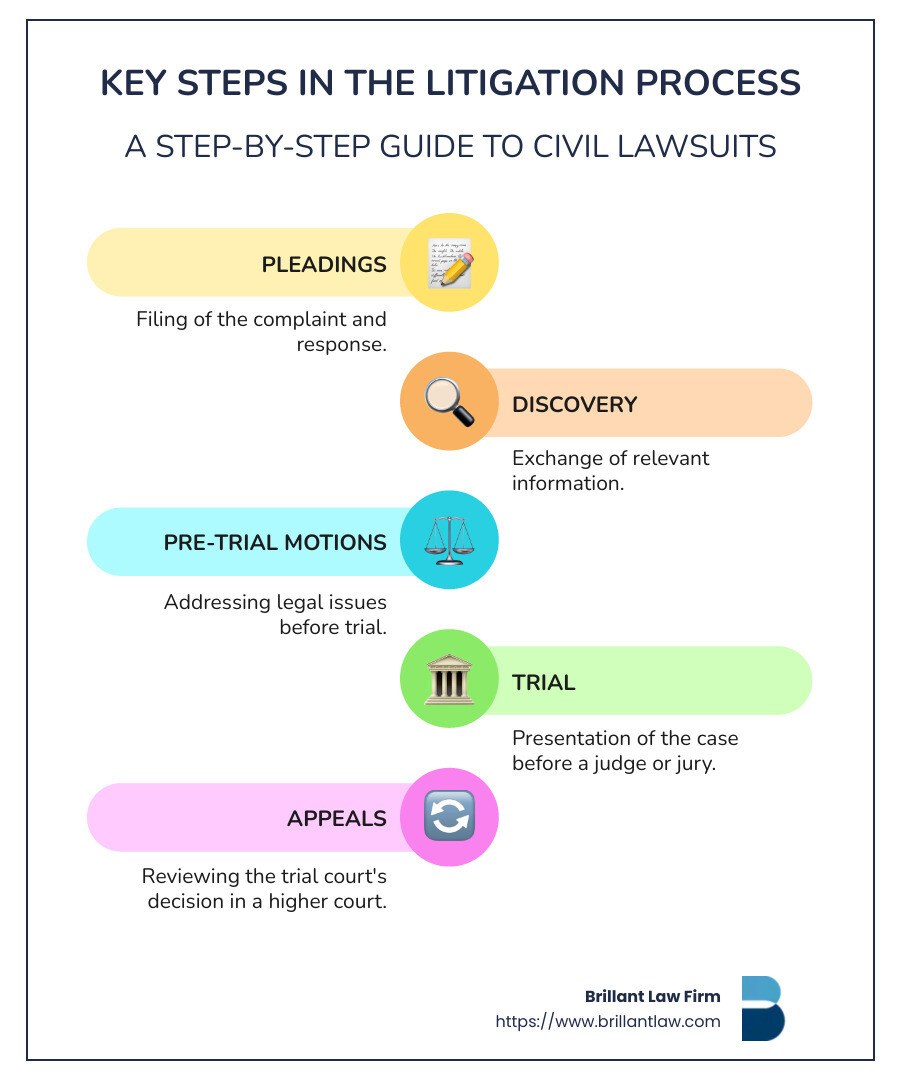
Litigation process steps can be overwhelming, but understanding them is key to navigating through a civil lawsuit. These steps typically include:
- Pleadings: Filing of the complaint and response.
- Findy: Exchange of relevant information.
- Pre-Trial Motions: Addressing legal issues before trial.
- Trial: Presentation of the case before a judge or jury.
- Appeals: Reviewing the trial court’s decision in a higher court.
If you’re seeking to understand these steps quickly, here’s a simple glimpse: every civil lawsuit typically follows a general sequence from initiating the legal action to resolving the dispute, often progressing through pleadings, findy, pre-trial motions, trial, and potentially, an appeal.
At Brillant Law Firm, located in California, we understand the complexities of the litigation process. With our depth of experience, we ensure our clients steer these steps efficiently and effectively.
I’m David Brillant. With years of experience in tax litigation and civil lawsuits, I’m well-versed in guiding clients through the litigation process steps. Next, you’ll learn about the essential phase prior to formal litigation: Pre-Suit Negotiations.
Pre-Suit Negotiations
Before stepping into the courtroom, there’s often a phase called pre-suit negotiations. This is a crucial step in the litigation process steps because it can save time, money, and stress for everyone involved. Let’s break down what happens during this phase.
Demand Letter
Imagine getting a letter that says, “We have a problem, and here’s why.” That’s essentially what a demand letter is. It’s the first move in pre-suit negotiations, sent by the plaintiff’s attorney to the defendant. The letter outlines the issue, the claims, and what the plaintiff wants to resolve the matter.
It’s like a formal way of saying, “Let’s solve this before things get complicated.” If you receive such a letter, it’s wise to contact an attorney right away to help craft a response.
Mediation
If the demand letter doesn’t lead to a resolution, the next step could be mediation. This involves a neutral third party, called a mediator, who helps both sides talk things through. The mediator doesn’t decide who wins or loses. Instead, they guide the discussion to help both parties reach an agreement.
Mediation is private and can be a less confrontational way to settle disputes. It allows both parties to discuss their issues openly without the pressure of a courtroom. Plus, it’s usually quicker and less expensive than going to trial.
Settlement Discussions
Throughout the pre-suit negotiations, settlement discussions can happen at any time. These discussions are all about finding a middle ground. The goal is to reach an agreement that both sides can live with, without having to go to court.
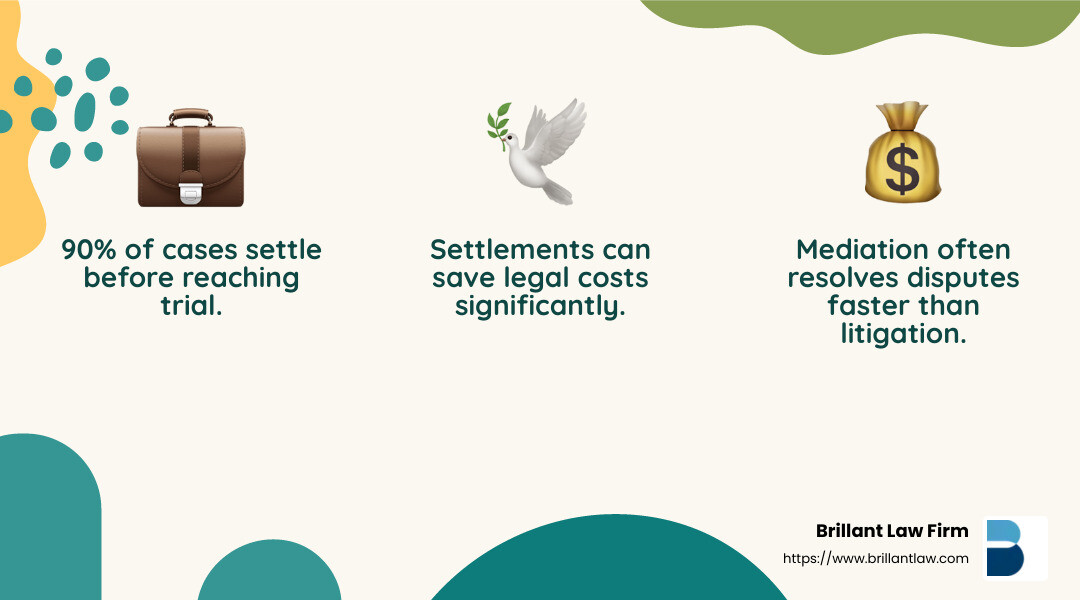
In many cases, these discussions lead to a settlement, which means the dispute is resolved without a trial. This is why most civil lawsuits never see the inside of a courtroom. In California, where Brillant Law Firm is based, settlement discussions are a common and effective way to resolve disputes.
Next, we’ll dive into the pleadings phase, where the formal paperwork begins.
Pleadings
Now, let’s dive into the pleadings phase of the litigation process steps. This is where the formal paperwork begins, setting the stage for the entire lawsuit.
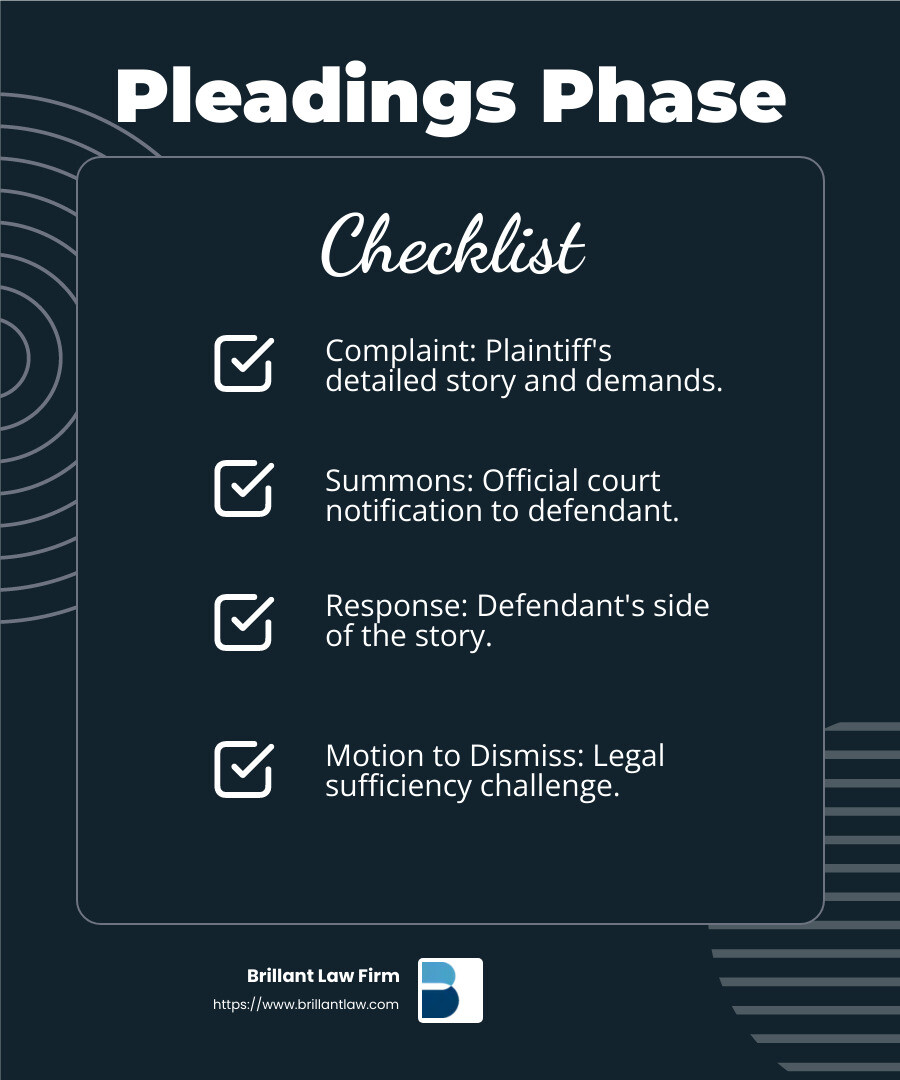
Complaint
The complaint is the first official document filed in a lawsuit. Think of it as a detailed story from the plaintiff’s perspective. It outlines who the parties are, what happened, and why the plaintiff believes the defendant is at fault. The complaint also specifies what the plaintiff wants from the court—whether it’s money, an injunction, or some other form of relief.
Once filed, the complaint is served to the defendant, officially notifying them of the lawsuit. This step is crucial because it ensures that the defendant is aware of the claims against them.
Summons
Along with the complaint, the defendant receives a summons. The summons is like a court’s invitation to the defendant, saying, “You need to show up and respond.” It contains essential details like the court’s name, parties involved, and a deadline for the defendant to file a response.
In California, defendants typically have 30 days to respond after being served with a summons and complaint. This timeline can vary, so it’s important to act quickly and consult an attorney to avoid missing critical deadlines.
Response
The response is where the defendant gets to share their side of the story. This document, often called an “answer,” addresses each point in the complaint. The defendant can admit, deny, or claim insufficient knowledge to admit or deny the allegations.
Sometimes, the defendant may include counterclaims in their response, turning the tables by alleging that the plaintiff has caused them harm. This can add complexity to the case, but it’s a strategic move to consider.
In some cases, instead of filing an answer, the defendant might file a motion to dismiss, arguing that the complaint is legally insufficient. This can delay the proceedings and potentially end the lawsuit early if the court agrees.
The pleadings phase is foundational. It frames the issues for the court and sets the direction for the rest of the litigation. Understanding this phase can help you steer the legal process more effectively.
Next, we’ll explore the findy phase, where both parties gather evidence to support their claims and defenses.
Findy Phase
The findy phase is where the real detective work happens in the litigation process steps. This is the time for both parties to dig deep and gather all the evidence they can find to support their case. Let’s break down some key tools used during this phase: interrogatories, depositions, and subpoenas.
Interrogatories
Interrogatories are written questions that one party sends to the other. These questions must be answered in writing and under oath. Think of them as a formal Q&A session.
For example, if you’re involved in a business dispute, you might ask, “What communications did you have with the supplier regarding the shipment?” The answers can reveal vital information, helping to build a strong case.
In California, the number of interrogatories is usually limited to 35, so it’s crucial to make each question count.
Depositions
Depositions are like interviews, but more formal. They take place outside the courtroom, usually in a lawyer’s office. During a deposition, lawyers ask the opposing party or witnesses questions under oath, and a stenographer records everything.
Depositions can be a goldmine of information. They give lawyers a chance to see how witnesses might act in court and to gather evidence that’s not available through documents alone.
In our business dispute example, a deposition might involve questioning a key witness about their role in the failed shipment. This can provide insights that weren’t clear from written documents.
Subpoenas
A subpoena is a powerful tool that compels someone to produce documents or testify in a deposition or at trial. Subpoenas can be sent to anyone, not just the parties involved in the lawsuit.
For instance, if there’s a third-party warehouse involved in the shipping dispute, you might issue a subpoena to obtain their records. This could uncover critical evidence that supports your case.
Subpoenas ensure that all relevant information is brought to light, promoting transparency and fairness.
The findy phase is essential because it lays the groundwork for the trial. By gathering and examining evidence thoroughly, both parties can better understand their positions and prepare for the next steps in litigation.
Next, we’ll discuss pre-trial motions, where legal strategies come into play to shape the trial’s direction.
Pre-Trial Motions
Once the findy phase wraps up, it’s time to focus on pre-trial motions. This stage is all about setting the stage for trial and tackling any legal issues that could influence the outcome.
What Are Pre-Trial Motions?
Think of motions as formal requests to the court. They’re like asking the teacher for extra time or a special favor. In the legal world, lawyers use motions to address specific issues before the trial kicks off.
Here are some common types of pre-trial motions:
Motion to Dismiss: This asks the court to throw out the case because it lacks legal merit. For example, if the lawsuit is based on a claim that is not recognized under California law, a motion to dismiss might be filed.
Motion for Summary Judgment: This motion argues that there’s no need for a trial because the facts are clear and undisputed. If the evidence collected during the findy phase strongly supports one side, this motion could be a game-changer.
Motion to Exclude Evidence: Sometimes, lawyers want to prevent certain evidence from being shown in court. This could be because the evidence was obtained improperly or is irrelevant to the case.
Tackling Legal Issues
Legal issues can pop up at any point, and pre-trial motions are a way to handle them. These issues might include disputes over what evidence is admissible or questions about the legality of certain claims.
For instance, in a business dispute, one party might file a motion to exclude emails that were obtained without proper consent. Addressing these issues before trial helps ensure a smoother process when the trial begins.
Preparing for Trial
During this phase, lawyers are also busy with trial preparation. This means organizing evidence, crafting arguments, and getting ready to present the case in front of a judge or jury.
Lawyers might:
- Identify key witnesses and prepare them for testimony.
- Review jury instructions to ensure they align with the legal arguments.
- Develop a trial strategy that highlights the strongest points of their case.
In California, attorney fees can range from $300 to $800 per hour, so effective trial preparation is crucial to manage costs and ensure a compelling presentation.
The pre-trial motions stage is vital because it shapes the trial’s direction and addresses legal problems early on. By filing strategic motions and preparing thoroughly, lawyers set the foundation for a successful trial.
Next, we’ll dive into the trial process itself, where the courtroom action unfolds.
Trial Process
Once the pre-trial motions are sorted, it’s time for the trial process, where the courtroom drama unfolds. This is the stage where all the preparation comes to life, and the case is presented before a judge or jury.
The Role of the Judge and Jury
In a trial, the judge and jury play crucial roles. The judge acts as the referee, ensuring the trial follows legal procedures and remains fair. They make decisions on legal issues, rule on objections, and provide instructions to the jury about the law.
The jury, on the other hand, is responsible for evaluating the evidence and determining the facts. They listen to both sides, consider the evidence presented, and ultimately decide on the outcome of the case. In some cases, known as bench trials, the judge takes on the role of both judge and jury, making the final decision.
Presenting the Case
The trial kicks off with opening statements from both parties. Think of this as the roadmap of what each side plans to prove. The plaintiff goes first, followed by the defendant. This sets the stage for the evidence and arguments to follow.
Next comes the presentation of evidence. Each side calls witnesses, presents documents, and showcases exhibits to support their arguments. This is where the groundwork laid during the findy phase comes into play. The plaintiff presents their case first, followed by the defendant. After each witness testifies, the opposing side gets a chance to cross-examine them.
Closing Arguments and Verdict
Once all evidence is presented, both sides deliver their closing arguments. This is their last chance to persuade the jury or judge by summarizing the key points of their case and highlighting the evidence that supports their position.
After closing arguments, the judge instructs the jury on the legal standards they must apply to the evidence. The jury then retires to deliberate, discussing the case in private until they reach a decision.
The final step is the verdict. If a jury is involved, they present their decision to the court. The verdict can be in favor of the plaintiff or the defendant, and it determines the outcome of the case. If it’s a bench trial, the judge announces the verdict.
The trial process is the culmination of all the hard work and preparation. It’s where the arguments are made, evidence is scrutinized, and justice is sought. But remember, even after a verdict is reached, the litigation journey might not be over. Next, we’ll explore what happens in the appeals process.
Appeals
Even after a verdict is reached in a trial, the journey through the litigation process steps might not be over. If a party is unhappy with the verdict, they can take the case to the Court of Appeals. This isn’t a chance to re-argue the entire case but an opportunity to examine if any legal errors happened during the trial.
Understanding the Court of Appeals
The Court of Appeals is like a safety net that ensures fairness in the legal system. It reviews the trial court’s decisions to see if the law was applied correctly. If you feel there was a mistake that affected the outcome of the trial, this is where you can seek a review.
Spotting Legal Errors
A legal error might include incorrect jury instructions, improper admission or exclusion of evidence, or misinterpretation of the law. The appellate court looks at these potential errors to determine if they were significant enough to impact the verdict.
The Appeals Process
Filing an Appeal: The first step in the appeals process is filing a notice of appeal. This must be done within a specific time frame after the verdict, usually 30 to 60 days in California.
Submitting Briefs: Both parties submit written arguments, called briefs, to the appellate court. These briefs outline their positions and highlight the alleged errors in the trial.
Oral Arguments: Sometimes, the court may also hear oral arguments from both sides. This is a chance to further persuade the judges and clarify points from the briefs.
Verdict Review: The appellate judges review the trial’s record, the briefs, and any oral arguments. They don’t re-evaluate evidence or hear new witnesses; their focus is strictly on legal issues.
Decision: Finally, the appellate court issues an opinion. They might affirm the original verdict if no errors are found, reverse it if significant errors are identified, or even order a new trial.
Appeals can be complex and time-consuming, often extending the litigation process by a year or more. However, they provide an essential check to ensure justice is served fairly. Let’s address some common questions about the litigation process steps.
Frequently Asked Questions about Litigation Process Steps
What are the basic steps in a civil lawsuit?
Civil lawsuits follow a series of structured steps. Understanding these steps can help explain the litigation process.
Pleadings: This is where everything starts. The plaintiff files a complaint, explaining the harm caused by the defendant and why they should be held responsible. The defendant responds with an answer, which may include counter-claims. These documents set the stage for the dispute.
Findy Phase: Once the pleadings are set, both sides gather information. This phase involves interrogatories, where parties exchange written questions and answers, depositions where witnesses give sworn testimony, and subpoenas to gather documents or evidence from third parties. It’s like putting together a puzzle to see the full picture.
Trial: If the case doesn’t settle, it goes to trial. Here, both sides present their arguments and evidence. A judge or jury then decides the outcome, known as the verdict. Unlike what you see on TV, trials are usually orderly and planned out in advance.
How long does a civil lawsuit take to settle?
The timeline for a civil lawsuit can vary greatly. Several factors influence how long it takes:
Case Complexity: Simple cases can wrap up in a few months, while complex ones might drag on for years. More information and witnesses often mean more time is needed.
Court Scheduling: Courts have busy calendars. Waiting for available dates can add months to the process.
Timeline: On average, many cases settle within a year, but this is just an average. Some might resolve quickly through settlement, while others require a full trial and appeals.
What are alternatives to litigation?
Litigation isn’t the only path to resolving disputes. Here are some alternatives:
Mediation: A neutral third party, called a mediator, helps the parties find common ground. It’s less formal than court and can be quicker and cheaper.
Arbitration: Similar to a private trial, an arbitrator hears both sides and makes a decision. It’s usually faster and less formal than going to court.
Settlement: Most cases settle before reaching trial. This means both parties agree on a resolution to avoid the uncertainty and cost of a trial.
Each alternative has its pros and cons, and the best choice depends on the specific circumstances of the case. Whether you’re considering litigation or an alternative, having a clear strategy and understanding of the process can make a significant difference.
Conclusion
Navigating the litigation process steps can be daunting, but with the right guidance and expertise, it becomes much more manageable. At Brillant Law Firm, we specialize in providing custom legal strategies that align with your unique needs. Our team is deeply rooted in California litigation, ensuring that we are well-versed in the state’s specific legal landscape.
Our commitment to excellence means that we leave no stone unturned. From the initial pleadings to the final verdict, we are with you every step of the way. Our attorneys are not just knowledgeable; they are also dedicated to ensuring that our clients understand every part of the process. We believe that informed clients make the best decisions.
California’s legal system can be complex, but with our experience, we help explain it. Whether you’re facing a civil lawsuit or exploring alternatives like mediation or arbitration, our expertise ensures that you have the best possible representation.
If you have questions or need assistance with your case, don’t hesitate to reach out to us. We are here to provide the support and guidance you need to steer your legal challenges successfully.
For more information about how we can assist you with your litigation needs, visit our Civil Litigation Services. Let us put our expertise to work for you.


