

Litigation Process for Personal Injury: 7 Key Steps to Win 2025
Understanding the Litigation Journey
The litigation process for personal injury cases follows a structured path through the legal system. For those seeking quick answers, here’s what you need to know:
| Stage | Description | Typical Timeline |
|---|---|---|
| 1. Filing a Complaint | Official lawsuit document filed with court | Within 2 years of injury in CA |
| 2. Service of Process | Formal notification to defendant | Within 60-90 days of filing |
| 3. Findy | Evidence gathering (documents, depositions) | 6-12 months |
| 4. Pre-Trial Motions | Legal arguments before trial | Throughout case |
| 5. Mediation/ADR | Attempt to settle with neutral third party | Usually 9-18 months after filing |
| 6. Trial | Presentation of case before judge/jury | 1-3 years after filing |
| 7. Post-Trial/Appeals | Review of trial decisions | Can add 1-2 years |
If you’ve been injured due to someone else’s negligence, understanding the litigation process for personal injury claims is crucial to protecting your rights. While most cases settle before trial, knowing what happens when a case proceeds to court can help you make informed decisions about your claim.
The reality is that personal injury litigation is complex and time-consuming. It involves multiple stages, strict deadlines, and specialized procedural rules that can overwhelm those without legal training.
Most personal injury claims begin with attempts to negotiate a settlement. When those negotiations fail—whether because an insurance company denies liability, makes unreasonably low offers, or disputes the extent of your injuries—the formal litigation process becomes necessary to pursue fair compensation.
As David Brillant, I’ve guided numerous clients through the litigation process for personal injury claims in California, leveraging my expertise as a Certified Specialist to steer complex legal matters and secure favorable outcomes when settlement negotiations fall short.

Litigation process for personal injury terms to remember:
– findy process in litigation
– litigation hold process
– litigation process steps
What Is Litigation in a California Personal Injury Case?
When you’re hurt because of someone else’s carelessness, you hope they’ll step up and make things right. But what happens when they don’t? That’s where litigation process for personal injury cases comes into play.
In simple terms, litigation is your day in court – it’s the formal legal process where your injury dispute gets resolved through California’s court system. Think of it as the path to justice when private negotiations hit a wall.
“Litigation gives injured people a voice when insurance companies won’t listen,” explains a California Superior Court judge. “It’s a structured process ensuring everyone gets a fair hearing, regardless of who has deeper pockets.”
Unlike criminal cases where the state prosecutes someone for breaking the law, personal injury litigation is different. Here, you (the injured plaintiff) seek financial compensation from the responsible party (defendant) to cover your medical bills, lost wages, pain and suffering, and other losses.
The entire litigation process for personal injury claims follows California’s Code of Civil Procedure – a detailed rulebook ensuring cases move forward fairly and consistently. These rules might seem complicated, but they protect everyone’s rights throughout the process.

Settlement vs. Litigation: Key Differences
Before diving deeper into courtroom proceedings, let’s clear up how litigation differs from settlement – because many people confuse these two very different paths.
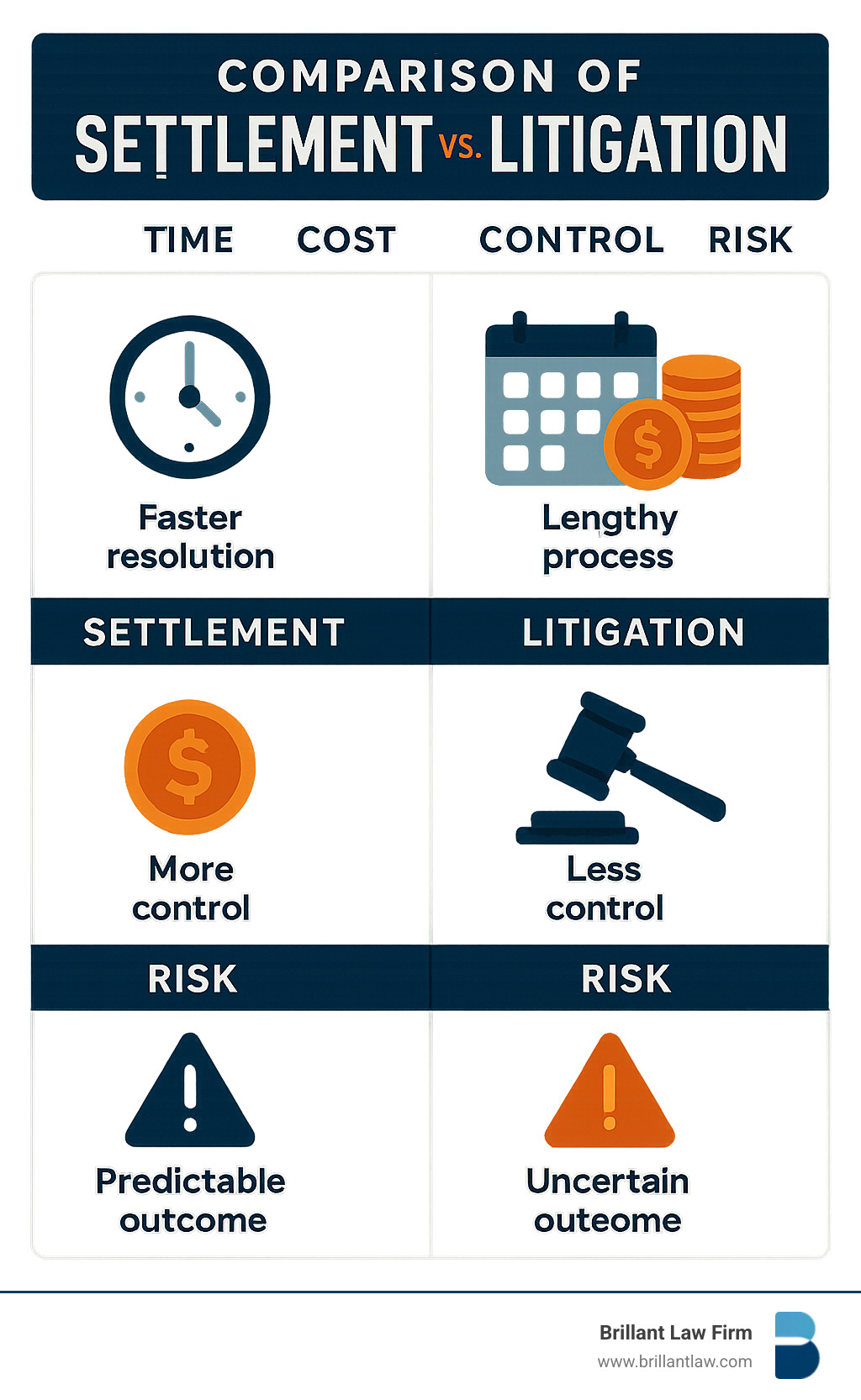
Settlement feels more like a private conversation. You and the other party (usually an insurance company) negotiate directly or through your attorneys. It’s typically faster, costs less, and stays confidential. You both maintain control over the outcome, and you know exactly what you’re getting. The certainty is comforting, even if the amount might be somewhat lower than what you’d hope for at trial.
Litigation, on the other hand, puts your case in the hands of the California court system. It follows strict rules and timelines, creates public records of everything, and ultimately lets a judge or jury decide your fate. While it takes longer (often 1-3 years) and costs more, litigation can sometimes result in significantly higher compensation.
As Maria, one of our clients, shared: “I initially wanted to settle quickly after my accident. But when the insurance company offered barely enough to cover half my medical bills, my attorney suggested litigation. It took fourteen months longer, but the jury awarded me nearly four times what they first offered.”
What’s interesting is that even after filing a lawsuit, about 95% of personal injury cases in California still settle before reaching trial. Often, the mere act of moving forward with litigation motivates insurance companies to make more reasonable offers.
The litigation process for personal injury claims isn’t simply about going to court – it’s about leveraging the court system to ensure you receive fair treatment. As explained in the litigation definition from Cornell Law School, litigation encompasses all activities involved in resolving a legal dispute through the court system.
Whether settlement or litigation is right for your situation depends on the specific details of your case, the severity of your injuries, and your personal preferences. A skilled California personal injury attorney can help you weigh these options and determine the best path forward.
From Claim to Courtroom: When Does a Case Enter Litigation?
The path from injury to litigation isn’t always a straight line. Most people hope their personal injury claim will resolve quickly with a fair settlement, but understanding when and why a case moves into the courtroom can help you steer this challenging journey with clearer expectations.
When you’re injured, your case typically begins in what attorneys call the “pre-litigation phase.” This initial stage usually involves:
Your attorney sending a demand letter to the at-fault party’s insurance company, outlining your injuries, damages, and the compensation you’re seeking. The insurance company then investigates your claim, while you continue medical treatment and document your recovery. Your legal team compiles evidence of your damages, including medical records, bills, and proof of lost wages. Finally, settlement negotiations begin.
“Most cases actually settle during this pre-litigation phase,” explains a California personal injury attorney. “But sometimes, the litigation process for personal injury claims becomes necessary when fair compensation isn’t being offered.”
Your case typically enters litigation when one or more of these situations occur:
The insurance company flat-out denies liability despite clear evidence that their insured caused your injuries. Perhaps they’ve made lowball settlement offers that don’t come close to covering your actual damages. Sometimes, there are fundamental disagreements about key facts in your case or the severity of your injuries.
“I tell my clients that insurance companies are in the business of collecting premiums, not paying claims,” shares a veteran California trial lawyer. “Sometimes filing a lawsuit is the only way to show them you’re serious about receiving fair compensation.”
Other situations that push cases into litigation include approaching statute of limitations deadlines, complex legal questions that require court resolution, or cases involving multiple responsible parties that complicate settlement negotiations.
The California Statute of Limitations for Personal Injury
In California, time is truly of the essence when it comes to personal injury claims. The standard statute of limitations for most personal injury cases is two years from the date of injury. Miss this deadline, and courts will almost certainly dismiss your case—no matter how strong it might be.
“I’ve seen too many valid claims dismissed simply because they were filed a day late,” one California judge notes. “The statute of limitations doesn’t care about the merits of your case—it’s an absolute deadline.”
Several important exceptions and variations to this rule exist:
Claims against government entities require filing an administrative claim within just six months of the injury. This shortened timeline catches many people off guard.
For medical malpractice cases, you have one year from findy of the injury or three years from when the injury occurred, whichever comes first.
If the injured person is a minor, the statute may be “tolled” (essentially paused) until they turn 18.
The findy rule sometimes applies when injuries aren’t immediately apparent, starting the clock when you finded or reasonably should have finded the injury.
These strict deadlines underscore why consulting with a personal injury attorney promptly after an injury is crucial to protecting your rights. The litigation process for personal injury claims can’t even begin if you’ve missed your filing window.
The decision to move from settlement negotiations to litigation isn’t one to take lightly, but sometimes it’s the necessary path to justice. As one client shared, “I was hesitant about going to court, but filing that lawsuit was what finally got the insurance company to take my injuries seriously.” Briefly Explain the Steps Involved in the Pretrial Litigation Process
The Litigation Process for Personal Injury Cases Explained
Once you’ve decided to pursue litigation, the litigation process for personal injury follows a structured path through California’s court system. While each case has unique elements, the procedural framework remains consistent across cases. Let’s walk through each stage together so you know exactly what to expect.

Step 1: Filing the Complaint — starting the litigation process for personal injury
Your journey through the court system officially begins when your attorney files a complaint. Think of this as your formal introduction to the court, explaining why you’re there and what you’re seeking. In California, most personal injury cases land in Superior Court in the county where the injury occurred, where the defendant lives or works, or another appropriate location based on your specific situation.
The complaint isn’t just paperwork—it’s the foundation of your entire case. Your attorney carefully crafts this document to establish who’s involved, why the court has authority over your case, the legal reason for your claim (usually negligence), the facts supporting your allegations, and what compensation you’re seeking.
“The complaint is like the blueprint for your entire case,” explains a California trial attorney I work with. “We need to carefully include all possible legal theories and damages from the start, because adding claims later can be quite challenging.”
Filing fees in California typically range from $435 to $1,500 depending on your case value and county. Along with your complaint, your attorney prepares a summons—the official notice telling the defendant they’ve been sued.
Step 2: Service of Process & Defendant’s Answer
After filing your complaint, the next crucial step is formally notifying the defendant through “service of process.” In California, this typically involves personal delivery of the summons and complaint by a professional process server, sheriff, or other legally authorized person. Once service is complete, proof of this service gets filed with the court.
California law gives defendants 30 days to file their written response, called an “answer.” In this document, they’ll either admit or deny each allegation in your complaint and assert any “affirmative defenses”—legal reasons why they believe they shouldn’t be held liable.
It’s worth noting that California follows a “comparative fault” system, meaning defendants often argue that you were partially responsible for your own injuries, which could reduce your compensation. If a defendant misses their response deadline, your attorney may request a default judgment in your favor.
Step 3: Pre-Trial Motions
Throughout litigation, both sides can file various motions asking the court to make rulings on specific issues. These legal maneuvers can significantly impact your case trajectory:
Demurrers challenge whether your complaint is legally sufficient. Motions to Strike ask the court to remove improper portions of legal documents. Motions for Summary Judgment argue that there are no disputed facts and one party deserves immediate judgment. Motions in Limine seek to exclude certain evidence before trial begins.
“Pre-trial motions aren’t just procedural formalities,” notes a California judge I regularly appear before. “They can dramatically reshape a case. A successful summary judgment motion can end the case entirely, while motions in limine determine what evidence the jury will ultimately hear.”
These motions require extensive legal research, compelling written arguments, and often oral arguments before the judge—all showcasing why having experienced legal representation matters so much.
Step 4: Findy — heart of the litigation process for personal injury
Findy represents perhaps the most critical phase of the litigation process for personal injury cases. This is when both sides formally exchange information and evidence, often revealing the true strengths and weaknesses of each position.
In California, findy typically includes written questions called interrogatories that must be answered under oath, requests for documents and other evidence, requests for the other party to admit or deny specific facts, and depositions—oral testimony given under oath before a court reporter.
The defendant may also request an independent medical examination to assess your injuries, and either side might use subpoenas to obtain information from third parties who aren’t directly involved in the lawsuit.
“Findy can feel intrusive and exhausting,” acknowledges a client whose case I recently handled. “But my attorney explained how essential it was for building our case and understanding exactly what we were up against.”
Electronic findy has become increasingly important, covering emails, text messages, social media posts, and other digital evidence. In complex cases, findy can stretch 6-12 months or longer in California courts. The information gathered during this phase often determines whether your case settles or proceeds to trial. Findy Process in Litigation
Step 5: Mediation & Alternative Dispute Resolution
After substantial findy has occurred, many California courts require parties to attempt alternative dispute resolution before proceeding to trial. Mediation is the most common approach, where a neutral third party facilitates confidential settlement discussions between you and the defendant.
The beauty of mediation is its informality—both sides present their positions in a conversational setting, and the mediator helps identify common ground and potential solutions. While the mediator can’t force an agreement, any settlement reached becomes legally binding once finalized.
California courts often order a Mandatory Settlement Conference (MSC) where you’ll meet with a judge or settlement officer at the courthouse to explore resolution possibilities.
“I’m continually amazed by mediation’s effectiveness,” shares a California mediator with over 20 years of experience. “Even when parties walk in convinced settlement is impossible, a skilled mediator can often find creative solutions that address everyone’s core concerns.”
The numbers speak for themselves—approximately 85-90% of cases that go to mediation reach settlement, even after litigation has begun. This makes ADR a pivotal moment in the litigation process for personal injury claims.
Step 6: Trial
If settlement efforts don’t succeed, your case proceeds to trial. In California, you can choose between a jury trial or a bench trial (decided by a judge alone). The trial unfolds in stages, beginning with jury selection where both sides question potential jurors to seat an impartial panel.
Opening statements give each side a chance to preview their case, followed by the presentation of evidence and witness testimony—first by your side, then the defense. You’ll have opportunities to counter the defendant’s evidence before both attorneys deliver closing arguments.
The judge then instructs the jury on relevant law before they deliberate in private and reach a verdict.
“Trials are inherently unpredictable,” cautions a veteran trial attorney whose cases I’ve worked on. “Even the strongest cases can face unexpected challenges once you’re in the courtroom.”
In California, personal injury trials typically last between 3-10 days, though complex cases may continue for weeks. Due to crowded court calendars, particularly in busier counties, it might take 1-3 years from filing to actually reach trial.

Step 7: Post-Trial Motions & Appeals
The verdict doesn’t necessarily end your journey through the litigation process for personal injury cases. Either party may file post-trial motions such as a Motion for Judgment Notwithstanding the Verdict (asking the judge to reverse the jury’s decision), a Motion for a New Trial (based on procedural errors or newly finded evidence), or a Motion to Modify the Judgment (seeking changes to specific terms).
If these motions don’t succeed, the losing party may appeal to the California Court of Appeal. Unlike the trial, which focuses on establishing facts, appeals concentrate on potential legal errors. The process involves extensive written arguments, limited oral presentation, and typically takes 1-2 years to complete. The appellate court may affirm the original decision, reverse it, or send it back for a new trial.
Even after winning a judgment, collecting your award can present challenges, particularly if the defendant lacks adequate insurance coverage or assets.
“The post-trial phase requires patience,” advises a California appellate attorney I collaborate with. “Appeals are lengthy processes, and even successful plaintiffs sometimes wait years before receiving their full compensation.”
Time, Cost & Risk: What Plaintiffs Need to Know
Deciding whether to pursue litigation isn’t a choice to make lightly. As someone who’s guided countless clients through this journey, I want to be completely transparent about what you can expect when starting on the litigation process for personal injury claims in California.
The path to justice through litigation can be rewarding but comes with practical considerations that every plaintiff should understand before proceeding.
The Timeline Reality
Most personal injury cases in California take between 12-30 months from filing to resolution. This timeline isn’t just about legal procedures—it reflects the real-world challenges of our court system.
“I tell my clients to think of litigation as a marathon, not a sprint,” shares a California personal injury attorney. “Court calendars in Los Angeles, San Francisco, and other populous counties are incredibly congested, often adding months to even straightforward cases.”
Defense attorneys regularly request continuances (postponements), which judges often grant. These tactical delays are frustrating but common. If your case involves multiple parties, complex medical issues, or requires specialized expert testimony, expect the timeline to stretch even further.
And if your case goes to appeal? Add another 1-2 years before final resolution.
Understanding the Financial Investment
Money matters—and litigation isn’t inexpensive. While most personal injury attorneys in California work on contingency (typically 33-45% of your recovery), the additional costs can add up quickly.
Your attorney will usually advance these expenses, but remember they’ll be reimbursed from your settlement or judgment before you receive your portion. These costs typically include:
Expert witness fees range from $350 to over $1,000 per hour in California—medical specialists, accident reconstructionists, and economic analysts don’t come cheap. A complex case might require multiple experts, each preparing reports, reviewing records, and potentially testifying at trial.
Court costs and administrative expenses add another layer—filing fees (~$435-$1,500), deposition costs ($1,000+ each), medical record retrieval, exhibit preparation, jury fees, and transcript expenses can total thousands of dollars.
One client reflected: “My attorney was transparent about costs from day one. While the final expert witness bills were substantial, their testimony proved crucial to our successful outcome.”
The Risk Factor
Even the strongest cases carry inherent risks. Statistics show approximately 50% of personal injury trials result in defense verdicts—meaning the plaintiff recovers nothing despite years of litigation.
There’s also the very real possibility of receiving a jury award that’s less than the last settlement offer you rejected. California’s comparative negligence laws mean that if you’re found partially responsible for your injuries, your compensation will be reduced proportionally.
Beyond financial concerns, consider the emotional investment. Testifying means having your life scrutinized in a public forum. Defense attorneys may question your credibility, pain levels, and lifestyle choices. Medical examinations, depositions, and trial testimony can be emotionally draining experiences.
“The findy process felt invasive,” one former plaintiff shared. “But my attorney prepared me thoroughly for what to expect, which made it manageable.”
Making an Informed Decision
Despite these challenges, litigation is sometimes the only path to fair compensation. When insurance companies refuse reasonable settlements or deny valid claims, the litigation process for personal injury claims becomes necessary to protect your rights.
The key is making this decision with complete awareness of what lies ahead. Your attorney should provide a realistic assessment of your case’s strengths and weaknesses, probable timeline, estimated costs, and potential outcomes.
As one client who successfully steerd the litigation process put it: “The two-year journey was longer and more challenging than I anticipated. But having an attorney who set realistic expectations from the beginning made all the difference. The jury’s verdict ultimately exceeded the insurance company’s best offer by more than double. Still, I wouldn’t recommend litigation to anyone unless they’re prepared for the long haul.”
For many injured Californians, the investment of time, money, and emotional energy is worthwhile when weighed against the alternative—accepting inadequate compensation that fails to cover their losses and needs.
Building a Winning Case: Evidence & Preparation
The strength of your personal injury case often comes down to one thing: evidence. As you steer the litigation process for personal injury in California, understanding what makes a compelling case can mean the difference between a disappointing outcome and fair compensation.
Strong evidence tells your story when you can’t be there to explain it yourself. Medical records don’t just show you were injured—they create an objective timeline of your suffering and recovery journey. Photos of your injuries or the accident scene capture moments that words alone can’t convey to a jury.
“I always tell clients that we’re building a puzzle for the jury,” shares a California trial attorney with 15 years of experience. “Each piece of evidence fills in part of the picture until your story becomes undeniable.”
The most persuasive cases combine multiple types of evidence. Your medical records establish your injuries while employment documentation proves your lost wages. Expert testimony explains complex concepts to jurors in understandable terms, helping them grasp how the accident has truly impacted your life.
Digital evidence has transformed personal injury litigation in recent years. Text messages, emails, and security camera footage can provide crucial context about how an accident occurred. Social media has become particularly significant—a seemingly innocent post about a weekend activity might be used by defense attorneys to suggest your injuries aren’t as severe as claimed.
“I had a client with a legitimate back injury who posted photos of herself at her daughter’s graduation,” recalls a seasoned personal injury lawyer. “Though she was in tremendous pain that day and left early, the defense attorney printed those smiling photos and used them to question her credibility. Be thoughtful about your online presence during litigation.”
Your attorney will likely use specialized eFindy tools to gather electronic evidence that strengthens your case, from obtaining traffic camera footage to preserving deleted social media posts that might help your claim.
How to Prepare Personally for Litigation
Beyond gathering evidence, personal preparation plays a crucial role in the litigation process for personal injury cases. The emotional and practical demands of litigation can catch many plaintiffs off guard.
First and foremost, follow your doctor’s advice consistently. Missing appointments or ignoring treatment recommendations gives defense attorneys ammunition to argue you’re not really injured or not taking your recovery seriously. Your medical journey creates a paper trail that either strengthens or weakens your case.
Be carefully honest with your attorney about everything—previous injuries, pre-existing conditions, or past legal issues. Your lawyer can only prepare for what they know about. As one attorney puts it, “I can work with the truth, no matter what it is. What I can’t overcome is being surprised by facts I should have known about.”
Prepare thoroughly for your deposition with your attorney’s guidance. This sworn testimony will likely be your most important contribution to your case. Many attorneys conduct practice sessions where they ask the difficult questions you’re likely to face, helping you respond truthfully while avoiding common traps.
Social media management becomes crucial during litigation. Consider temporarily deactivating accounts or, at minimum, setting profiles to private and declining new friend requests. Even innocent posts can be taken out of context by skilled defense attorneys looking to minimize your claim.
Develop emotional resilience for what can be a lengthy process. California courts, particularly in urban areas, face significant backlogs that can extend timelines. Having realistic expectations about both the duration and potential outcomes helps manage the inevitable stress of litigation.
“The clients who struggle most are those expecting quick resolutions,” notes a California personal injury attorney. “Understanding that litigation is a marathon, not a sprint, helps maintain the patience needed for the journey.”
Many plaintiffs find keeping a daily pain and limitation journal helpful, documenting how injuries affect their daily life. These contemporaneous notes can refresh your memory during testimony and provide powerful evidence of your ongoing challenges.
The litigation process for personal injury cases demands commitment, but proper preparation significantly improves your chances of a favorable outcome. Working closely with your attorney, gathering compelling evidence, and preparing yourself mentally for the challenges ahead creates the foundation for a successful case.
Frequently Asked Questions About Personal Injury Litigation in California
What percentage of cases actually go to trial?
Despite what TV shows might have you believe, the courtroom showdown is actually quite rare in personal injury cases. Here in California, only about 3-5% of personal injury cases ever make it to trial. The overwhelming majority reach settlement at some point during the litigation process for personal injury claims.
Many cases resolve during findy or after a productive mediation session. I’ve even seen plenty of cases settle literally hours before trial was set to begin – what we attorneys sometimes call “on the courthouse steps” settlements.
“I was prepared to testify and had my suit pressed and ready,” one client told me. “Then my attorney called the night before to say the insurance company had finally made a reasonable offer. It was such a relief to avoid the stress of testifying.”
Don’t let these statistics fool you, though. Being genuinely prepared for trial often leads to better settlement offers. Insurance companies can sense when you and your attorney are willing to go the distance.
How long does findy usually last?
The findy phase typically serves as the backbone of the litigation process for personal injury cases. In California, this evidence-gathering stage usually spans 6-12 months, though more complex cases involving multiple parties or catastrophic injuries may take longer.
The California Code of Civil Procedure establishes specific timelines that keep the process moving:
– Written interrogatories and document requests must be answered within 30 days
– Add 5 more days (35 total) if these requests were served by mail
– Depositions require at least 10 days’ advance notice
These timeframes aren’t set in stone, though. Judges have discretion to extend or shorten these periods based on the unique circumstances of your case. I’ve seen findy periods extended when medical treatment is ongoing or when locating key witnesses proves challenging.
One thing to remember: findy can feel invasive and time-consuming, but it’s often where cases are truly won or lost. The evidence uncovered during this phase frequently determines whether you’ll receive fair compensation.
Can my case settle after litigation has started?
Absolutely! In fact, settlement remains possible – and even likely – at any point during the litigation process for personal injury claims. Your case might settle the day after filing the complaint, during findy, at mediation, during trial, or even while the jury is deliberating.
As your case progresses through litigation, both sides continuously reassess their positions based on new information. A strong deposition performance, a favorable ruling on a key motion, or newly finded evidence can dramatically shift settlement dynamics.
I’ll never forget one client’s experience: “We’d been fighting for almost a year when the defendant’s former employee testified they knew about the dangerous condition for months before my accident. Their settlement offer doubled within 48 hours.”
Many clients find relief in knowing that starting litigation doesn’t mean they’re locked into a trial. The courthouse doors remain open for settlement discussions throughout the entire process. This flexibility allows you to make decisions based on the evolving strengths and weaknesses of your case rather than being forced into an all-or-nothing trial scenario.
The ultimate decision to settle always remains yours. While your attorney will provide guidance based on their experience with the litigation process for personal injury claims, you maintain control over whether to accept a settlement offer or proceed toward trial.
Conclusion
The litigation process for personal injury claims represents more than just legal procedures—it’s a pathway to justice when fair settlement isn’t offered. While I’ve walked many clients through this journey, I’ve seen how understanding each step helps you feel more in control during a challenging time in your life.
Litigation isn’t the quick and easy route—it demands patience, resilience, and resources. But when insurance companies refuse to offer fair compensation for serious injuries, it remains the most powerful tool available to level the playing field. The courtroom becomes the great equalizer where your story can be fully heard.
What makes this process worthwhile for many of my clients is the opportunity to have their day in court. As one client told me after winning her case: “It wasn’t just about the money—though that helps with my medical bills. It was about someone finally acknowledging that what happened to me wasn’t right.”
Throughout this guide, we’ve explored everything from filing complaints to navigating findy, preparing for depositions, and understanding what happens at trial. The litigation process for personal injury cases follows a structured path, but each case writes its own unique story.
Most cases still settle even after litigation begins—sometimes on the courthouse steps just before trial. The act of pursuing litigation often demonstrates your resolve and can bring reluctant insurance companies back to the negotiation table with more reasonable offers.
At Brillant Law Firm, we believe knowledge is power. We hope this comprehensive overview helps you approach potential litigation with clearer expectations and less anxiety. Our approach combines thorough legal expertise with genuine compassion—because behind every case file is a person whose life has been disrupted by injury.
Whether your path leads to settlement or verdict, our goal remains constant: securing the compensation you deserve to rebuild your life and move forward with confidence.


