

Understanding Your Rights in Civil Disputes
Litigation process explained is really just a fancy way of saying “how a lawsuit works from start to finish.” If you’ve ever wondered what happens after someone decides to take a dispute to court, you’re in the right place.
When informal methods of resolving conflicts fail, our legal system provides a structured path forward. Think of litigation as the adult version of asking a parent to settle an argument – except the parent is a judge, and the rules are a bit more complex than “because I said so.”
| Phase | Description | Timeline |
|---|---|---|
| 1. Pre-litigation | Investigation, demand letters, settlement attempts | 1-6 months |
| 2. Pleadings | Filing complaint, response from defendant | 30-60 days |
| 3. Findy | Exchanging information, depositions, evidence gathering | 6-12 months |
| 4. Pre-trial motions | Summary judgment, evidence admissibility | 2-3 months |
| 5. Trial | Evidence presentation, witness testimony, verdict | 1 day-2 weeks |
| 6. Post-trial | Appeals, judgment enforcement | 1-2+ years |
“Litigation is something nobody wants to go through, but at some point, most of us will.” Those words ring true whether you’re considering filing a lawsuit or suddenly find yourself named as a defendant. Understanding the road ahead helps remove some of the mystery and anxiety from the process.
Here’s what might surprise you about litigation in California:
Most cases never see a courtroom trial – about 95% settle before that dramatic courtroom showdown you’ve seen on TV. The reality is less dramatic but often more practical for all involved.
Patience is essential – the average civil case in California takes between 12-24 months to resolve completely. The wheels of justice turn thoroughly, but rarely quickly.
Settling isn’t giving up – you can reach a settlement agreement at any point in the process, even minutes before a verdict.
Alternatives exist – mediation and arbitration often provide faster, less expensive paths to resolution than traditional litigation.
The litigation process explained simply is a methodical approach to conflict resolution, with each step designed to ensure fairness. While television portrays courtrooms full of surprise witnesses and dramatic revelations, real litigation follows careful procedures with few surprises. Findy rules specifically exist to eliminate “gotcha” moments.
I’m David Brillant, a Certified Specialist in Estate Planning, Trust and Probate Law. Throughout my career navigating complex tax, trust and estate matters across California, I’ve guided countless clients through each stage of litigation. My approach focuses on helping you understand your options while developing strategic approaches that align with your specific goals.
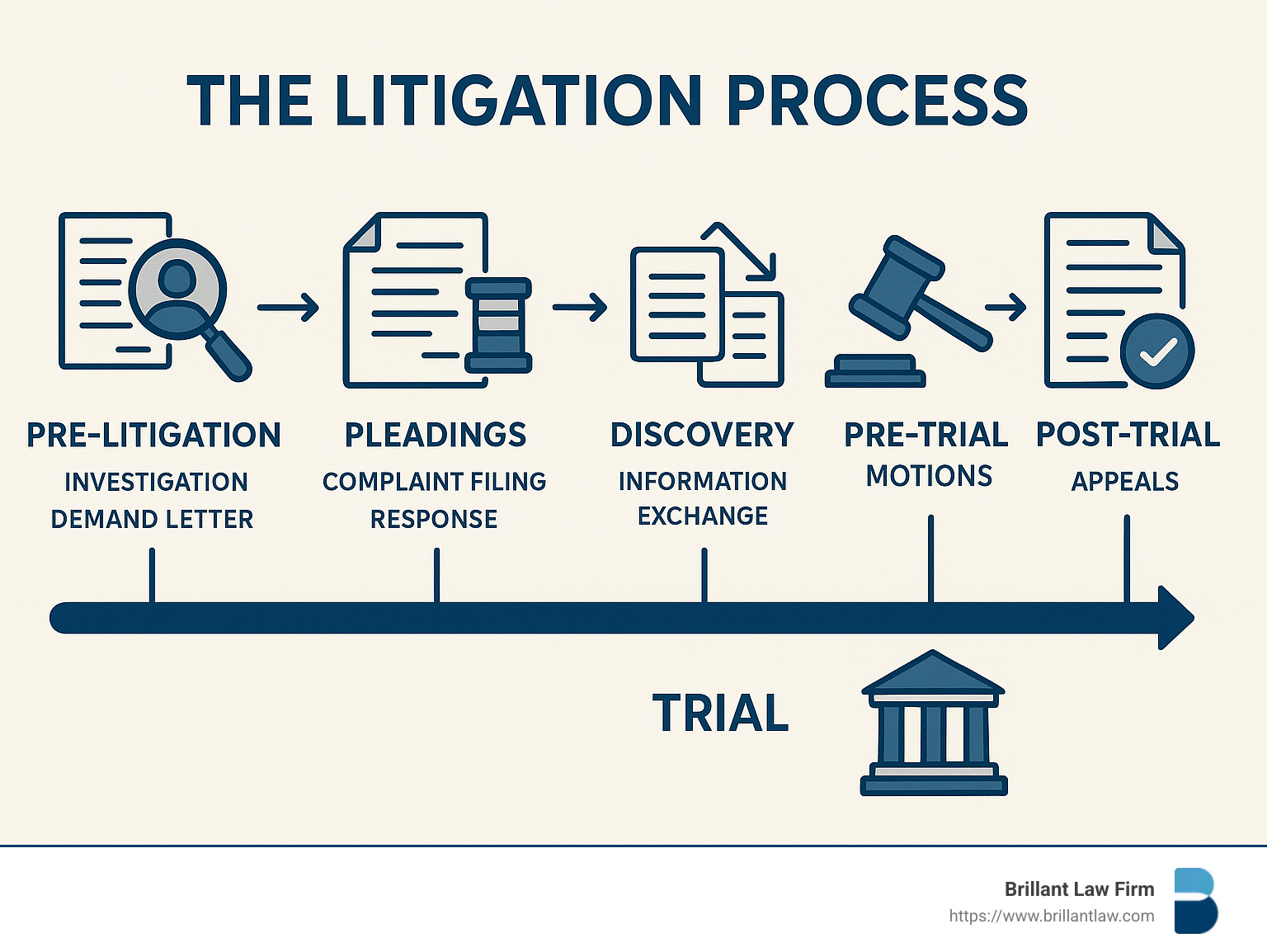
Litigation Process Explained: Quick Overview
Let’s face it – nobody wakes up excited about getting involved in a lawsuit. But understanding the litigation process explained can make this challenging journey a bit less daunting. Think of litigation as a road trip with clearly marked stops along the way, each requiring different preparation and strategy.
The litigation journey typically follows these key phases:
Pre-Litigation Assessment: Before hitting the road, you need to pack properly – gathering evidence, evaluating your claim’s strength, and often sending demand letters to attempt resolution without court involvement.
Pleadings: This official starting line involves filing formal documents that frame the dispute – complaints, answers, and sometimes counterclaims that establish what the fight is actually about.
Findy: Perhaps the longest and most crucial phase, where both sides exchange information through document requests, interrogatories, and depositions. This is where cases are often won or lost before trial ever begins.
Motions: Throughout the process, either side can ask the court to make important rulings – from dismissing claims to limiting evidence that can be presented at trial.
Alternative Dispute Resolution: Many California courts require mediation or settlement conferences, creating opportunities to resolve disputes without a full trial.
Trial: The part everyone thinks of first – presenting evidence and arguments before a judge or jury who will decide the outcome.
Post-Trial: Even after verdict, the journey may continue through appeals and judgment enforcement efforts.
Here’s something that surprises many of my clients: roughly 95% of civil cases settle before reaching trial. As one California judge memorably put it during a settlement conference: “You can have certainty today or uncertainty tomorrow – but you can’t have both.”
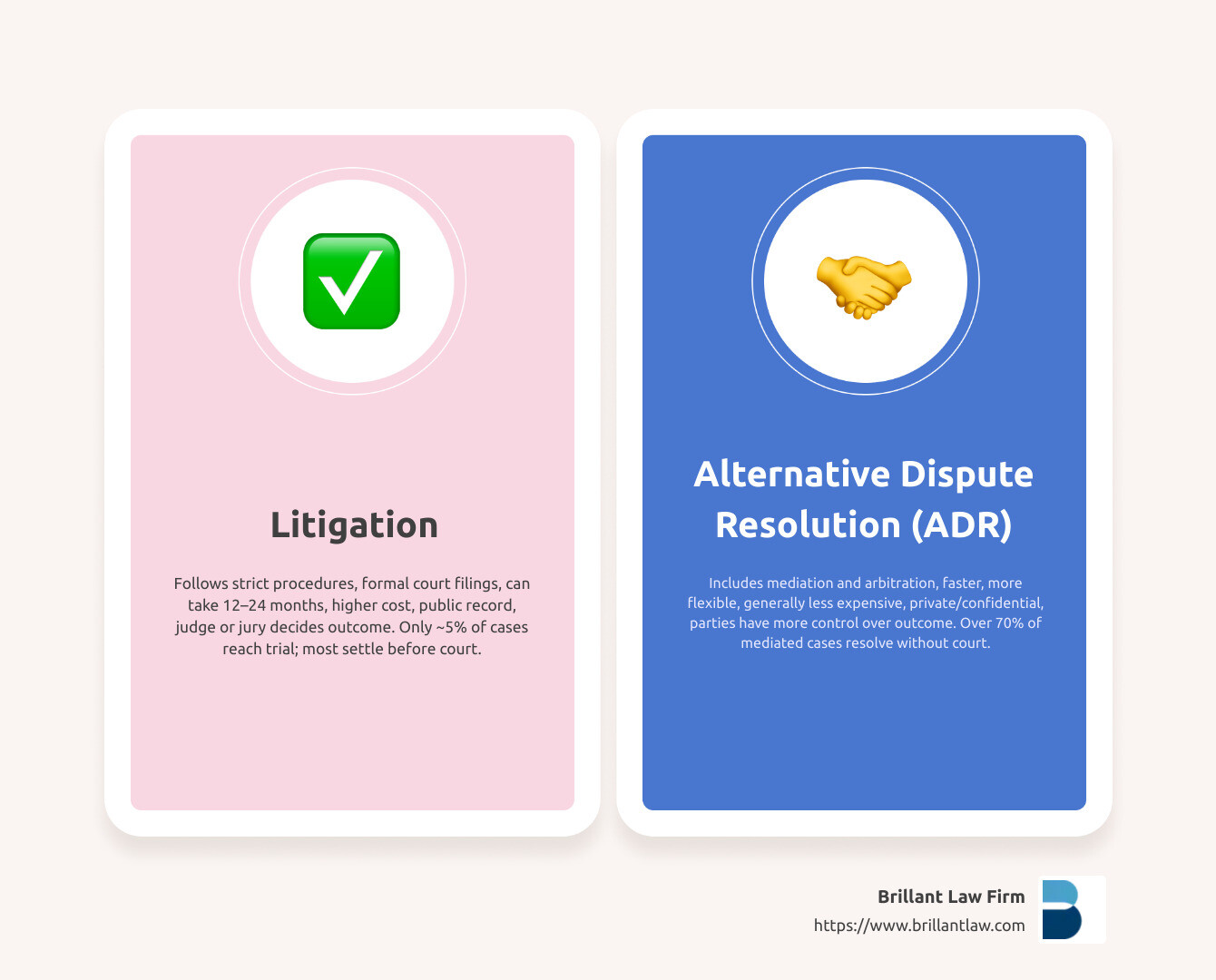
Cases settle for many practical reasons – the astronomical costs of continuing to trial, weaknesses exposed during findy, or simply the unpredictability inherent in putting your fate in the hands of a judge or jury. Even the strongest cases carry risks, and as litigation progresses, both sides often gain clearer perspectives on those risks.
Why Understanding the Litigation Process Explained Matters
When I meet with new clients facing potential litigation, I often see a mix of anxiety and misconception about what lies ahead. Understanding this process isn’t just academic – it’s practical in several important ways:
Risk management becomes possible when you grasp the full litigation landscape. Each phase presents different opportunities and pitfalls, and knowing what’s coming helps you make strategic choices rather than reactive ones.
Cost control is a critical concern in California, where litigation expenses can quickly spiral. Attorney fees typically range from $350 to $900 per hour, and that’s before considering court fees, expert witnesses, and other expenses. Understanding where your money goes helps you budget appropriately and identify strategic off-ramps when settlement makes financial sense.
Informed decision-making requires understanding the context of each choice you’ll face. Should you accept that settlement offer? Push for additional findy? File that motion? The answers depend on understanding where you are in the process and what lies ahead.
As one client recently told me after we successfully resolved her trust dispute: “I wish I’d understood the whole process from the beginning – I would have made different choices and saved myself both money and stress.”
At Brillant Law Firm, we believe in empowering our clients with knowledge about the litigation process explained in clear terms, not just handling their cases. This partnership approach leads to better strategic decisions and, ultimately, better outcomes in California’s complex legal landscape.
Stage 1: Pre-Litigation Assessment & Strategy
The moment before you enter the courtroom doors is often the most critical in any legal dispute. The Litigation Process Explained truly begins well before any official paperwork hits the clerk’s desk. This first stage sets the foundation for everything that follows.
Demand Letters and Initial Communication
Most legal journeys begin with a simple letter. A well-crafted demand letter serves as your opening statement to the other party, clearly outlining what happened, why you believe they’re legally responsible, what you want them to do about it, and when you expect a response.
“I’ve seen countless cases resolve with just a strongly-worded letter on firm letterhead,” says David Brillant. “Sometimes the other side simply needs to understand you’re serious about pursuing your rights.”
These letters aren’t just formalities—they’re strategic tools that can save you thousands in litigation costs if they lead to early resolution. They also establish a paper trail showing your reasonable attempts to resolve the matter before heading to court.
Evidence Gathering and Case Evaluation
Before committing to litigation, we conduct a thorough investigation to understand the full picture. This involves collecting relevant documents, identifying potential witnesses, and sometimes consulting experts with specialized knowledge.

Think of this phase as building the foundation of your case. A house built on sand won’t withstand a storm, and similarly, a case built on weak evidence won’t withstand scrutiny in court. We help clients understand what evidence strengthens their position and what potential weaknesses might need addressing.
Statute of Limitations Considerations
Time waits for no one—especially in legal matters. California imposes strict deadlines for filing different types of lawsuits:
Personal injury claims have a 2-year window, while written contract disputes give you 4 years. For oral agreements, you only have 2 years, and property damage claims must be filed within 3 years. Trust contests can be particularly time-sensitive, often with just 120 days after receiving notice.
Missing these deadlines is like showing up after the theater doors close—no matter how good your ticket was, you won’t be seeing the show. This is why early consultation with an attorney is absolutely essential.
Fee Agreements and Cost Analysis
Let’s talk money—because litigation isn’t cheap. Before proceeding, we have honest conversations with clients about what they’re signing up for financially:
Attorney fees in California typically range from $350-$900 per hour depending on experience and specialization. Court filing fees start around $435 just to file a complaint. If your case requires expert witnesses, plan on spending anywhere from $5,000 to $50,000 depending on the complexity. Each deposition costs $1,500 or more, and if you lose, you might end up paying some of the other side’s costs.
“Let’s let the courts decide” sounds straightforward until you understand what that really means for your bank account, calendar, and peace of mind. We make sure clients go in with eyes wide open.
Best Practices Before Filing — Litigation Process Explained
Early Case Evaluation
A thorough evaluation isn’t just about determining if you can win—it’s about whether you should fight at all. We help clients answer crucial questions: How strong is your legal position? What evidence exists or needs to be developed? What damages can you realistically recover? And perhaps most importantly: Do the potential benefits outweigh the certain costs?
Sometimes the smartest legal strategy is knowing when not to litigate. As one client recently told me, “I’m so glad you helped me see the big picture instead of just taking my retainer and charging ahead.”
Insurance Notification
Many people don’t realize their insurance policies might cover legal disputes. Professional liability, directors and officers policies, general commercial coverage, and errors and omissions insurance can all potentially help fund your legal battle.
However, these policies typically require prompt notification—miss the window, and you might lose coverage entirely. We help clients identify all potential insurance resources and ensure proper notification happens immediately.
Preservation of Documents
Once litigation becomes a realistic possibility, you have a legal duty to preserve relevant evidence. This means implementing “litigation holds” (formal notices to stop normal document destruction), backing up electronic data, and documenting your preservation efforts.
The consequences for failing to preserve evidence can be severe. Courts have been known to impose sanctions ranging from monetary penalties to the nuclear option—dismissing claims entirely. As one judge colorfully put it in a recent case, “Deleting evidence is like showing up to court with dirty hands—don’t expect much sympathy.”
For more comprehensive information about what litigation actually involves, check out our detailed guide on Litigation Means.
The pre-litigation phase is where cases are often won or lost. By carefully assessing your position, preserving evidence, exploring insurance options, and understanding the true costs involved, you position yourself for the strongest possible outcome—whether that’s a favorable settlement or victory in court.
Stage 2: Pleadings & Filing the Lawsuit
When pre-litigation efforts fail to resolve your dispute, the formal litigation process explained moves into the pleadings phase – where the lawsuit officially takes shape through documents that establish what the case is actually about.
The Complaint
The complaint is the document that kicks off your lawsuit. Think of it as the formal “story” of your case that includes:
- Identification of all parties involved
- Statement of jurisdiction (explaining why this particular court can hear your case)
- Detailed factual allegations (what happened)
- Legal claims or causes of action (how the law was broken)
- Requested relief or damages (what you want the court to do)
In California, certain types of complaints must be verified – meaning you’ll swear under penalty of perjury that the facts are true. This is particularly common in probate and trust litigation matters that we handle at Brillant Law Firm.
“The complaint is your opportunity to tell your story to the court,” as I often explain to clients. “It sets the stage for everything that follows.”
Jurisdiction and Venue
Choosing the proper court isn’t just a technicality – it’s essential for your case to proceed. We carefully analyze:
Subject Matter Jurisdiction: Does this court have authority over this type of case? For instance, probate courts handle trust and estate matters, while federal courts generally handle federal questions.
Personal Jurisdiction: Does the court have authority over the defendant? This is usually straightforward when all parties are California residents, but becomes more complex with out-of-state defendants.
Venue: Is this the appropriate location within California for your lawsuit? Generally, cases should be filed where the defendant resides or where the events occurred.
Filing in the wrong court can result in dismissal or transfer, causing frustrating delays and unnecessary expenses.
Service of Process
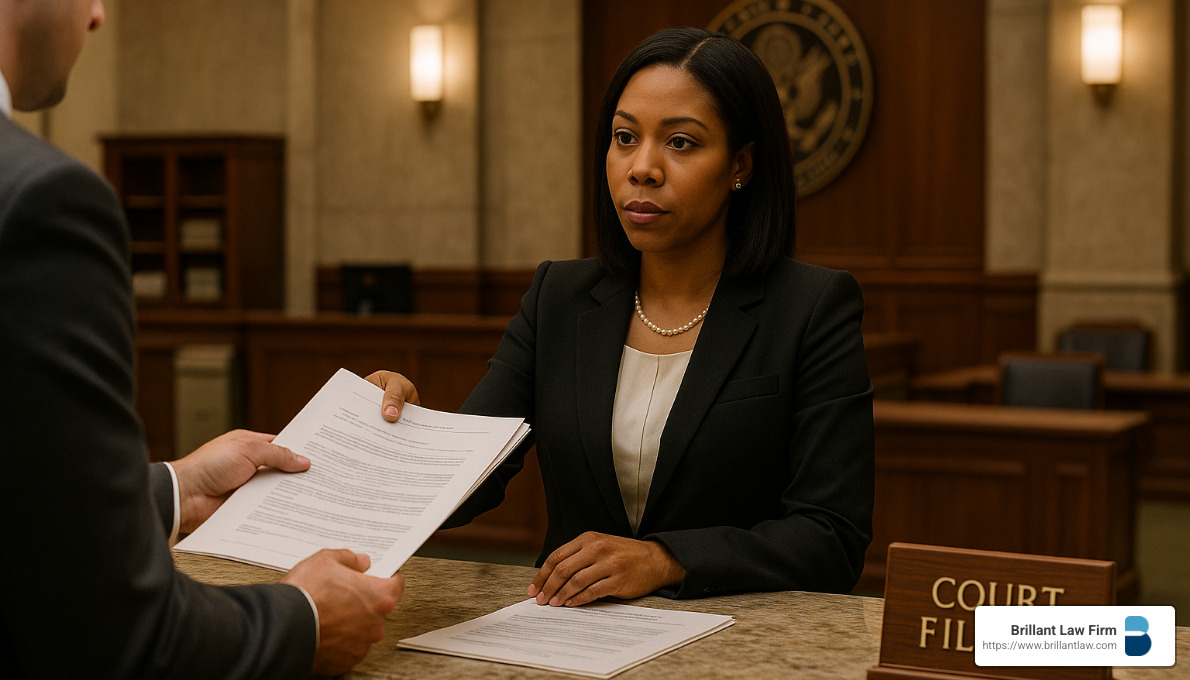
After filing your complaint, it must be properly served on each defendant. This formal notification is crucial – without it, the case simply can’t proceed. California recognizes several methods:
Personal service involves physically delivering documents to the defendant. This is the most straightforward method and leaves no doubt that the defendant received notice.
Substituted service allows delivery to someone else at the defendant’s home or business, followed by mailing a copy, when personal service isn’t possible.
Service by publication in a newspaper may be permitted for defendants who cannot be located, though this requires court approval.
California has specific rules for proper service, and mistakes can invalidate your entire proceeding. I’ve seen cases dismissed entirely because of improper service – a costly error that’s easily avoided with proper guidance.
The Answer and Responsive Pleadings
Once served, defendants typically have 30 days to respond. Their options include:
Filing an answer that admits or denies each allegation in your complaint. This is the most common response.
Filing a demurrer to challenge the legal sufficiency of the complaint – essentially saying “even if everything they claim is true, they still don’t have a valid legal case.”
Filing a motion to strike to remove improper portions of the complaint.
Filing a cross-complaint against you or other parties if they believe they have related claims.
As one California judge colorfully put it during a hearing I attended: “The answer is where the defendant gets to tell their side of the story and explain why they shouldn’t be liable.”
California Filing Fees and Court Costs
Be prepared for significant court costs when filing in California Superior Courts:
$435 for filing a complaint
$435 for filing an answer
Additional fees for motions, jury demands, and other proceedings
These fees are just the beginning of litigation costs, but fee waivers are available for those who qualify based on financial need. At Brillant Law Firm, we’re always transparent about all potential costs from the beginning of your case.
For more detailed information about the steps involved in litigation, visit our page on Litigation Process Steps.
Timelines & Deadlines in Pleadings — Litigation Process Explained
The litigation process explained includes strict deadlines that must be observed:
Complaint Filing must occur before the statute of limitations expires – miss this deadline, and your claim is likely forever barred.
Service Deadline is typically 60 days after filing the complaint in California courts. If you don’t serve defendants within this window, your case could be dismissed.
Response Deadline is 30 days after service for defendants (with extensions possible in certain circumstances).
Amended Pleadings are often allowed once without court permission before a responsive pleading is filed, giving you a chance to correct issues or add information.
Missing these deadlines can have serious consequences, including default judgment against defendants or dismissal of plaintiffs’ claims. I’ve seen cases with strong merits lost simply because someone missed a critical deadline.
The pleadings phase sets the foundation for your entire case. While it might seem technical and document-heavy, the decisions made during this stage will shape everything that follows in the litigation process explained.
Stage 3: Findy Deep Dive
Findy represents the heart of the Litigation Process Explained. This critical phase allows parties to uncover facts, exchange information, and evaluate the strengths and weaknesses of their case before stepping into the courtroom.
As one seasoned California judge often tells litigants, “Real litigation is not nearly so dramatic as what is shown on TV.” This is largely because findy rules ensure that “surprises aren’t good for the courtroom” – a stark contrast to the dramatic revelations portrayed in legal dramas.
Types of Findy Tools
When you’re navigating a lawsuit in California, you’ll likely encounter several findy methods, each serving a unique purpose in building your case.
Interrogatories are written questions that must be answered under oath within 30 days. These questions help establish basic facts, identify potential witnesses, and clarify each party’s legal positions. In California courts, parties are typically limited to 35 special interrogatories without obtaining court permission – a rule designed to prevent findy abuse.
Requests for Production of Documents allow you to obtain crucial evidence like contracts, emails, financial records, and photographs. I’ve seen cases completely transform once key documents come to light during this process. These requests often encompass vast amounts of electronically stored information, from text messages to database records.

Depositions are perhaps the most powerful findy tool in your arsenal. During a deposition, witnesses answer questions under oath before a court reporter who creates a verbatim transcript. These sessions provide invaluable opportunities to assess witness credibility, clarify facts, and lock in testimony before trial. California law generally limits depositions to seven hours per witness – making preparation absolutely essential.
One client recently told me, “I was terrified of being deposed until you explained exactly what to expect. Just knowing the process made all the difference.”
Requests for Admission ask parties to admit or deny specific facts, helping narrow the issues for trial. When used strategically, these requests can eliminate the need to prove undisputed matters, saving time and resources.
Physical and Mental Examinations may be ordered when a party’s physical or mental condition is directly relevant to the case. These examinations must be conducted by qualified professionals and require court approval in most instances.
E-Findy Challenges
Modern litigation involves unprecedented volumes of electronic data. E-findy presents unique challenges that weren’t imaginable even twenty years ago:
Volume and complexity create significant problems, with even modest business disputes potentially involving millions of emails and documents. One recent case required reviewing over 500,000 emails – a task that would have been impossible without specialized software tools.
Preservation requirements kick in as soon as litigation becomes reasonably foreseeable. Failing to implement proper “litigation holds” can result in severe sanctions, including adverse inferences or even case dismissal.
Privacy concerns arise frequently, especially with personal devices and accounts that may contain both relevant evidence and protected private information. California’s robust privacy laws add additional complexity to these issues.
Cost management becomes essential, as e-findy expenses can quickly spiral out of control. Even in relatively straightforward cases, e-findy costs often exceed $10,000 – making strategic planning crucial.
Expert Witnesses
Many cases hinge on specialized knowledge that goes beyond what judges and juries typically understand. Expert witnesses help bridge this gap by providing opinions on technical matters like:
- Medical standards of care
- Property valuation and appraisal
- Forensic accounting and financial analysis
- Industry practices and standards
- Technical or scientific issues
California law requires expert disclosure by specific deadlines, typically 50-70 days before trial. These experts are subject to deposition, and their credentials and opinions will be thoroughly scrutinized by opposing counsel.
“An effective expert doesn’t just know their field,” I often tell clients, “they need to communicate complex concepts clearly to non-specialists – a rare combination of skills.”
Findy Sanctions
The Litigation Process Explained wouldn’t be complete without understanding potential consequences for findy violations. California courts have broad authority to impose sanctions for:
- Failing to respond to findy requests
- Providing evasive or incomplete answers
- Destroying or altering evidence
- Making frivolous objections
- Failing to attend depositions
These sanctions can range from monetary penalties (often several thousand dollars) to more severe consequences like evidence exclusion or even case dismissal.
As one California judge memorably stated, “The purpose of findy is to take the ‘game’ element out of trial preparation.” Courts take this principle seriously when addressing findy misconduct.
Managing Costs & Protecting Privilege
Findy typically accounts for 60-70% of litigation expenses, making cost management essential. At Brillant Law Firm, we help clients steer these challenges through several proven strategies:
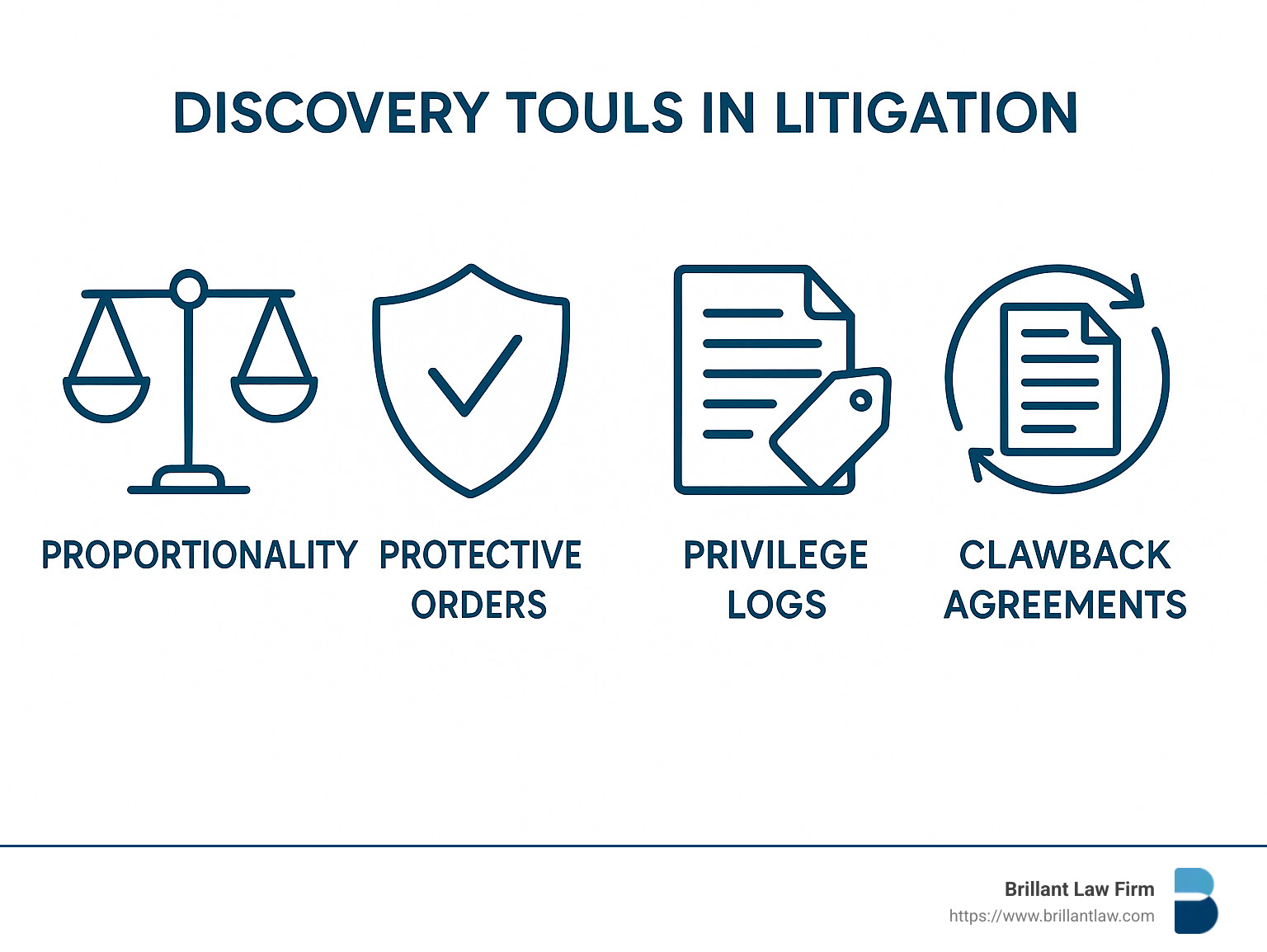
Proportionality provides a powerful framework for limiting excessive findy. California courts increasingly require that findy efforts be proportional to the case’s value and complexity. We leverage these principles to fight back against fishing expeditions and unreasonable demands.
Protective orders offer crucial safeguards against findy that would cause undue burden, expense, or potential harm. These orders can limit findy scope, protect sensitive information, or shift costs to the requesting party when appropriate.
Privilege logs document materials withheld based on attorney-client privilege or work product protection. These logs identify each document’s date, author, recipients, subject matter, and basis for privilege – allowing opposing counsel to evaluate privilege claims without seeing the protected content.
Clawback agreements provide insurance against accidental disclosure of privileged materials. These agreements, which can be incorporated into court orders, allow you to retrieve privileged documents inadvertently produced during findy – an essential protection when reviewing thousands of documents under tight deadlines.
One client recently shared, “I was shocked at how much the findy process revealed. Information I thought was completely private suddenly became central to the case.”
For more detailed information about specific findy procedures and strategic considerations, visit our comprehensive guide to the Findy Process in Litigation or review the Federal Rules of Civil Procedure for additional context.
Stage 4: Motions, Settlement & Alternative Dispute Resolution
As findy progresses, the litigation process explained enters a critical phase where parties file motions and explore alternatives to trial. This stage often determines whether a case will ultimately reach a courtroom.
Motion Practice
Motions are formal requests asking the court to make specific rulings on legal issues. Think of them as mini-decisions that shape the case before trial.
Motion for Summary Judgment represents one of the most powerful tools in litigation. When filed, it essentially tells the court, “Even if we look at all the evidence in the light most favorable to the other side, they still can’t win.” I’ve seen these motions resolve entire cases or eliminate specific claims, saving clients months of trial preparation and tens of thousands in legal fees.
Motions in Limine serve as the gatekeepers of trial evidence. Filed just before trial begins, these motions ask the judge to exclude certain evidence from being presented to the jury. “The battle over what jurors will see and hear often determines the outcome before opening statements even begin,” as one California judge aptly put it. These motions typically address prejudicial evidence, hearsay statements, or expert testimony that doesn’t meet legal standards.
Findy Motions help resolve disputes during the information-gathering phase. When parties disagree about document production or deposition scope, these motions ask the court to referee. In one recent case, our motion to compel production of financial records proved pivotal in establishing our client’s rightful trust distribution.
Demurrers and Motions to Dismiss challenge whether a case should proceed at all. These early motions argue that even if all allegations are true, no legal basis for recovery exists. California courts grant these sparingly, but when successful, they can end litigation before significant costs accumulate.
Settlement Negotiations
As an attorney who’s guided clients through hundreds of disputes, I can confidently say that court proceedings should always be a last resort. Settlement discussions can occur at any point – before filing, during findy, on the courthouse steps, or even mid-trial.
Settlement negotiations take various forms, from direct discussions between parties to attorney-led negotiations to formal settlement conferences with a judge. The timing often depends on when parties have enough information to realistically assess case value.
One client described settlement as “paying to make a problem go away.” There’s truth in that perspective – settlements balance the cost of continued litigation against the uncertainty of trial outcomes. As one experienced mediator noted, “A common way of describing a settlement is that both sides go away equally unhappy.”
When settlement is reached, documentation becomes critical. A well-drafted settlement agreement prevents future disputes by clearly addressing all terms, confidentiality requirements, and enforcement mechanisms.
Mediation
Mediation brings in a neutral third party to facilitate settlement discussions in a structured environment. Unlike a judge or arbitrator, mediators don’t impose decisions but help parties find their own solutions.

The mediation process typically begins with joint sessions where parties present their positions, followed by separate caucuses where the mediator shuttles between rooms, carrying offers and helping parties evaluate their options. The confidential nature of these discussions encourages candor and creative problem-solving.
California courts frequently require mediation before trial, recognizing its remarkable 75-85% success rate. As one client told me after a successful mediation, “I wish we’d done this six months ago before spending so much on litigation.”
Arbitration
Arbitration represents a middle ground between mediation and trial – more formal than mediation but less structured than court proceedings. In arbitration, a neutral arbitrator (or panel) hears evidence and makes a binding decision.
Many contracts contain arbitration clauses requiring disputes to be resolved this way rather than through litigation. The benefits can include faster resolution, privacy, and reduced costs. However, parties should understand that arbitration decisions typically have limited appeal rights.
The arbitration process generally follows a simplified version of trial procedures, with more relaxed evidence rules and streamlined presentations. For complex trust or business disputes in California, arbitration can reduce resolution time from years to months.
Leveraging ADR to Shorten the Litigation Process Explained
Alternative Dispute Resolution (ADR) methods offer several advantages that can significantly expedite case resolution while controlling costs.
Confidentiality stands as perhaps the greatest benefit for many clients. Unlike public court proceedings where sensitive business information or family matters become public record, ADR discussions remain private. This confidentiality allows parties to speak more candidly about settlement and preserve relationships that might otherwise be damaged through contentious litigation.
Cost savings prove substantial with ADR. A typical mediation in California might cost $3,000-$8,000 for the mediator’s time, compared to $50,000-$200,000 for trial preparation and presentation. These savings extend beyond attorney fees to include reduced expert witness costs, court reporter fees, and business disruption.
Mediator selection gives parties control they wouldn’t have in court. When selecting a mediator, we look for individuals with subject matter expertise and settlement experience relevant to your specific dispute. For trust or tax matters, we might recommend mediators with specialized knowledge in those areas who can help parties evaluate complex issues more effectively.
Enforceable agreements result from successful ADR. Settlement agreements reached through mediation are binding contracts, and arbitration awards can typically be converted to court judgments if necessary. This provides the certainty of court enforcement without the full litigation process.
At Brillant Law Firm, we view ADR not as an alternative to zealous advocacy but as a strategic tool within the litigation process explained. When appropriate, we recommend Litigation Process for Civil Suits that incorporate ADR at optimal points, leveraging the advantages of arbitration while maintaining readiness for trial if necessary.
Stage 5: Trial, Verdict & Post-Trial Actions
If settlement efforts fail, the case proceeds to trial – the phase most people associate with the litigation process explained, though relatively few cases reach this stage.
Jury Selection
The trial journey begins with selecting who will decide your case. Voir dire (French for “to speak the truth”) is where potential jurors are questioned about their backgrounds, beliefs, and potential biases.
“Finding the right jury is like assembling a puzzle where each piece brings a unique perspective,” explains David Brillant. “We’re looking for jurors who can fairly evaluate the evidence without preconceived notions.”
In California civil cases, attorneys can remove potential jurors in two ways: challenges “for cause” when a juror demonstrates clear bias, and a limited number of peremptory challenges where no reason is required. The final jury typically consists of 12 members who will determine the outcome of your case.
Opening Statements
Once the jury is seated, the litigation process explained moves to opening statements – the attorneys’ first opportunity to address the jury directly. Think of this as setting the stage for what’s to come.
The plaintiff’s attorney speaks first, providing a roadmap of what they intend to prove. The defendant’s attorney follows with their own narrative of events. While these statements preview the case, they aren’t considered evidence, and attorneys cannot argue their positions at this stage – that comes later.
Evidence Presentation
Now comes the heart of the trial – presenting evidence that supports your case. This typically includes:
Witness testimony: People with relevant knowledge testify under oath, subject to cross-examination by the opposing side. Witnesses might include parties to the lawsuit, eyewitnesses, or people with specialized knowledge.
Documents and exhibits: Contracts, photographs, videos, medical records, business documents – anything relevant to proving or disproving the claims.
Expert opinions: In complex matters involving specialized knowledge, experts help jurors understand technical aspects of the case, from medical standards to financial analyses.
The plaintiff presents their case first, followed by the defendant. Throughout this process, the judge ensures all evidence follows California’s rules of evidence, which can sometimes feel frustratingly technical but exist to ensure fairness.

Closing Arguments
After all evidence has been presented, attorneys deliver their closing arguments – their final opportunity to persuade the jury. Unlike opening statements, closings allow attorneys to argue forcefully for their position, weaving together the evidence presented and explaining how the law applies to the facts.
The plaintiff typically goes first, followed by the defendant, with the plaintiff often given a brief rebuttal opportunity. A compelling closing argument connects emotionally with jurors while logically addressing the evidence and legal standards.
“A good closing doesn’t just summarize what happened in court,” notes Brillant. “It tells a cohesive story that helps jurors understand why your side should prevail.”
Verdict and Judgment
After closing arguments, the judge provides the jury with detailed instructions on the law they must apply. The jury then retires to deliberate in private until reaching a verdict.
In bench trials (where a judge decides without a jury), the judge considers the evidence and applicable law before issuing a written decision with findings of fact and conclusions of law.
The moment when a verdict is announced brings intense emotion for all involved – relief, vindication, disappointment, or sometimes shock. But remember, the litigation process explained doesn’t necessarily end with the verdict.
Post-Trial Motions
After the verdict, either party may file various motions that could affect the outcome:
Motion for new trial: Argues that significant errors occurred during trial that justify starting over.
Motion for judgment notwithstanding the verdict: Asks the judge to reverse the jury’s decision because no reasonable jury could have reached that verdict based on the evidence.
Motion to alter or amend the judgment: Requests changes to the judgment without an entirely new trial.
Motion for attorney fees and costs: Seeks to have the losing party pay the winner’s legal expenses (available only in certain types of cases).
These motions must typically be filed within strict time limits after the verdict, often just 15-30 days.
Appeals & Judgment Enforcement
The Appeals Process
The losing party often has the right to appeal to a higher court, arguing that legal errors affected the outcome. In California, this process begins by filing a notice of appeal within 60 days of judgment.
Appeals aren’t a do-over of the trial. Instead, appellate courts review the record for legal errors while generally accepting the trial court’s factual findings. The process involves submitting written briefs arguing legal points, with possible oral argument before a panel of appellate judges.
Months later (sometimes a year or more), the appellate court issues a written opinion either affirming the judgment, reversing it, or sending it back to the trial court with instructions. Most trial court decisions are ultimately affirmed on appeal.
Supersedeas Bond
If you’ve won a judgment but your opponent appeals, you may have to wait to collect while the appeal proceeds. The appellant (party appealing) typically must post a supersedeas bond to stay enforcement during the appeal.
In California, this bond usually equals about 150% of the judgment amount – guaranteeing payment if the appeal fails. This requirement can be financially challenging for appellants, often requiring substantial collateral.
Judgment Enforcement
If you’ve won and the judgment is final (or not stayed pending appeal), but the other side doesn’t voluntarily pay, California law provides several enforcement tools:
Judgment liens can be placed on real property, ensuring you get paid when the property sells.
Bank accounts can be levied, with funds taken directly to satisfy the judgment.
Wages can be garnished, though California law limits how much can be taken from each paycheck.
Personal property can be seized and sold at auction, with proceeds applied to the judgment.
Judgment debtor examinations can be conducted under oath to identify assets available for collection.
“Winning a judgment is only half the battle,” cautions Brillant. “Collecting on that judgment often requires persistence and creativity.” The enforcement process can sometimes take years, especially if the judgment debtor has limited assets or attempts to hide them.
At Brillant Law Firm, we guide clients through every phase of the litigation process explained, from pre-filing strategy through trial and, if necessary, judgment enforcement. Our experience in California civil litigation helps clients steer this complex journey with confidence.
For more information about how we can assist with your specific legal matter, visit our Civil Litigation Attorney California page.
Costs, Timelines & Risks in California Courts
When clients ask me about what to expect during litigation, I always make sure they understand the full picture—not just the legal process, but the practical realities of time, money, and emotional investment. The Litigation Process Explained isn’t complete without an honest conversation about these factors.
Typical Duration
“How long will this take?” is often the first question I hear. In California, civil litigation typically follows these timelines:
Most standard cases take about 12-24 months from filing to resolution. More complex matters—like multi-party business disputes or complicated trust litigation—can extend to 3-5 years. And if there’s an appeal? Add another 1-2+ years to the journey.
As one seasoned court administrator I work with often says, “The wheels of justice turn slowly, but they do turn.” This isn’t just about court backlogs (though those certainly exist); it’s about the deliberate pace built into our system to ensure fairness and due process.
Cost Factors
Litigation in California is undeniably expensive. Attorney fees typically range from $350 to $900 per hour, depending on experience, location, and specialization. But that’s just the beginning.
Court costs start with initial filing fees of $435 or more, with additional charges for each motion filed ($60-$500). When you add court reporter fees ($700-$1,000 per day), expert witness costs ($5,000-$50,000+), and deposition expenses ($1,500-$3,000 each), the total can quickly become substantial.
Then there are the less obvious expenses: exhibit preparation ($1,000-$10,000), jury fees ($150 per day in California courts), and the cost of your own time spent gathering documents, meeting with attorneys, and potentially testifying.
One client told me after her case concluded: “I wish someone had helped me understand not just how much it would cost, but how those costs would be spread out over time.” That’s why we provide detailed cost projections at each stage of the Litigation Process Explained.
Fee-Shifting Risks
Most Americans are familiar with the idea that each side pays their own legal fees (known as the “American Rule”). However, there are important exceptions that can dramatically change the financial equation:
Contractual provisions often allow the prevailing party to recover attorney fees. If you’re in a contract dispute, check whether your agreement contains such a clause.
Statutory fee-shifting applies in certain cases like civil rights violations, consumer protection matters, and some trust and probate proceedings.
Sanctions can be imposed for frivolous litigation tactics or findy abuses, potentially making one side responsible for the other’s costs.
Cost-shifting may occur when a settlement offer is rejected and the ultimate outcome isn’t more favorable than the offer was.
Understanding these risks is crucial when making decisions about whether to initiate or continue litigation.
Emotional and Business Impact
The ledger of litigation costs extends far beyond financial statements. There’s a very real human toll that I make sure clients understand before proceeding.
Stress and anxiety are nearly universal companions throughout the litigation process. Even the strongest clients feel the weight of uncertainty and conflict.
Business disruption can be significant, with key personnel diverted to document gathering, depositions, and strategy meetings instead of focusing on operations.
Management attention gets divided, often at crucial moments for a company or family business.
Reputational concerns arise, especially in cases that might generate public interest or industry attention.
Relationship strain often extends beyond the parties directly involved, affecting families, business partners, and communities.
A business owner who recently completed litigation shared with me: “The hardest part wasn’t the money—it was the constant distraction from running my business. I was answering questions about events from three years ago instead of planning for next quarter.”
At Brillant Law Firm, we believe in helping clients make fully informed decisions about litigation. Understanding these practical realities of the Litigation Process Explained is essential to developing a strategy that aligns with your overall goals, not just your legal position. Sometimes the “right” legal answer isn’t the right answer for your life or business—and that’s a conversation worth having before the first document is filed.
Frequently Asked Questions about the Litigation Journey
How long does a California civil case usually take?
When clients ask me about timelines, I always take a deep breath before answering. The truth is, litigation duration varies tremendously depending on several key factors.
Most straightforward cases in California courts take about 12-24 months from filing to resolution. However, complex business or trust litigation can stretch to 3+ years, especially if appeals become involved.
Court congestion plays a major role too—particularly in busy jurisdictions like Los Angeles or San Francisco. Your case might be ready, but court calendars often have months-long backlogs for hearing dates.
The pace of findy can dramatically impact timelines. When parties cooperate, this phase might conclude in 6-8 months. When they don’t, disputes over document production or deposition scheduling can add many months to the process.
As Judge Maria Rodriguez of the Los Angeles Superior Court often tells litigants, “Very few cases go all the way to trial; most cases either settle or get decided at the motion to dismiss or summary judgment phase.” This observation holds true—approximately 95% of civil cases resolve before trial through settlement or dispositive motions.
What are the biggest cost drivers in litigation?
Understanding cost factors helps you make informed decisions throughout the litigation process explained. In my experience, these are the primary expense categories:
Attorney fees typically represent 60-80% of your total litigation budget. In California, hourly rates range from $350-$900 depending on attorney experience, firm size, and location. Complex matters requiring specialized expertise command premium rates.
Findy expenses often surprise clients with their magnitude. Document review can cost tens of thousands of dollars in complex cases, while a single day-long deposition (including preparation, attendance, and transcript costs) easily runs $3,000-$5,000.
Expert witnesses are essential in many cases but come at a premium. A financial expert in a trust dispute might charge $15,000-$30,000 for analysis and testimony, while medical experts in personal injury cases often command $25,000-$50,000 for comprehensive case review and testimony.
Motion practice generates significant costs, with each substantive motion potentially requiring 15-40 attorney hours plus court fees. A summary judgment motion in a complex case can cost $20,000-$40,000 to prepare and argue.
Trial preparation and attendance represents the most intensive phase, often requiring 60-100+ attorney hours per week during trial, plus paralegal support, exhibit preparation, and witness coordination.
One client memorably compared litigation to home renovation: “You need to take whatever budget you think is reasonable, then double it—and still be prepared for surprises.”
Can I settle after trial has started?
Absolutely! Settlement remains an option at virtually any stage of litigation, including during trial itself. In fact, the litigation process explained often includes settlement discussions that intensify as trial approaches.
I’ve personally been involved in cases that settled:
– During jury selection when parties finally confronted the reality of having strangers decide their fate
– After opening statements revealed the strength of opposing counsel’s narrative
– Midway through testimony when a key witness performed poorly
– During deliberations when parties realized the unpredictability of jury decisions
– Even post-verdict to avoid the expense and uncertainty of appeals
Many judges actively encourage settlement throughout trial, sometimes taking breaks specifically to allow settlement discussions. This practice acknowledges both the uncertainty of trial outcomes and the judicial system’s interest in efficient resolution.
One of my colleagues calls this phenomenon “courthouse steps syndrome”—the tendency for even the most entrenched parties to suddenly find common ground when facing the immediate reality of trial. The psychological impact of sitting in an actual courtroom, with a judge and jury ready to hear your case, often creates settlement momentum that wasn’t possible earlier.
Settlement always remains your decision. Your attorney can advise on legal merits, but ultimately, you must weigh the certainty of settlement against the risks and potential rewards of continuing litigation.
For more information about settling during litigation, you can read our detailed guide on the Litigation Process for Civil Suits.
Conclusion
The litigation process explained is a journey that few start on willingly, yet understanding each step empowers you to steer it successfully. Throughout this guide, we’ve walked through the winding path from pre-litigation assessment to judgment enforcement – a path that, while challenging, becomes manageable with proper guidance.
At Brillant Law Firm, we believe knowledge is your strongest asset when facing potential litigation. Our approach combines strategic thinking with practical wisdom, helping clients make informed decisions at each critical juncture.
When clients come to us facing potential litigation, we focus on five essential elements:
Strategic assessment forms the foundation of every case we handle. By thoroughly evaluating the strengths and weaknesses of your position, we develop approaches custom to your specific circumstances. This isn’t just about legal analysis – it’s about understanding your goals and crafting a strategy aligned with what matters most to you.
Cost-benefit analysis provides clarity in a process often clouded with emotion. Litigation in California can be expensive, with attorney fees ranging from $350-$900 per hour and cases potentially stretching for years. We help you understand not just what you might win, but what it might cost to get there – both financially and emotionally.
Settlement opportunities often represent the most practical path forward. With only 5% of cases reaching trial, we continually assess when and how settlement might serve your interests. As one client told us after resolving a contentious trust dispute, “I never thought we’d settle, but when I saw the full picture, I realized it was the best option for everyone involved.”
Trial preparation, when necessary, draws on our extensive courtroom experience. We build compelling narratives supported by evidence, anticipate opposing arguments, and prepare thoroughly for every contingency. Our attention to detail has proven invaluable for clients who do find themselves before a judge or jury.
Post-judgment strategies extend beyond the verdict. Whether enforcing a favorable judgment or navigating the appeals process, we remain by your side until true resolution is achieved.
Throughout California, our offices in Walnut Creek, Saranap, San Miguel, and Castle Hill serve clients facing complex civil litigation challenges. We bring not just legal expertise but a genuine commitment to guiding you through what can be one of life’s most stressful experiences.
While this guide provides a comprehensive overview of the litigation process explained, each case presents unique considerations that deserve personalized attention. The California court system has its own particular procedures, timelines, and local rules that can significantly impact your case.
We invite you to contact us to discuss your specific situation. Whether you’re contemplating filing a lawsuit, responding to one, or simply exploring your options, our team is ready to help you steer the complexities of civil litigation with confidence and clarity.
Understanding the process is the first step toward regaining control in what often feels like an overwhelming situation. With the right guidance, even the most challenging legal journeys can lead to resolution and, ultimately, peace of mind.


