

The Importance of Law Trusts
Law trust is a pivotal concept in estate planning, serving as a safeguard for managing and protecting assets. Simply put, a law trust is a legal entity where one party, known as the trustor, entrusts assets to another party, the trustee, for the benefit of a third party, called the beneficiary. This fiduciary relationship ensures that the trustee holds assets responsibly, in line with the trustor’s wishes, and for the beneficiary’s benefit.
- Legal Entity: A trust is established as a legal entity, separate from the individuals involved.
- Fiduciary Relationship: Trustees are bound by law to act in the best interests of the trust beneficiaries.
- Asset Management: Trusts are set up to manage and distribute assets as per the trustor’s intentions.
Underpinning California’s legal framework, trusts provide a structured way to manage property and financial affairs, often ensuring smoother transitions across generations while potentially reducing tax burdens and bypassing the probate process.
I’m David Brillant, an experienced tax and trust lawyer. With my profound expertise in law trust, I strive to simplify complex trust and estate matters for clients in California, ensuring effective asset protection and management. Let’s dive deeper into understanding how trusts can benefit you and your legacy.
Law trust terms to know:
– successor trustees
– what is a trustor
Understanding Law Trust
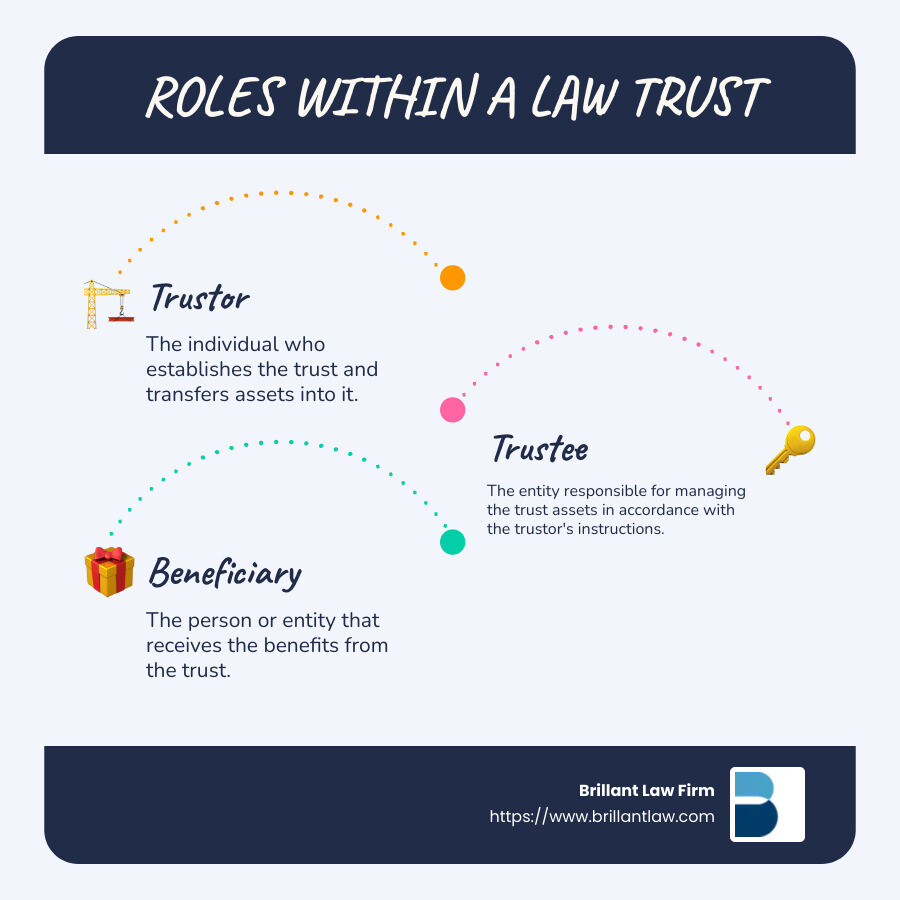
A law trust is an arrangement that involves three key players: the trustor, the trustee, and the beneficiary. These roles are central to how a trust functions, providing a framework for managing and protecting assets.
Key Roles in a Law Trust
Trustor: This is the individual who creates the trust. The trustor transfers assets into the trust, setting the rules for how these assets should be managed and distributed. Think of the trustor as the architect who designs the blueprint for asset management.
Trustee: The trustee is the person or entity responsible for managing the trust according to the trustor’s instructions. They hold the legal title to the trust assets and have a fiduciary duty to act in the best interests of the beneficiaries. Trustees can be individuals or organizations, but they must be chosen wisely to ensure they act with integrity and competence.
Beneficiary: Beneficiaries are those who benefit from the trust. They hold the equitable title to the assets, meaning they are entitled to the benefits, such as income or property, as specified in the trust. The trustor can name one or multiple beneficiaries, and their interests can vary depending on the trust’s terms.
Legal Protection and Asset Management
Trusts offer significant legal protection for the trustor’s assets. By transferring ownership to the trust, assets are shielded from certain legal actions, such as probate, which can be a lengthy and costly process in California. This protection can also help in managing estate taxes and providing for beneficiaries in a controlled manner.
Asset management is another vital function of a trust. Trustees are tasked with managing the assets prudently, ensuring they are invested wisely and distributed according to the trustor’s wishes. This management can provide peace of mind to the trustor, knowing that their assets are being handled by a trusted party.
Real-Life Application
Consider a scenario where a trustor sets up a trust to provide for their minor children. The trustee, perhaps a trusted family friend or financial institution, manages the assets, ensuring they grow until the children reach adulthood. Meanwhile, the children, as beneficiaries, receive financial support for education or other needs as outlined in the trust. This setup not only protects the assets but also ensures they are used for their intended purpose.
In California, trusts are a powerful tool for anyone looking to secure their financial legacy, protect their assets, and ensure their wishes are honored long after they are gone.
Types of Law Trusts
When it comes to law trusts, there are several types that cater to different needs and circumstances. Let’s explore the main categories: living trust, testamentary trust, revocable trust, irrevocable trust, funded trust, and unfunded trust.
Living Trust
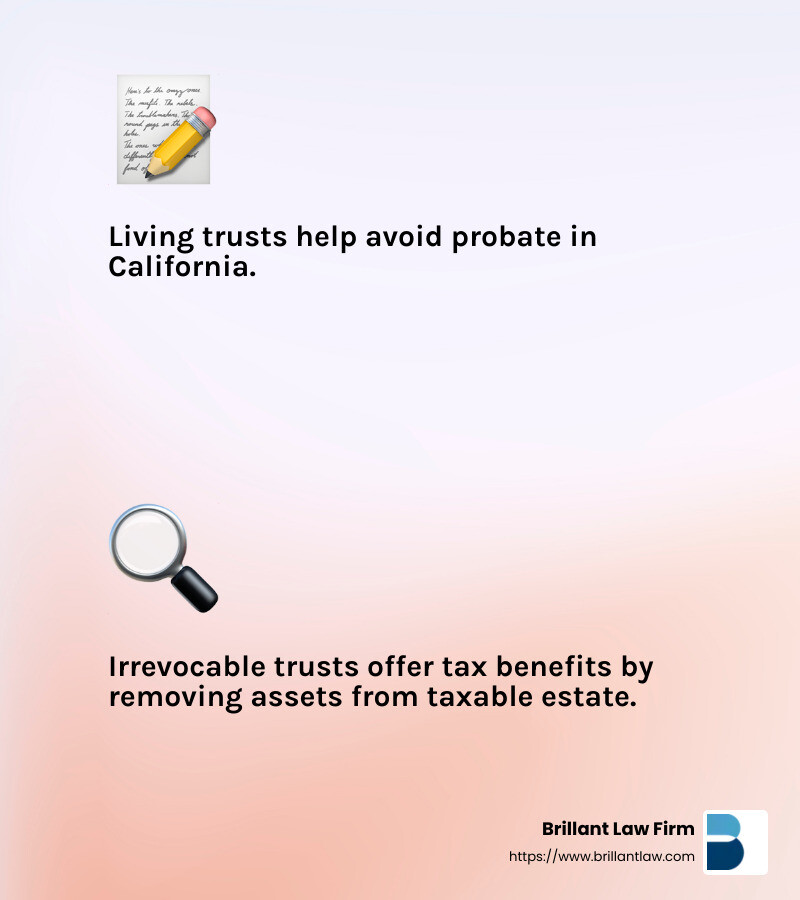
A living trust, also known as an inter-vivos trust, is created during the trustor’s lifetime. It’s designed to manage the trustor’s assets while they’re alive and distribute them after their death. One of the key benefits is that it helps avoid probate, which can be a complex process in California.

Testamentary Trust
Unlike a living trust, a testamentary trust is established through a will and comes into effect only after the trustor’s death. This type of trust is often used to ensure that assets are distributed according to the trustor’s wishes, particularly when minor children or dependents are involved.
Revocable Trust
A revocable trust allows the trustor to modify or revoke the trust during their lifetime. This flexibility can be appealing for those who anticipate changes in their financial situation or family dynamics. However, because the trustor retains control, the assets are still considered part of their estate for tax purposes.
Irrevocable Trust
An irrevocable trust, on the other hand, cannot be easily altered once it’s established. This type of trust offers greater tax benefits because the assets are removed from the trustor’s taxable estate. It’s often used for asset protection and estate tax reduction.
Funded Trust
A funded trust is one where the trustor has transferred assets into the trust. This is crucial because a trust without assets has no value. The funding process involves retitling assets like real estate, bank accounts, or investments in the name of the trust.
Unfunded Trust
An unfunded trust is essentially a trust that hasn’t been given any assets. It can be a placeholder for future assets or a plan for asset distribution, but it doesn’t provide any benefits until it’s funded.
Choosing the Right Trust
Selecting the right type of trust depends on your specific needs and goals. For instance, if you want flexibility, a revocable trust might be suitable. If tax benefits and asset protection are priorities, consider an irrevocable trust.
In California, understanding these distinctions is vital for effective estate planning. Each type of trust serves a unique purpose, and choosing the right one can make a significant difference in how your assets are managed and distributed.
Next up, we’ll dig into the benefits and purposes of law trusts, exploring how they can protect your assets and provide peace of mind.
Benefits and Purposes of Law Trusts
When you hear about law trusts, you might think they’re just for the wealthy. But they offer many benefits for anyone looking to manage and protect their assets. Let’s break down some of the key advantages and purposes of these trusts.
Asset Protection
One of the primary reasons people set up a trust is asset protection. By placing assets in a trust, you can shield them from creditors or legal claims. For example, if you’re worried about lawsuits or financial difficulties, a trust can help keep your assets safe. This is particularly true for irrevocable trusts, where assets are no longer considered part of your estate.
Tax Benefits
Trusts can also offer significant tax advantages. For instance, assets in a revocable trust benefit from a step-up in basis, which can reduce capital gains taxes for your heirs. On the other hand, irrevocable trusts can remove assets from your taxable estate, potentially lowering estate taxes. It’s a smart strategy for those looking to minimize tax burdens and maximize what’s passed on to beneficiaries.
Estate Planning
Estate planning is another major purpose of trusts. They allow you to control how your assets are distributed after your death. A living trust can help avoid probate, which is a public and often lengthy process. This ensures that your assets are distributed according to your wishes quickly and privately. Trusts are also essential when minor children or dependents are involved, ensuring they receive the support they need.
Privacy
Privacy is a significant benefit of trusts. Unlike wills, which become public record during probate, the terms of a trust remain private. This means your financial affairs and wishes are kept confidential, offering peace of mind to those who value discretion. Many individuals choose trusts specifically to avoid public scrutiny.
Beneficiary Care
Trusts can be custom to provide ongoing care for beneficiaries. Whether it’s ensuring a child with special needs receives lifelong support or setting aside funds for a grandchild’s education, trusts offer flexibility. With a trust, you can establish specific conditions for distribution, ensuring that your beneficiaries are cared for according to your intentions.
In summary, law trusts are versatile tools that serve multiple purposes, from protecting assets and reducing taxes to planning your estate and ensuring privacy. They can be customized to meet your unique needs and provide peace of mind for you and your loved ones.
Next, let’s explore how to set up a law trust, including the roles of the settlor, trustee, and beneficiaries.
Setting Up a Law Trust
Setting up a law trust involves several crucial steps and roles. Let’s walk through the process and key elements involved.
The Role of the Settlor
The settlor (also known as the grantor) is the person who creates the trust. To set up a trust, the settlor must have a clear intent and the legal capacity to do so. This means they need to understand the implications of transferring their assets into the trust and must be of sound mind to make such decisions.
Intent and Capacity
The settlor’s intent is crucial. They must clearly express their desire to create a trust, which is often done through a written trust document. This document outlines the terms of the trust, including who will benefit from it and how it will be managed. It’s important to ensure that this intent is documented accurately to avoid disputes later on.
Definitive Beneficiary
A trust must have a definitive beneficiary—someone who will benefit from the trust. Beneficiaries can be individuals, such as family members, or entities, like charities. The trust document should clearly identify these beneficiaries to prevent any ambiguity. In some cases, beneficiaries may not be named specifically but defined as a class, like “my grandchildren.”
Legal Formalities
Creating a trust involves certain legal formalities. In California, this typically includes drafting a trust document that specifies the trust’s terms, signing the document, and potentially notarizing it. It’s also necessary to fund the trust by transferring assets into it. This step is critical; without assets, the trust cannot function as intended.
Trustee Duties
The trustee is responsible for managing the trust according to its terms and the law. They have a fiduciary duty to act in the best interests of the beneficiaries, which includes managing the trust’s assets prudently and transparently. Trustees must also provide regular accountings to the beneficiaries and may be held liable if they fail in their duties.
In summary, setting up a law trust involves careful planning and execution. From the settlor’s intent to the trustee’s duties, each element plays a vital role in ensuring the trust operates smoothly and effectively for its intended purposes.
Next, we’ll address some frequently asked questions about law trusts, including what they are and how they function.
Frequently Asked Questions about Law Trust
What is the law of trust?
The law of trust is a legal framework that governs the creation and management of trusts. A trust is a legal entity where a trustor (the person setting up the trust) transfers ownership of assets to a trustee. The trustee then manages these assets for the benefit of a third party, known as the beneficiary. This arrangement ensures that the trustor’s assets are handled according to their wishes, providing legal protection and potentially offering tax benefits.
What is a common law trust?
A common law trust is a type of financial agreement that is established through a trust deed. This document outlines the terms under which the trust will operate, including the transfer of ownership from the trustor to the trustee. The trustee holds and manages the assets, ensuring that they are used for the benefit of the beneficiaries. Common law trusts are often used to manage and protect assets, ensuring they are distributed according to the trustor’s instructions.
Why are trusts considered illegal?
Trusts can be considered illegal if they are created with an illegal purpose or go against public policy. For example, if a trust is set up to defraud creditors by hiding assets, it would be deemed illegal. Trusts must adhere to the law and public policy standards, which means they cannot be used for unlawful activities or to circumvent legal obligations. It’s crucial to ensure that the purpose of a trust is legitimate and transparent to avoid legal issues.
Understanding the nuances of trusts is essential to ensure they are used effectively and legally. By adhering to legal standards and clearly defining the roles of the trustor, trustee, and beneficiary, you can set up a trust that serves its intended purpose without running afoul of the law.
Conclusion
At Brillant Law Firm, we pride ourselves on our deep expertise in law trust and the broader landscape of trust administration. We understand that navigating trust laws can be complex, but our team is here to simplify the process for you.
Our bespoke strategies are custom to meet the unique needs of each client. We take the time to understand your goals and craft solutions that provide robust asset protection, tax benefits, and peace of mind. Whether you’re looking to set up a living trust for estate planning or need assistance with a more complex irrevocable trust, our dedicated professionals are ready to assist.
Trust administration requires precision and experience, and that’s exactly what we offer. Our commitment to excellence ensures that your trust is managed efficiently and in accordance with your intentions. We handle everything from drafting trust documents to managing the legal formalities involved, leaving you free to focus on other priorities.
For those seeking guidance in trust administration, we invite you to explore our Trust Administration Services. Find how our expertise can help protect your assets and secure your legacy.
With Brillant Law Firm by your side, you can rest assured that your trust matters are in capable hands. Let us be your partner in achieving your financial and estate planning goals, with strategies that are as unique as your needs.


