
Why You Need a Civil Suit Lawyer

I need a civil suit lawyer – If this thought has crossed your mind, you’re likely facing a situation where hiring legal help is crucial. Here are some immediate reasons why:
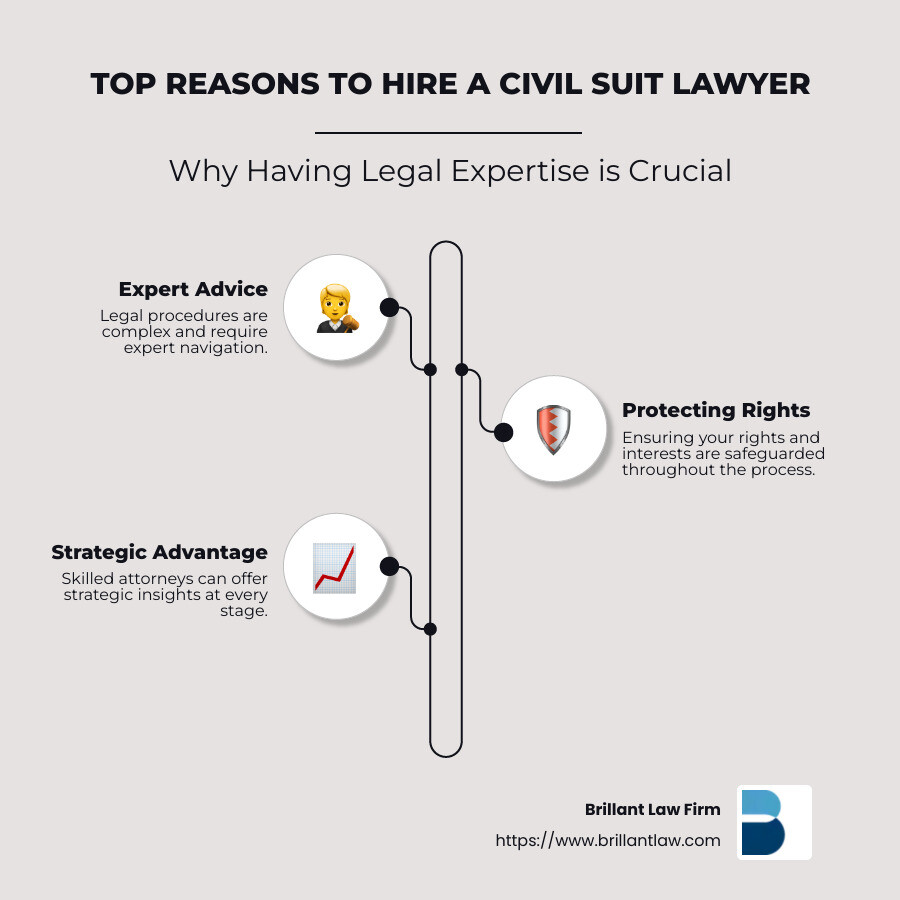
- Expert Advice: Legal procedures are complex and require expert navigation.
- Protecting Rights: Ensuring your rights and interests are safeguarded throughout the process.
- Strategic Advantage: Skilled attorneys can offer strategic insights at every stage.
- Time-Saving: Handling legal complexities on your own can be overwhelming and time-consuming.
Civil litigation isn’t just about winning or losing a court case; it’s about protecting your interests, rights, and often your future. When you’re involved in a civil dispute, whether as a plaintiff or a defendant, having a professional on your side can make all the difference. From breaches of contract to real estate disputes, the stakes are high, and the legal landscape is intricate.
I’m David Brillant, a seasoned Tax and Trust and Estate lawyer with experience in both simple and complex civil litigation matters. I understand the critical importance of having expert legal representation. Let’s explore why a civil suit lawyer is essential for your legal journey.
Common i need a civil suit lawyer vocab:
– i need a civil attorney
– litigation lawyer
Understanding Civil Suits
Civil suits are legal disputes between individuals or entities where one party seeks compensation or another form of relief from another party. Unlike criminal cases, civil suits do not involve criminal charges or jail time. Instead, they often focus on issues like financial compensation, property rights, or personal disputes.
Types of Civil Suits
Civil suits can cover a wide range of issues. Here are some common types:
Property Disputes: These involve disagreements over the ownership, use, or boundaries of real estate. For example, if you and your neighbor can’t agree on where the property line is, this could lead to a civil suit.
Family Law: This area includes divorce, child custody, and adoption cases. Family law disputes often require sensitive handling due to the personal nature of the issues involved.
Personal Injury: If you’ve been injured due to someone else’s negligence, you might file a personal injury lawsuit. This can include car accidents, slip and fall incidents, or medical malpractice.
Breaches of Contracts: When one party fails to fulfill their obligations under a contract, the other party can sue for breach of contract. This is common in business transactions but can occur in any situation where a formal agreement is in place.
Negligence: This involves cases where one party’s failure to exercise reasonable care results in harm to another. For example, if a business fails to maintain safe premises and a customer is injured, the business could be sued for negligence.
Differences Between Civil and Criminal Cases
Civil cases and criminal cases serve different purposes within the legal system. Here are the key differences:
Purpose: Civil cases aim to resolve disputes and provide compensation or other relief to the wronged party. Criminal cases, on the other hand, seek to punish individuals who have broken the law and to deter future criminal behavior.
Parties Involved: In a civil case, the plaintiff (the person bringing the suit) seeks compensation from the defendant (the person being sued). In a criminal case, the government prosecutes the defendant, who is accused of committing a crime.
Burden of Proof: The burden of proof is lower in civil cases. The plaintiff must prove their case by a “preponderance of the evidence,” meaning it is more likely than not that the defendant is liable. In criminal cases, the prosecution must prove the defendant’s guilt “beyond a reasonable doubt.”
Outcomes: Civil cases usually result in monetary compensation or orders to do or not do something (like a restraining order). Criminal cases can result in fines, community service, probation, or imprisonment.
Hiring a civil litigation attorney can help you steer these differences and effectively present your case, whether you are the plaintiff or the defendant.
Understanding these distinctions is crucial for anyone involved in legal proceedings. Knowing whether your case is civil or criminal will determine the type of legal strategy you need and the potential outcomes you might face.
Next, we will dig into the top reasons why you should hire a civil suit lawyer, exploring their expertise in legal procedures, navigating complex legal systems, and protecting your rights and interests.
Top Reasons to Hire a Civil Suit Lawyer
Expertise in Legal Procedures
Navigating the legal maze of a civil suit can be daunting. A qualified attorney knows the ins and outs of legal procedures and can guide you through every step. They understand how to:
- File lawsuits correctly, ensuring all necessary documents like complaints and summons are in order.
- Present legal arguments effectively, whether in written briefs or oral presentations.
- Handle court procedures, from pre-trial conferences to the findy phase, where evidence is exchanged.
Without this expertise, you risk procedural mistakes that could jeopardize your case.
Navigating Complex Legal Systems
The legal system is complex, and each case comes with its own set of legal guidelines and court systems. An experienced lawyer can:
- Help you choose the right court and understand its jurisdiction.
- Ensure your case is filed within the statute of limitations, which varies depending on the type of claim and jurisdiction.
- Guide you through the findy process, where both parties exchange evidence.
Protecting Your Rights and Interests
One of the most critical roles of a civil suit lawyer is to protect your rights and interests. They can:
- Offer legal representation to ensure your side is heard.
- Negotiate for a fair settlement if you prefer to avoid a lengthy trial.
- Provide legal counsel to help you make informed decisions, whether it’s accepting a settlement offer or proceeding to trial.
For example, in personal injury cases, a lawyer can fight for compensation for medical bills, lost wages, and pain and suffering. In property disputes, they can help secure your property rights and resolve boundary issues.
Next, we will dig into the steps to take when you need a civil suit lawyer, exploring how to respond to complaints, handle counterclaims, and evaluate the legitimacy of your claim.
Steps to Take When You Need a Civil Suit Lawyer
Responding to a Complaint
When you’re served with a complaint, it’s crucial to act quickly. A complaint is a legal document that initiates a lawsuit, and ignoring it can lead to a default judgment against you. Here are the steps to respond effectively:
- Read the Complaint Thoroughly: Understand what you’re being accused of and what the plaintiff is seeking.
- Contact a Lawyer: Seek legal advice immediately. A lawyer can help you understand the complaint and the best way to respond.
- File an Answer: Your lawyer will draft an answer to the complaint, addressing each allegation. This document is filed with the court and served to the plaintiff.
- Gather Evidence: Start collecting any documents or information that can support your response.
Filing the correct paperwork and meeting deadlines is essential. Missing a deadline can lead to a default judgment, meaning the court could rule in favor of the plaintiff without hearing your side.
Handling Counterclaims
In some cases, you might have grounds to counter-sue the plaintiff. This is known as a counterclaim. Here’s how to handle it:
- Evaluate Your Position: Discuss with your lawyer whether you have a valid counterclaim. This could be based on issues like breaches of contract or negligence by the plaintiff.
- File the Counterclaim: Your lawyer will prepare and file the necessary documents with the court. This will be part of your legal response to the original complaint.
- Prepare for Findy: Both parties will exchange evidence during the findy phase. Be ready to share documents and answer questions under oath.
A counterclaim can strengthen your position in the lawsuit and potentially lead to a more favorable outcome.
Evaluating the Legitimacy of Your Claim
Before taking legal action, evaluate the legitimacy of your claim:
- Consult a Legal Professional: Speak with a lawyer to assess whether you have a strong case. They can help determine if you have suffered an actual wrong that resulted in damages.
- Check the Statute of Limitations: Ensure your claim is within the statute of limitations. This is the time limit for filing a lawsuit, which varies by type of claim and jurisdiction.
- Gather Evidence: Collect all relevant documents, witness statements, and other evidence that support your claim.
Evaluating the legitimacy of your claim with a legal professional can save you time and resources, ensuring you have a solid case before proceeding.
Next, we will explore alternatives to litigation, such as settling out of court and exploring arbitration and mediation.
Alternatives to Litigation
When to Settle Out of Court
Sometimes, litigation isn’t the best path. Settling out of court can be a smart move, saving you time, money, and stress. Here’s why you might consider it:
1. Cost-Effective: Court battles can be expensive. Settling out of court can save you from hefty legal fees and court costs.
2. Time-Efficient: Trials can drag on for months, even years. A settlement can resolve the dispute much faster.
3. Control Over Outcome: In a settlement, both parties have a say in the final agreement. You avoid the uncertainty of a court ruling.
4. Privacy: Court cases are public. Settlements can be confidential, keeping your matters private.
5. Less Stressful: Litigation can be emotionally draining. Settling can be less confrontational and more cooperative.
Example: Imagine you’re in a property dispute. Going to court could mean a long, drawn-out battle. Instead, you and the other party agree on a fair settlement with the help of your lawyer. This saves both of you time and money.
Exploring Arbitration and Mediation
If settling out of court isn’t an option, arbitration and mediation are effective alternatives to litigation.
Arbitration
1. Binding Arbitration: In arbitration, a neutral third party (the arbitrator) listens to both sides and makes a decision. This decision is usually binding, meaning it’s final and enforceable.
2. Cost-Effective: Arbitration can be cheaper than a court trial. It eliminates many of the court fees and legal expenses.
3. Time-Efficient: Arbitration is generally quicker than going to court. Cases can be resolved in a matter of months.
4. Expertise: Arbitrators often have specific expertise in the relevant field, which can lead to a more informed decision.
Example: Let’s say you’re dealing with a breach of contract. Instead of a lengthy court process, you opt for arbitration. The arbitrator, an expert in contract law, resolves the dispute efficiently and fairly.
Mediation
1. Voluntary Agreement: Mediation involves a mediator who helps both parties reach a voluntary agreement. Unlike arbitration, the mediator doesn’t make a decision but facilitates negotiation.
2. Control Over Outcome: Both parties work together to find a mutually acceptable solution, giving you more control over the outcome.
3. Cost-Effective: Mediation is often less costly than both litigation and arbitration.
4. Time-Efficient: Mediation sessions can quickly lead to a resolution, often within a few meetings.
5. Preserves Relationships: Mediation is less adversarial, making it a good option if you want to maintain a relationship with the other party.
Example: Suppose you have a family law matter, like a custody dispute. Mediation can help you and the other parent come to an agreement without the stress of a court battle. This can be better for everyone involved, especially the children.
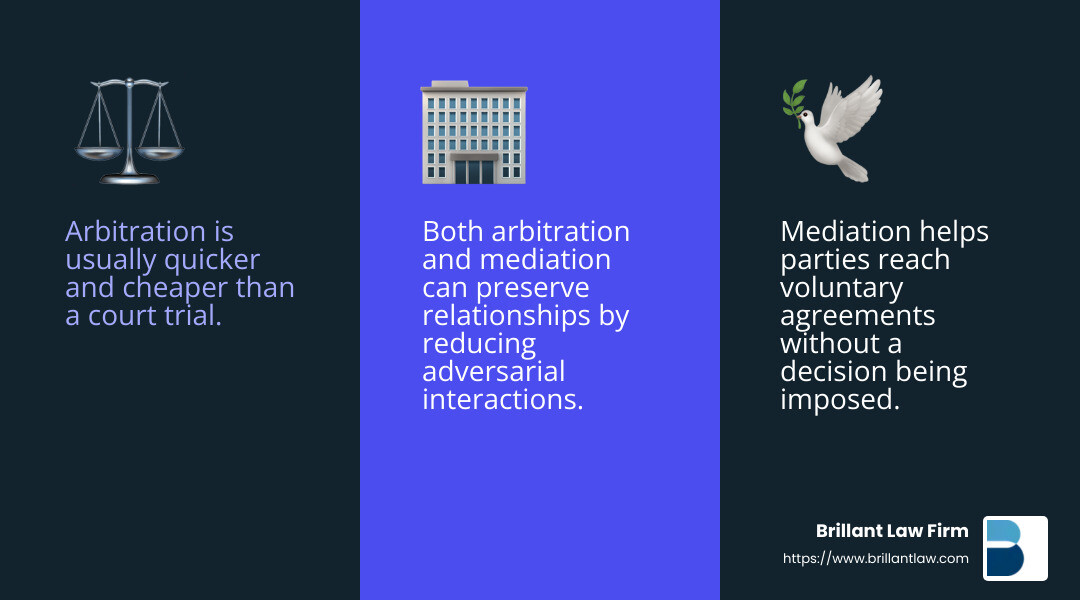
In summary, whether you opt for settlement, arbitration, or mediation, these alternatives to litigation can offer significant benefits. They provide a quicker, cheaper, and often less stressful way to resolve disputes.
Next, we will dive into Frequently Asked Questions about Civil Suit Lawyers to help you understand more about the role and importance of legal representation in civil suits.
Frequently Asked Questions about Civil Suit Lawyers
Is a civil suit the same as a lawsuit?
Yes, a civil suit is the same as a lawsuit. Both terms refer to legal proceedings where one party (the plaintiff) seeks to resolve a dispute or claim against another party (the defendant). Civil suits can cover a wide range of issues, including property disputes, breaches of contract, and personal injury claims. Unlike criminal cases, civil suits typically involve seeking monetary compensation or specific performance rather than criminal penalties.
Should I settle a civil dispute out of court?
Settling a civil dispute out of court can often be a wise decision. Here’s why:
- Cost-Effective: Court trials can be very expensive. Settling out of court can save you a lot of money on legal fees and court costs.
- Time-Efficient: Court cases can drag on for months or even years. A settlement can resolve the issue much faster.
- Control Over Outcome: When you settle, both parties have a say in the final agreement. This can be more predictable than leaving the decision to a judge or jury.
- Privacy: Court proceedings are public, but settlements can be kept private, protecting your confidentiality.
- Less Stressful: Going to court can be emotionally draining. Settling can be less confrontational and more cooperative.
Example: If you’re involved in a breach of contract dispute, settling out of court can save both parties time and money, and you can come to a mutually agreeable solution without the stress of a trial.
Can I sue a business?
Yes, you can sue a business if you have a legitimate claim. This is often referred to as a business lawsuit. Common reasons for suing a business include:
- Breach of Contract: If a business fails to honor the terms of a contract, you can sue for damages.
- Product Liability: If a product you bought from a business causes harm, you can file a lawsuit for compensation.
- Negligence: If a business’s actions or lack of action causes you harm, you may have grounds for a lawsuit.
In some cases, you might even consider a class-action lawsuit, where multiple plaintiffs with similar claims against the same business come together to sue as a group. This can be more efficient and powerful than individual lawsuits.
Example: Suppose you bought a product that turned out to be defective and caused injury. You could sue the business for product liability, seeking compensation for medical bills and other damages.
In the next section, we’ll discuss the Conclusion and why choosing the right civil suit lawyer is crucial for navigating these complex legal waters.
Conclusion
When facing a civil lawsuit, having the right legal team by your side can make a world of difference. At Brillant Law Firm, we specialize in Trusts, Estates, Taxation, Business, Civil Litigation, and Appeals, providing bespoke, ironclad strategies custom specifically for our clients.
Our unparalleled expertise and unwavering dedication set us apart. We understand that each case is unique, and we take the time to get to know your specific needs and objectives. Whether you’re dealing with a property dispute, a breach of contract, or a personal injury claim, our team is equipped to handle the complexities of your case with precision and care.
Why Choose Brillant Law Firm?
Expertise in Legal Procedures: Navigating the legal system can be daunting. Our seasoned attorneys ensure that all legal arguments and court procedures are handled efficiently and effectively.
Client-Specific Strategies: We don’t believe in one-size-fits-all solutions. Our approach is to craft strategies that align with your overall objectives, whether that’s a quick settlement or taking a case to trial.
Protection of Rights and Interests: Your rights and interests are our top priority. We work tirelessly to ensure you get a fair settlement and robust legal representation.
Real-World Impact
Imagine facing a breach of contract dispute. Without proper legal representation, you could end up with a settlement that doesn’t fully compensate for your losses. However, with the expertise of Brillant Law Firm, you can steer the complex legal waters confidently, knowing that we are fighting for your best interests.
Our commitment to excellence and personalized service ensures that you are not just another case number. We stand by you at every step, from filing the initial complaint to potentially appealing a court decision.
For more information on how we can assist you with your civil litigation needs, visit our litigation lawyer service page.
Choosing the right civil suit lawyer is crucial for navigating the complexities of legal disputes. With Brillant Law Firm, you’re not just getting a lawyer; you’re getting a dedicated team of experts committed to your success.


