How to Setup a Revocable Living Trust: 7 Powerful Benefits 2025
Understanding Revocable Living Trusts: A Simple Guide
How to setup a revocable living trust involves several straightforward steps that can help you protect your assets and provide for your loved ones. For those wanting a quick answer, here’s the basic process:
- Decide if a trust is right for you (ideal for those with real estate or assets over $166,250 in California)
- Create the trust document naming grantor, trustee, and beneficiaries
- Sign and notarize the document
- Fund your trust by transferring assets into it
- Review regularly to ensure it remains current with your wishes
A revocable living trust is an estate planning tool that allows you to maintain control of your assets during your lifetime while establishing a clear plan for their management and distribution after your death. Unlike a will, assets in a properly funded trust avoid the public and often lengthy probate process, saving your loved ones time, money, and stress.
“Probate can often take from nine months to a year for a regular estate, and complications such as selling a home or tax issues can lengthen the process,” according to estate planning experts. With a revocable living trust, your successor trustee can often distribute assets within weeks or months.
My name is David Brillant, a Certified Specialist in Estate Planning, Trust and Probate Law by the State Bar of California Board of Legal Specialization with extensive experience helping clients how to setup a revocable living trust that protects their unique assets and family situations. I specialize in solving complex problems where others believe a solution isn’t possible, ensuring your estate plan is both legally sound and custom to your specific needs.
Easy how to setup a revocable living trust word list:
– Estate planning guidance
– Trust planning services
– average cost to set up a living trust
What Is a Revocable Living Trust and How Does It Work?
Think of a revocable living trust as your financial command center that works while you’re alive and continues after you’re gone. In plain language, it’s a legal arrangement where you (as the grantor) place your assets into a trust that you control completely during your lifetime.
What makes this tool special is right in the name—”revocable” means you can change your mind. You can modify, amend, or even completely dissolve your trust anytime you want as long as you’re mentally capable. This flexibility is protected under California Probate Code and gives you peace of mind knowing nothing is set in stone.
Here’s the beauty of how it works:
You create a trust document that spells out who gets what and when. You transfer ownership of your house, bank accounts, and other valuables from your personal name into the trust’s name. While you’re alive and well, you serve as the trustee—meaning you maintain complete control over everything. When you can no longer manage things (due to incapacity or death), your hand-picked successor trustee steps in to follow your instructions.
The day-to-day reality? Nothing really changes in how you live. You can still buy that new car, sell that rental property, or gift money to your grandkids. Your tax situation stays exactly the same—all income from trust assets still appears on your personal tax return. It’s your life, just with better legal protection.
For more detailed information about revocable living trusts and how they function, you can check out Nolo’s legal encyclopedia on revocable living trusts.
Key Benefits & Drawbacks at a Glance
Before we dive into how to setup a revocable living trust, let’s be honest about what this tool can and can’t do for you.
On the plus side, a properly funded trust helps your loved ones avoid probate—that court-supervised process that can tie up assets for months. Your family will appreciate the privacy a trust provides, as unlike wills, trust details don’t become public record for nosy neighbors to examine.
If you become incapacitated, your successor trustee can immediately step in to pay bills and manage your affairs without court intervention. When you pass away, your beneficiaries typically receive their inheritances much faster than through probate—often in weeks or months rather than a year or more.
Trusts are also harder to contest than wills, providing extra security for your wishes. And if you own property in multiple states, a trust helps avoid conducting separate probate proceedings in each state.
However, trusts aren’t perfect. Setting up a proper trust typically costs more upfront than a simple will. You’ll need to maintain it by making sure new assets get titled in the trust’s name. Unlike some other trust types, revocable trusts don’t reduce income or estate taxes during your lifetime. Your assets remain vulnerable to creditors while you’re alive. And importantly, you’ll still need a will to name guardians for minor children.
Understanding these trade-offs helps you decide if a revocable living trust aligns with your unique situation and goals. At Brillant Law Firm, we’ve helped countless California families steer these decisions with clarity and confidence.
How to Setup a Revocable Living Trust
Creating a revocable living trust in California doesn’t have to be complicated. I’ll guide you through each step of the process to ensure your trust provides the protection you and your loved ones deserve.
Step 1 – Decide If a Revocable Living Trust Is Right for You
Before diving into paperwork, let’s make sure a trust is the right fit for your situation. Consider these important factors:
If you own a home in California, a trust almost always makes sense regardless of your overall estate value. For those without real estate, estates valued under $166,250 might qualify for simplified probate procedures, potentially making a trust unnecessary.
Privacy matters too. When my clients in Walnut Creek express concerns about keeping their financial affairs confidential, I remind them that trusts offer the privacy that probate simply can’t provide.
Family dynamics play a crucial role as well. If you have a blended family, a child with special needs, or worry about potential disputes among heirs, a trust gives you significantly more control over how and when your assets transfer.
How to setup a revocable living trust becomes especially important when planning for potential incapacity. Unlike powers of attorney that might face resistance from financial institutions, a properly funded trust ensures a seamless transition of control if you become unable to manage your affairs.
Step 2 – Draft & Customize the Trust Document
Your trust document serves as the blueprint for your estate plan. Whether working with an attorney (recommended for most situations) or using software, your trust should clearly establish:
Who you are (the grantor), who’ll manage the trust (trustee), and who’ll step in if you can’t serve (successor trustee). Initially, you’ll likely wear both the grantor and trustee hats.
Be thoughtful when naming your beneficiaries. Rather than simply stating “my children,” name them specifically and consider contingent beneficiaries in case your primary beneficiaries predecease you.
The distribution instructions deserve special attention. Instead of vague directions like “divide everything equally,” consider being specific: “My home at 123 Main Street should be sold and the proceeds divided equally between my children, with my daughter Sarah receiving my jewelry collection and my son Michael receiving my classic car.”
Include clear provisions for how the trust can be amended or revoked during your lifetime, and define how incapacity will be determined if needed. This might involve requiring letters from two physicians or other objective standards.
Step 3 – Sign & Notarize in California
Making your trust legally valid in California is straightforward but requires attention to detail:
Take time to thoroughly review the document before signing. This isn’t just a formality—catching errors now prevents headaches later.
While California doesn’t legally require witnesses for a trust (unlike a will), I always recommend signing your trust in front of a notary public. This small step provides an additional layer of protection against potential challenges to the document’s validity.
Store your original trust document somewhere safe yet accessible—a fireproof home safe works well for many clients. Just as important: make sure your successor trustee knows where to find it and how to access it when needed.
Step 4 – How to Setup a Revocable Living Trust for Married Couples
How to setup a revocable living trust for married couples requires thoughtful consideration of California’s community property laws. You’ll need to decide between two main approaches:
A joint trust holds all assets (both community and separate property) in one document with both spouses serving as co-trustees. This approach simplifies daily management and works beautifully for most couples with straightforward estates and harmonious family dynamics.
Separate trusts, on the other hand, clearly segregate each spouse’s property into individual trusts. This might make sense for couples with substantial separate property, children from previous relationships, or complex tax planning needs.
At Brillant Law Firm, I find that most California couples benefit from the simplicity of a joint trust. However, for blended families or those with significant separate property, the added protection of separate trusts might be worth the additional complexity.
Step 5 – Fund the Trust Immediately
Here’s where many DIY trusts fall short. Creating the document without transferring assets into it is like buying a safe but never putting your valuables inside—it defeats the purpose entirely.
Nearly half of all living trusts fail to avoid probate because the creator never completed the funding process. Don’t let this happen to you!
For real estate, you’ll need to prepare and record new deeds transferring your property into the trust. Remember to update your homeowner’s insurance and notify your mortgage holder (don’t worry—federal law prevents lenders from accelerating your mortgage when you transfer property to your own trust).
Financial accounts require contacting your banks and investment firms to retitle accounts in the trust’s name. For business interests, you’ll need assignment documents and updates to operating agreements or stock certificates.
For personal items without formal titles (furniture, jewelry, artwork), create a comprehensive assignment of personal property document. Don’t forget about digital assets—include provisions for accessing and managing online accounts, cryptocurrencies, and digital content.
The bottom line? A trust only protects what you put into it. Assets not properly transferred will likely require probate despite all your careful planning.
At Brillant Law Firm, I help clients throughout California steer this crucial funding process, ensuring your trust works exactly as intended when your loved ones need it most.
Funding Your Trust and Avoiding Common Pitfalls
The truth about how to setup a revocable living trust is that creating the document is just the beginning. The real magic happens when you fund it—transferring your assets into the trust’s name. This crucial step is what actually allows your estate to bypass probate.
Think of your trust as a beautiful empty box—it’s only valuable when you place your treasures inside. Let’s walk through how to properly fund different types of assets:
Real Estate in California:
When it comes to your home or investment properties, details matter. Work with a title company or attorney to prepare proper deeds (typically a grant deed in California). Once prepared, you’ll need to record these deeds with the county recorder’s office where each property is located. Don’t forget to update your property tax billing information with the county assessor’s office. The good news? Your homeowner’s insurance typically remains unchanged since the trust isn’t considered a separate entity for insurance purposes.
Bank and Investment Accounts:
Heading to your bank or calling your financial advisor is your next step. Request retitling forms from each institution—they’ll have the process streamlined. Your accounts will typically be renamed to something like: “John Smith, Trustee of the John Smith Revocable Living Trust dated January 15, 2023.” Many of my clients find it convenient to keep one checking account outside the trust for everyday transactions, which is perfectly fine.
Retirement Accounts:
Here’s where many people make mistakes. Generally, you should not transfer retirement accounts like IRAs, 401(k)s, or 403(b)s directly into your trust. These accounts already avoid probate through beneficiary designations. Instead, consider naming your trust as a beneficiary if it makes sense for your situation. I always recommend consulting with a financial advisor about potential tax implications before making this decision.
Life Insurance:
You have options here. You can name your trust as the beneficiary of your policies, which gives you more control over how the proceeds are distributed. Alternatively, you might use direct beneficiary designations to keep these proceeds outside the trust. The right choice depends on your family situation and distribution goals.
Vehicles:
California presents some unique considerations for vehicles. While you can transfer titles to your trust, some insurers may raise questions about insuring vehicles owned by trusts. For everyday vehicles, the hassle might outweigh the benefit. However, for valuable collector cars, the probate-avoidance advantage often makes trust ownership worthwhile.
Your “pour-over will” serves as a safety net for anything you might miss. This special type of will directs that any assets still in your name at death should “pour over” into your trust. While these assets will still go through probate, they’ll ultimately follow your trust’s distribution plan. Think of it as a backup plan—helpful, but not ideal as your primary strategy.
Common Mistakes & How to Fix Them
Even the most organized people make mistakes when funding their trusts. Here are the pitfalls I see most often in my practice:
The Empty Trust Syndrome: Creating a beautiful trust document but never transferring assets into it is surprisingly common. Nearly half of all trust creators fall into this trap. The solution? Create a systematic checklist of all your assets and methodically work through retitling each one. At Brillant Law Firm, we help clients track this process to ensure nothing falls through the cracks.
Choosing the Wrong Captain: Your successor trustee will steer your financial ship when you no longer can. Selecting someone who’s unwilling or unable to handle this responsibility creates problems. Have honest conversations with potential successors before naming them, and always designate multiple alternates. The most organized or financially savvy person in your family might be the best choice—not necessarily the oldest child.
Life Changes, Trusts Should Too: Marriages, divorces, births, deaths, and significant financial changes should trigger a trust review. I recommend setting a calendar reminder to review your trust every 3-5 years, or after any major life event. This simple habit prevents outdated beneficiary designations that can lead to unintended consequences.
The Mystery Assets Problem: Without a current inventory of trust assets, your successor trustee may feel like they’re on a scavenger hunt. Create and regularly update a comprehensive list with account numbers, online access information, and physical locations of important documents. Store this inventory with your trust documents.
Digital Assets in a Digital Age: From cryptocurrency to social media accounts, digital assets are increasingly important parts of our estates. Include specific provisions for these assets in your trust and maintain a secure inventory of your online accounts. Services like password managers can help organize this information for your successor trustee.
At Brillant Law Firm, we provide all clients with a comprehensive Checklist for Creating a Trust that walks through these potential pitfalls. We also encourage you to learn more about How to Execute a Living Trust After Death in California to understand the full lifecycle of your trust.
A properly funded trust is the key to avoiding probate and ensuring your wishes are carried out efficiently. The time you invest in funding your trust now will save your loved ones significant time, money, and stress later.
Revocable Living Trust vs. Will & Other Alternatives
When figuring out how to setup a revocable living trust, it’s helpful to understand how it stacks up against other estate planning options. After all, trusts aren’t the only way to plan for your future—they’re just one tool in a larger toolkit.
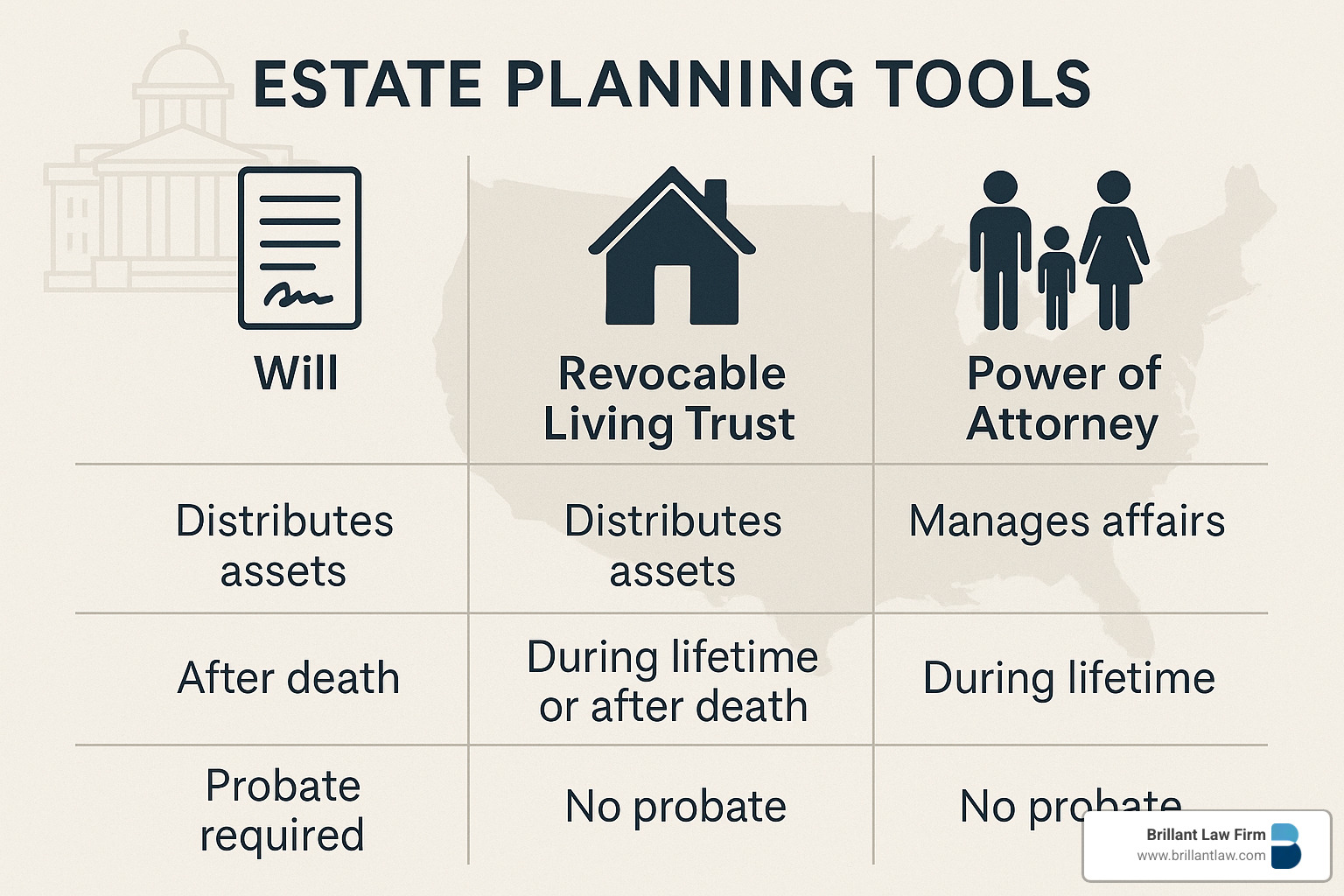
Think of estate planning like choosing the right vehicle for a journey. Sometimes you need a sturdy SUV (a trust), while other times a simple sedan (a will) might do just fine. Let’s look at how these options compare:
| Feature | Revocable Living Trust | Will |
|---|---|---|
| Probate Avoidance | Yes (for funded assets) | No |
| Privacy | Private | Public record |
| Effective | Immediately upon funding | Only at death |
| Incapacity Planning | Yes | No |
| Guardian Designation | No | Yes |
| Initial Cost | Higher ($2,500-$6,000) | Lower ($1,000-$2,500) |
| Complexity | More complex | Simpler |
| Contestability | More difficult to contest | Easier to contest |
A trust keeps your affairs private, while a will becomes public record during probate. Imagine your financial details and family arrangements displayed for anyone to see—that’s what happens with a will. If privacy matters to you, a trust offers that protection.
“I never realized how important privacy would be until I saw a family friend’s will details published in the local paper,” one client told me. “That’s when I decided a trust was right for my family.”
Beyond privacy, the probate process in California can be lengthy and costly. With a properly funded trust, your loved ones can often receive their inheritances in months rather than the year or more typical with probate.
But what about other alternatives? Let’s explore a few:
Transfer on Death (TOD) Designations work like beneficiary designations on life insurance. They’re simple and direct—when you pass away, the named person gets the asset without probate. They’re great for bank accounts and investments, and in some cases, real estate. The downside? They don’t help if you become incapacitated, and they only work for certain types of assets.
Small Estate Procedures in California can be a blessing if your estate is modest. If you have less than $166,250 in assets (excluding real property), your heirs may qualify to use simplified procedures that avoid full probate. It’s still a court process, but it’s faster and less expensive.
Joint Tenancy means owning property together with someone else, with the right of survivorship. When one owner dies, the other automatically gets full ownership—no probate needed for that asset. It’s simple but creates immediate ownership rights that you can’t easily undo, and it might have tax consequences you didn’t anticipate.
For most California homeowners or those with assets over $166,250, a revocable living trust offers the most comprehensive solution. It handles both death and incapacity, keeps matters private, and gives you flexibility other tools can’t match.
That said, these alternatives aren’t necessarily competitors to a trust—they can be complementary. Many of my clients use a combination of tools: a trust for their home and major assets, TOD designations for certain accounts, and a will to catch anything that might have been missed (often called a “pour-over will”).
The right approach depends on your unique situation. A young couple with few assets might start with just a will, while a retiree with a home in the Bay Area would likely benefit substantially from a trust.
Want to dive deeper into these differences? Check out our detailed article on the Difference Between a Will and a Trust for more insights custom to California residents.
Costs, Professional Help, and When to Hire an Attorney
Let’s talk money—because knowing what you’re getting into financially is just as important as understanding the benefits of your trust. Setting up a revocable living trust in California comes with varying costs depending on how you approach it.
If you’re wondering about the DIY route, online services and software packages typically range from $400-$700. While this might seem budget-friendly, it’s a bit like being your own doctor—you might diagnose correctly, but there’s also a real risk of missing something critical. DIY options can work for very straightforward situations, but they often lack California-specific guidance that could make or break your trust’s effectiveness.
For professionally created trusts in California, expect to invest:
* $2,500-$4,000 for an individual trust
* $3,000-$6,000 for a married couple’s trust
* $6,000+ for more complex situations
This investment typically includes proper execution, funding assistance, and those essential complementary documents that round out your estate plan. Think of it as the difference between buying a suit off the rack versus having one custom—both cover you, but one is precisely fitted to your unique measurements.
Beyond the initial setup, remember to budget for:
* Recording fees for real estate deeds (these vary by county in California)
* Modest financial institution fees for retitling accounts
* Occasional maintenance as your life circumstances evolve
While I’m all for saving money where it makes sense, certain situations really do call for professional guidance. You wouldn’t try to remove your own appendix, right? Similarly, how to setup a revocable living trust deserves professional attention if you’re dealing with:
Blended families where providing for children from different relationships requires careful balancing. One wrong word can unintentionally disinherit someone you love.
Special needs planning for beneficiaries receiving government benefits. A standard trust could actually harm their eligibility for crucial assistance programs.
Substantial estates that might face estate tax considerations. While California doesn’t have a state estate tax, federal taxes could still apply to larger estates.
Business ownership requiring specialized provisions to ensure smooth transition and operation after your passing.
Real estate in multiple California counties needing proper handling to avoid complications.
Family dynamics that might lead to disputes or contests. An attorney can help fireproof your plan against potential challenges.
At Brillant Law Firm, we believe in transparent pricing that reflects the value we provide. We’ve seen too many DIY disasters that end up costing families far more to fix than they would have paid for professional help from the start. Learn more about whether you can Set Up a Trust Without a Lawyer on our website.
Choosing Key Roles Wisely
The people you select to manage your trust can make all the difference between a smooth transition and a family falling-out. Think of these roles as casting a play where the script is your financial legacy.
Trustee: Initially, this is typically you (and your spouse for joint trusts). You’re essentially appointing yourself as manager of your own assets—business as usual, just under a different legal structure.
Successor Trustee: This is where the real decision-making comes in. This person steps into your shoes when you can’t wear them anymore—whether through incapacity or death. The ideal candidate is financially responsible, organized, fair-minded, and—perhaps most importantly—willing to take on what can be a demanding role.
I always recommend having a heart-to-heart conversation with potential successors before naming them. Many clients are surprised to find their first choice isn’t actually comfortable with the responsibility, while someone else in their circle is both willing and capable.
Consider naming multiple successors as backups—life happens, and your first choice might not be available when needed. Geographic proximity is helpful but not essential in our digital age.
Corporate/Professional Trustees: For larger estates or situations where family dynamics are complicated, professional trustees like banks and trust companies offer neutral, professional management. They typically charge annual fees based on trust assets (usually 1-2% annually in California), which might be money well spent for peace of mind and family harmony.

When siblings don’t get along or blended family tensions exist, a neutral third party can be the difference between successful trust administration and years of costly litigation. I’ve seen families torn apart over relatively modest estates simply because the wrong person was put in charge.
How to setup a revocable living trust involves not just legal documents but human relationships. The best-written trust in the world can’t overcome poor choices in these key roles. At Brillant Law Firm, we help you steer these sensitive decisions with both legal expertise and an understanding of family dynamics.
Frequently Asked Questions about Revocable Living Trusts
Does a revocable living trust lower my taxes?
Contrary to what many hope, a revocable living trust doesn’t provide tax benefits during your lifetime. Since you maintain control over your trust assets, the IRS simply views them as yours for tax purposes. Every dollar of income generated by your trust assets still appears on your personal tax return under your Social Security number.
Similarly, when you pass away, everything in your revocable trust counts toward your taxable estate. That said, your trust can include thoughtful tax planning provisions that activate after death, potentially reducing estate taxes for married couples or larger estates.
If you’re concerned about estate taxes, don’t worry. At Brillant Law Firm, we can help incorporate more sophisticated tax planning strategies for substantial estates that might face these issues in California.
What assets should NOT go into the trust?
While how to setup a revocable living trust typically involves transferring most assets into it, some things are better left outside. Think of your trust like a beautiful garden—not every plant belongs there!
Retirement accounts like IRAs and 401(k)s should generally stay outside your trust. Transferring these could trigger an immediate tax bill that nobody wants. Instead, consider naming your trust as a beneficiary if that makes sense for your situation.
Health savings accounts work similarly to retirement accounts—they enjoy special tax treatment that could be lost if you transfer them to your trust.
For everyday motor vehicles in California, the potential headaches with insurance companies and the DMV usually outweigh the benefits of trust ownership. That said, if you have valuable collector cars, those might be worth the extra paperwork.
Accounts with beneficiary designations that already name the right people will pass outside probate without needing trust protection.
For each asset you own, we carefully weigh the probate-avoidance benefits against any potential complications of trust ownership. This personalized approach ensures your plan works for your specific situation.
How do beneficiaries receive assets after the grantor’s death?
When a trust creator passes away, the carefully selected successor trustee steps in to handle the next steps. Here’s what typically unfolds:
First, your successor trustee takes control by presenting the trust document and death certificate to banks, investment companies, and other relevant organizations. This process is generally straightforward and doesn’t require court involvement.
Next comes the sometimes tedious but necessary step of inventorying and valuing assets as of the date of death. This creates a clear picture of the estate and establishes new tax basis for certain assets.
The trustee then pays final expenses and debts from the trust assets. These might include funeral costs, outstanding medical bills, and other obligations.
Any required tax returns are filed—this includes your final personal tax return and potentially a trust tax return if income was generated during administration.
Finally, the moment your beneficiaries have been waiting for: assets are distributed according to the specific instructions in your trust.
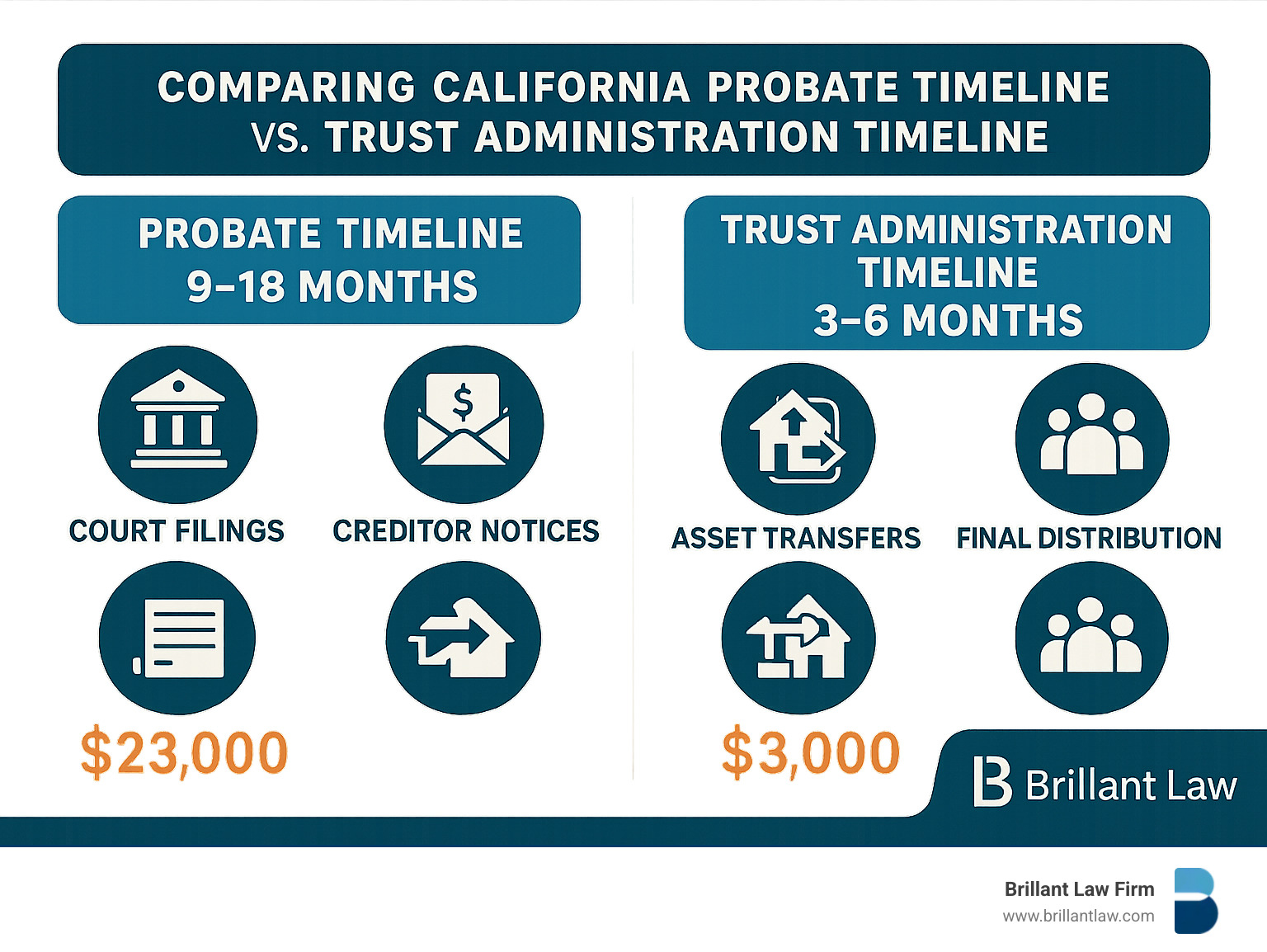
The wonderful thing about this process is the timeline. While probate often drags on for 9-18 months in California, trust administration typically wraps up within 3-6 months. And unlike probate’s public proceedings, all this happens privately, protecting your family’s business from prying eyes.
Your successor trustee carries important fiduciary responsibilities throughout this process—they must follow your trust instructions and act in your beneficiaries’ best interests.
For a more detailed walk-through of what happens after a trust creator’s passing, check out our comprehensive guide on How to Execute a Living Trust After Death in California.
Conclusion
Creating a revocable living trust is like building a sturdy home for your assets—it provides shelter, protection, and comfort for both you and your loved ones. How to setup a revocable living trust might seem daunting at first, but the peace of mind it delivers makes the journey worthwhile.
Throughout this guide, we’ve walked through each step of the process, from deciding if a trust is right for you to properly funding it. We’ve explored the benefits of probate avoidance, privacy protection, and seamless management during potential incapacity. These advantages make revocable living trusts an ideal solution for many California families looking to protect their legacies.
At Brillant Law Firm, we don’t just create documents—we craft personalized estate plans that reflect your unique family dynamics, assets, and wishes. From our Walnut Creek office, we help clients throughout California steer these important decisions with clarity and confidence.
Your revocable living trust is just one piece of a comprehensive estate plan. Depending on your specific situation, you might also benefit from:
- A pour-over will to catch any assets not transferred to your trust
- Durable powers of attorney to manage financial matters during incapacity
- Advance healthcare directives to guide medical decisions
- HIPAA authorizations to ensure proper access to health information
- Business succession planning if you own a company
I’ve helped countless California families create plans that provide genuine peace of mind. Whether you’re just beginning to explore your options or you’re ready to move forward with creating your trust, our team is here to guide you every step of the way.
Estate planning isn’t just about documents and assets—it’s about caring for the people you love and the legacy you’ll leave behind. We’d be honored to help you create a plan that truly reflects your wishes and protects what matters most to you.
For more detailed information about living trusts and other estate planning tools, I invite you to explore our guide on More info about Living Trust basics.