

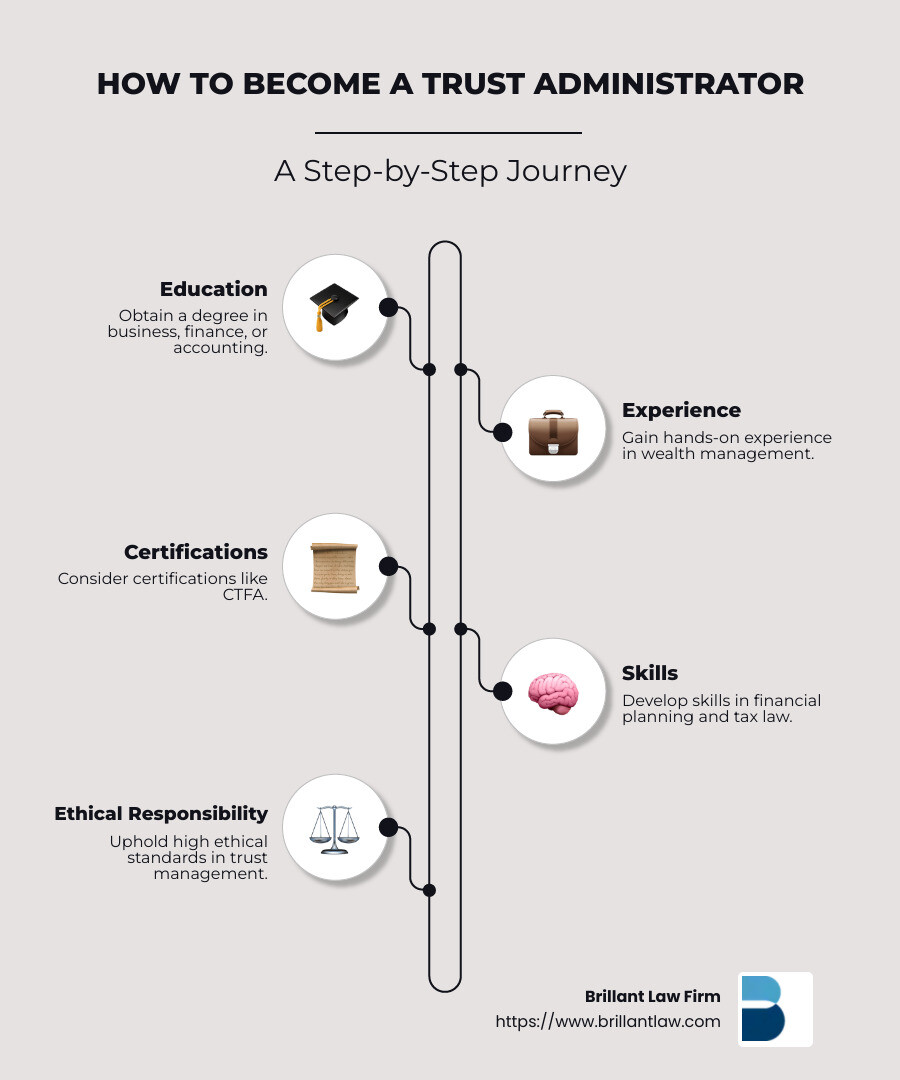
How to become a trust administrator is a journey anchored in education, experience, and ethical responsibility. If you’re considering this career path, here are some steps to guide you:
- Education: Obtain a degree in fields such as business, finance, or accounting.
- Experience: Gain hands-on experience in wealth management or related areas.
- Certifications: Consider certifications like the Certified Trust and Fiduciary Advisor (CTFA).
- Skills: Cultivate skills in financial planning, tax law, and asset management.
Ready to dive deeper into this fulfilling profession? Allow me, David Brillant, a seasoned expert in tax, trust, and estate law, to guide you. With experience in both transactional and litigation aspects, I help simplify complex problems and provide custom strategies for those navigating trust administration in California.
How to become a trust administrator terms to learn:
– how much does a trust administrator make
– trust administration accounting
– fiduciary accounting and trust administration guide
Understanding Trust Administration
A trust administrator plays a crucial role in managing and overseeing a trust, ensuring it operates smoothly and effectively. In simple terms, a trust is a legal arrangement where one party, known as the trustee, holds assets for the benefit of another party, called the beneficiary. The trust administrator ensures that the trust is managed according to the grantor’s wishes and in the best interests of the beneficiaries.
Trust Management
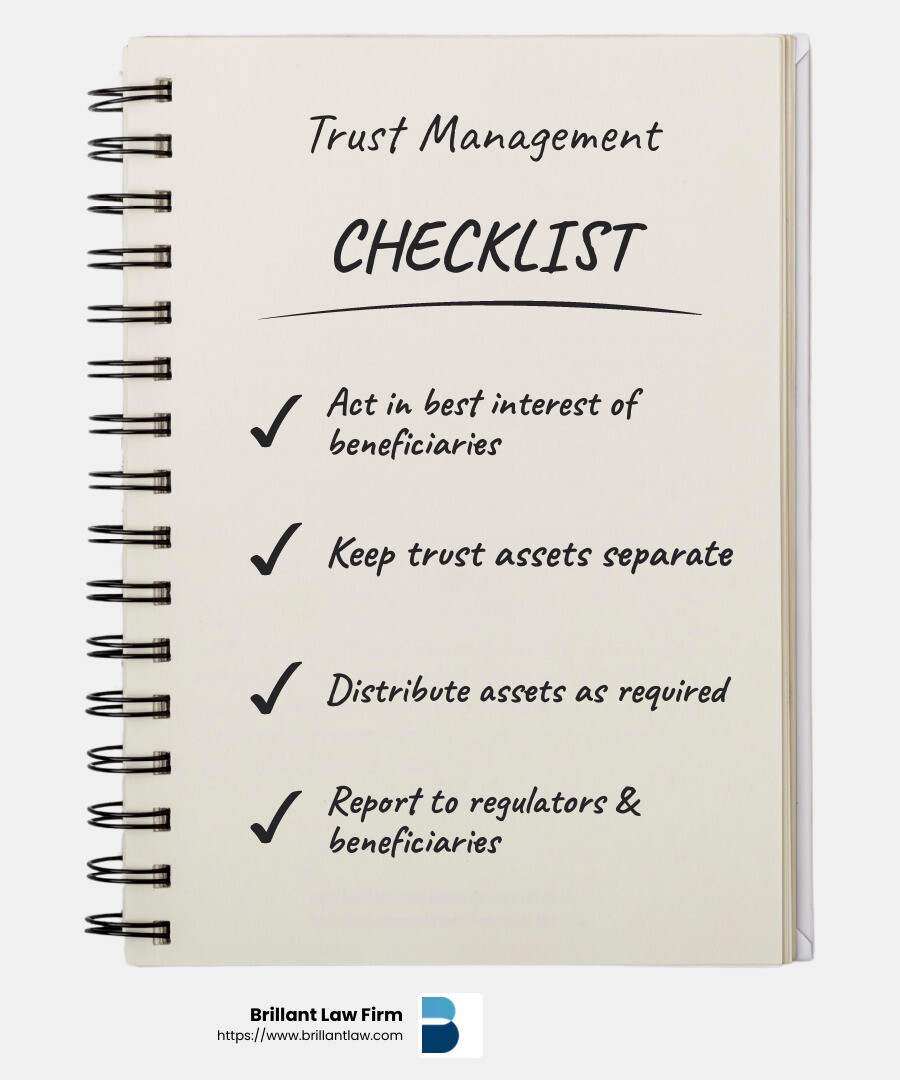
Trust management involves a variety of tasks that require attention to detail and a solid understanding of financial principles. The primary responsibility of a trust administrator is to act as a fiduciary, which means they must always act in the best interest of the beneficiaries and manage the trust according to the grantor’s wishes. This includes:
- Ensuring the safety of assets: The administrator must keep trust assets separate from personal assets and account for them accurately.
- Administering the trust: This involves keeping detailed records of all transactions and distributing assets as required.
- Filing reports: Trust administrators must report to state and federal regulators and keep beneficiaries informed.
Asset Management
Asset management is another critical aspect of trust administration. Trust administrators must make informed decisions about the trust’s assets, ensuring they are invested wisely to meet the trust’s objectives. This can involve:
- Investing: Allocating assets to grow wealth according to the grantor’s instructions.
- Adjusting assets: Making changes to the asset allocation as circumstances change.
- Communicating with beneficiaries: Ensuring beneficiaries understand the trust’s goals and answering any questions they may have.
A trust administrator’s role is not just about managing money; it’s about building trust and maintaining open communication with beneficiaries. This requires a combination of financial acumen and interpersonal skills.
In California, trust administration begins upon the death of the first spouse in a married couple, which underscores the importance of timely and proper management to avoid potential litigation and disputes. The Brillant Law Firm specializes in providing expert legal services during these challenging times, ensuring that trust administration is handled with care and precision.

Ready to explore more about the skills and qualifications needed to become a successful trust administrator? Let’s explore the educational requirements and career path in the next section.
How to Become a Trust Administrator
Becoming a trust administrator involves a blend of education and hands-on experience. Here’s a straightforward guide to help you steer this career path.
Educational Requirements
To start your journey as a trust administrator, a solid educational foundation is key. Most individuals in this field hold a bachelor’s degree. While several majors can lead you to this career, degrees in business, finance, or accounting are particularly beneficial. These fields of study provide the necessary skills in financial management, asset allocation, and fiduciary responsibilities.
- Business Degree: Offers a broad understanding of management and operational principles.
- Finance Degree: Focuses on investment strategies, financial markets, and asset management.
- Accounting Degree: Equips you with skills in financial reporting and tax compliance.
These degrees lay the groundwork for understanding complex financial instruments and the legal aspects of trust administration.
Gaining Experience
Education alone isn’t enough. Practical experience in wealth management is crucial. This experience helps you understand the nuances of managing assets and working with beneficiaries.
Training Programs: Many aspiring trust administrators start with training programs or internships at financial institutions or law firms. These programs offer exposure to real-world scenarios and help you build a network of industry professionals.
Wealth Management Experience: Working in wealth management provides hands-on experience with asset allocation and investment strategies. It also helps you learn how to communicate effectively with clients and beneficiaries.
In California, gaining experience at a local firm, like Brillant Law, can be particularly beneficial. You’ll understand the specific legal requirements and best practices for trust administration in the state. This experience not only improves your resume but also prepares you for the challenges of the role.
By combining the right education with practical experience, you’ll be well on your way to becoming a proficient trust administrator. Next, we’ll explore the certifications and training that can further improve your credentials in this field.
Certifications and Training
Once you’ve laid a solid foundation with education and experience, the next step in how to become a trust administrator is acquiring the right certifications and training. These not only improve your credibility but also expand your expertise in estate planning and trust management.
Estate Planning Certification
Pursuing an estate planning certification is a smart move for any aspiring trust administrator. Certifications such as the Accredited Estate Planner (AEP) or the Chartered Trust and Estate Planner (CTEP) are highly regarded in the industry. These certifications focus on key areas like financial planning, tax law, and regulatory compliance, equipping you with the skills necessary to manage complex trust portfolios effectively.
AEP: Offered by the National Association of Estate Planners & Councils, this certification requires active practice in estate planning and membership in a local estate planning council. It’s ideal for those who spend a significant portion of their time on estate planning tasks.
CTEP: Provided by the Global Academy of Finance and Management, this designation targets professionals serving high-net-worth individuals (HNWIs). It demands at least three years of experience in estate planning or trusts and completion of related coursework.
Certified Trust and Fiduciary Advisor (CTFA)
The Certified Trust and Fiduciary Advisor (CTFA) certification, awarded by the American Bankers Association (ABA), is another valuable credential. It is specifically custom for those in wealth management roles and focuses on trust administration, financial planning, and fiduciary responsibilities.
To earn the CTFA, you need:
- A minimum of three years of experience in wealth management.
- Completion of one approved wealth management training program.
- Passing a comprehensive exam that covers all aspects of trust administration.
Maintaining the CTFA designation requires 45 credits of continuing education every three years, ensuring you stay up-to-date with industry trends and regulations.
Ethics Training
Ethics training is a crucial component of any trust administrator’s education. Trust administrators are fiduciaries, meaning they are legally obligated to act in the best interests of their clients. Ethics training helps you understand and steer the moral and legal responsibilities associated with this role.
Ethical Decision-Making: Courses often focus on scenarios you might face as a trust administrator, teaching you how to make decisions that are both ethical and compliant with the law.
Regulatory Compliance: Understanding the legal framework governing trusts ensures you can effectively manage assets while adhering to state and federal laws.
Incorporating certifications and ethics training into your career development not only improves your skills but also builds trust with clients. As you continue on this path, you’ll be well-prepared to handle the complexities of trust administration with confidence and integrity.
Next, we’ll dig into the essential skills required for trust administration, which will further prepare you for success in this field.
Skills Required for Trust Administration
To excel as a trust administrator, you need a specific set of skills. These skills help you manage trusts effectively and ensure the best outcomes for beneficiaries. Let’s explore the key skills you’ll need:
Attention to Detail
Attention to detail is crucial in trust administration. You’re dealing with people’s assets and legacies, so even small mistakes can have big consequences. Whether you’re reviewing legal documents or managing asset distributions, being meticulous ensures everything is handled correctly.
Imagine you’re overseeing a trust with multiple beneficiaries. If you miscalculate the distribution amounts, it could lead to disputes or even legal challenges. By paying close attention to every detail, you help maintain trust and avoid costly errors.
Financial Planning
As a trust administrator, you’ll often engage in financial planning. This involves evaluating the trust’s assets, making investment decisions, and ensuring the trust grows over time. Strong financial planning skills help you make informed choices that align with the settlor’s goals and benefit the beneficiaries.
Consider this: You’re managing a trust for a family aiming to grow their assets for future generations. By employing sound financial strategies, you can help maximize the trust’s value, ensuring it serves its purpose long-term.
Tax Law
Understanding tax law is essential. Trusts are subject to various taxes, and navigating these can be complex. Knowledge of tax law helps you minimize the tax burden on the trust, preserving more assets for the beneficiaries.
For instance, California has specific tax regulations that may impact how a trust is managed. Being well-versed in these laws allows you to make strategic decisions, such as timing distributions to optimize tax outcomes.
In summary, excelling in these skills—attention to detail, financial planning, and tax law—will set you up for success as a trust administrator. Mastering these areas ensures you can manage trusts effectively, honor the settlor’s intentions, and provide peace of mind to beneficiaries.
Next, we’ll address frequently asked questions about becoming a trust administrator, offering further insights into this rewarding career path.
Frequently Asked Questions about Becoming a Trust Administrator
What does a trust administrator do?
A trust administrator plays a crucial role in managing and overseeing a trust’s assets. Their primary responsibility is to ensure that the trust is administered according to the grantor’s wishes and in the best interest of the beneficiaries.
Key Duties:
Asset Tracking: Keep meticulous records of all assets within the trust. This includes monitoring the trust’s total value and ensuring assets are accurately accounted for and reported.
Decision-Making: Make informed decisions about investing and distributing trust assets. This requires a deep understanding of the grantor’s intentions and the beneficiaries’ needs.
Communication: Regularly update beneficiaries and other stakeholders about the trust’s status and any important decisions made. Clear communication helps build trust and prevents misunderstandings.
How much do trust administrators make?
In California, trust administrators can expect to earn competitive salaries, reflecting the complexity and responsibility of the role.
Average Salary: Trust administrators in California typically earn between $70,000 and $120,000 annually, depending on experience and specific duties.
Highest Paying Cities: Cities like San Francisco, Los Angeles, and San Diego often offer higher salaries due to the cost of living and demand for skilled professionals.
How to become a certified trust officer?
Becoming a certified trust officer involves meeting specific educational and professional requirements. Here’s a step-by-step guide:
Education: Obtain a bachelor’s degree in business, finance, or a related field. This foundational knowledge is crucial for understanding trust management and wealth management principles.
Experience: Gain experience in wealth management or a related area. Practical experience is invaluable in understanding the complexities of trust administration.
Certification: Pursue certification, such as the Certified Trust and Fiduciary Advisor (CTFA). This certification demonstrates your expertise and commitment to ethical and effective trust management.
Ongoing Training: Stay updated with the latest developments in estate planning and tax law. Continuous learning ensures you remain competent and capable in your role.
By following these steps, you can position yourself as a competent and trusted professional in the field of trust administration. This career path not only offers financial rewards but also the satisfaction of helping individuals and families manage their legacies effectively.
Next, we’ll conclude with insights into the bespoke strategies offered by Brillant Law Firm in California.
Conclusion
Navigating the path to becoming a trust administrator is a rewarding journey that combines education, experience, and certification. At Brillant Law Firm, we understand the complexities involved in trust administration and are dedicated to providing bespoke strategies custom to meet the unique needs of our clients in California.
Our team specializes in trusts, estates, taxation, and business law, offering unparalleled expertise and unwavering dedication. We pride ourselves on our commitment to excellence and our ability to craft ironclad strategies that ensure the effective management and distribution of trust assets.
Located in several areas across California, including Walnut Creek, Saranap, San Miguel, and Castle Hill, we are well-equipped to serve clients throughout the state. Whether you’re just starting out on your journey to becoming a trust administrator or are an experienced professional seeking guidance, Brillant Law Firm is here to support you every step of the way.
For more information on how we can assist with trust administration, visit our Trust Administration page. Let us help you turn complex challenges into successful outcomes, ensuring your peace of mind and the security of your legacy.


