

Fiduciary accounting and trust administration guide is crucial for anyone involved in managing trusts and estates. This guide helps ensure that fiduciaries adhere to California’s Probate Code while efficiently carrying out their duties. Here’s a brief breakdown for quick insights:
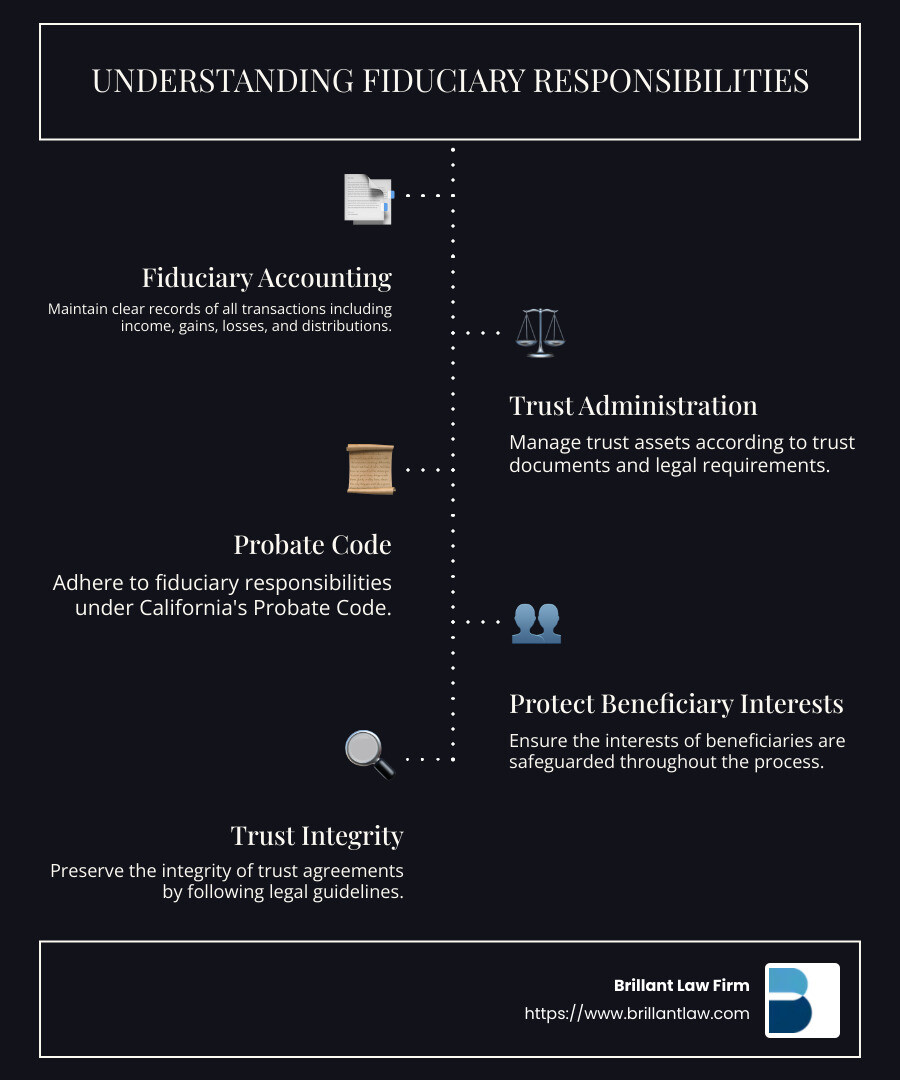
- Fiduciary Accounting: Involves maintaining transparent records of all transactions, such as income, gains, losses, and distributions.
- Trust Administration: Handling trust assets in accordance with the trust documents and legal requirements.
- Probate Code: Governs the fiduciary responsibilities and how accountings are prepared and presented.
Navigating these complex areas is crucial for protecting the interests of beneficiaries and preserving the integrity of trust agreements.
As someone deeply versed in trust and estate law, I’m David Brillant, ready to share expertise from years of handling fiduciary accounting and trust matters. With a solid grounding in tax law and recognized specialization in estate planning, I aim to simplify what might seem daunting and provide clarity as we explore these essential legal processes.
Understanding Fiduciary Accounting
Fiduciary accounting is like the heartbeat of trust administration. It’s all about keeping things clear and honest when managing someone else’s assets. Let’s break down some key aspects:
Legal Requirements
In California, fiduciaries must adhere to strict legal standards. The Probate Code is the rulebook that guides fiduciaries in their duties. It ensures that all transactions are documented and reported correctly. This helps protect both the fiduciary and the beneficiaries, ensuring everyone is on the same page and legal obligations are met.
Asset Management
Managing assets isn’t just about keeping them safe. It’s about making them work for the beneficiaries. This involves tracking all receipts and disbursements and understanding how to balance income with principal adjustments. By doing so, fiduciaries ensure that the assets are not only preserved but also optimized for growth and benefit distribution.
Tax Compliance
Taxes can be tricky, but they’re a crucial part of fiduciary accounting. Compliance means preparing federal and state tax returns accurately. For trusts, this often involves dealing with complex tax issues like generation-skipping tax (GST) and estate taxation. Proper tax management can save the trust money and avoid legal troubles.
Beneficiary Communication
Clear communication with beneficiaries is vital. Beneficiaries need to understand how their interests are being managed. Regular updates and transparent accountings help build trust and prevent misunderstandings. This involves showing detailed reports of all financial activities related to the trust, ensuring beneficiaries feel informed and secure about their assets.
Understanding these components of fiduciary accounting ensures that fiduciaries can effectively manage their responsibilities. This not only protects the interests of beneficiaries but also upholds the integrity of the trust administration process.
Fiduciary Accounting and Trust Administration Guide
Navigating the complexities of fiduciary accounting can feel daunting. However, a fiduciary accounting and trust administration guide can simplify this process, especially when it comes to understanding sample accountings, Probate Code accountings, and court proceedings.
Sample Accountings
Sample accountings are invaluable tools for fiduciaries. They provide a clear example of how to compile and present financial activities within a trust. These samples typically include detailed schedules of receipts, disbursements, gains, and losses. By studying these examples, fiduciaries can ensure their accountings meet legal standards and are easily understood by beneficiaries and the court.
For instance, the Fiduciary Accounting Handbook includes two complete sample accountings. These samples serve as a blueprint, demonstrating the format and level of detail required for effective fiduciary reporting.
Probate Code Accountings
In California, the Probate Code outlines specific requirements for fiduciary accountings. This legal framework ensures that all financial activities are recorded accurately and transparently. The code requires fiduciaries to provide periodic accountings that detail every transaction affecting the trust’s assets.
The Fiduciary Accounting Handbook helps explain these requirements by organizing the rules into clear, actionable steps. This ensures that fiduciaries can produce the accountings judges want to see, reducing the risk of errors and misunderstandings.
Court Proceedings
Court proceedings can be an integral part of trust administration, especially when disputes arise. A well-prepared fiduciary accounting can simplify these proceedings by providing clear evidence of how the trust has been managed.
A dedicated chapter in the Fiduciary Accounting Handbook focuses on court proceedings. It offers a step-by-step guide on how to prepare for court, ensuring fiduciaries are ready to present their accountings effectively. This preparation is crucial, as clear and accurate accountings can significantly influence court decisions, protecting both the fiduciary and the beneficiaries.
By utilizing resources like sample accountings and following the guidelines set by the Probate Code, fiduciaries can steer the complexities of trust administration with confidence. This not only ensures compliance with legal standards but also fosters trust and transparency with beneficiaries and the court.
Key Components of Trust Accounting
Understanding the key components of trust accounting is crucial for fiduciaries. These components ensure transparency and compliance with legal requirements, especially in California. Let’s break down these essential parts: receipts and disbursements, assets and liabilities, and income and principal adjustments.
Receipts and Disbursements
Receipts and disbursements are the backbone of trust accounting. Receipts include all income the trust receives, such as dividends, interest, rent, or any capital gains. Disbursements are expenses paid out of the trust, like administrative costs, taxes, and distributions to beneficiaries.
Accurate tracking of these transactions is vital. It ensures that the fiduciary can provide a clear account of how funds are handled. This transparency is critical for maintaining trust with beneficiaries and meeting legal obligations.
Assets and Liabilities
Assets and liabilities provide a snapshot of the trust’s financial position. Assets include everything the trust owns, such as cash, investments, real estate, and any other property. Liabilities are obligations the trust must pay, like debts or pending distributions.
Regularly updating and reviewing this information is essential. It helps fiduciaries manage the trust effectively and prepare accurate reports for beneficiaries and the court.
Income and Principal Adjustments
One of the more complex aspects of trust accounting involves making income and principal adjustments. This process ensures that income and principal are allocated correctly, following the trust’s terms and the Probate Code.
For example, understanding when to classify a receipt as income or principal can affect how funds are distributed to beneficiaries. The Fiduciary Accounting Handbook offers practical explanations and examples to guide fiduciaries through these adjustments, reducing the risk of common mistakes.
By focusing on these key components, fiduciaries can ensure their trust accounting is both accurate and compliant. This attention to detail fosters transparency, builds trust with beneficiaries, and meets the legal standards set forth by the Probate Code.
Next, we’ll dive into a step-by-step guide for preparing a fiduciary accounting, including a recordkeeping checklist and tips for working with CPAs.
Preparing a Fiduciary Accounting
Creating a fiduciary accounting can seem daunting, but breaking it down into simple steps can make the process manageable. Here’s a straightforward guide to help you through it, along with a handy recordkeeping checklist and tips for engaging with CPAs.
Step-by-Step Guide
Gather Essential Documents
Start by collecting all relevant documents. This includes bank statements, investment reports, tax returns, and any other financial records related to the trust. These documents form the foundation of your accounting.List All Assets and Liabilities
Document all assets the trust owns and any liabilities it owes. This provides a clear picture of the trust’s financial status at the start of the accounting period.Track Receipts and Disbursements
Record all income received and expenses paid out during the accounting period. This includes dividends, interest, rent, taxes, and distributions to beneficiaries. Keeping detailed records here is vital for accuracy.Make Necessary Adjustments
Adjust the income and principal as required by the trust’s terms and the Probate Code. This ensures that funds are allocated correctly, which is crucial for transparency and compliance.Prepare the Final Report
Compile all this information into a formal accounting report. This report should be clear, comprehensive, and ready for presentation to beneficiaries and the court if necessary.
Recordkeeping Checklist
- Bank Statements: Ensure all statements are complete and up-to-date.
- Investment Reports: Include all relevant reports and updates.
- Tax Returns: Gather all filed returns for reference.
- Receipts and Invoices: Keep copies of all transactions.
Staying organized with this checklist helps in preparing an accurate and compliant fiduciary accounting.
Engaging with CPAs
Working with a Certified Public Accountant (CPA) can greatly improve the accuracy and reliability of your fiduciary accounting. Here are some tips for effective collaboration:
Clear Communication: Share all relevant documents and information with your CPA. Open and clear communication ensures they understand the trust’s specifics and can provide the best advice.
Engagement Letter: Use a formal engagement letter to outline the scope of the CPA’s work and expectations. This helps in setting clear boundaries and responsibilities.
Regular Updates: Schedule regular meetings or updates to discuss progress and address any issues promptly. This keeps the process on track and avoids last-minute surprises.
By following these steps and utilizing the resources available, fiduciaries can confidently prepare accurate accountings that meet legal requirements and build trust with beneficiaries.
Next, we’ll address some frequently asked questions about fiduciary accounting to further clarify this essential process.
Frequently Asked Questions about Fiduciary Accounting
How to do fiduciary accounting?
Fiduciary accounting involves a few key steps to ensure accuracy and compliance. It starts with asset identification, where you list all assets owned by the trust. This includes cash, investments, real estate, and any other property. Next, you’ll need to focus on income tracking. Record all income sources like dividends, interest, and rental income. Keeping these records is crucial for both transparency and tax compliance.
Speaking of taxes, tax compliance is another essential part. Ensure that all income is reported accurately for tax purposes, and any necessary tax payments are made on time. This helps avoid legal issues and keeps the trust in good standing.
What should a trust accounting include?
A comprehensive trust accounting should include:
Receipts: Document all income received by the trust. This includes interest, dividends, rents, and any other inflows.
Disbursements: Record all expenses paid out, such as taxes, trustee fees, and other administrative costs.
Assets and Liabilities: Clearly list all assets owned by the trust and any outstanding liabilities. This gives a snapshot of the trust’s financial health.
Income and Principal Adjustments: Note any adjustments made between income and principal according to the trust’s terms and the Probate Code.
These components ensure that the accounting is complete and provides a clear financial picture for beneficiaries and other interested parties.
Does a trustee have to show accounting to beneficiaries?
Yes, trustees are generally required to provide an annual accounting to the trust’s current beneficiaries. This is not just a best practice—it’s often a legal obligation. The accounting should clearly show all transactions, including receipts, disbursements, assets, and liabilities.
This transparency helps build trust and ensures beneficiaries are informed about the trust’s financial activities. It also protects the trustee by demonstrating they are fulfilling their fiduciary duties responsibly. In California, this requirement is part of the legal framework that governs trust administration, ensuring all parties are aware of their rights and responsibilities.
By understanding these aspects of fiduciary accounting, trustees can confidently manage trusts while maintaining compliance and transparency.
Conclusion
Navigating the complexities of fiduciary accounting and trust administration can be daunting, but with the right guidance, it becomes manageable. This is where the Brillant Law Firm comes in. With our unparalleled expertise and dedication, we provide bespoke strategies custom to meet the unique needs of our clients in California.
Our firm specializes in trust administration, ensuring that trustees fulfill their duties efficiently and transparently. We understand the intricacies of the Probate Code and the importance of accurate accounting. Our team is committed to helping trustees prepare comprehensive accountings that include receipts, disbursements, and other essential components. We also offer guidance on tax compliance and beneficiary communication, ensuring that all legal obligations are met.
At Brillant Law Firm, we pride ourselves on our commitment to excellence. Our clients can rely on us for honest advice and reliable guidance every step of the way. Whether you’re dealing with routine trust administration or complex fiduciary accounting issues, we have the knowledge and experience to help you achieve the best possible outcomes.
For more information on how we can assist you with trust administration in California, please visit our Trust Administration page. Let us help you steer the intricacies of fiduciary accounting with confidence and clarity.


