

Why Federal Appeals Representation Matters
When facing a federal appeals process, finding the right attorney is crucial. This pivotal stage isn’t about retrying your case; it’s about scrutinizing the trial for legal errors. Here’s what you need to know upfront:
- Focus on Trial Errors: Appeals target procedural mistakes, not the facts of the case.
- Strict Deadlines: You only have fourteen days after a judgment to file a notice of appeal.
- Expertise Needed: The process is complex and requires a specialized federal appeals attorney.
Choosing the right legal representation can make all the difference in the outcome of your appeal.
I am David Brillant, an expert in tax, estate, and appeals law. I specialize in navigating complex legal issues and have a proven track record in solving intricate cases. Let’s dive deeper into what you should look for in a federal appeals attorney.
Understanding the Federal Appeals Process
Navigating the federal appeals process can feel overwhelming. But with the right guidance, you can understand each step and know what to expect. Here’s a breakdown of the key elements:
Appeal Timeline
Timing is critical in federal appeals. According to the Federal Rules of Appellate Procedure (Rule 4(b)), you must file a “notice of appeal” within fourteen days of the trial judgment. Missing this deadline can jeopardize your appeal, so acting quickly is essential.
Appeal Grounds
An appeal isn’t about retrying your case. Instead, it focuses on errors that occurred during the trial. Common grounds for appeal include:
- Errors during jury selection (voir dire)
- Improper admission or exclusion of evidence
- Incorrect rulings on pre-trial or trial motions
- Verdicts not supported by the weight of evidence
- Sentences violating Federal Sentencing Guidelines or constitutional protections
Appellate Procedure
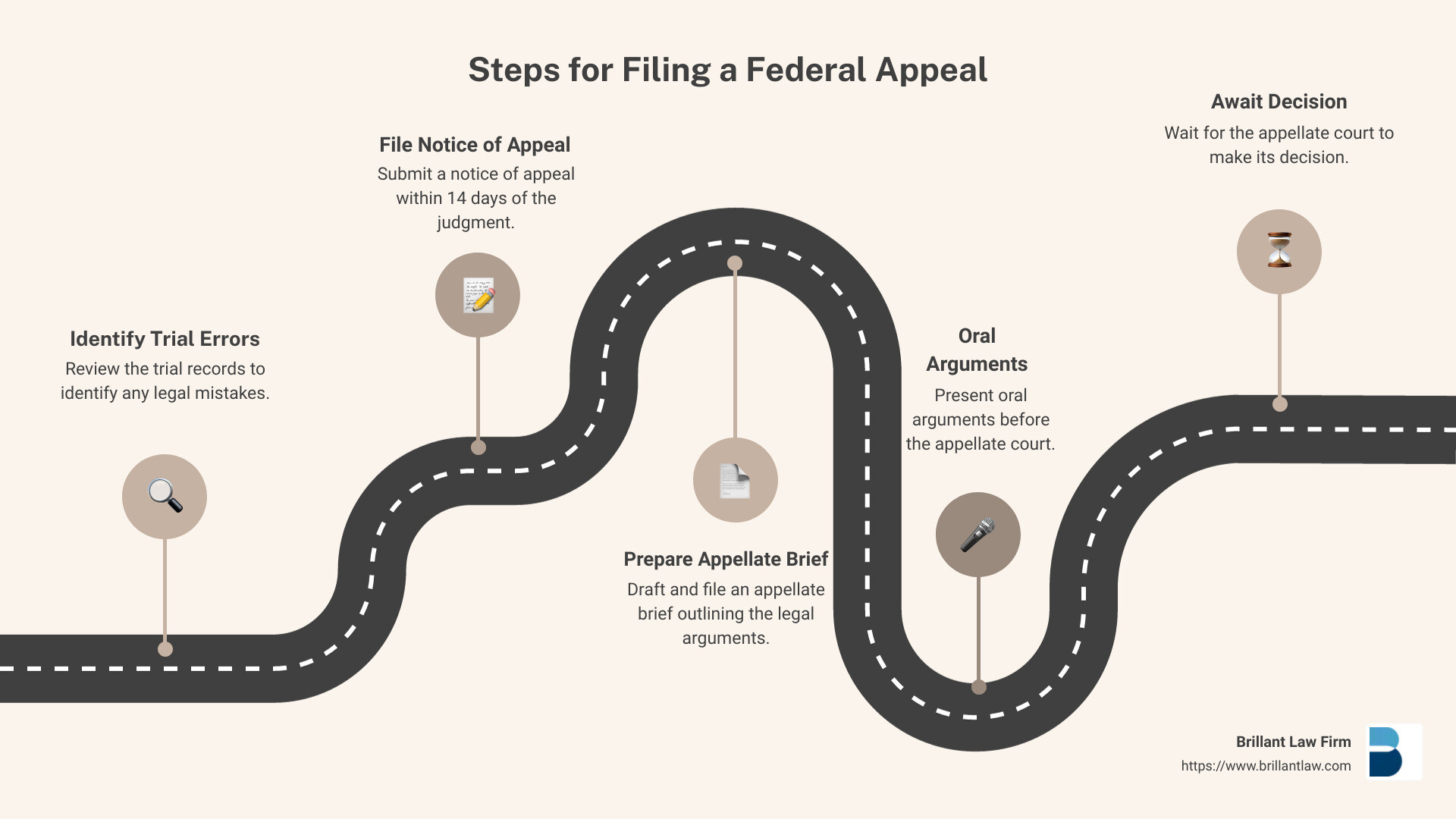
The appellate procedure is different from a trial. It’s mostly about written briefs and legal arguments, rather than witness testimonies or new evidence. Here’s a simplified outline:
- File a Notice of Appeal: This is your official statement that you intend to appeal.
- Prepare the Record on Appeal: This includes transcripts and all pertinent documents from the trial.
- Submit Briefs: Both sides submit written arguments. The appellant (you) outlines the trial errors, while the appellee (the other side) defends the trial court’s decision.
- Oral Arguments: In some cases, the court may schedule oral arguments where lawyers present their case and answer the judges’ questions.
- Decision: The appellate court reviews the briefs and oral arguments, then makes a decision. This could be to uphold the original decision, reverse it, or send the case back to the lower court for further proceedings.
Notice of Appeal
The notice of appeal is your first step in the appellate process. It’s a formal declaration that you intend to challenge the trial court’s decision. This document must be filed within the strict fourteen-day deadline. Missing this deadline can mean losing your right to appeal.
Trial Errors
Identifying trial errors is crucial for a successful appeal. These errors can include:
- Jury Selection Errors: Mistakes during voir dire can lead to an unfair jury.
- Evidence Issues: Whether evidence was wrongly admitted or excluded can be grounds for appeal.
- Motion Rulings: Incorrect rulings on motions can significantly impact the trial’s outcome.
- Sentencing Errors: Sentences that don’t align with guidelines or constitutional protections can be challenged.
Understanding these aspects of the federal appeals process can help you steer your case more effectively. With the right federal appeals attorney, you can ensure that all potential grounds for appeal are thoroughly examined and presented.
Next, let’s explore the key qualities to look for in a federal appeals attorney.
Key Qualities to Look for in a Federal Appeals Attorney
Choosing the right federal appeals attorney can make a significant difference in the outcome of your case. Here are the essential qualities to look for:
Experience
Experience is crucial when selecting a federal appeals attorney. Look for someone who has handled numerous appeals, particularly in federal courts. An attorney with a deep understanding of the complexities of appellate law can steer the process effectively.
Track Record
A strong track record of success is a good indicator of an attorney’s ability. Check their history of overturned convictions or reduced sentences. A consistent record of favorable outcomes reflects their capability to craft compelling legal arguments and achieve results.
Specialization
Specialization in federal appeals is another key factor. Federal appellate litigation often involves complex legal issues and specific areas of law, such as white-collar crime, public corruption, or fraud. An attorney who specializes in these areas will have a deeper understanding and be better equipped to handle your case.
Communication Skills
Effective communication is vital. Your attorney should be able to explain complex legal concepts in simple terms, keeping you informed throughout the process. Clear communication also extends to their written briefs and oral arguments.
Legal Strategy
A well-thought-out legal strategy is essential for a successful appeal. Your attorney should be able to identify trial errors, motion rulings, and sentencing issues that can be grounds for appeal. They should also be adept at using these insights to craft a solid appellate strategy.
By focusing on these qualities—experience, track record, specialization, communication skills, and legal strategy—you can choose a federal appeals attorney who is well-equipped to handle your case and maximize your chances of a favorable outcome.
Federal Appeals Attorney: Expertise and Experience
When it comes to federal criminal appeals, having an attorney with deep expertise and extensive experience is crucial. Federal appeals are complex and require a thorough understanding of appellate litigation, intricate legal issues, and strategic planning from trial through sentencing. Here are key areas where expertise and experience matter most:
Federal Criminal Appeals
Federal criminal appeals involve challenging a conviction or sentence handed down by a federal court. These appeals can be based on various grounds, such as errors in the admission or exclusion of evidence, improper jury instructions, or violations of constitutional rights.
Appellate Litigation
Appellate litigation is a specialized field that focuses on reviewing and challenging lower court decisions. This process involves analyzing trial records, writing compelling briefs, and presenting oral arguments effectively in front of appellate judges.
Complex Legal Issues
Federal appeals often involve complex legal issues that require a nuanced understanding of the law. These issues can range from white-collar crimes like healthcare fraud and money laundering to conspiracy and drug crimes.
Trial Strategy
An effective trial strategy is the backbone of a successful appeal. Experienced appellate attorneys can spot potential grounds for appeal during the trial itself and lay the groundwork for a robust appellate argument. This foresight can make a significant difference in the outcome of an appeal.
Sentencing Strategy
Sentencing in federal cases can be particularly challenging. Errors during the sentencing phase, such as incorrect application of sentencing guidelines or failure to consider mitigating factors, can be grounds for appeal.
By understanding the intricacies of federal criminal appeals, appellate litigation, complex legal issues, trial strategy, and sentencing strategy, you can better appreciate the expertise required in a federal appeals attorney. This knowledge will help you make an informed decision when selecting the right attorney to handle your case.
Questions to Ask a Potential Federal Appeals Attorney
Choosing the right federal appeals attorney is crucial for the success of your appeal. Here are some key questions to ask potential attorneys to ensure they are the right fit for your case:
1. What Is Your Experience with Similar Cases?
You want an attorney who has handled cases similar to yours. Ask about their experience with federal criminal appeals, especially those involving the specific charges you face.
2. What Is Your Success Rate?
While past success doesn’t guarantee future results, a high success rate can indicate an attorney’s capability. Knowing this, inquire about the attorney’s specific success rate and how it compares to the average.
3. How Do You Structure Your Fees?
Understanding the fee structure is essential to avoid unexpected costs. Some attorneys charge a flat fee, while others bill hourly. Ensure you get a clear explanation of all potential costs involved. This transparency helps you plan financially and avoid surprises down the line.
4. How Often Will We Communicate?
Communication frequency is vital. You need an attorney who will keep you informed throughout the appeals process. Ask how often they will update you and through what means—whether by phone, email, or in-person meetings.
5. What Is Your Appellate Strategy?
A strong appellate strategy is crucial for a successful appeal. Ask the attorney to outline their approach to your case. They should explain how they will review the trial record, identify errors, and present compelling arguments. An effective strategy involves meticulous preparation and attention to detail in brief writing and oral advocacy.
By asking these questions, you can better assess whether a potential federal appeals attorney has the experience, skills, and approach needed to handle your appeal effectively.
The Importance of Specialization in Federal Appeals
When it comes to federal appeals, specialization is crucial. A federal appeals attorney with specialized knowledge can significantly impact the outcome of your case. Here’s why:
Federal Appellate Courts
Federal appellate courts have unique rules and procedures. Each of the 13 U.S. Circuit Courts of Appeal, including the 5th Circuit which recently proposed rules on AI use in filings, has its own specific requirements. Understanding these nuances is vital for success.
Criminal Appeals
Criminal appeals are complex and require a deep understanding of both trial and appellate law.
Civil Appeals
Civil appeals, while different from criminal appeals, also demand specialized expertise. These cases can involve disputes over contracts, property rights, or regulatory compliance. A specialized attorney ensures that every legal argument is carefully crafted and supported by relevant case law.
White-Collar Crime
White-collar crime cases, such as fraud and embezzlement, often involve detailed financial records and complex legal issues.
Fraud Cases
Fraud cases, including healthcare, mortgage, and tax fraud, require an attorney who understands the specific statutes and regulations involved. An attorney with a track record in handling fraud appeals can provide the expertise needed to challenge convictions based on intricate legal and factual grounds.
Conclusion
Specialization in federal appeals ensures that your attorney is not just familiar with the law but is an expert in the specific type of case you are dealing with. This expertise can make a significant difference in the success of your appeal.
Next, we will address some frequently asked questions about federal appeals attorneys to further guide you in making an informed decision.
Frequently Asked Questions about Federal Appeals Attorneys
What is the role of a federal appeals attorney?
A federal appeals attorney plays a crucial role in challenging decisions made in federal trial courts. Their primary job is to identify and argue legal errors that occurred during the trial. Unlike trial lawyers, who focus on presenting evidence and witnesses, appellate lawyers concentrate on legal arguments and written briefs.
Key Functions:
– Reviewing Trial Records: They carefully review the trial transcripts and records to find grounds for appeal.
– Identifying Legal Errors: They look for mistakes made by the trial judge, such as improper admission of evidence or incorrect jury instructions.
– Drafting Appellate Briefs: They write detailed legal documents that argue why the trial court’s decision should be overturned.
– Oral Arguments: They present oral arguments before appellate judges to further advocate for their client’s position.
How long does a federal appeal take?
The duration of a federal appeal can vary widely. Several factors influence the timeline, including the complexity of the case, the number of issues raised, and the backlog of cases at the appellate court.
Typical Timeline:
– Notice of Appeal: Must be filed within 14 days of the trial judgment.
– Briefing Schedule: Both parties submit written briefs, a process that can take several months.
– Oral Arguments: Scheduled by the court, often several months after briefs are submitted.
– Decision: The appellate court’s decision can take anywhere from a few months to over a year, depending on the case’s complexity and the court’s workload.
In general, expect the entire process to take several months to a few years.
Can I use my trial lawyer for my federal appeal?
While it’s possible to use your trial lawyer for your federal appeal, it is generally not recommended. Appellate law is a specialized field requiring different skills and experience than trial law.
Differences Between Trial and Appellate Lawyers:
– Focus: Trial lawyers are experts in presenting evidence and examining witnesses, whereas appellate lawyers focus on legal arguments and written briefs.
– Experience: Appellate lawyers have specific experience in navigating the complex rules and procedures of appellate courts.
– Strategy: The strategy for an appeal is very different from that of a trial. Appellate lawyers are skilled in identifying and arguing legal errors, which is essential for a successful appeal.
For the best chance of success, it’s advisable to hire an attorney who specializes in federal appeals. This ensures that your appeal is handled by someone with the right expertise and experience to steer the complexities of the appellate process.
Conclusion
Choosing the right federal appeals attorney can significantly impact the outcome of your case. At Brillant Law Firm, our team of experienced appellate litigators is dedicated to providing top-notch legal expertise and client-focused service.
Our attorneys bring years of specialized experience in handling federal appeals, ensuring that we are well-versed in the intricacies of appellate law. From trial strategy to sentencing strategy, we cover all aspects of federal criminal appeals. Our commitment to excellence is reflected in our meticulous approach to each case, as we strive to identify and argue every possible legal error.
We understand that each client’s situation is unique. That’s why we offer bespoke strategies custom to meet your specific needs. Whether you’re dealing with complex white-collar crime or other federal offenses, our attorneys are equipped to craft a compelling appeal that aligns with your overall objectives.
If you’re seeking a knowledgeable and dedicated federal appeals attorney, look no further than Brillant Law Firm. Our proven track record and commitment to client success make us the ideal choice for your appellate needs.
Ready to take the next step? Contact us today to discuss your case and find out how we can help you achieve the best possible outcome on your federal appeal.


