

Looking for a family law appellate attorney near me? When family law matters such as divorce or child custody don’t go your way, the appeals process gives you a second chance. However, this process is complex and strict deadlines must be met, so expert legal representation is key.
Here’s a quick list of reasons you might need a family law appellate attorney:
- Unfavorable court rulings
- Legal errors by the trial court
- Misrepresentation of facts
- Procedural mistakes
At Brillant Law Firm, we specialize in guiding you through the appellate process and helping you achieve the best possible outcome.
I’m David Brillant, a certified specialist with experience in family law appeals. I have successfully steerd many complex appellate cases and am committed to providing top-notch legal support.
What is a Family Law Appellate Attorney?
A family law appellate attorney is a specialized lawyer who focuses on handling appeals in family law cases. Unlike trial attorneys who present evidence and arguments in a trial court, appellate attorneys work in higher courts to challenge or defend the decisions made by trial courts.
What Do They Do?
Appellate attorneys review the trial court’s proceedings to identify any legal errors that could have affected the outcome of the case. These errors might include:
- Misinterpretation of the law
- Improper admission or exclusion of evidence
- Abuse of discretion by the judge
Once they identify these errors, appellate attorneys prepare detailed written arguments (called briefs) and present oral arguments to persuade appellate judges to overturn or uphold the trial court’s decision.
Cases They Handle
Family law appellate attorneys handle a variety of cases, including:
- Divorce decrees
- Child custody and support orders
- Alimony awards
- Property division
Legal Expertise
Appellate attorneys possess a deep understanding of both family law and appellate procedures. This dual expertise allows them to effectively argue why a trial court’s decision should be reversed or affirmed. They are skilled in:
- Analyzing trial records
- Researching legal precedents
- Crafting persuasive arguments
Their work is highly specialized and requires meticulous attention to detail, as even minor mistakes can have significant consequences.
Why You Need One
If you’re unhappy with a family court decision, a family law appellate attorney can help you steer the complex appeals process. They ensure that all procedural requirements are met and deadlines are adhered to, increasing your chances of a favorable outcome.
Looking for a family law appellate attorney near me? At Brillant Law Firm, we specialize in guiding clients through the appellate process with expertise and dedication. Contact us to discuss how we can assist with your appeal.

Next, let’s dive into When Can You Appeal a Family Law Decision? to understand the specific grounds for appealing a family court ruling.
When Can You Appeal a Family Law Decision?
Appealing a family law decision isn’t as simple as disagreeing with the outcome. There are specific legal grounds and strict deadlines to consider. Here’s a breakdown of when you can appeal a family law decision:
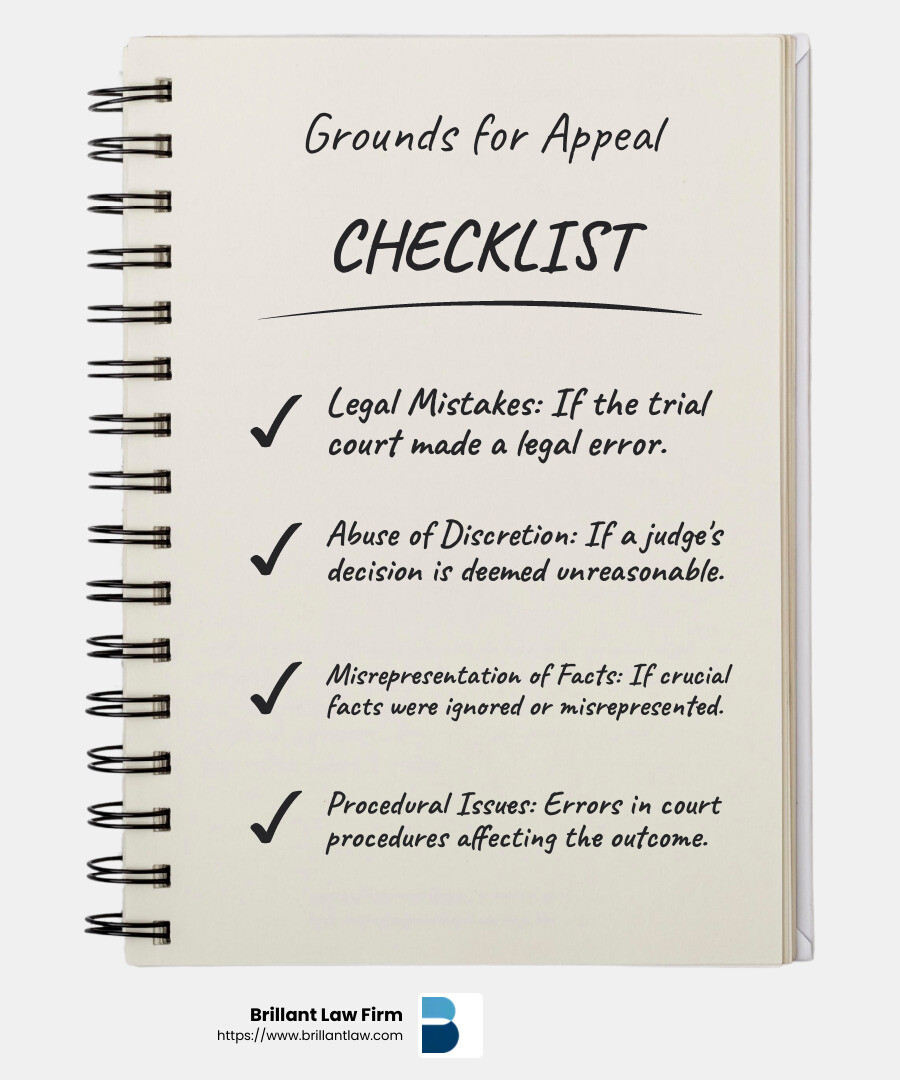
Grounds for Appeal
Legal Mistakes: If the trial court made an error in applying or interpreting the law, this could be grounds for an appeal. For example, if a judge misinterpreted a statute or ignored legal precedent, an appellate court might reverse the decision.
Abuse of Discretion: Sometimes, judges have the authority to make discretionary decisions. However, if a judge’s decision is deemed unreasonable or arbitrary, it could be considered an abuse of discretion. For instance, awarding sole custody without sufficient evidence to support that decision might be appealable.
Misrepresentation of Facts: If crucial facts were misrepresented or ignored, this might be grounds for an appeal. This includes situations where evidence was improperly admitted or excluded, affecting the case’s outcome.
Procedural Issues: Errors in the court’s procedures can also be grounds for an appeal. This could include failing to notify a party of a hearing or not allowing sufficient time to present a case.
Final Orders
Appeals generally apply to final orders—decisions that conclude the court’s ruling on a particular issue. Examples include:
- Divorce Decrees
- Child Custody Orders
- Spousal Support Decisions
- Property Division
Interlocutory orders, or temporary orders made during the trial process, are typically not appealable until the final order is issued.
Deadlines
Time is of the essence when filing an appeal. In Colorado, for example, you must file a notice of appeal within 49 days of the final order’s issuance. Missing this deadline usually means losing the right to appeal.
Legal Mistakes and Deadlines
An example from the research highlights the importance of meeting deadlines. In a case against Home Depot, a lawyer missed a crucial email notification, leading to the dismissal of the case. This underscores the importance of diligence and attention to procedural deadlines in the appeals process.
Consulting an Appellate Attorney
Given the complexity and strict requirements of the appeals process, consulting with a family law appellate attorney near me is crucial. They can help identify valid grounds for appeal, ensure all procedural requirements are met, and increase your chances of a successful outcome.
Next, let’s explore How to Choose the Right Family Law Appellate Attorney Near Me for tips on selecting the best legal representation for your appeal.
Choosing the right family law appellate attorney can make a huge difference in your case. Here’s what to look for:
Experience
Family law appeals are complex. You need an attorney with significant experience in appellate practice. Look for someone who has handled cases similar to yours. For instance, attorneys at Brillant Law Firm have extensive experience in family law appeals and are highly respected in their field.
Reputation
Reputation matters. Check reviews, testimonials, and peer endorsements. An attorney with a solid reputation, like those at Brillant Law Firm, who have substantial experience in both trial and appellate courts, is a good example of someone you can trust.
Consultation
A consultation is your chance to gauge if the attorney is the right fit for you. They should be able to explain the appeals process clearly and discuss potential outcomes. At Brillant Law Firm, initial consultations are free, giving you an opportunity to understand how they can assist you.
Case Studies and Success Stories
Look for attorneys who can share case studies or success stories. This shows their ability to handle complex cases effectively. Attorneys at Brillant Law Firm focus exclusively on civil appeals and have a track record of handling all aspects of the process, from post-trial motions to petitions in the higher courts.
Attention to Detail
Appeals courts follow strict rules and deadlines. An attorney who is meticulous and detail-oriented can identify legal irregularities that may underlie your case. The attorneys at Brillant Law Firm emphasize thoroughness and determination in handling legal disputes, which can be crucial for a successful appeal.
Compassionate Representation
Family law cases are deeply personal. Choose an attorney who is not only skilled but also compassionate. At Brillant Law Firm, the attorneys take time to learn the details about a client’s case and provide compassionate representation.
Local Expertise
Having an attorney with local expertise can be beneficial. They will be familiar with the specific rules and judges in your jurisdiction. Attorneys at Brillant Law Firm have experience in local courts, which can be a significant advantage.
Next, let’s dive into the Steps in the Family Law Appeals Process to understand what happens after you’ve chosen your attorney.
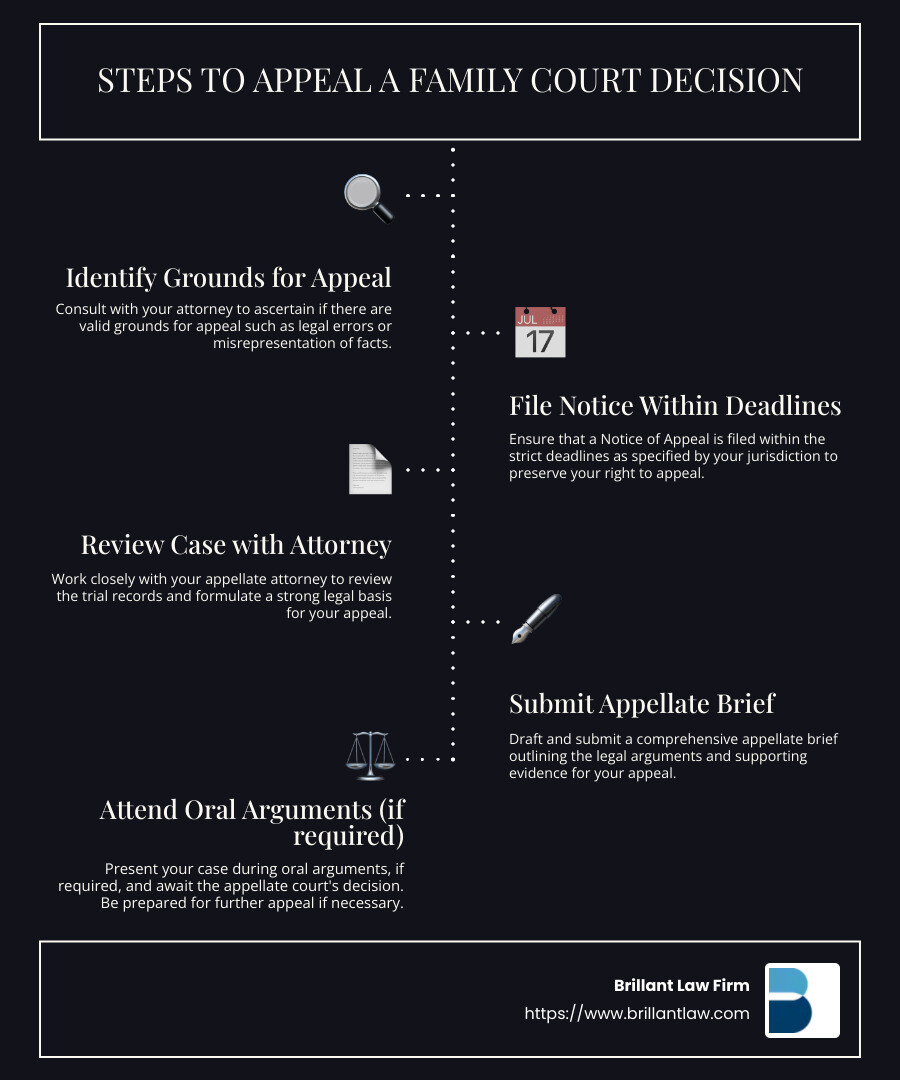
Steps in the Family Law Appeals Process
Navigating the family law appeals process can be challenging. Here’s a simplified guide to help you understand each step.
Filing Notice of Appeal
The first step is to file a Notice of Appeal. This document tells the court and the other party that you are appealing the decision.
Important: You must file this notice within 49 days of the court’s final order. Missing this deadline can jeopardize your appeal.
Reviewing the Case
Once the notice is filed, your attorney will review the entire case. This includes examining court transcripts, evidence, and any legal documents from the previous trial.
Why it matters: This review helps identify any legal errors or procedural issues that could be grounds for an appeal.
Establishing a Legal Basis
Simply being unhappy with the decision is not enough. Your attorney must find a legal basis for the appeal. This could involve:
- Abuse of discretion: When the judge makes a decision that is unreasonable or arbitrary.
- Legal errors: Incorrect application or interpretation of the law.
- Misrepresentation of facts: Incorrect facts that influenced the outcome.
Meeting Deadlines
The appeals process is time-sensitive. Apart from filing the Notice of Appeal, there are other critical deadlines:
- Briefs: Your attorney must submit written arguments (briefs) explaining why the original decision was wrong.
- Reply Briefs: The other party will respond with their arguments, and you may need to reply to these as well.
Tip: Attorneys like those at Brillant Law Firm ensure all filings are timely and well-prepared, which is crucial for a successful appeal.
Oral Arguments
In some cases, the appellate court may schedule oral arguments. This is where attorneys present their case in person and answer questions from the judges.
Note: Not all appeals require oral arguments, but when they do, it’s an opportunity to clarify points and emphasize key arguments.
The Decision
After reviewing all briefs and hearing oral arguments, the appellate court will make a decision. They can:
- Affirm: Agree with the lower court’s decision.
- Reverse: Overturn the lower court’s decision.
- Remand: Send the case back to the lower court for further proceedings.
Example: In the case of Kevin Rollins vs. Home Depot, the failure to respond to a motion due to an email error led to the dismissal of the case. This highlights the importance of diligence and attention to detail in the appeals process.
Understanding these steps can help you feel more confident as you steer your appeal.
Next, let’s look at the Common Grounds for Family Law Appeals to see what specific issues might support your case.
Common Grounds for Family Law Appeals
Not all family law decisions can be appealed. To successfully appeal, you need solid grounds. Here are some common reasons why family law cases get appealed.
Abuse of Discretion
Definition: Abuse of discretion occurs when a judge makes a decision that is arbitrary, unreasonable, or not based on the evidence.
Example: Imagine a judge awards sole custody to one parent without considering the other parent’s evidence of being a fit and involved parent. This could be seen as an abuse of discretion.
Why it matters: If your attorney can show that the judge’s decision was outside the bounds of reasonable judgment, you may have grounds for an appeal.
Legal Errors
Definition: Legal errors happen when the judge incorrectly applies or interprets the law.
Example: A legal error could involve a judge misinterpreting child support guidelines, leading to an incorrect support amount.
Why it matters: Legal errors can significantly affect the outcome of your case. If identified, they can provide a strong basis for an appeal.
Misrepresentation of Facts
Definition: Misrepresentation of facts involves incorrect or misleading information that influences the court’s decision.
Example: Suppose one parent falsely claims that the other parent has a history of substance abuse, and the court bases its custody decision on this false information. This misrepresentation could be grounds for an appeal.
Why it matters: Correcting these misrepresented facts can be crucial for ensuring a fair outcome in your case.
Procedural Issues
Definition: Procedural issues occur when the court fails to follow the correct legal procedures.
Example: If a judge allows evidence that should have been excluded, or if a party wasn’t given proper notice of a hearing, these procedural missteps could affect the case’s outcome.
Why it matters: Ensuring that all legal procedures are followed is essential for a fair trial. Any deviation can be a valid reason for an appeal.
Tip: Work with a family law appellate attorney near me to identify these grounds. Attorneys like those at Brillant Law Firm are experienced in spotting such issues and can help build a strong case for your appeal.
Understanding these common grounds can help you and your attorney determine if an appeal is warranted. Next, let’s address some Frequently Asked Questions about Family Law Appeals to further clarify the process.
Frequently Asked Questions about Family Law Appeals
How do I appeal child support in Colorado?
Appealing a child support decision in Colorado involves several important steps:
File a Notice of Appeal: This must be done within 49 days of the final order. Missing this strict deadline means you lose the right to appeal.
Prepare an Income and Expense Affidavit: This document details your financial situation and is crucial for the appeal. Make sure to include all supporting documents, such as pay stubs, tax returns, and any other relevant financial records.
Submit to the County Child Support Office: The affidavit and supporting documents should be submitted to the county child support office handling your case.
Consult an Attorney: A family law appellate attorney can help ensure that all documents are correctly prepared and submitted, increasing the chances of a successful appeal.
Can you appeal a family court ruling in Florida?
Yes, you can appeal a family court ruling in Florida, but there are specific steps and deadlines:
File a Notice of Appeal: This must be done within 30 days of the final judgment. Extensions of time are rarely granted, so it’s crucial to act quickly.
Prepare the Record on Appeal: This includes transcripts, evidence, and any other documents presented in the original case. Your attorney will help compile this record.
Submit Briefs: Both parties will submit written arguments (briefs) to the appellate court. These documents explain why the original decision should be upheld or overturned.
Oral Arguments: In some cases, the court may schedule oral arguments where attorneys present their cases in person.
How long do I have to appeal an order issued by a court?
The deadlines for filing an appeal are strict and vary by state:
Colorado: You have 49 days from the date the final order is issued to file a Notice of Appeal. If you miss this deadline, you lose the right to appeal.
Florida: You must file a Notice of Appeal within 30 days of the final judgment.
Tip: Always consult with a family law appellate attorney near me to ensure you meet these deadlines. Missing them can result in the court’s ruling standing without any opportunity for review.
Understanding these FAQs can help you steer the complex process of appealing a family law decision. For more personalized guidance, contact a skilled appellate attorney who can provide expert advice custom to your specific situation.
Conclusion
At Brillant Law Firm, we understand that navigating the appeals process in family law can be both complex and emotionally taxing. With our unparalleled expertise and unwavering dedication, we are committed to providing you with the best possible legal representation.
Our team of skilled appellate attorneys has experience in handling family law appeals. We specialize in identifying legal errors, procedural issues, and misrepresentations of fact that could be grounds for a successful appeal. Our meticulous approach ensures that every aspect of your case is reviewed and presented in the most compelling manner.
Why Choose Brillant Law Firm?
Expert Representation: Our attorneys are well-versed in the intricacies of appellate law and have a proven track record of successful outcomes. We are former appellate clerks who have worked closely with judges and have a deep understanding of the appellate process.
Bespoke Strategies: We tailor our legal strategies to meet the unique needs of each client. Our goal is to ensure that you receive the best possible outcome for your case.
Commitment to Excellence: We pride ourselves on our dedication to excellence and our commitment to keeping you informed at every step of the process.
If you believe that a legal error or procedural mistake has affected the outcome of your family law case, you deserve a second chance. Contact us to discuss your situation and explore your options for appeal.
For more information on how we can help you steer the appeals process, visit our Appeals Attorney page and schedule a consultation today.
At Brillant Law Firm, we are your partners in achieving justice and securing a better future for you and your family.


