

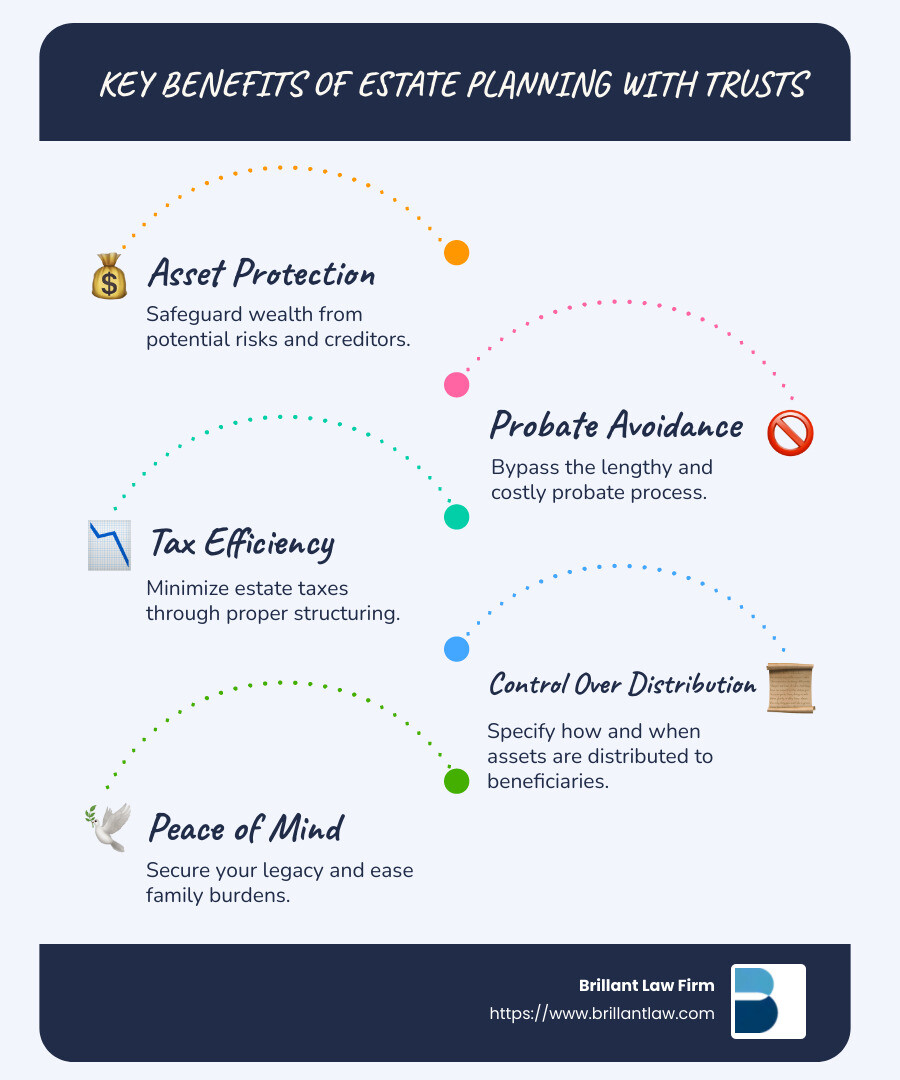
Estate planning with trusts is a strategic way to manage and distribute your assets, ensuring financial stability and peace of mind for you and your loved ones. Simply put, it involves setting up a legal framework to control how your assets are handled, both during your lifetime and after you’re gone. Key benefits include:
- Asset Protection: Trusts safeguard your wealth from potential risks and creditors.
- Probate Avoidance: Trusts can help bypass the lengthy and costly probate process.
- Tax Efficiency: Proper structuring can minimize estate taxes legally.
- Control Over Distribution: Trusts allow you to specify how and when your assets are distributed to beneficiaries.
Why consider estate planning with trusts?
- Protect Your Wealth and ensure it’s preserved for heirs.
- Ease Family Burdens by eliminating uncertainties about how assets should be handled.
- Secure Your Legacy by setting terms on asset distribution.
As the sole practitioner of my Walnut Creek office, I, David Brillant, have experience in Estate planning with trusts. With expertise as a Certified Specialist in Estate Planning, Trust and Probate Law, I bring a nuanced approach to each client’s unique situation.
Important Estate planning with trusts terms:
– California trusts and estates
– what is an estate plan
– estate plan checklist
Understanding Trusts in Estate Planning
When it comes to estate planning with trusts, understanding the fundamental components is crucial. Trusts are powerful tools that serve as fiduciary arrangements, providing a structured way to manage and distribute your assets. Let’s break down some key aspects:
Fiduciary Arrangement
A trust involves a fiduciary relationship where a trustee is appointed to manage assets for the benefit of beneficiaries. This setup ensures that your estate is handled according to your wishes. The trustee is bound by a legal duty to act in the best interests of the beneficiaries, maintaining integrity and impartiality throughout the process.
“The trustee’s independence is critical. They must act without undue influence from beneficiaries or outside parties.”
Asset Protection
One of the primary benefits of using a trust in your estate plan is asset protection. Trusts can shield your assets from creditors and legal claims, ensuring that your wealth is preserved for future generations. This protection is crucial for individuals looking to safeguard their estate from unforeseen liabilities.
Probate Avoidance
Probate can be a lengthy and costly process, often causing delays in asset distribution. Trusts offer a way to bypass probate, allowing beneficiaries to receive their inheritance without the hassle of court proceedings. This not only saves time but also maintains privacy, as probate records are public.
Did you know? Trusts can help beneficiaries receive assets sooner by avoiding probate.
In summary, trusts are versatile instruments in estate planning. They offer a fiduciary framework that ensures your assets are managed and distributed as intended, while also providing asset protection and probate avoidance. By incorporating trusts into your estate plan, you can achieve peace of mind, knowing your legacy is secure.

Next, we’ll explore the different types of trusts available for estate planning and how they can be custom to meet your unique needs.
Types of Trusts for Estate Planning
When it comes to estate planning with trusts, choosing the right type is key. Each trust type serves different needs, so let’s explore the options available:
Revocable Trusts
Revocable trusts, often called living trusts, are flexible. You can change or dissolve them at any time during your lifetime. They are ideal for those who want control and flexibility. However, assets in a revocable trust are still considered part of your estate for tax purposes.
Tip: Revocable trusts are great for avoiding probate, but they won’t protect your assets from creditors.
Irrevocable Trusts
Once set, irrevocable trusts cannot be changed without the beneficiary’s consent. This rigidity can be beneficial for tax planning, as assets in an irrevocable trust are not included in your estate’s taxable value. They offer solid asset protection, making them a good choice for those seeking to minimize estate taxes and protect assets from creditors.
Living Trusts
A living trust is created while you’re alive and allows for seamless asset management. It’s a type of revocable trust that ensures your assets are managed according to your wishes if you become incapacitated. Upon your death, the trust becomes irrevocable, and assets are distributed to beneficiaries without going through probate.
Did you know? A living trust can help manage your affairs if you’re unable to do so due to illness or injury.
Testamentary Trusts
Testamentary trusts are established through a will and only come into effect after your death. These trusts are useful for managing assets for minor children or dependents. However, they do not avoid probate, as they are subject to the terms of your will.
Joint Trusts
Joint trusts are designed for married couples. They combine both partners’ assets into a single trust, simplifying management and distribution. This type of trust can be either revocable or irrevocable and is particularly useful for couples with shared estate planning goals.
In conclusion, the type of trust you choose depends on your specific needs and goals. Whether you seek flexibility, asset protection, or a combination of both, there’s a trust that can meet your requirements.
Next, we’ll dig into the benefits of using trusts in estate planning, including privacy, tax advantages, and more.
Benefits of Using Trusts in Estate Planning
When it comes to estate planning with trusts, the benefits are substantial. Let’s break down some key advantages:
Privacy
One of the standout benefits of using trusts is privacy. Unlike a will, which becomes a public document once it enters probate, a trust is a private arrangement. This means the details of your assets and who receives them remain confidential. For many, this privacy is a significant reason to opt for a trust.
Example: Imagine you own a business in Walnut Creek, CA, and you want to pass it on to your children without public scrutiny. A trust can help you do just that.
Tax Benefits
Trusts can offer notable tax advantages. For instance, placing assets in an irrevocable trust can help reduce estate taxes. This is because assets in such trusts are not considered part of your taxable estate. Additionally, certain trusts can help manage gift taxes and even income taxes, depending on how they’re structured.
Fact: A well-structured trust can significantly lower the estate taxes your heirs might have to pay, preserving more of your wealth for future generations.
Wealth Control
Trusts provide a level of control over how and when your assets are distributed. You can set specific conditions for distribution, such as age milestones or life events like graduating college. This ensures your wealth is used in a way that aligns with your values and intentions.
Quote: “Trusts allow you to extend your influence beyond your lifetime, ensuring your legacy is preserved as you see fit.”
Probate Savings
Avoiding probate is another significant benefit. Probate can be a lengthy and costly process, often taking months or even years to resolve. By using a trust, you can bypass probate entirely, allowing your beneficiaries to receive their inheritance more quickly and without additional legal fees.
Did you know? In California, probate fees can quickly add up, often exceeding 4% of the estate’s total value. Trusts help eliminate these costs, saving your loved ones both time and money.
In summary, trusts are a powerful tool in estate planning, offering privacy, tax benefits, wealth control, and probate savings. Next, we’ll explore common mistakes people make when setting up trusts and how to avoid them.
Common Mistakes and How to Avoid Them
Setting up a trust is a smart move for anyone thinking about estate planning. But there are some common pitfalls that can trip you up. Let’s look at a few mistakes and how you can steer clear of them.
Unqualified Trustee
Choosing the right trustee is crucial. The trustee manages the trust and ensures your wishes are followed. Picking an unqualified person can lead to mismanagement and even legal disputes.
How to Avoid: Select someone reliable and trustworthy. They should have a good understanding of financial matters and be able to act without bias. Consider a professional trustee if you’re unsure.
Tip: A good trustee is like a good captain—they steer the ship smoothly and keep it on course.
Lack of Asset Protection
One of the main reasons for setting up a trust is asset protection. However, if not properly structured, your assets may still be vulnerable to creditors or legal claims.
How to Avoid: Work with an experienced estate planning attorney in California to ensure your trust is set up correctly. They can help you choose the right type of trust, like an irrevocable trust, to shield your assets effectively.
Fact: Properly structured trusts can protect your assets from creditors and legal claims, preserving your wealth for your beneficiaries.
Improper Funding
A trust is only as good as the assets it holds. Failing to transfer assets into the trust means it won’t serve its purpose.
How to Avoid: Make sure all intended assets are properly retitled in the name of the trust. This includes real estate, bank accounts, and investments. Regularly review and update your trust to include any new assets.
Example: Imagine setting up a trust but forgetting to transfer your Walnut Creek property into it. The property would not be protected by the trust, defeating the purpose.
By avoiding these common mistakes, you can ensure your trust works as intended, providing security and peace of mind for you and your loved ones. Next, we’ll tackle some frequently asked questions about estate planning with trusts.
Frequently Asked Questions about Estate Planning with Trusts
Estate planning with trusts can seem complex, but understanding the basics can make a big difference. Here are some common questions and answers to help you steer the process.
What type of trust is best for estate planning?
Choosing the right trust depends on your goals. Revocable trusts are flexible. They allow you to make changes as your life situation evolves. This is great if you want control over your assets while you’re alive. However, they don’t offer asset protection from creditors.
On the other hand, irrevocable trusts provide strong asset protection. Once set up, you generally can’t change them. This makes them ideal for shielding assets from creditors and reducing estate taxes.
Asset protection trusts are specifically designed to guard your assets from lawsuits or creditors. They can be a smart choice if you’re concerned about potential financial risks.
Fact: In California, revocable trusts become irrevocable upon the grantor’s death, offering both flexibility and eventual asset protection.
Why do people use trusts for estate planning?
Trusts are popular for several reasons:
Probate Avoidance: Trusts can bypass probate, allowing beneficiaries to receive assets faster and privately. Probate can be lengthy and public, so many prefer trusts to keep matters confidential.
Asset Management: Trusts let you specify how and when your assets are distributed. This is helpful if you have young children or dependents with special needs.
Tax Benefits: Certain trusts can minimize estate taxes, preserving more wealth for your beneficiaries.
Example: A family in Castle Hill used a trust to ensure their children received their inheritance without going through probate, saving time and maintaining privacy.
Which may be considered a disadvantage of using a trust for estate planning?
While trusts offer many benefits, they also have some downsides:
Initial Cost: Setting up a trust can be expensive. Legal fees and administrative costs add up, especially if you hire professionals to manage the trust.
Upfront Information: Creating a trust requires detailed information about your assets and beneficiaries. This can be time-consuming and may feel overwhelming.
Complexity: Trusts can be complex legal documents. Understanding all the terms and conditions is crucial, but it might require professional guidance.
Tip: Weigh the costs and benefits of a trust with a California estate planning attorney to see if it’s the right choice for you.
By understanding these aspects of estate planning with trusts, you’re better equipped to make informed decisions about your financial future.
Conclusion
When it comes to estate planning with trusts, choosing the right partner is crucial. At Brillant Law Firm, we specialize in crafting bespoke strategies custom specifically for our clients in California. Our expertise in trusts, estates, and taxation allows us to provide solutions that align perfectly with your unique needs and goals.
Estate planning is not just about managing assets; it’s about ensuring your legacy is preserved and your loved ones are protected. Our team of dedicated professionals is committed to excellence, offering unparalleled expertise and unwavering dedication to every client.
By working with us, you gain access to a wealth of knowledge and experience. Whether you’re looking to set up a revocable trust for flexibility or an irrevocable trust for asset protection, we are here to guide you through the complexities of estate planning. Our bespoke strategies ensure that your estate plan is both effective and efficient, minimizing taxes and avoiding probate where possible.
Located in California, Brillant Law Firm is ready to assist you with all your estate planning needs. We understand the nuances of California law and are equipped to help you steer the legal landscape with confidence.
Explore how our estate and trust attorneys can help you build a robust estate plan. Together, we can create a plan that reflects your wishes and secures your family’s future.
Choosing the right law firm can make all the difference. Let us be your trusted partner in estate planning, offering you peace of mind and a clear path forward.


