

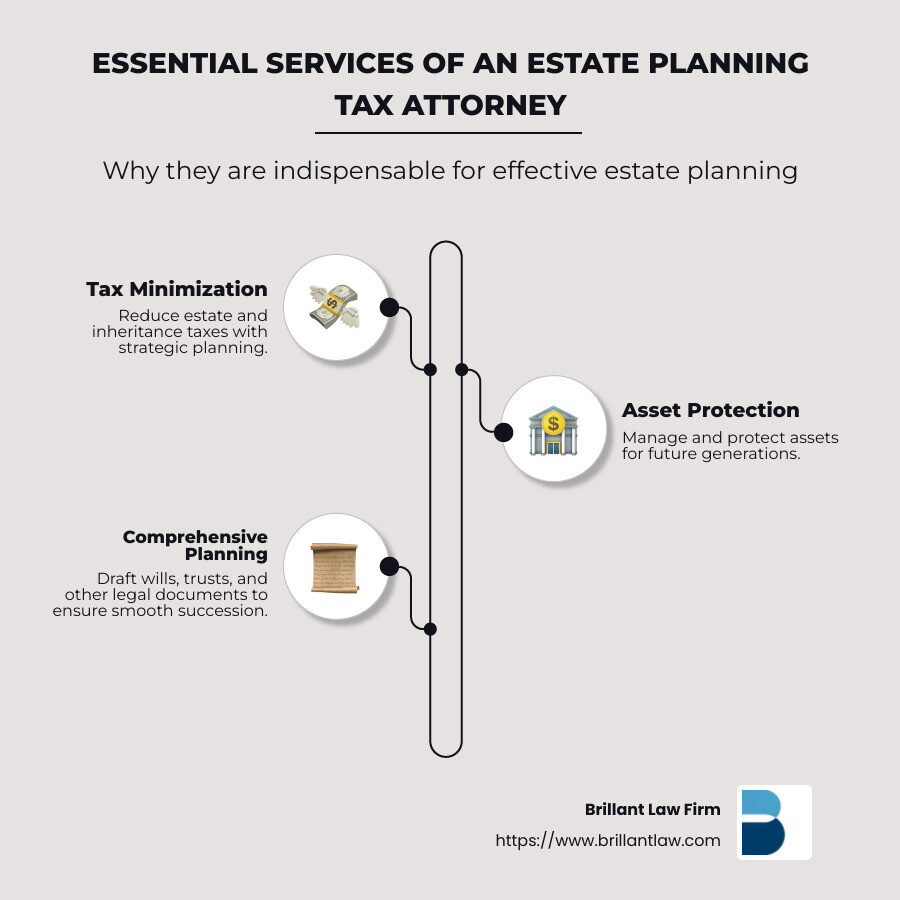
When considering how to safeguard and transfer your wealth, enlisting the help of an estate planning tax attorney could be one of the most prudent decisions you make. Whether you’re concerned about minimizing taxes on your estate or ensuring the smooth succession of your business, these specialized attorneys play a crucial role. Here’s a quick overview of why they’re indispensable:
- Tax Minimization: They help reduce estate and inheritance taxes.
- Comprehensive Planning: Drafting of wills, trusts, and other necessary legal documents.
- Asset Protection: Efficiently manage and protect assets for future generations.
- Peace of Mind: Ensures your wishes are honored without leaving room for family disputes.
Estate planning is more than just creating a will—it’s about securing your legacy and providing for your loved ones. Neglect in this area can lead to significant legal challenges and tax burdens upon your passing, highlighting the importance of professional guidance.
I am David Brillant, a seasoned estate planning tax attorney with a wealth of experience in navigating complex legal landscapes. My background as a Certified Specialist by the State Bar of California equips me to handle both transactional and litigation issues, enhancing estate planning with strategic tax solutions.
Key Estate planning tax attorney vocabulary:
– Advanced tax planning techniques
– attorneys wills
– what is estate planning
Understanding Estate Planning
Estate planning is not just for the ultra-wealthy; it’s a crucial step for anyone wishing to manage their assets and provide for loved ones after their passing. Let’s break down the estate planning process, its goals, and the essential legal documents involved.
The Estate Planning Process
The estate planning process involves several key steps to ensure your assets are distributed according to your wishes. Here’s a simplified overview:
List Your Assets and Debts: Start by cataloging all your assets, including real estate, vehicles, stocks, and personal items, as well as any debts you owe.
Define Your Goals: Determine what you want to achieve with your estate plan. This might include providing for a surviving spouse, funding education for children or grandchildren, or leaving a legacy for a charitable cause.
Draft a Will: A will is a legal document that outlines your wishes regarding the distribution of your assets and the care of any minor children.
Set Up Trusts: Trusts can help manage your assets during your lifetime and after your death, potentially reducing estate taxes and avoiding probate.
Designate Beneficiaries: Clearly name who will receive your assets, including life insurance policies and retirement accounts.
Establish Powers of Attorney: Assign someone to make financial and healthcare decisions on your behalf if you become incapacitated.
Review and Update Regularly: Life changes such as marriage, divorce, or the birth of a child can impact your estate plan. Regular updates ensure it remains relevant.
Goals of Estate Planning
The primary goal of estate planning is to ensure that your assets are distributed according to your wishes with minimal legal problems and tax burdens. Here are some specific objectives:
- Preserve Family Wealth: Protect your assets from unnecessary taxes and legal fees.
- Provide for Loved Ones: Ensure your family is financially secure after your passing.
- Avoid Probate: Streamline the transfer of assets to avoid lengthy and costly court processes.
- Plan for Incapacity: Make arrangements for your care and financial affairs if you’re unable to make decisions.
Essential Legal Documents
Estate planning involves several legal documents, each serving a unique purpose:
- Will: Specifies how your assets should be distributed and can name guardians for minor children.
- Trusts: Can provide tax benefits and avoid probate. Common types include revocable living trusts and irrevocable trusts.
- Durable Power of Attorney: Authorizes someone to manage your financial affairs if you become incapacitated.
- Healthcare Directive: Outlines your wishes for medical treatment if you’re unable to communicate.
- Beneficiary Designations: Ensure accounts like life insurance and retirement plans are directed to the right people.

Estate planning is a comprehensive process that requires careful consideration and expert guidance. By understanding the steps involved and the goals you wish to achieve, you can create a plan that honors your legacy and provides for those you care about most.
In the next section, we will explore the critical role that an estate planning tax attorney plays in minimizing taxes and effectively managing your assets.
The Role of an Estate Planning Tax Attorney
An estate planning tax attorney plays a pivotal role in ensuring your estate plan is both effective and efficient. Let’s unpack how they assist with tax minimization, asset management, and inheritance planning.
Tax Minimization
One of the primary goals of estate planning is to minimize taxes, allowing more of your wealth to be passed on to your beneficiaries. An estate planning tax attorney brings specialized knowledge to the table, helping you steer complex tax laws and identify strategies to reduce tax liabilities.
For instance, they might recommend setting up trusts, such as a Charitable Remainder Trust, which can offer significant tax benefits while supporting your charitable goals. According to an article in California Tax Lawyer, understanding potential clawbacks and tax law changes is crucial for effective planning.
Asset Management
Proper asset management is vital for maintaining the value of your estate. An estate planning tax attorney can help you structure your assets in a way that protects them from creditors and lawsuits, as well as ensure they are managed according to your wishes.
For example, the Goralka Law Firm successfully implemented asset protection plans for clients, safeguarding personal assets from claims. This kind of strategic planning is essential in preserving family wealth for future generations.
Inheritance Planning
Inheritance planning involves more than just deciding who gets what. It’s about ensuring that your heirs receive their inheritance in the most beneficial way. This might mean setting up trusts for minor children or creating a Limited Liability Company (LLC) to manage assets for heirs who may not be ready to handle them responsibly.
A key case study from the research highlights how setting conditions on asset distribution can protect heirs from their own financial mismanagement. By working with an estate planning tax attorney, you can tailor your inheritance plan to fit the unique needs of your family.

Estate planning is a complex field, but with the right attorney by your side, you can ensure that your plan is both comprehensive and custom to your specific needs. In the next section, we’ll explore how to choose the right estate planning tax attorney to guide you through this intricate process.
How to Choose the Right Estate Planning Tax Attorney
Choosing the right estate planning tax attorney can make a significant difference in how effectively your estate is managed and protected. Here’s how to find the best fit for your needs.
Experience
Experience is crucial when selecting an attorney. Look for someone who has been practicing estate planning for many years. They should have a track record of handling complex estates and navigating the intricacies of California tax laws. An experienced attorney will have faced challenges and learned how to overcome them, ensuring your estate plan is robust and compliant.
Certifications
Certifications can be a good indicator of an attorney’s expertise. In California, look for attorneys who are certified specialists in Estate Planning, Trust, and Probate Law by the State Bar of California Board of Specialization. This certification demonstrates that the attorney has met rigorous standards and is committed to staying updated on the latest legal developments.
Tip: Ask potential attorneys about their certifications and what continuing education they pursue to keep their knowledge current.
Client Reviews
Client reviews provide insight into an attorney’s reputation and the quality of their service. Look for reviews that mention the attorney’s communication skills, professionalism, and ability to deliver results. Positive testimonials from satisfied clients can give you confidence in your choice.
Quote from a satisfied client: “Our attorney guided us through the estate planning process with clarity and patience, ensuring all our concerns were addressed.”
Cost
Understanding the cost structure is essential. In California, estate planning attorneys may charge between $300 and $600 per hour, depending on their experience and the complexity of your case. Some may offer flat fees for specific services like drafting a trust, while others might charge hourly for more detailed work.
Advice: Discuss fees upfront and ask for an estimate of the total cost to avoid surprises later on.
By focusing on these key areas—and cost—you can find the right estate planning tax attorney to help secure your family’s financial future.
In the next section, we’ll answer some frequently asked questions about estate planning tax attorneys, including how much you can expect to pay and the potential disadvantages of estate planning.
Frequently Asked Questions about Estate Planning Tax Attorneys
How much does an estate lawyer cost?
In California, the cost of hiring an estate planning tax attorney can vary widely. Expect to pay between $300 and $600 per hour. The price often depends on the attorney’s experience, the complexity of your estate, and the specific services you need. Some attorneys might offer flat fees for standard services like drafting a will or trust, while others charge hourly for more complex tasks. Always discuss costs upfront to avoid surprises.
Factors influencing cost:
- Experience: More experienced attorneys typically charge higher rates.
- Complexity: A complex estate with many assets will require more time and expertise.
- Services: Drafting documents may cost less than ongoing legal advice or litigation.
What are the disadvantages of estate planning?
Estate planning is essential, but it comes with certain challenges:
Cost: Hiring a qualified attorney can be expensive, as mentioned above. However, this investment can save your heirs money in the long run by minimizing taxes and legal fees.
Time: Creating a comprehensive estate plan can be time-consuming. It involves gathering documents, meeting with your attorney, and making important decisions about your assets and heirs.
Complexity: The legal and tax implications of estate planning can be complex. Without expert guidance, you might overlook important details, leading to potential issues for your beneficiaries.
Despite these disadvantages, proper estate planning helps ensure that your assets are distributed according to your wishes, potentially saving your heirs from costly legal battles.
What is an estate tax attorney?
An estate tax attorney specializes in the legal and tax aspects of managing and distributing an estate. Their expertise includes:
Specialization: These attorneys focus on minimizing estate taxes and ensuring legal compliance. They understand complex tax laws and how they apply to your specific situation.
Legal Documents: They draft and review key documents like wills, trusts, and power of attorney forms. This ensures that your estate plan is legally sound and reflects your intentions.
Strategies: Estate tax attorneys develop strategies to protect your assets and reduce tax liabilities. This might include setting up trusts, gifting assets, or using other legal mechanisms to manage your estate efficiently.
Choosing the right estate tax attorney can help you steer these complexities, ensuring your estate plan is both effective and compliant with California law.
In the next section, we will explore how Brillant Law Firm can provide expert estate planning services custom to your needs in California.
Conclusion
At Brillant Law Firm, we understand that estate planning is more than just a legal necessity—it’s a personal journey to secure your legacy. Our team of experienced attorneys is dedicated to providing bespoke estate planning services that are specifically custom to meet the unique needs of our clients in California.
We pride ourselves on our unparalleled expertise in estate planning tax law, ensuring that your assets are managed and distributed according to your wishes while minimizing tax liabilities. Our attorneys are not only skilled in drafting wills and trusts but also adept at navigating the complex tax laws that can impact your estate.
Our commitment to excellence means that we stay at the forefront of legal developments, offering strategies that protect your interests and those of your beneficiaries. Whether you’re looking to establish a simple will or need comprehensive estate planning advice, we are here to guide you every step of the way.
If you’re seeking a legal partner who is fully committed to your success, look no further than Brillant Law Firm. We invite you to explore our estate planning services and find how we can help you create a robust plan that secures your future and provides peace of mind for your loved ones.


