

Estate Planning California is more than a legal necessity; it’s a gateway to securing and preserving your legacy in a state renowned for its complexity and unique regulations. Here’s what you need to know immediately:
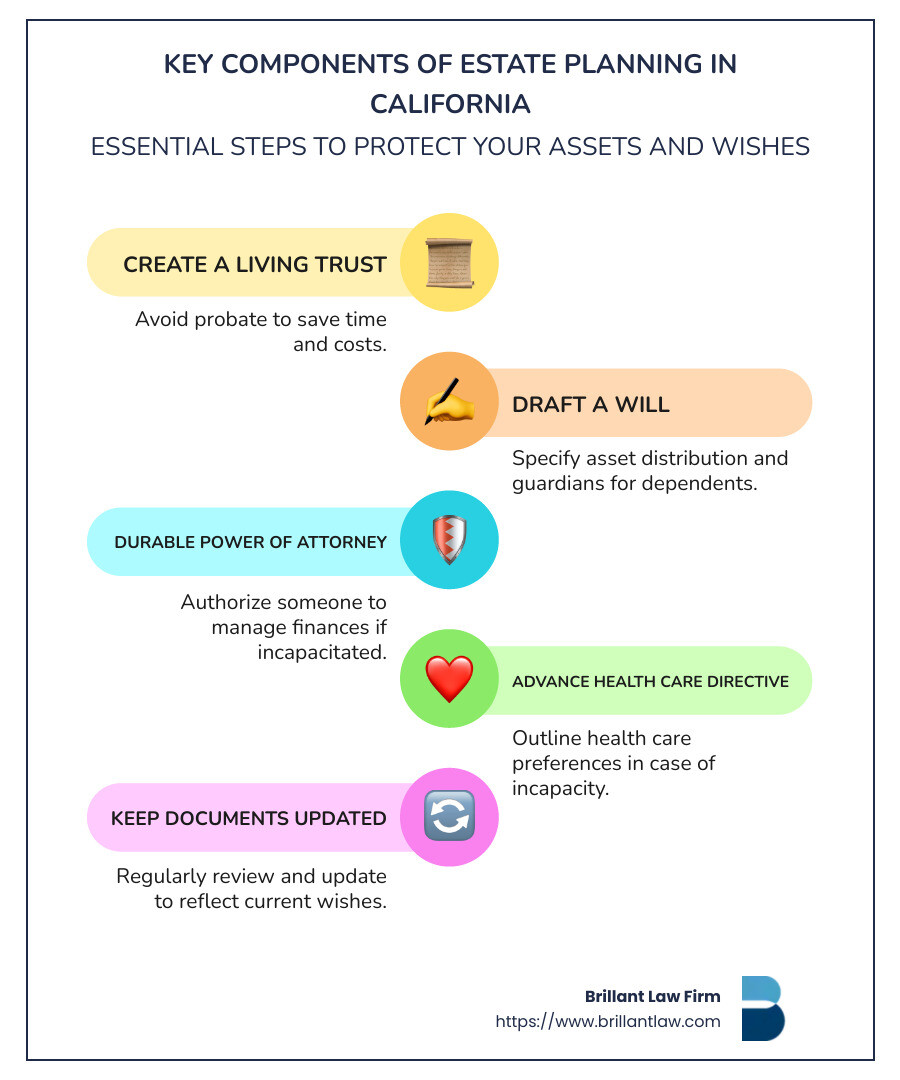
- Create a Living Trust: Avoid probate, which is costly and time-consuming.
- Draft a Will: Essential for dictating the distribution of your property and naming guardians for dependents.
- Authorize a Durable Power of Attorney: Ensure your finances are managed if you cannot.
- Complete an Advance Health Care Directive: Specify your health care preferences in case you’re unable to communicate them.
Navigating the intricacies of Estate Planning California can be daunting, particularly given the state’s distinct laws governing probate and estate taxes. This article provides a comprehensive overview to help you understand the essentials and prepare effectively. If done right, estate planning can protect your assets and ensure your wishes are honored without unnecessary legal problems.
As David Brillant, a seasoned expert in this field with a Masters in Taxation and over two decades of experience handling complex estate planning matters. I offer insights into ensuring your estate plan fulfills your family’s needs in Estate Planning California. In the following sections, I will dive deep into how you can secure your family’s future within California’s legal framework.
Understanding Estate Planning in California
Estate planning in California is not just for the wealthy—it’s for everyone. Whether you have a modest estate or significant assets, it’s crucial to understand the key components of a solid estate plan in the Golden State. Let’s break down the essentials:
Living Trust
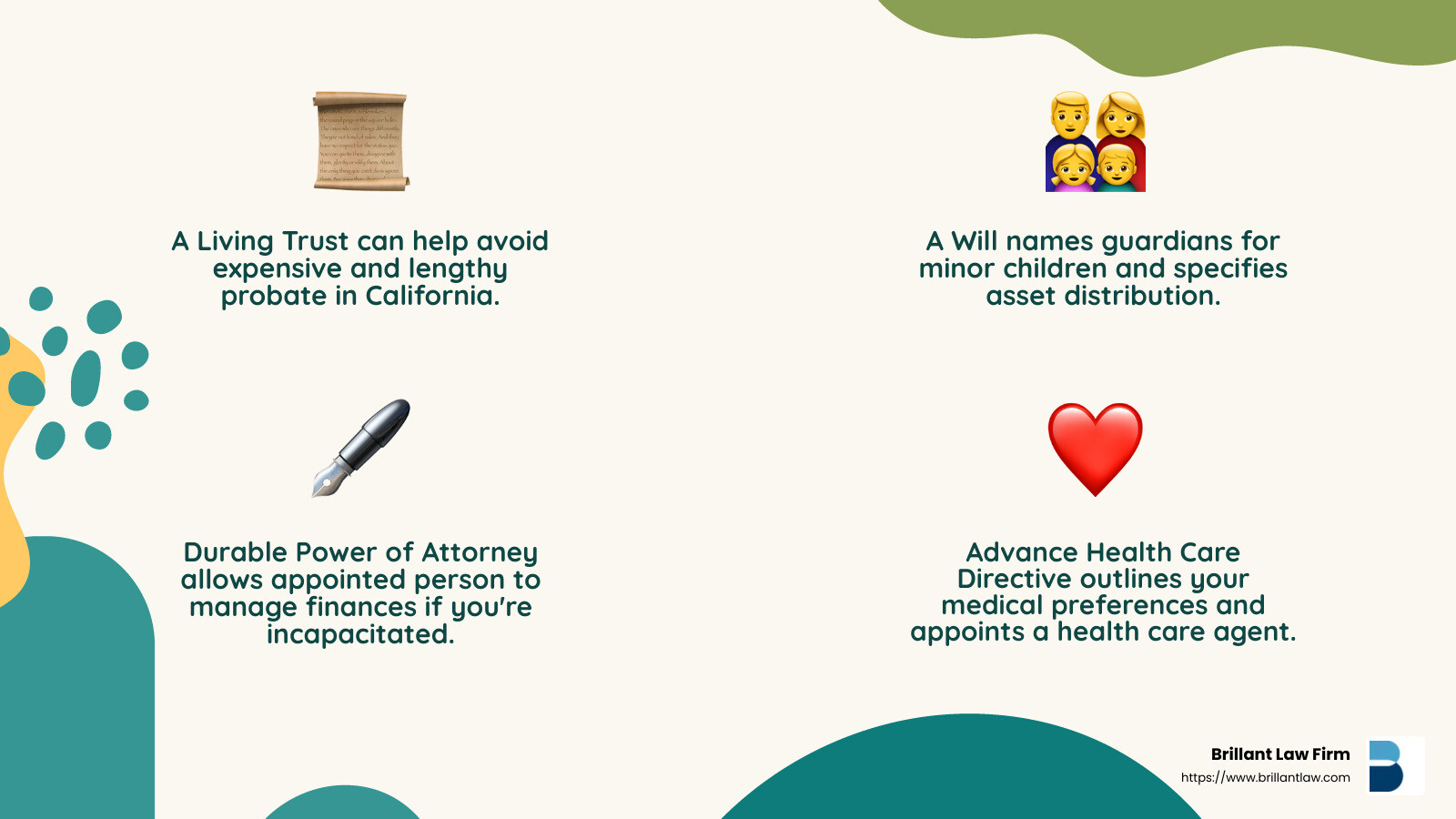
A Living Trust is often the centerpiece of an estate plan in California. Think of it as a legal “box” where you place your assets. This trust allows you to manage your property during your lifetime and specify how it should be distributed after your death. One of the main advantages of a living trust is that it helps avoid probate, which can be long and expensive in California.
- Why Choose a Living Trust? It keeps your estate private and can save your heirs time and money.
- How It Works: You transfer ownership of your assets to the trust, but you can still manage them as the trustee. After your death, a successor trustee takes over to distribute the assets according to your wishes.
Will
A Will is your chance to communicate your wishes regarding your estate and guardianship for any minor children. While a will goes through probate, it is still an essential part of estate planning.
- Key Points:
- Names guardians for minor children.
- Specifies how you want your assets distributed.
- Acts as a backup to a living trust through a “Pour-Over Will,” which transfers any remaining assets into your trust.
Power of Attorney
A Durable Power of Attorney is vital for managing your financial affairs if you become incapacitated. This document allows you to appoint someone you trust to handle financial matters on your behalf.
- Why It’s Important: Without it, your family might face court proceedings to manage your finances.
- Decisions Covered: Paying bills, managing investments, and handling real estate transactions.
Advance Health Care Directive
An Advance Health Care Directive lets you outline your medical preferences if you’re unable to communicate them yourself. It also allows you to appoint a health care agent to make decisions on your behalf.
- What It Includes:
- Your preferences for life-sustaining treatment and pain management.
- The appointment of a health care agent.
- Instructions for organ donation.
Estate Planning California is about more than just avoiding taxes or probate; it’s about making sure your wishes are respected and your loved ones are taken care of. These documents form the backbone of a comprehensive estate plan, ensuring your affairs are in order no matter what happens.
In the next section, we’ll explore the key components of a California estate plan in greater detail, helping you to tailor your estate planning strategy to your unique needs.
Key Components of a California Estate Plan
Creating a robust Estate Planning California strategy involves several key components. Each plays a crucial role in ensuring your wishes are respected and your loved ones are well-cared for. Let’s explore these essential elements:
Living Trust
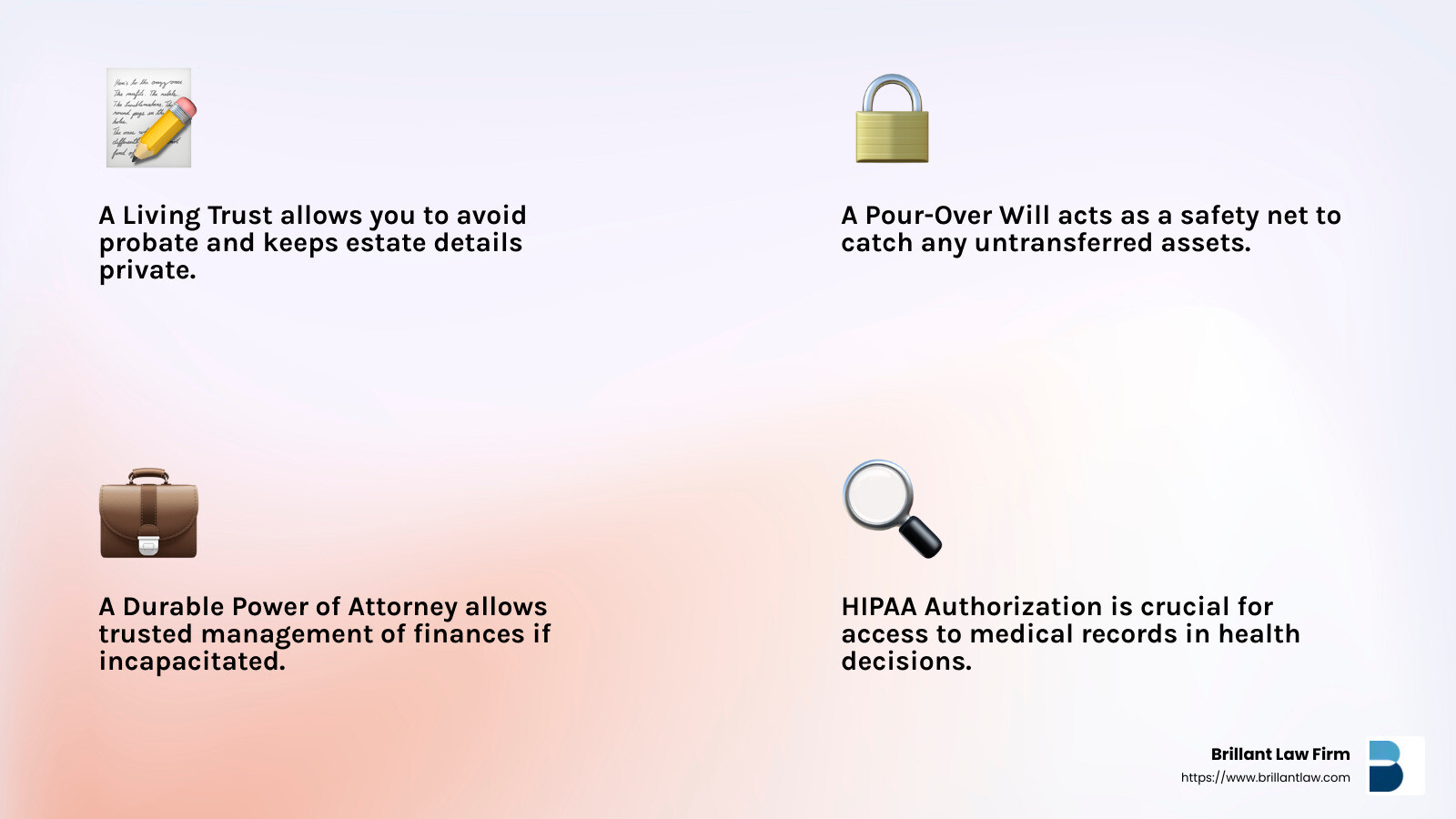
A Living Trust acts as a central hub for managing your assets. It allows you to control your property while you’re alive and specify how it should be distributed after your death. The primary benefit? Avoiding the often costly and time-consuming probate process in California.
- Flexibility: You can modify or revoke it as long as you’re alive and mentally competent.
- Privacy: Unlike a will, a living trust keeps your estate details private.
Pour-Over Will
Even with a living trust, a Pour-Over Will is essential. It acts as a safety net, ensuring any assets not already in your trust at the time of your death are “poured over” into it.
- Why It’s Needed: If you acquire assets or forget to transfer them to your trust, the pour-over will catch them.
- Probate: While it still requires probate, it simplifies the process by consolidating assets into the trust.
Durable Powers of Attorney
A Durable Power of Attorney is crucial for managing your affairs if you become incapacitated. This document allows you to appoint someone you trust to make financial decisions on your behalf.
- Financial Control: Your appointed agent can handle tasks like paying bills, managing investments, and handling real estate.
- Avoids Court: Without it, your family might need to seek court approval to manage your finances.
HIPAA Authorization
A HIPAA Authorization is often overlooked but vital. It grants designated individuals access to your medical records, ensuring they can make informed decisions about your health care.
- Why It’s Important: Without it, even close family members might be denied access to crucial health information.
- Who Needs It: Anyone you trust to make health-related decisions for you.
These components form the backbone of a comprehensive Estate Planning California strategy. By incorporating these elements, you ensure your wishes are clear and legally enforceable, safeguarding your estate and providing peace of mind for you and your loved ones.
Up next, we’ll dig into strategies for avoiding probate in California, helping you streamline the transfer of assets to your heirs.
Avoiding Probate in California
Probate in California can be a costly and lengthy process, but there are effective ways to bypass it. Here’s how you can ensure a smooth asset transfer to your heirs without the hassle of probate:
Living Trust
A Living Trust is one of the most reliable tools for avoiding probate. By placing your assets in a living trust, you can manage them while you’re alive and specify how they should be distributed after your death. This keeps your estate out of the probate court, saving time and money.
- Control and Privacy: You maintain control over your assets and keep details private.
- Immediate Transfer: Assets pass directly to beneficiaries without court interference.
Joint Ownership
Owning property jointly with rights of survivorship is another effective strategy. When one owner passes away, the property automatically transfers to the surviving owner, avoiding probate.
- Types of Joint Ownership: Options include joint tenancy and community property with right of survivorship.
- Ease of Transfer: The surviving owner receives full ownership without probate delays.
Payable-on-Death Accounts
For bank accounts, a Payable-on-Death (POD) Account designation allows you to name a beneficiary who receives the funds directly upon your death.
- Simple Setup: Easily set up with your bank, ensuring a smooth transition.
- No Probate: Funds bypass probate, going straight to the named beneficiary.
Transfer-on-Death Deeds
A Transfer-on-Death (TOD) Deed is available for real estate in California. This allows you to designate a beneficiary who will inherit your property upon your death, without the need for probate.
- Revocable: Change your mind? You can revoke the TOD deed at any time.
- Direct Transfer: The property passes directly to the beneficiary, avoiding probate court.
By incorporating these strategies into your Estate Planning California approach, you can effectively minimize the burden of probate for your loved ones. Each method offers a way to ensure your assets are transferred smoothly and efficiently, providing peace of mind for you and your heirs.
Next, we’ll explore common mistakes in estate planning that you should avoid to protect your legacy.
Estate Planning California: Common Mistakes to Avoid
Estate planning in California is crucial for ensuring your assets are distributed according to your wishes. However, many people overlook key aspects, leading to unnecessary complications. Here are some common mistakes to watch out for:
Intestate Succession
Failing to create a will or trust can result in intestate succession. This means that the state of California decides how your assets are distributed, based on predetermined laws. Intestate succession can lead to outcomes you may not want, such as distant relatives inheriting your estate or your assets being divided in ways that don’t align with your wishes.
- Family Chaos: Without a will, family members may argue about who gets what.
- State Decisions: The state’s formula may not reflect your personal preferences.
Probate Court
Even with a will, your estate may end up in probate court, a process that can be lengthy and expensive. Probate involves court supervision to validate your will and distribute your assets, which can take months or even years.
- Costly and Time-Consuming: Probate fees can eat into your estate’s value, and delays can frustrate heirs.
- Public Record: Probate proceedings are public, meaning anyone can access the details of your estate.
Outdated Documents
Another frequent mistake is not keeping your estate planning documents up to date. Life changes such as marriage, divorce, births, or deaths in the family can affect your estate plan. Failing to update your documents can lead to unintended beneficiaries or outdated instructions.
- Regular Reviews Needed: Review your estate plan annually or after major life events.
- Avoid Surprises: Ensure your plan reflects your current wishes and family situation.
By steering clear of these common pitfalls in your Estate Planning California efforts, you can protect your legacy and provide clear guidance for your loved ones. Proper planning and regular updates ensure that your wishes are honored and your family is spared unnecessary stress.
Next, we’ll address some frequently asked questions about estate planning in California to help you steer this complex process.
Frequently Asked Questions about Estate Planning in California
What is the cost for estate planning in California?
Estate planning costs in California can vary widely based on the complexity of your needs. Attorney fees are a significant part of these costs. Lawyers might charge a flat fee for creating a basic will or living trust. However, more complex plans that involve multiple documents or tax planning strategies may incur higher fees.
- Basic Will or Living Trust: Typically ranges from $300 to $2,000.
- Comprehensive Estate Plan: Can go from $2,000 to $10,000 or more, depending on complexity.
Investing in a well-thought-out estate plan can save your heirs significant money and stress in the long run.
Who needs a trust instead of a will in California?
A living trust can be a valuable tool for many Californians, especially those with substantial assets or specific wishes about how their estate should be managed in case of incapacity.
- Asset Management: A trust provides more control over how and when your assets are distributed.
- Incapacity: If you become incapacitated, a trust allows a trustee to manage your assets without court intervention.
- Avoiding Probate: Trusts bypass the probate process, which can be lengthy and costly.
If you have a complex financial situation or specific wishes about asset management, a trust may be the better choice over a will.
How to avoid probate in California?
Avoiding probate can save your heirs time and money. Here are some strategies to consider:
- Living Trust: As mentioned, a living trust can help your estate avoid probate entirely.
- Joint Ownership: Holding property in joint ownership with rights of survivorship ensures it passes directly to the other owner upon death.
- Payable-on-Death and Transfer-on-Death Accounts: These designations allow certain assets to transfer directly to a beneficiary without going through probate.
By using these tools, you can streamline the transfer of your assets and reduce the burden on your loved ones. For more detailed guidance, consulting with an estate planning attorney can provide custom solutions for your situation.
In the next section, we’ll dig into the bespoke strategies offered by Brillant Law Firm to help you with your estate planning in California.
Conclusion
When it comes to Estate Planning California, the choices you make today can significantly impact your family’s future. At Brillant Law Firm, we specialize in creating bespoke strategies custom to your unique needs and circumstances.
Why Choose Brillant Law Firm?
We pride ourselves on our unparalleled expertise and unwavering dedication to our clients. Our approach is simple: provide clear, concise, and effective estate planning solutions that are easy to understand and implement. We know that every family is different, and that’s why we craft personalized plans that reflect your specific wishes and goals.
Bespoke Strategies
Our team is adept at navigating the complexities of California estate laws. We work closely with you to ensure every detail is addressed, from living trusts and wills to powers of attorney and healthcare directives. Our strategies are designed to protect your assets, avoid probate, and provide peace of mind for you and your loved ones.
California Estate Planning
Estate planning in California can be daunting, but it doesn’t have to be. With Brillant Law Firm by your side, you can rest assured that your estate is in capable hands. We stay up-to-date with the latest legal changes and tax implications, ensuring your plan remains relevant and effective.
In summary, choosing Brillant Law Firm means choosing a partner who is committed to excellence and to safeguarding your legacy. Don’t leave your estate to chance—contact us today to begin crafting a plan that ensures your wishes are honored and your family is protected.


