

Estate and trust law is crucial for managing and distributing your assets efficiently, whether during your lifetime or after you pass away. Here’s a quick look:
- Trusts: Legal arrangements where a trustee manages assets for beneficiaries.
- Estates: Everything you own at the time of death.
- Asset Distribution: Strategies to ensure your wealth goes where you want.
Through estate and trust law, you can protect your wealth, minimize taxes, and ensure your wishes are respected.
As David Brillant, a certified specialist in estate and trust law with over two decades of experience, my mission is to guide clients through the complexities of asset protection and distribution in California. Up next, we’ll explore the fascinating world of estate management and legal structures to safeguard your legacy.
Related content about Estate and trust law:
– Family trust attorney
– Special needs trust attorney
– Trust litigation lawyer
Understanding Estate and Trust Law
When it comes to estate and trust law, understanding the difference between trusts and estates is crucial. These legal structures help manage and distribute assets according to your wishes.
Trusts vs. Estates
Trusts are legal arrangements where a trustee holds and manages assets for beneficiaries. They are often used to avoid probate, offer privacy, and protect assets from creditors. Trusts can be custom to individual needs, providing flexibility and control over how and when assets are distributed.
Estates refer to everything you own at the time of your death, including property, investments, and personal items. The estate goes through a legal process known as probate. Probate involves validating a will, settling debts, and distributing assets to beneficiaries. This process can be time-consuming and costly, making trusts an attractive alternative for many.
Key Components of Estate Planning
Estate planning is about making sure your assets are managed and distributed according to your wishes. Here are the key components:
Wills: A will is a legal document that outlines how your assets should be distributed after your death. It can also name guardians for minor children. Without a will, the state decides asset distribution, which might not align with your wishes.
Power of Attorney: This document gives someone you trust the authority to manage your financial affairs if you become incapacitated. This includes paying bills, managing investments, or selling property.
Healthcare Directives: Also known as living wills, these documents specify your preferences for medical treatment if you cannot communicate them yourself. They can also appoint someone to make healthcare decisions on your behalf.

A well-crafted estate plan can prevent family disputes, minimize taxes, and ensure a smooth transition of assets. In California, where Brillant Law Firm operates, it’s crucial to understand these components to protect your legacy effectively.
In the next section, we’ll dig into the various types of trusts and their unique benefits.
Types of Trusts
Trusts are powerful tools in estate planning, offering different benefits depending on their type. Let’s explore some common types of trusts and how they can protect your assets and fulfill your wishes.
Revocable Trusts
Revocable trusts, also known as living trusts, are flexible. The grantor can modify or revoke them during their lifetime. This flexibility allows adjustments as life circumstances change, such as marriage, divorce, or acquiring new assets.
- Benefits: They provide management of assets if you become incapacitated. However, they don’t protect assets from creditors during your lifetime.
Irrevocable Trusts
Once established, irrevocable trusts cannot be easily altered or revoked. The grantor relinquishes control over the assets, providing a higher level of asset protection.
- Benefits: They offer strong protection from creditors and can reduce estate taxes, making them ideal for those seeking to safeguard assets from potential claims or lawsuits.
Living Trusts
A living trust is created during the grantor’s lifetime and can be either revocable or irrevocable. It manages assets efficiently and avoids probate, ensuring a smooth transfer to beneficiaries.
- Benefits: Living trusts help avoid the lengthy and public probate process, providing privacy and quicker asset distribution. They are particularly beneficial for business owners or those with out-of-state real estate.
Testamentary Trusts
Testamentary trusts are established through a will and come into effect after the grantor’s death. They are often used to manage asset distribution to beneficiaries over time.
- Benefits: They can be custom to specific needs, such as providing for minor children or managing funds for beneficiaries who may not be financially savvy.
Benefits of Trusts
Trusts offer several advantages, making them a valuable part of estate planning:
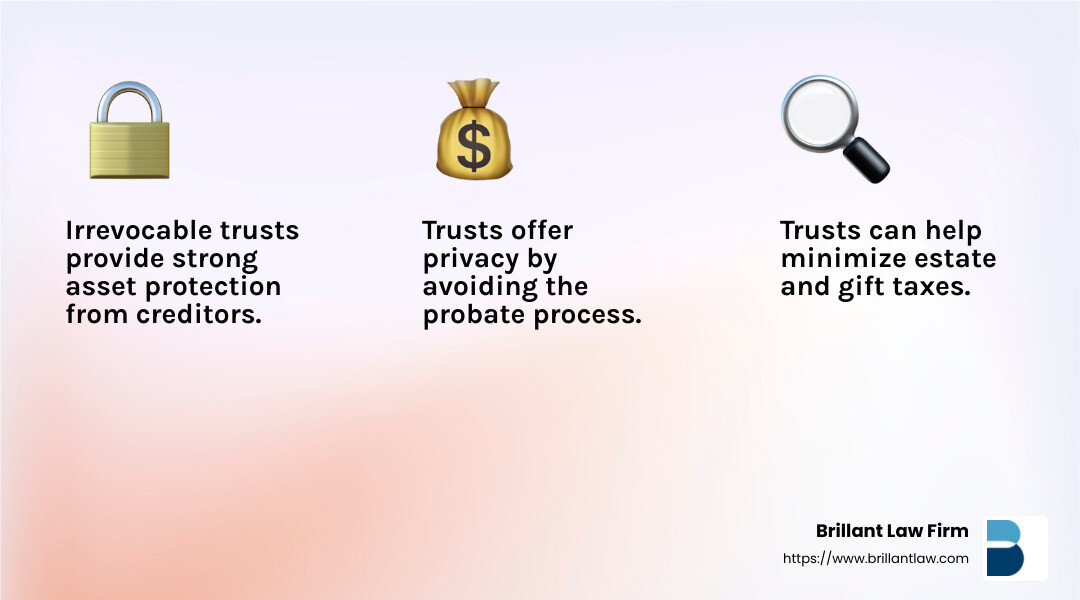
Asset Protection: Especially with irrevocable trusts, assets are shielded from creditors and lawsuits.
Tax Benefits: Trusts can help minimize estate and gift taxes, preserving more wealth for your beneficiaries.
Privacy: Unlike wills, which go through probate and become public, trusts keep your financial affairs private.
Probate Avoidance: Assets in a trust bypass the probate process, allowing for faster and more efficient distribution.
In summary, understanding the different types of trusts and their benefits can help you make informed decisions about your estate planning. Next, we will explore the components of an estate plan to give you a comprehensive view of how to protect your assets and ensure your wishes are honored.
Estate Administration in California
Estate administration is the process of managing and distributing a deceased person’s assets. In California, this involves several key steps, particularly when there is no will, known as intestate succession.
Probate Process
Probate is a legal process that validates a will, if there is one, and oversees the distribution of an estate. In California, probate ensures that the deceased’s debts and taxes are paid before distributing the remaining assets to beneficiaries or heirs.
Executor Duties: The executor, named in the will, manages the estate. If there is no will, the court appoints an administrator. This person gathers assets, pays debts, and distributes what’s left according to California law.
Probate Court: The court supervises the entire process to ensure fairness and legality. Probate can be time-consuming and costly, often taking several months or even years.
Asset Distribution
In cases of intestate succession, where there is no will, California state laws determine how assets are distributed. This process follows a specific hierarchy:
Spouse: If the deceased was married, the spouse typically receives the largest share of the estate.
Children: If there are children, they share the estate equally after the spouse’s share is allocated.
Parents and Siblings: If there are no children or spouse, the estate goes to the deceased’s parents or siblings.
Extended Relatives: If no immediate family is found, more distant relatives may inherit.
This hierarchy ensures that close family members are prioritized, but it might not align with what the deceased would have wanted. Therefore, having a will is crucial to ensure assets are distributed according to personal wishes.
State Laws
California’s intestate succession laws are specific. For example, community property laws can affect asset distribution between spouses. Understanding these laws is vital for anyone involved in estate administration.
Community Property: In California, assets acquired during marriage are typically considered community property and are divided equally between spouses.
Separate Property: Assets owned before marriage or acquired by gift or inheritance may be treated as separate property and distributed differently.
Family Hierarchy
The state’s hierarchy in intestate succession emphasizes the importance of family. However, it can lead to disputes if family members disagree on their entitlements. Clear communication and legal guidance are essential to steer these complexities.
Estate administration in California can be complex, especially without a will. Understanding the probate process, executor duties, and the state’s asset distribution laws can help ensure a smooth transition of assets. Next, we’ll explore common challenges in estate and trust law and how to address them effectively.
Common Challenges in Estate and Trust Law
Navigating estate and trust law can be tricky, especially when unexpected challenges arise. Let’s explore some common issues and explore effective strategies to handle them.
Creditor Claims
One major concern is protecting your assets from creditor claims. Creditors can pursue assets in your estate to settle debts. To safeguard your wealth, consider setting up an irrevocable trust. Once assets are transferred to this type of trust, they are no longer considered part of your estate, making it more difficult for creditors to access them.
Family Disputes
Money can sometimes bring out the worst in people, leading to family disputes. These disagreements can become heated and disrupt the asset distribution process. Clear communication is vital. Ensure your estate planning documents are detailed and up-to-date. Additionally, naming a neutral third-party trustee can help prevent conflicts and ensure fair management of the estate.
Legal Complexities
Estate and trust laws can be complex, with nuances specific to California. It’s crucial to work with a knowledgeable attorney who can guide you through the legal maze. An experienced attorney will help ensure your estate plan complies with state laws and reflects your wishes accurately.
Solutions and Strategies
Irrevocable Trusts: As mentioned, these trusts are great for asset protection. They remove assets from your estate, reducing exposure to creditor claims.
Clear Communication: Regularly discuss your estate plans with family members. Transparency can help avoid misunderstandings and reduce the likelihood of disputes.
Legal Tools: Use tools like power of attorney and healthcare directives. These documents ensure your wishes are respected if you become incapacitated and should be integral parts of your estate plan.
Estate and trust law can pose various challenges, but with the right strategies, you can protect your assets and ensure a smooth transfer to your heirs. Next, we’ll address some frequently asked questions about estate and trust law to further clarify this complex area.
Frequently Asked Questions about Estate and Trust Law
What is the difference between a trust and an estate?
A trust is a legal arrangement where a person, known as the grantor, transfers property to a trustee. The trustee manages these assets for the benefit of beneficiaries. Trusts can be set up during the grantor’s life (living trust) or after their death (testamentary trust). They can also be revocable or irrevocable, meaning they can be changed or not once established.
An estate, on the other hand, encompasses all the assets and liabilities left by a person at their death. The estate goes through probate, a court-supervised process to distribute assets according to the deceased’s will or, if there’s no will, state law.
In short, trusts are ongoing arrangements that can last many years, while estates are temporary and exist only until the probate process is complete.
What are the disadvantages of an estate trust?
While trusts offer many benefits, they also have some downsides:
Cost: Setting up a trust can be expensive. Legal fees for creating a trust in California can range from $2,000 to $5,000 or more, depending on complexity.
Complexity: Trusts can be complicated to manage, requiring ongoing administration and sometimes professional help.
Irrevocability: An irrevocable trust cannot be changed once established. This lack of flexibility can be a disadvantage if your circumstances change.
Lack of Privacy: While trusts generally offer more privacy than probate, certain types, like testamentary trusts, may still be subject to public court proceedings.
Despite these disadvantages, the benefits of asset protection and probate avoidance often outweigh the drawbacks.
What is the law of trust?
The law of trust governs the creation and management of trusts. It involves a fiduciary relationship where the trustee holds and manages assets for the benefit of the beneficiaries. The rules for trusts are detailed and can vary, but they generally cover:
- Creation and validity of trusts
- Duties and powers of trustees
- Rights of beneficiaries
- Types of trusts, such as living, testamentary, revocable, and irrevocable
In California, trust law is particularly intricate, and understanding its nuances can help in effective estate planning. A knowledgeable attorney can provide guidance custom to your specific needs.
With these FAQs, we’ve clarified some key aspects of estate and trust law. Understanding these differences and nuances can help you make informed decisions about your estate planning.
Conclusion
Navigating estate and trust law can feel like trying to find your way through a maze. But with the right guidance, you can protect your legacy and ensure your wishes are honored. At Brillant Law Firm, we specialize in providing bespoke strategies custom to your unique needs.
Our team is dedicated to offering peace of mind by crafting ironclad plans that safeguard your assets and ensure a smooth transition for your loved ones. Whether you’re setting up a trust, drafting a will, or dealing with probate, we’re here to help every step of the way.
We understand that every client is unique, and so are their needs. Our approach is not one-size-fits-all; instead, we take the time to understand your specific situation and goals. This allows us to offer personalized solutions that align with your overall objectives.
Our commitment to excellence means we stay ahead of the curve, continuously updating our knowledge to leverage the latest legal trends and technologies. With Brillant Law Firm, you’re not just getting a lawyer; you’re getting a dedicated team ready to defend your interests with best expertise and zeal.
Secure your financial future and that of your family with our expert guidance. Contact us today for a consultation and take the first step towards a well-planned estate. Let us help you protect what matters most.


