

Digital estate planning checklist is more crucial than ever in our tech-driven world. So, what exactly does this checklist involve?
- Identify Digital Assets: Include online accounts, devices, and stored data.
- Determine Asset Management: Decide what’s to be deleted, archived, or transferred.
- Designate a Digital Executor: Trust someone to implement your requests.
- Secure Storage: Keep passwords and details safe yet accessible.
Each point ensures that your digital presence, or digital footprint, is handled just as you wish.
In today’s interconnected age, your digital assets—ranging from social media accounts to cryptocurrency—form a significant part of your estate. Effective digital estate planning is key to securing these assets and ensuring a seamless transition for your loved ones. By systematically addressing your digital footprint, you help prevent potential disputes and secure your online legacy.
As David Brillant, a seasoned trust and estate lawyer based in California, I specialize in navigating the complexities of digital estate planning checklist. With my expertise, I ensure that your online presence is protected and managed according to your wishes. Now, let’s dig deeper into digital estates.

Relevant articles related to digital estate planning checklist:
– asset checklist for estate planning
– estate plan checklist
– what is an estate plan
Understanding Digital Assets
Digital assets are everywhere. They range from your Facebook photos to your Bitcoin stash. Let’s break it down into three main categories: social media, cryptocurrency, and online accounts.
Social Media
Social media is more than just a way to share cat videos. It’s a part of your digital identity. Facebook, Instagram, and Twitter accounts hold valuable memories and personal data. You might want these preserved or deleted after you’re gone.
Think about it: who will have access to your Facebook after you pass away? Without a plan, your loved ones might struggle to manage your accounts. To avoid this, include instructions for your social media profiles in your digital estate planning checklist.
Cryptocurrency
Cryptocurrency is like digital gold. It’s valuable but tricky to manage without the right keys. Platforms like Coinbase or wallets like Ledger hold your Bitcoin, Ethereum, or other digital currencies.
But here’s the catch: if you lose access to your crypto keys, your assets might be gone forever. That’s why it’s crucial to include cryptocurrency in your digital estate plan. Make sure your digital executor knows how to access and manage these assets.
Online Accounts
Online accounts are everywhere. From Amazon to Netflix, we use them daily. These accounts often contain personal information and even financial assets.
Consider this: your email might be the key to many other accounts. If someone can’t access your email, they might not be able to manage your other online accounts. Ensure your digital estate plan includes instructions for handling these accounts.
In conclusion, understanding and planning for your digital assets is crucial. By doing so, you protect your digital legacy and make life easier for your loved ones.
Creating Your Digital Estate Planning Checklist
Building a digital estate planning checklist is like creating a roadmap for your digital afterlife. It helps ensure your online presence and digital assets are managed according to your wishes. Let’s break down the essentials: inventory, accessibility, and planning.
Inventory: Know What You Own
Start by listing all your digital assets. This might seem daunting, but it’s a crucial step. Think of everything from your social media accounts to your online banking details.
- Social Media: List platforms like Facebook, Instagram, and LinkedIn. Note down usernames and any specific wishes for account handling.
- Email Accounts: Email is often the gateway to other accounts. List all email addresses and consider how you want them managed.
- E-commerce and Subscriptions: Include accounts like Amazon, Netflix, and any other services you pay for or manage online.
Create a simple table or list to keep track of these assets. This inventory will act as a foundation for your digital estate plan.
Accessibility: Make It Easy to Find
Once you’ve cataloged your digital assets, think about accessibility. You don’t want your loved ones to play detective to find and manage your accounts.
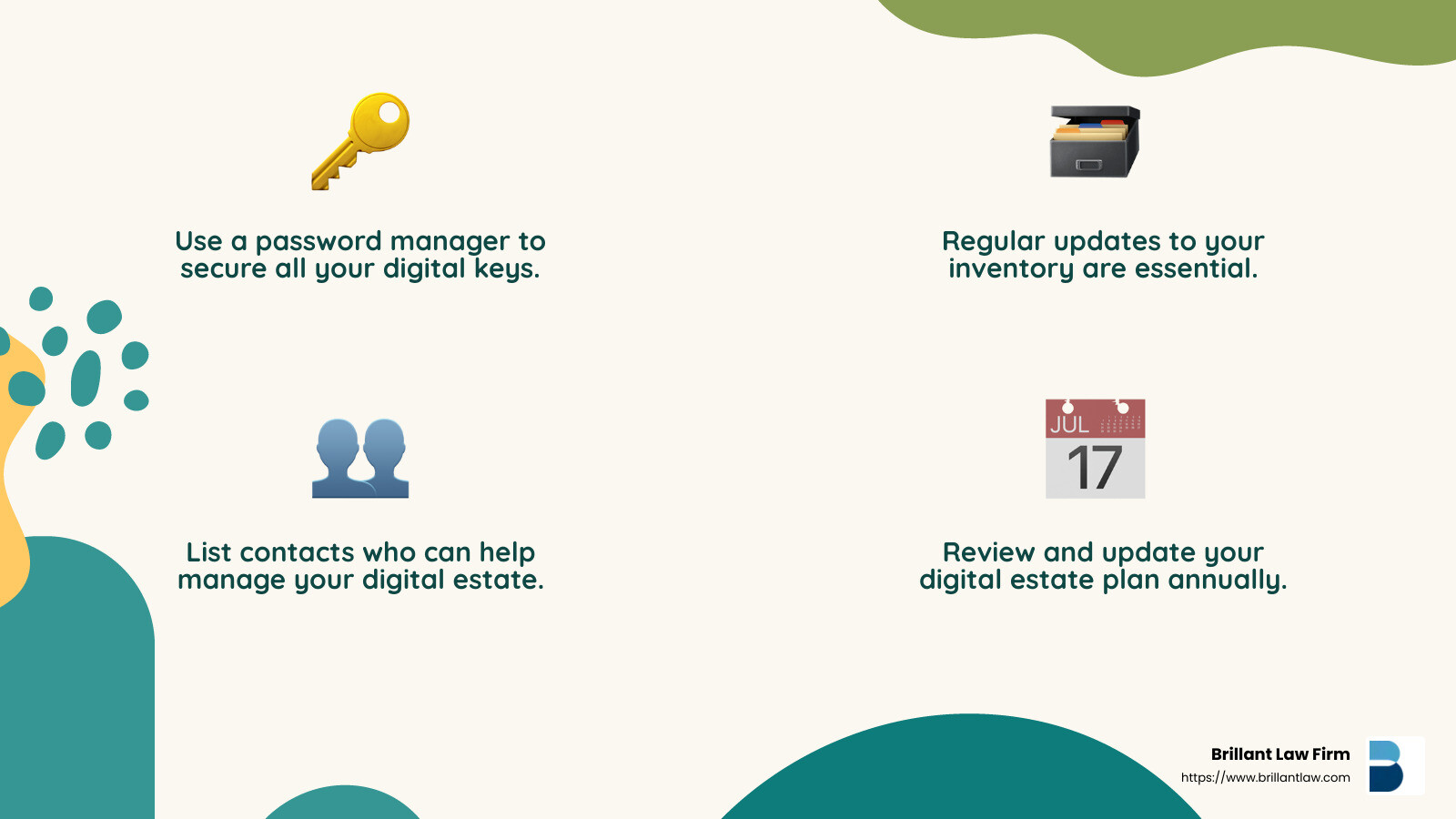
- Passwords and Security Questions: Use a password manager to securely store this information. Apps like 1Password can be a lifesaver.
- Contact Information: Include details of any contacts who might assist in managing your digital estate, like IT professionals or account managers.
Planning: Keep It Up-to-Date
Your digital world is always changing. New accounts pop up, and old ones become obsolete. Regular updates to your digital estate planning checklist are essential.
- Annual Reviews: Set a reminder to review your digital estate plan at least once a year. Update account details and ensure your inventory reflects any changes.
- Digital Executor: Identify someone you trust to manage your digital assets. This person should know where to find your plan and how to execute your wishes.
A well-maintained digital estate planning checklist not only ensures your digital legacy is preserved but also provides peace of mind for you and your family.
Next, we’ll explore the steps to develop a comprehensive digital estate plan, including appointing a digital executor and securing your plan.
Steps to Develop a Digital Estate Plan
Creating a digital estate plan involves several important steps that ensure your digital assets are handled according to your wishes. Let’s explore the key components: taking inventory, deciding on asset management, appointing a digital executor, and securing your plan.
Take Inventory of Digital Assets
Start by taking inventory of all your digital assets. This step helps you understand what you own and how it should be managed. Here’s a quick guide:
Social Media Accounts: Include platforms like Facebook, Twitter, and Instagram. Note down usernames and passwords, and specify any preferences for account handling, such as memorialization or deletion.
Email Accounts: List all your email addresses. These are crucial because they often serve as the recovery point for other online accounts. Decide if you want them closed or if certain communications should be preserved.
E-commerce and Online Services: Don’t forget accounts like Amazon, Etsy, or any other platforms where you conduct transactions. Determine whether you want these accounts transferred, closed, or maintained.
Creating a detailed inventory helps you and your executor understand the scope of your digital presence.
Decide on Asset Management
Once you have your inventory, it’s time to decide how each asset should be managed:
Privacy Wishes: Clearly state your privacy preferences. For instance, you might want some accounts deleted to protect your personal information, while others could be archived for sentimental reasons.
Account Handling: Specify how you want each account handled. Should an e-commerce store be transferred to a family member, or should it be shut down? Make these decisions clear for your executor.
Appoint a Digital Executor
Choosing a digital executor is a crucial step. This person will be responsible for carrying out your digital estate plan:
Responsibilities: Your digital executor should be someone you trust to handle sensitive information. They will manage, transfer, or delete accounts as per your instructions.
Legal Documents: While the role of a digital executor isn’t legally binding in California, it’s still beneficial to name one in your will. This designation helps ensure your wishes are respected and executed.
Secure and Store Your Plan
Finally, ensure your digital estate plan is secure yet accessible:
Password Manager: Use a reliable password manager to store account credentials securely. This tool will help your executor access your accounts without hassle.
Physical Storage: Keep a copy of your digital estate plan in a safe place, like a locked file cabinet. Alternatively, consider storing it with your attorney for added security.
Legal Documentation: While your digital estate plan should be separate from your will, make sure your executor knows where to find it. This separation helps protect sensitive information from becoming public.
By following these steps, you can create a robust digital estate plan that protects your digital legacy and provides peace of mind for your loved ones.
Next, we’ll dig into the legal considerations specific to California, including important laws and privacy concerns.
Legal Considerations in California
When planning your digital estate in California, understand the legal landscape. Three key areas to focus on are the Revised Uniform Fiduciary Access to Digital Assets Act (RUFADAA), data privacy, and terms-of-service agreements.
RUFADAA: Access to Digital Assets
California has adopted the RUFADAA, which provides a framework for fiduciaries to access digital assets after someone’s death or incapacitation. This law helps your executor or designated representative manage your digital assets according to your wishes.
Tiered Access: RUFADAA outlines a tiered process for accessing digital assets. First, if a digital service provider offers a tool to manage your assets posthumously (like Google’s inactive account manager), that tool takes precedence. If not, your legal documents guide the process. Finally, if neither is available, the service provider’s terms of service will dictate access.
Importance of Legal Documents: Ensure that your legal documents, like wills or trusts, clearly state your wishes regarding digital assets. This clarity helps your executor steer the process effectively.
Data Privacy: Protecting Sensitive Information
Data privacy is a significant concern in digital estate planning. It’s crucial to safeguard your personal information while ensuring your executor can access necessary accounts.
Privacy Preferences: Clearly outline your privacy preferences in your digital estate plan. Decide which accounts should be deleted to protect sensitive data and which should be preserved for sentimental or practical reasons.
Secure Storage: Use encryption and password protection for storing sensitive information. This security measure helps prevent unauthorized access and potential identity theft.
Terms-of-Service Agreements: Understanding Restrictions
Each online service has its own terms-of-service agreements, which can significantly impact how your digital assets are handled after your death.
Review and Compliance: Regularly review the terms of service for your digital accounts. Some services may not allow account transfers, while others might have specific procedures for account deactivation or memorialization.
Incorporate into Planning: Make sure your executor is aware of these terms and incorporate them into your digital estate planning checklist. Understanding these agreements ensures your wishes can be carried out within legal boundaries.
By considering these legal aspects, you can craft a digital estate plan that respects both your wishes and the law. Next, we’ll address some frequently asked questions about digital estate planning to further clarify the process.
Frequently Asked Questions about Digital Estate Planning
How do I create a digital estate plan?
Creating a digital estate plan is essential to ensure your digital assets are managed according to your wishes. Start by taking inventory of all your digital assets. This includes social media accounts, email, and any e-commerce platforms you use. Document usernames, passwords, and any security questions associated with these accounts.
Next, consider accessibility. Decide who will have access to these digital assets and how they should be managed. This plan should be clear and detailed, outlining whether certain accounts should be deleted, preserved, or transferred to someone else.
Finally, integrate your digital estate plan with your overall estate planning by including it in your will or trust. This ensures your digital assets are handled alongside your physical assets, providing a comprehensive approach to your estate.
Is a bank account considered a digital asset?
While bank accounts themselves are not digital assets, the digital ledger or online access to these accounts is considered a digital asset. This includes the ability to manage your accounts online, view statements, and perform transactions.
It’s crucial to include information about online banking in your digital estate plan. Provide details on how to access these accounts, including login credentials and any two-factor authentication procedures. This helps your executor or appointed representative manage your financial affairs in accordance with your wishes.
Additionally, be aware of any IRS implications related to your bank accounts and digital assets. Proper documentation and planning can help avoid complications with taxes and ensure a smooth transition of your financial responsibilities.
What are the components of estate planning?
Estate planning involves more than just managing digital assets. It includes several key components to ensure your wishes are carried out effectively.
Wills: A will outlines how your assets should be distributed after your death. It can also specify guardianship for minor children and include instructions for your digital assets.
Trusts: Trusts allow you to place conditions on how and when your assets are distributed. They can offer more control over your estate and help avoid probate.
Power of Attorney: This legal document grants someone the authority to make decisions on your behalf if you become incapacitated. It can cover financial, medical, or both types of decisions.
By incorporating these elements into your estate planning, you can ensure that both your physical and digital assets are managed according to your preferences. This comprehensive approach provides peace of mind and clarity for your loved ones.
Conclusion
Creating a digital estate plan is no longer optional; it’s essential in today’s digital age. At Brillant Law Firm, we specialize in crafting bespoke estate plans that protect your digital and physical assets. Our team, based right here in California, brings unparalleled expertise and dedication to ensuring your wishes are honored.
Digital estate planning involves understanding your digital footprint and deciding how it should be managed after you’re gone. Our firm can guide you through the process, from taking a comprehensive inventory of your digital assets to appointing a digital executor. We help you steer complex legal considerations, such as California’s Revised Uniform Fiduciary Access to Digital Assets Act (RUFADAA), ensuring compliance and security.
By partnering with us, you gain access to a team committed to excellence. We tailor strategies that align with your unique needs, providing peace of mind that your legacy is in good hands. Whether you have questions about integrating digital assets into your estate plan or need expert advice on trusts and wills, we’re here to help.
For more information on how we can assist with your estate planning needs, visit our Estate and Trust Attorneys page. Let’s ensure your digital and physical assets are protected, preserving your legacy for future generations.


