

The Importance of Finding the Right Appeal Attorney Near You
If you are searching for an Appeal Attorney Near Me, you’re likely facing a legal challenge involving a recent court decision. Here’s how to quickly address your needs:
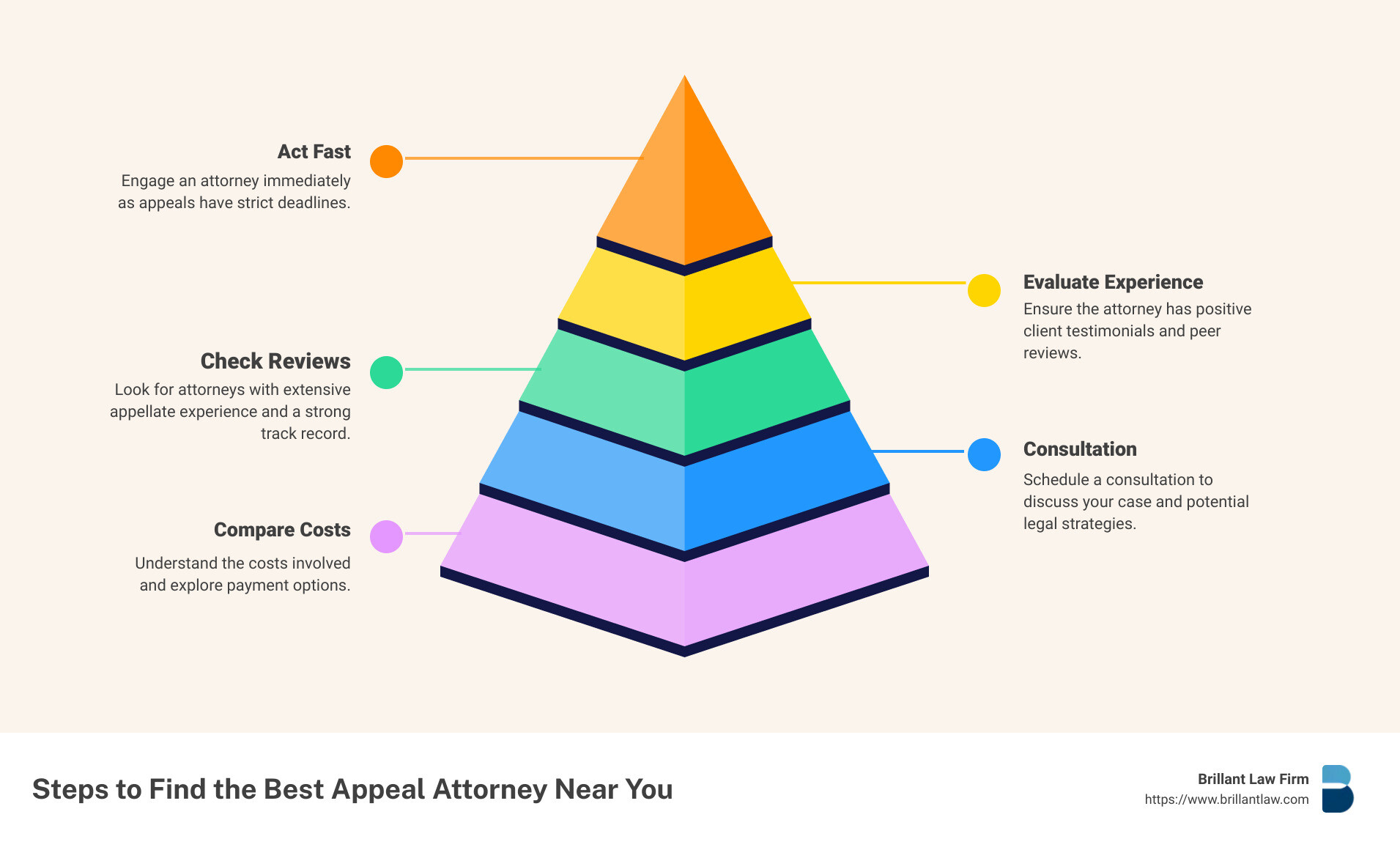
- Act Fast: Appeals have strict deadlines. Engage an attorney immediately.
- Evaluate Experience: Look for attorneys with extensive appellate experience and a strong track record.
- Check Reviews: Ensure the attorney has positive client testimonials and peer reviews.
When a court decision doesn’t go your way, an appeal can be your lifeline to justice. Appellate attorneys specialize in identifying legal mistakes made during your trial, such as misapplications of law or procedural errors. These professionals will present your case to a higher court, seeking to overturn or modify the original ruling.
I’m David Brillant, an experienced appellate lawyer who understands the intricacies of the appeals process. With extensive expertise in complex legal matters, my focus is on protecting your rights and ensuring justice is served.
Understanding Appeals
An appeal is a legal process where a higher court reviews the decision of a lower court to identify and correct legal mistakes. If you believe that errors were made during your trial, you can file an appeal to have those mistakes examined.
Key Points:
Plea to Higher Court: An appeal is essentially a request to a higher court to review and reverse the decision of a lower court. This is not a new trial but a review of the original trial’s procedures and decisions.
Legal Mistakes: Common grounds for an appeal include misapplication of the law, procedural errors, or ineffective assistance of counsel. For example, if your lawyer failed to object to inadmissible evidence, this could be a valid reason for an appeal.
Outcome: The higher court can affirm the original decision, reverse it, or send the case back to the lower court for further proceedings.
How to Find a Qualified Appeal Attorney Near Me
Finding the right appeals lawyer can be daunting, but knowing what to look for can simplify the process. Here’s how to evaluate expertise, check credentials, and understand the consultation process.
Evaluating Experience and Expertise
When searching for an appellate attorney, experience is crucial. Look for lawyers who have handled similar cases and have a proven track record.
Consider these factors:
- Years of Experience: More years often mean more nuanced understanding and skill.
- Types of Cases Handled: Ensure the lawyer has experience with cases similar to yours, be it business disputes or criminal appeals.
- Success Rate: A high success rate in appeals can indicate strong legal expertise and strategic acumen.
Checking Credentials and Reviews
Credentials and reviews provide insight into an attorney’s reputation and reliability. Here’s what to check:
- Bar Association Membership: Verify that the lawyer is a member of the state bar association, which ensures they meet professional standards.
- Client Testimonials: Positive feedback from previous clients can be a good indicator of an attorney’s effectiveness.
- Peer Reviews: Reviews from other legal professionals can offer an additional layer of credibility.
Consultation Process
The consultation process is your chance to gauge whether the attorney is the right fit for your case. Many firms offer free consultations.
During the consultation, focus on:
- Case Evaluation: The attorney should review your case details and provide an honest assessment of your appeal’s viability.
- Legal Strategy: Discuss potential strategies and understand how the lawyer plans to approach your appeal. This can help you gauge their expertise and commitment.
Costs and Fees Associated with Appeals
Typical Costs in Different States
Understanding the costs associated with filing an appeal is crucial. These costs can vary widely depending on the state and the complexity of the case. Here’s a quick breakdown:
Filing Fees: These are the fees paid to the court to file the appeal. For example, in Michigan, the application fee is $375, plus a $25 e-filing fee. In Pennsylvania, filing fees can range from a few hundred to several thousand dollars, depending on the court and the nature of the case.
Attorney Fees: These can vary significantly based on the attorney’s experience and the complexity of the appeal. Some attorneys charge hourly rates, which can range from $250 to $650 per hour. Others may offer flat fees for specific services.
Additional Expenses: These might include costs for obtaining trial transcripts, copying and binding briefs, and travel expenses for court appearances. These can add up quickly, so it’s important to budget for them.
Payment Options and Pro Bono Services
Paying for an appeal can be a significant financial burden. However, there are various payment options and services available to help manage these costs:
Payment Plans: Many attorneys offer flexible payment plans to help spread out the costs over time. This can make it easier to manage the financial burden of an appeal.
Pro Bono Representation: Some attorneys and law firms offer pro bono (free) services for clients who cannot afford to pay. Organizations like legal aid societies can also provide free legal assistance to those who qualify.
Legal Aid: Legal aid organizations can be a valuable resource for those who need financial assistance. They often provide free or low-cost legal services to individuals who meet certain income criteria.
By understanding the typical costs and exploring available payment options, you can better prepare for the financial aspects of filing an appeal. Make sure to discuss these details during your consultation to find a solution that works best for your situation.
Next, we’ll discuss common grounds for appeal and how to identify legal mistakes that could strengthen your case.
Common Grounds for Appeal
When it comes to appeals, identifying the right grounds is crucial. Let’s explore some common reasons why you might need to file an appeal.
Identifying Legal Mistakes
Legal mistakes can happen during a trial. These errors can be a solid basis for an appeal. Here are some common types of legal mistakes:
Misapplication of Law: Sometimes, the judge may incorrectly apply a law. For instance, if the trial judge misapplied the law in denying a motion to suppress evidence, this could be a strong ground for appeal. Source
Procedural Errors: These occur when the trial court fails to follow proper legal procedures. This might include errors in jury instructions or improper admission of evidence.
Ineffective Counsel: If your attorney did not provide competent representation, this could be grounds for an appeal. Ineffective counsel can include failing to file necessary motions or not presenting key evidence.
Filing Post-Sentence Motions
Post-sentence motions are crucial for preserving your right to appeal. Here’s what you need to know:
Post-Sentence Motion: After sentencing, you have ten days to file a post-sentence motion. This can include requests for a new trial, judgment of acquittal, or reconsideration of your sentence. Source
Motion for Extraordinary Relief: This motion can be argued before sentencing and asks the judge to reconsider a wrongful conviction or erroneous evidentiary ruling. While rare, it can be effective in extraordinary circumstances. Source
Deadlines: If a post-sentence motion is not filed within ten days, many issues may be waived on appeal. The trial court must rule on these motions within 120 days. If not, they are denied automatically by law. Source
New Evidence: Finding new evidence that could significantly impact the outcome of the case can also be grounds for an appeal. This evidence must be something that was not available during the original trial.
Jury Misconduct: If it is found that the jury engaged in misconduct, such as discussing the case outside of deliberations or being influenced by external factors, this can be grounds for an appeal.
Understanding these common grounds for appeal can help you identify the errors in your case and strengthen your appeal strategy.
Next, we’ll address some frequently asked questions about the appeals process to further clarify your path forward.
Frequently Asked Questions about Appeals
What does it mean when a lawyer appeals?
When a lawyer appeals, they are asking a higher court to review a decision made by a lower court. This is usually done because the lawyer believes there were legal mistakes during the trial. These mistakes could include misapplication of the law, procedural errors, or even jury misconduct. Essentially, the goal of an appeal is to reverse or modify the lower court’s decision.
How much does an appeal cost in Michigan?
In Michigan, the cost of filing an appeal includes a $375 application fee and a $25 efiling fee. However, these are just the initial costs. Additional expenses can arise, such as attorney fees, costs for obtaining trial transcripts, and other legal expenses. It’s essential to budget for these potential costs when considering an appeal.
How long do appeals take in Pennsylvania?
Appeals in Pennsylvania can take anywhere from a few months to a year or more. The timeline depends on several factors, including the complexity of the case, the caseload of the court, and whether additional proceedings like oral arguments or post-trial motions are necessary. Understanding these variables can help you set realistic expectations for the duration of your appeal.
Conclusion
When it comes to navigating the complex world of appeals, having the right legal team by your side is crucial. At Brillant Law Firm, we pride ourselves on our expertise, dedication, and commitment to excellence. Our team understands the intricacies of appellate law and is well-equipped to handle a variety of cases, from criminal appeals to civil disputes.
Our attorneys bring a wealth of experience and a proven track record of success. For example, attorney Todd Mosser has over twenty years of experience in identifying trial court errors and fighting for justice on behalf of his clients. This level of expertise is vital when appealing a court decision, as it requires meticulous attention to detail and a deep understanding of legal procedures.
We believe in providing personalized attention to each case. Our approach is not just about winning; it’s about ensuring that you receive the due process you deserve. Whether it’s reviewing trial transcripts for errors, identifying new evidence, or evaluating constitutional violations, our team is dedicated to exploring every available legal avenue to achieve a favorable outcome.
Moreover, our commitment to excellence extends beyond just our legal expertise. We are dedicated to clear, candid communication and providing our clients with the best possible value for their investment. Our unique billing pledge ensures that you only pay for the time necessary to achieve your goals, offering transparency and peace of mind.
Choosing Brillant Law Firm means choosing a partner who is as invested in your case as you are. We understand the high stakes involved and are committed to providing strategic, thorough, and persuasive advocacy to help you steer the appellate court system successfully.
If you are facing an unfavorable court decision, don’t let it be the end of the road. Reach out to us for a free consultation and let us help you pursue justice through the appellate process.
Contact us today to learn more about how we can assist you with your appeal.


