

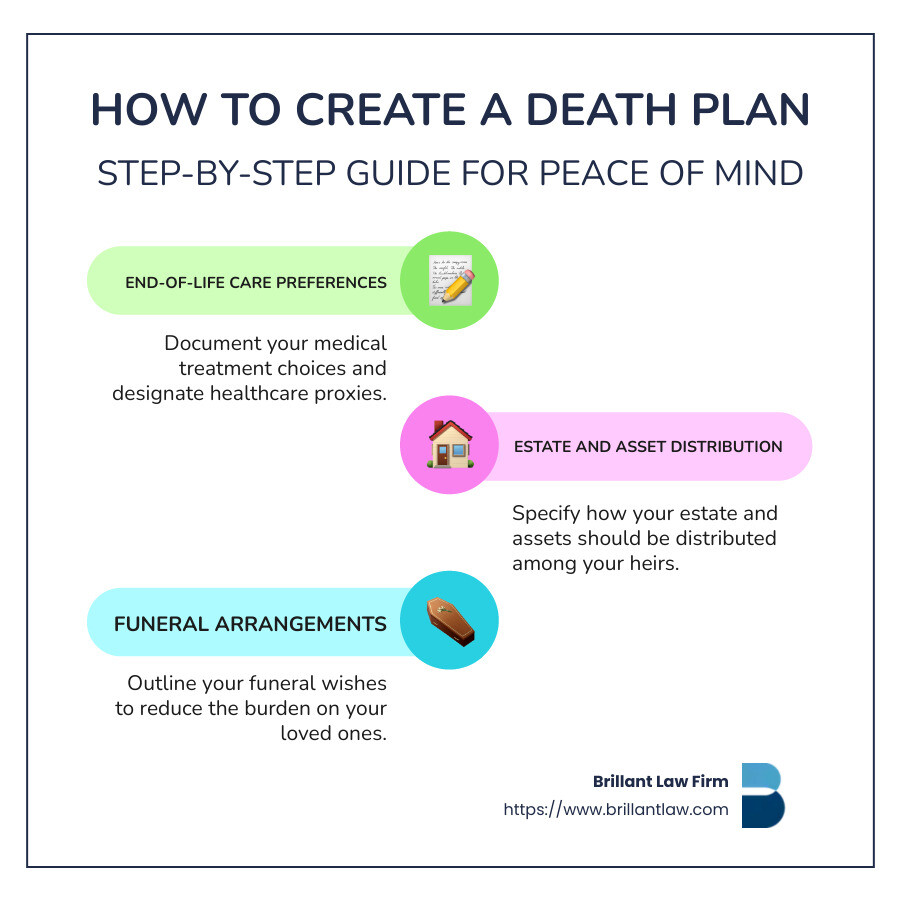
Death plan is a term that often stirs uncomfortable emotions, but preparing one is essential for achieving peace of mind. A well-thought-out death plan encompasses end-of-life wishes and estate arrangements, allowing you to make your desires clear and lessen the emotional and practical burden on your loved ones. This process includes:
- Documenting your end-of-life care preferences
- Designating healthcare proxies and guardians for minors
- Specifying the distribution of your estate and assets
By taking these steps, you ensure an easier transition for those left behind, sparing them from making hard decisions during an emotionally charged time. Think of it as a final act of love and protection for your family.
Planning for the end of life is not just about finalizing documents. It’s about preserving your legacy and protecting those you care about from unnecessary stress and conflict. Proper estate planning is crucial, not just in organizing one’s finances but in offering a sense of certainty that your wishes will be respected. As a seasoned estate planning attorney in California, I, David Brillant, guide my clients through the complexities of crafting a thorough death plan, ensuring they feel confident and their estates are well protected.
Glossary for death plan:
– asset checklist for estate planning
– free estate planning worksheet
– will preparation worksheet
Understanding the Death Plan
Death planning is more than just preparing for the inevitable; it’s about ensuring your values, wishes, and instructions are clearly outlined and respected. This process can be simplified by understanding key components like a living will and an advance directive.
Living Will
A living will is a legal document that spells out your preferences for medical treatment if you become unable to communicate your decisions. It’s not about distributing assets; it’s about personal choices regarding healthcare. This can include preferences on life support, resuscitation, and pain management.
A living will is your voice when you can’t speak. Think of it as a guide for your loved ones and healthcare providers, ensuring that your medical care aligns with your values and wishes.
Advance Directive
An advance directive is a broader document that includes a living will and appoints a healthcare proxy. This proxy is someone you trust to make medical decisions on your behalf if you’re incapacitated. In California, this document is vital, as it provides legal clarity and guidance to medical staff and family members.
An advance directive can also cover organ donation preferences and other specific instructions about your healthcare. It’s a comprehensive approach to managing your medical treatment and ensuring that your wishes are respected.
Why It Matters
By preparing a living will and advance directive, you’re taking a proactive step in your death planning. This preparation can prevent disputes among family members and provide peace of mind knowing that your healthcare decisions are in trusted hands.
Incorporating these documents into your death plan ensures a smooth transition and reduces the emotional burden on your loved ones during a difficult time. It’s about making sure your voice is heard and your wishes are honored, even when you can’t express them yourself.
Having a clear understanding of these components is the first step in creating a comprehensive death plan. In the next section, we’ll explore the essential components that make up a complete death plan, including wills, funeral wishes, and more.
Essential Components of a Death Plan
Creating a death plan is essential for ensuring that your wishes are respected and your loved ones are not burdened with unnecessary stress. Here are the key components you should consider:
Will and Testament
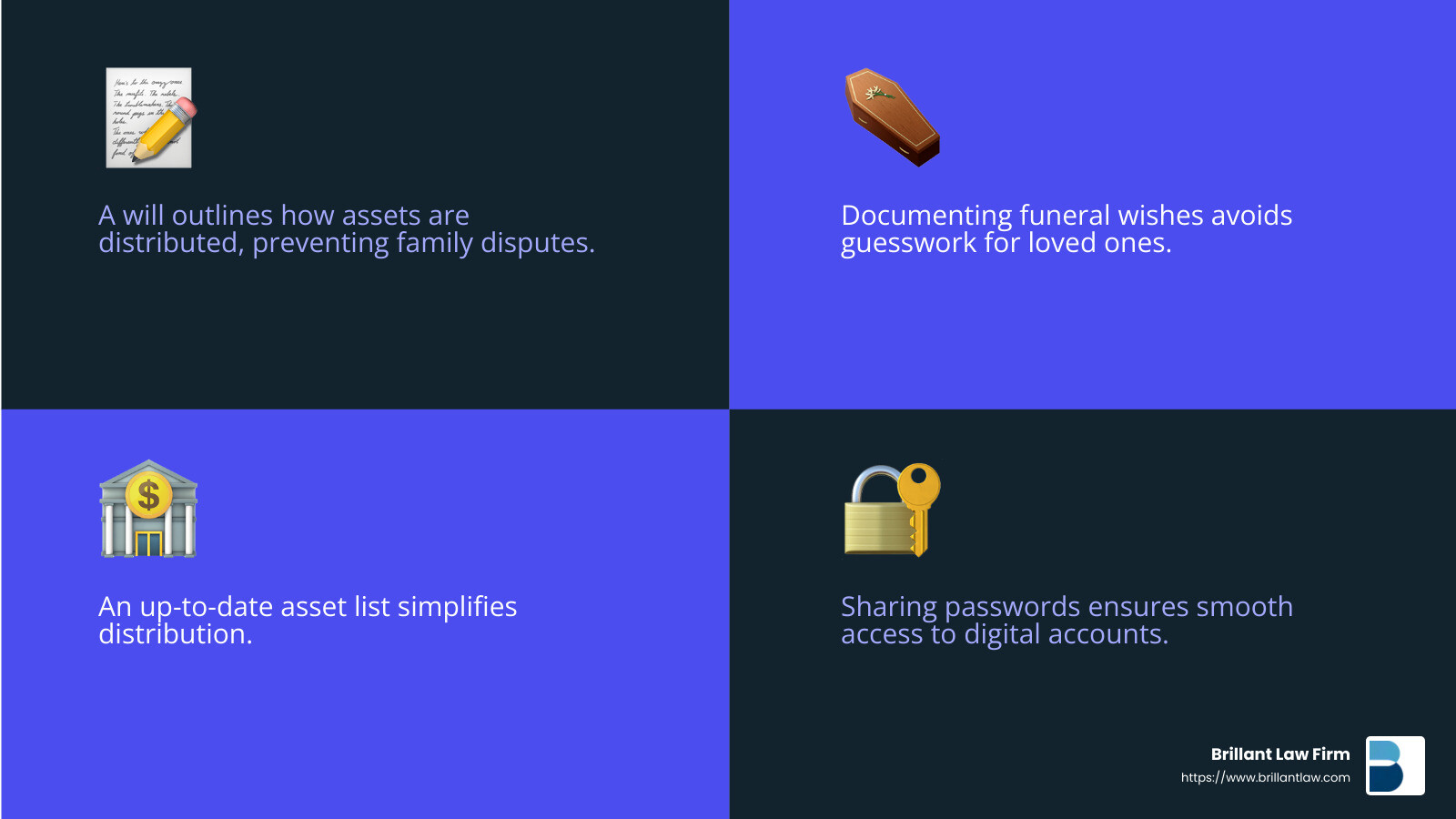
Your will is the cornerstone of your death plan. It outlines how you want your assets distributed after you pass away. A well-prepared will can prevent family disputes and ensure your belongings go to the right people. In California, make sure your will is signed, dated, and witnessed by two non-related individuals to be legally binding.
Funeral Wishes
Communicating your funeral wishes can bring peace of mind to both you and your loved ones. Whether you prefer a traditional service, a celebration of life, or a simple gathering, writing down your preferences will help avoid any guesswork. Consider using resources like the ‘My Funeral Wishes’ leaflet to guide you through the process.
Asset List
An asset list is a comprehensive inventory of everything you own. This includes savings accounts, real estate, investments, and personal belongings. Keeping this list up-to-date and sharing it with your executor can simplify the distribution process and ensure nothing is overlooked.
Passwords
Much of our lives are online. Documenting your passwords for important accounts is crucial. Consider using a password manager like 1Password to securely store and share this information with trusted individuals. This ensures your loved ones can access necessary accounts without added stress.
Important Documents
Gather all essential documents, such as your life insurance policy, pension details, mortgage papers, and any other financial records. Store them in a safe place and inform your executor or a trusted family member of their location. This preparation can save time and reduce confusion during an already challenging period.
By addressing these elements, you’re paving the way for a smoother transition and providing clarity for those you leave behind. In the next section, we’ll dig into how to create a comprehensive death plan, covering aspects like estate planning and power of attorney.
How to Create a Comprehensive Death Plan
Creating a comprehensive death plan involves a few key elements that ensure your wishes are carried out and your loved ones are supported. Let’s explore these essential components:
Estate Plan
An estate plan is more than just a will. It’s a detailed strategy that includes everything from managing your assets to minimizing taxes. A well-thought-out estate plan can prevent family disputes, save money, and ensure your legacy is preserved. In California, it’s wise to consult with an estate attorney to tailor your plan according to state laws and your personal circumstances.
Living Trust
A living trust is a powerful tool in your estate plan. Unlike a will, a living trust goes into effect while you’re still alive and helps manage your assets. It also allows your estate to bypass the lengthy and public probate process. This means your assets can be distributed more quickly and privately. Setting up a living trust in California can be straightforward with the right legal guidance.
Power of Attorney
A power of attorney (POA) is crucial for managing your affairs if you become incapacitated. The person you appoint will make legal, financial, or medical decisions on your behalf. This ensures that someone you trust is in control, and it prevents court intervention. Make sure your POA is clear and detailed to avoid any confusion or disputes.
Organ Donor Designation
If you wish to donate your organs, it’s important to make this decision official. Include your organ donor designation in your death plan and inform your family and healthcare providers. This can be a lifesaving gift, and having it documented ensures your wishes are respected.
By integrating these components into your death plan, you’re providing a roadmap for your loved ones and ensuring your wishes are honored. Next, we’ll explore how to communicate your death plan effectively with your family and executor.
Communicating Your Death Plan
Once you’ve crafted a comprehensive death plan, the next step is to communicate it effectively. This ensures your wishes are understood and respected when the time comes. Let’s break down the key areas to focus on:
Family Discussion
Discussing your death plan with family can be challenging but necessary. Open, honest conversations help avoid misunderstandings later. Share your plans and reasons behind them. Encourage questions, and be ready to explain your choices. This transparency fosters trust and eases the emotional burden on your loved ones.
Tips for Family Discussions:
- Choose the Right Time: Pick a calm, private setting where everyone can focus.
- Be Clear and Direct: Use simple language to explain your wishes.
- Encourage Feedback: Allow family members to express concerns or ask questions.
Executor
Your executor plays a vital role in carrying out your death plan. This person will handle your estate, ensuring that your wishes are fulfilled. It’s crucial to select someone responsible and trustworthy. Once chosen, inform them of their role and provide access to necessary documents.
Key Points for Executors:
- Understand Responsibilities: Ensure your executor knows their duties, from asset distribution to debt settlement.
- Provide Support: Share contact details of professionals, like your estate attorney, who can assist them.
- Access to Documents: Make sure your executor knows where to find important documents, passwords, and keys.
Social Media Accounts
Managing your social media accounts after death is essential. Decide whether you want your accounts memorialized, deleted, or managed by someone else. Share your preferences with your executor and family.
Managing Social Media Accounts:
- Legacy Contacts: On platforms like Facebook, you can designate a legacy contact to manage your account.
- Account List: Keep a list of all your social media accounts and passwords in a secure location.
- Specify Actions: Clearly state what you want to happen to each account in your death plan.
Communicating your death plan is a crucial step in ensuring your wishes are honored. By involving your family and executor and addressing digital assets, you pave the way for a smoother transition. Next, we’ll tackle some frequently asked questions about death planning.
Frequently Asked Questions about Death Planning
What is a death plan?
A death plan is an essential part of end-of-life planning. It outlines your wishes for medical treatment, asset distribution, and legal matters. Think of it as a roadmap for your loved ones to follow when you’re no longer able to guide them.
Key Elements of a Death Plan:
Medical Treatment: Specify your preferences for medical care, such as life support or pain management. This is often detailed in a living will or advance directive.
Legal Matters: Include crucial documents like your will, power of attorney, and any trusts. These ensure your wishes are legally binding and respected.
How to set up an end-of-life plan?
Creating an end-of-life plan involves several steps. Here’s a simple checklist to guide you:
Draft a Will or Trust: Decide if a will or a living trust is best for you. A will is straightforward and effective after death, while a trust offers privacy and goes into effect immediately upon creation.
Funeral Arrangements: Plan your funeral in advance. Specify your preferences for services, burial or cremation, and any religious or cultural rituals.
Asset List: Compile a detailed list of your assets, including bank accounts, real estate, and personal belongings. This helps in smooth asset distribution.
Organize Important Documents: Gather all essential documents, such as your birth certificate, marriage license, and insurance policies. Keep them in a secure, accessible place.
Passwords and Digital Assets: Maintain an updated list of passwords for your online accounts. Decide how you want these accounts handled after your death.
What is the difference between a will and a trust?
Understanding the difference between a will and a trust is vital for effective estate planning.
Will: A will is a legal document that outlines how your assets should be distributed after your death. It goes through probate, a public court process, which can be lengthy and costly.
Trust: A trust is a legal entity that holds your assets during your lifetime and distributes them after your death. Trusts offer privacy since they bypass the probate process.
Comparison Table:
| Feature | Will | Trust |
|---|---|---|
| Effectiveness | After death | Immediately upon creation |
| Probate | Required | Avoided |
| Privacy | Public | Private |
By understanding these elements, you can create a death plan that reflects your wishes and provides peace of mind for you and your loved ones.
Conclusion
In crafting a death plan, have a trusted partner who understands the intricacies of estate planning. This is where Brillant Law Firm comes in. Based in California, we specialize in creating bespoke strategies custom to your unique needs. Our commitment to excellence ensures that your wishes are respected and legally upheld.
At Brillant Law, we recognize that every individual’s situation is unique. Our team of experts works closely with you to steer the complexities of estate planning, from drafting wills and trusts to managing taxation and civil litigation. By choosing us, you gain access to unparalleled expertise and unwavering dedication.
We believe in the power of planning and the peace of mind it brings. Our approach is thorough, ensuring that every aspect of your estate is handled with care and precision. Whether it’s setting up a living trust, designating a power of attorney, or organizing your digital assets, we are here to guide you every step of the way.
In California, where the legal landscape can be complex, having a reliable partner is crucial. Brillant Law Firm is committed to providing ironclad strategies that protect your legacy and provide clarity for your loved ones.
For more information on how we can assist you with your estate planning needs, visit our Estate and Trust Attorneys page. Let us help you create a death plan that ensures a peaceful passing and secures your family’s future.


