

Civil lawsuit attorney fees can vary significantly, impacting the overall cost of pursuing litigation in California. Here’s a quick breakdown of what you can expect:
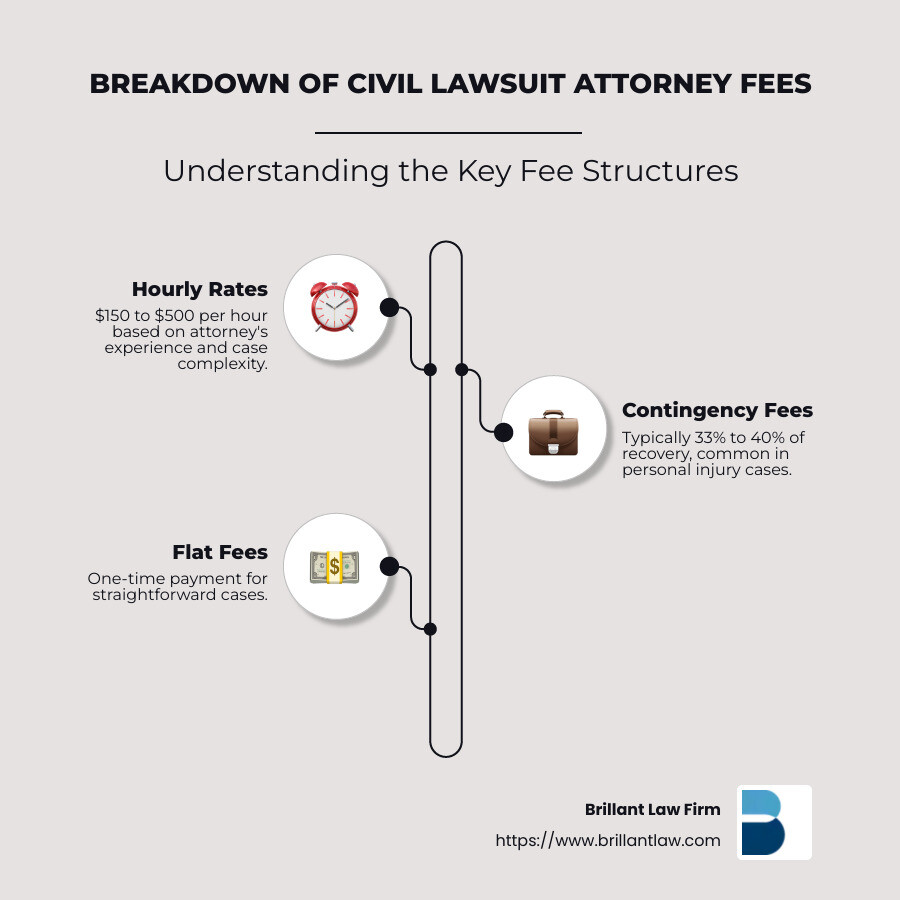
- Hourly Rates: Typically range from $150 to $500 per hour, depending on the attorney’s experience and the complexity of the case.
- Contingency Fees: Usually range from 33% to 40% of the total recovery, common in personal injury cases.
- Flat Fees: Common for straightforward cases, involving a one-time payment for the attorney’s services.
Litigation costs in civil lawsuits are influenced by various factors, including case complexity, the experience level of the attorney, and the location within California. Understanding these fees is crucial for anyone considering legal action.
As David Brillant, a seasoned tax and estate lawyer with experience in civil lawsuit attorney fees, I aim to simplify complex legal issues for you. Let’s explore what you need to know about these fees to make informed decisions in your legal journey in California.
Civil lawsuit attorney fees terms to remember:
– average attorney fees for civil case
– civil suit court costs
– how much does it cost to file a civil lawsuit
Understanding Civil Lawsuit Attorney Fees
When navigating civil lawsuits, understanding attorney fees is key. Let’s break down the three main types of fee structures you might encounter:
Hourly Fee Structures
With hourly fee structures, attorneys charge based on the time they spend working on your case. In California, these rates typically range from $150 to $500 per hour. The exact rate will depend on the lawyer’s experience and the complexity of your case.
- Retainer Fees: Often, attorneys require a retainer before they begin work. This is an upfront payment that the attorney will bill against as they work on your case. Once the retainer is used up, you’ll need to replenish it.

Contingency Fees
Contingency fees are common in personal injury cases. Here, the attorney’s payment is a percentage of the money you recover if you win your case. This percentage usually ranges from 33% to 40% of the total recovery.
- No Win, No Fee: If you don’t win your case, you typically don’t owe any attorney fees. However, you might still be responsible for other costs like filing fees or expert witness fees.

Flat Fee Agreements
For more straightforward cases, a flat fee might be the best option. This is a one-time payment for all the attorney’s services related to your case.
- Predictable Costs: Flat fees provide a clear understanding of what you’ll pay, making budgeting easier. They’re often used in cases like drafting contracts or handling simple legal matters.

Understanding these fee structures will help you better plan for the financial aspects of your legal journey. Whether you choose an hourly rate, contingency fee, or flat fee, knowing what to expect can make all the difference.
Let’s now explore when attorney fees might be recoverable in civil lawsuits.
When Are Attorney Fees Recoverable?
In civil lawsuits, the American Rule generally applies, meaning each party pays their own attorney fees. However, there are notable exceptions where you might recover these costs.
Exceptions to the American Rule
Contract Clauses: Some contracts include specific clauses that allow the prevailing party to recover attorney fees. If you’re involved in a dispute over such a contract, these clauses can shift the burden of legal fees to the losing party.
Statutory Provisions: Certain California statutes also provide for fee recovery. For example, in some consumer protection or civil rights cases, the law might require the losing party to pay the winner’s attorney fees. This is often aimed at encouraging the enforcement of rights and deterring misconduct.
Fee Awards: Courts can award attorney fees in specific situations, like cases involving public interest issues or class actions. The decision usually depends on the nature of the case and the applicable laws.
Proposals for Settlement
A Proposal for Settlement, or “Offer of Judgment,” is another tool that can affect who pays attorney fees. Here’s how it works:
Offer Timing: One party makes a formal settlement offer to the other. If this offer is not accepted within 30 days, and the final judgment is at least 25% more favorable to the party who made the offer, the opposing party may have to pay the attorney fees from the date of the offer.
Risk of Paying Opponent’s Fees: This mechanism puts pressure on both sides to consider settlement seriously. Ignoring a reasonable offer can lead to unexpected costs, making it a strategic element in legal disputes.
Understanding these exceptions and strategic tools can play a crucial role in your legal strategy. Knowing when attorney fees are recoverable can impact decisions, such as whether to settle or proceed to trial. Let’s now dig into the factors influencing attorney fees in civil lawsuits.
Factors Influencing Attorney Fees
When it comes to civil lawsuit attorney fees, several factors can influence how much you might end up paying. Let’s break down the key elements:
Case Complexity
The complexity of your case is a big factor. Simple cases, like straightforward contract disputes, often cost less. But if your case involves multiple parties, complicated legal issues, or extensive evidence, expect higher fees. Complex cases require more time and resources, which drives up costs.
Lawyer’s Experience
An attorney’s experience and reputation can also influence fees. In California, a seasoned lawyer might charge between $300 and $500 per hour, while a less experienced attorney might charge $150 to $300 per hour. More experienced lawyers may cost more, but they often bring valuable expertise that can make a difference in your case.
Location
Where your case is handled can impact fees, too. Legal costs in major cities like San Francisco or Los Angeles tend to be higher compared to smaller towns. The cost of living and the competitive legal market in these areas often drive up attorney fees.
Case Expenses
Apart from attorney fees, you’ll need to consider case expenses. These are additional costs related to your lawsuit:
Filing Fees: These are the costs to file your case in court. They’re generally fixed but can vary depending on the court and the type of case.
Expert Witness Fees: If your case requires expert testimony, be prepared to pay for their time and expertise. Expert witnesses can charge thousands of dollars, depending on their field and the complexity of their testimony.
Travel Expenses: If your case involves travel, such as attending depositions or court hearings in different locations, these costs can add up. This includes transportation, lodging, and meals.
Understanding these factors can help you anticipate the costs associated with your legal case. As you plan your legal strategy, consider how each of these elements might affect your budget. Next, we’ll address some frequently asked questions about civil lawsuit attorney fees.
Frequently Asked Questions about Civil Lawsuit Attorney Fees
When navigating civil lawsuits, understanding attorney fees can be daunting. Here are some common questions people have about civil lawsuit attorney fees:
Who pays in a civil lawsuit?
In most civil lawsuits, each party pays their own attorney fees. This is known as the “American Rule.” However, there are exceptions. If a contract or statute specifically states that the losing party must pay the winning party’s fees, then the court may order it. This is common in business contracts or cases involving consumer protection laws.
What are reasonable attorney’s fees?
Reasonable attorney’s fees depend on several factors, such as the complexity of the case, the lawyer’s experience, and the location. In California, you might see hourly rates ranging from $150 to $500. It’s crucial to discuss fees upfront with your attorney to avoid surprises. They should provide you with a clear fee agreement outlining how they’ll charge you.
How much does a lawyer for a civil case cost?
The cost of hiring a lawyer for a civil case varies widely. For a simple case, you might pay a few thousand dollars. Complex cases, involving multiple parties or extensive legal work, can cost much more. Apart from hourly fees, you might also incur expenses like court filing fees, expert witness fees, and travel expenses.
Understanding these aspects of civil lawsuit attorney fees can help you plan better and avoid unexpected costs. If you have more questions, don’t hesitate to ask your attorney for clarity. They are there to guide you through the process.
Conclusion
At Brillant Law Firm, we understand that navigating civil lawsuits can be overwhelming, especially when it comes to managing costs. That’s why we are committed to providing bespoke strategies custom specifically to your needs. Our team specializes in Trusts, Estates, Taxation, Business, Civil Litigation, and Appeals, ensuring that every angle of your case is covered with unparalleled expertise.
Our approach is not just about handling the immediate legal challenges you face. We look at the bigger picture, crafting strategies that protect your interests now and into the future. We believe in commitment to excellence, which means you get a dedicated team ready to defend your interests with best expertise and zeal.
Whether you’re dealing with straightforward cases suitable for flat fee arrangements or complex litigation requiring a detailed hourly approach, we are here to help. Our team is well-versed in the nuances of California law, ensuring that you receive the best possible representation.
If you’re facing a civil lawsuit and need guidance on attorney fees or any legal strategy, don’t hesitate to reach out. We are here to support you every step of the way.
For more information about how we can assist you, visit our Civil Lawsuit Lawyer Cost page. Let’s move forward together with confidence and clarity.


