

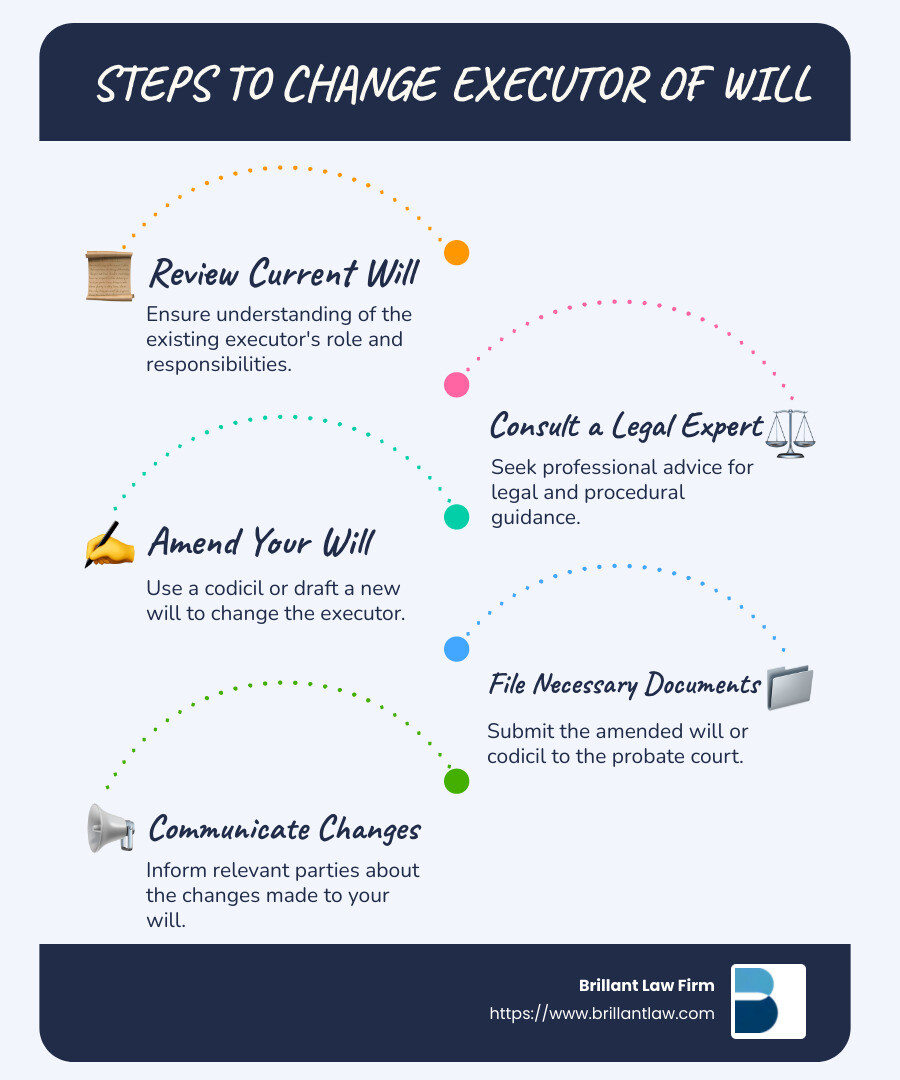
Changing executor of will is an important process for those looking to ensure that their estate is managed effectively and according to their wishes. Whether due to changing relationships, relocations, or other personal reasons, you may want to appoint a different person to handle the responsibilities tied to your estate. Here is a quick summary of the steps involved:
- Review your current will: Ensure you understand the existing executor’s role and responsibilities.
- Consult a legal expert: Seek advice to steer the legal and procedural intricacies.
- Amend your will: Use a codicil or draft a new will to officially change the executor.
- File necessary documents: Submit the amended will or codicil to the probate court.
Executor responsibilities include tasks like managing estate affairs, distributing assets to beneficiaries, and dealing with the probate process. In California, estate management can be complex and may involve legal proceedings in probate court to validate the will, settle debts and taxes, and oversee asset distribution.
I am David Brillant, a seasoned specialist in Trust and Estate law based in California. With experience in changing executor of will, I aim to guide you through this process efficiently, ensuring your estate is handled according to your wishes.
Understanding the Role of an Executor
An executor is the person responsible for managing a deceased person’s estate. This role involves several key duties, including asset distribution, settling debts, and navigating the probate court process. Understanding these responsibilities is crucial if you’re considering changing the executor of your will.
Executor Duties
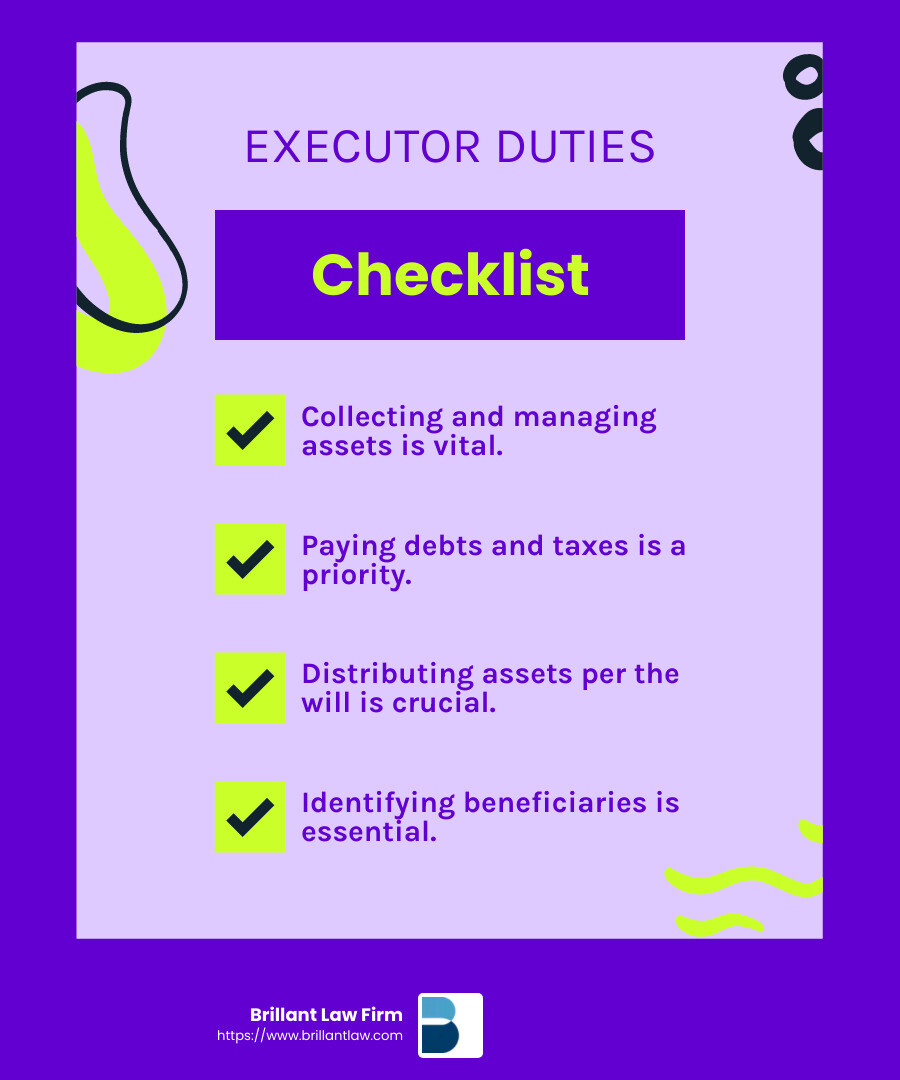
The executor’s primary duty is to ensure the deceased’s wishes, as outlined in their will, are carried out. This includes:
- Collecting and managing assets: The executor must safeguard all estate assets, such as property, investments, and personal belongings.
- Paying debts and taxes: Before distributing assets to beneficiaries, the executor must settle any outstanding debts and taxes.
- Distributing assets: Once debts and taxes are cleared, the executor distributes the remaining assets to the beneficiaries as per the will’s instructions.
Asset Distribution
Asset distribution is a critical part of an executor’s responsibilities. It involves:
- Identifying beneficiaries: The executor must determine who is entitled to what, based on the will.
- Appraising assets: This may involve getting professional valuations for items like real estate or valuable personal property.
- Transferring ownership: The executor facilitates the legal transfer of assets to the beneficiaries, which might require additional legal documentation.
Probate Court
In California, the probate process is a legal procedure that validates the will and oversees the estate’s management. The executor plays a vital role in this process by:
- Filing the will with the probate court: This is the first step in opening a probate case.
- Handling court paperwork: The executor must manage all required documents and filings with the probate court.
- Appearing in court: The executor may need to attend court hearings to address any disputes or issues that arise.
The probate court ensures that the executor follows legal procedures and that the estate is settled fairly and according to the law.
Understanding these responsibilities can help you decide if your current executor is the right person for the job or if a change is necessary. In the next section, we’ll explore the steps involved in changing the executor of your will.
Changing the Executor of Your Will
Sometimes, life changes mean you need a new executor for your will. Whether your current executor is unable or unwilling to serve, or you just want someone else, you can make this change in California using two main methods: a codicil or a new will.
Codicil: A Simple Update
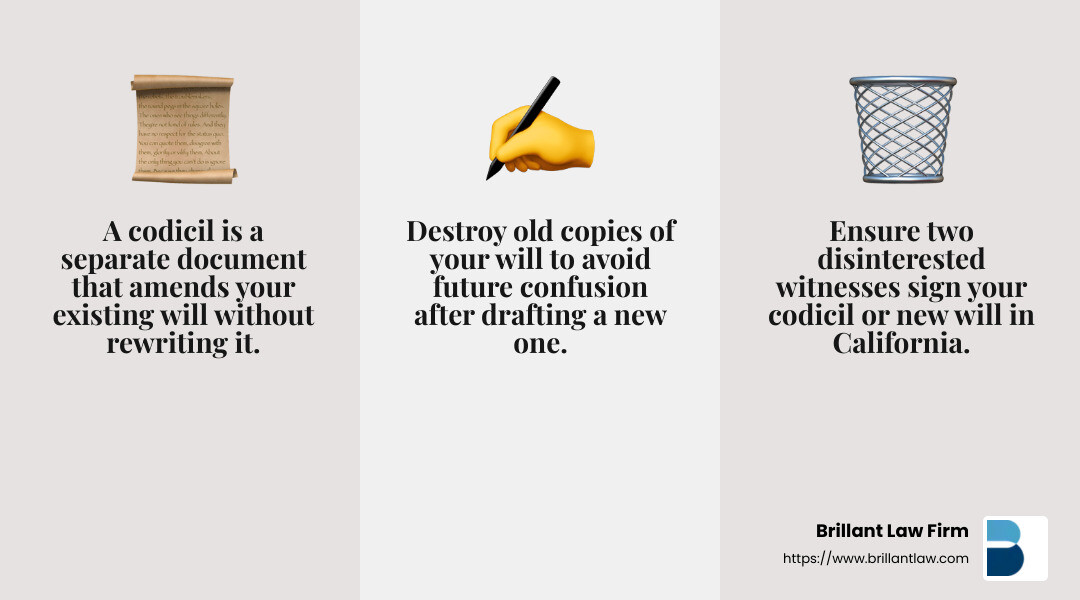
A codicil is like a mini-update to your will. It’s a separate document that modifies parts of your existing will without rewriting the whole thing. If you’re only changing the executor, a codicil might be the easiest option.
Here’s how to do it:
- Choose a New Executor: Make sure your new choice is over 18 and of sound mind.
- Draft the Codicil: Clearly state the change and when it takes effect.
- Sign with Witnesses: You and two disinterested witnesses must sign the codicil. Beneficiaries can’t be witnesses.
- Attach and File: Attach the codicil to your will and file it with your estate planning attorney.
New Will: A Fresh Start
If you’re changing more than just the executor, consider drafting a new will. This option is best when you have multiple updates or significant changes.
Steps to create a new will:
- List Executors and Beneficiaries: Clearly outline who will manage your estate and who will inherit your assets.
- Include Distribution Details: Specify how your assets will be divided.
- Sign with Witnesses: Like the original will, you need two witnesses to sign.
- Destroy Old Copies: To avoid confusion, destroy all copies of your old will. Your new will should state it supersedes any previous versions.
Legal Requirements in California
In California, the process for changing an executor is straightforward but must be done correctly to avoid legal issues. Here are the key requirements:
- Witnesses: Both a codicil and a new will need two witnesses to be valid.
- Age and Mental Capacity: Executors must be adults and mentally capable.
- Filing: Keep your updated documents filed with your attorney.
Making sure your will is up to date is crucial for effective estate planning. Whether you choose a codicil or a new will, ensure that your documents meet all legal standards to avoid complications later.
In the next section, we’ll walk through the specific steps to change the executor of your will, including filing petitions and navigating the probate court process.
Steps to Change the Executor
Changing the executor of your will in California involves a few key steps. Whether you’re using a codicil or drafting a new will, the process includes filing a petition and navigating the probate court. Here’s how you can do it smoothly:
1. File a Petition
The first formal step in changing the executor is to file a petition with the probate court. This document informs the court of your intention to change the executor and outlines the reasons for the change.
- Prepare Your Petition: Clearly state the current executor, your new choice, and your reasons for the change.
- Include Required Information: The petition should include your full name, the name of the current executor, and the name of the new executor.
2. Submit to Probate Court
Once your petition is ready, you need to submit it to the probate court in the county where you reside. This step is crucial to ensure that your request is legally recognized.
- Attach Necessary Documents: Include any supporting documents, such as the codicil or new will, with your petition.
- Pay Filing Fees: Be prepared to pay the necessary filing fees, which can vary but are typically higher in California.
3. Application Process
After filing, the court will review your application. This process ensures that all legal requirements are met and that the change is in the best interest of the estate.
- Court Review: The court will examine your petition and the reasons for the change. They might schedule a hearing to discuss the matter further.
- Approval: If everything is in order, the court will approve the change and officially recognize the new executor.
4. Notify Interested Parties
Once the court approves the change, it’s important to notify all interested parties. This includes beneficiaries and anyone else directly impacted by the change.
- Send Notifications: Inform all parties of the change in executor to prevent any confusion later.
- Update Records: Ensure that all estate planning documents reflect the new executor’s details.
Changing the executor of your will doesn’t have to be daunting. By following these steps and ensuring all legal requirements are met, you can smoothly transition to a new executor.
In the next section, we’ll explore when you might consider making this change, such as during major life events or if your current executor is unable to serve.
When to Consider Changing Your Executor
Life has a way of throwing curveballs, and your choice of executor might need to change as a result. Here are some key moments when changing the executor of your will might be necessary:
Major Life Events
Big changes in your life can impact your estate planning decisions. Events like marriage, divorce, or the birth of a child might prompt you to reconsider who should manage your estate. For example, if you originally chose your spouse as the executor but are now divorced, you might want to appoint a new executor to reflect your current circumstances.
Incapacity of the Executor
If your chosen executor becomes incapacitated, they may no longer be able to fulfill their duties effectively. The executor needs to be of sound mind and physically capable of managing the responsibilities involved. If their health declines, it might be time to select someone else who can handle the role.
Relocation
Your executor’s location can also influence your decision. If they move far away, it might be challenging for them to manage the estate efficiently. While it’s not impossible for an executor to serve from a distance, being local can simplify meetings, court appearances, and estate management tasks. If your executor relocates, consider choosing someone closer to home.
These life changes might mean it’s time to update your will. In the next section, we’ll tackle common questions about the process of changing the executor, including how to do it and potential costs involved.
Frequently Asked Questions about Changing Executor of Will
How do I change the executor of my will?
Changing the executor of your will in California is a straightforward process. You have two main options: adding a codicil or creating a new will.
Codicil: This is a simple amendment to your existing will. It’s ideal if you’re only changing the executor and not making extensive other changes. To do this, write a codicil naming the new executor and the date of this change. Make sure to sign it in front of two witnesses who are not beneficiaries of your will.
New Will: If you’re making broader changes, it might be better to draft a new will. This process is similar to creating your original will. List your new executor, beneficiaries, and asset distribution. Sign it with two witnesses, and remember to destroy all copies of the old will to avoid confusion.
Can I change the executor without an attorney?
Yes, you can change the executor without an attorney, but it’s crucial to ensure that all legal requirements are met. Adding a codicil or drafting a new will can be done as a DIY project. However, keep in mind that even small mistakes can lead to big issues later, especially if your estate is complex.
While you don’t need an attorney, getting legal advice can be beneficial. An estate planning attorney can ensure that all documents are correctly prepared and legally binding, reducing the risk of disputes during probate. If you choose to go it alone, double-check that your changes comply with California laws.
How much does it cost to change the executor?
The cost to change the executor of your will can vary, especially if you decide to hire an attorney. In California, attorney fees can range from $300 to $600 per hour, depending on the complexity of your estate and the attorney’s experience.
If you handle the change yourself, the cost might be limited to notary fees and any potential filing fees if you decide to file the updated documents with a probate court. However, investing in professional help can save time and prevent costly errors during the probate process.
In the next section, we’ll wrap up with some final thoughts on how Brillant Law Firm can support your estate planning needs in California.
Conclusion
Navigating the complexities of estate planning can be daunting, but it doesn’t have to be. At Brillant Law Firm, we specialize in California estate planning and offer expert guidance custom to your unique needs. Whether you’re considering changing the executor of your will or crafting a comprehensive estate plan, we’re here to ensure your wishes are respected and legally sound.
Our team is dedicated to providing you with clear, straightforward advice. With our deep understanding of California’s legal landscape, we help you make informed decisions that protect your estate and your loved ones. We take pride in our commitment to excellence and our ability to simplify complex legal processes.
Choosing the right executor is crucial, and we can assist you in making this decision with confidence. Our experienced attorneys will work closely with you to draft ironclad documents that reflect your intentions and stand up in court.
If you’re ready to take the next step in securing your legacy, contact us at Brillant Law Firm. Let us be your partner in creating a robust estate plan that gives you peace of mind. Visit our Trusts and Estates page to learn more about how we can assist you.
Your estate is important. Trust Brillant Law Firm to guide you every step of the way.


