

Importance of Hiring a California Tax Attorney
If you’re in need of a california tax attorney, you’re likely searching for expertise in navigating complex tax issues. Whether facing an audit, dealing with the IRS or the California Franchise Tax Board (FTB), or needing advice on tax planning and compliance, a specialized attorney can help.
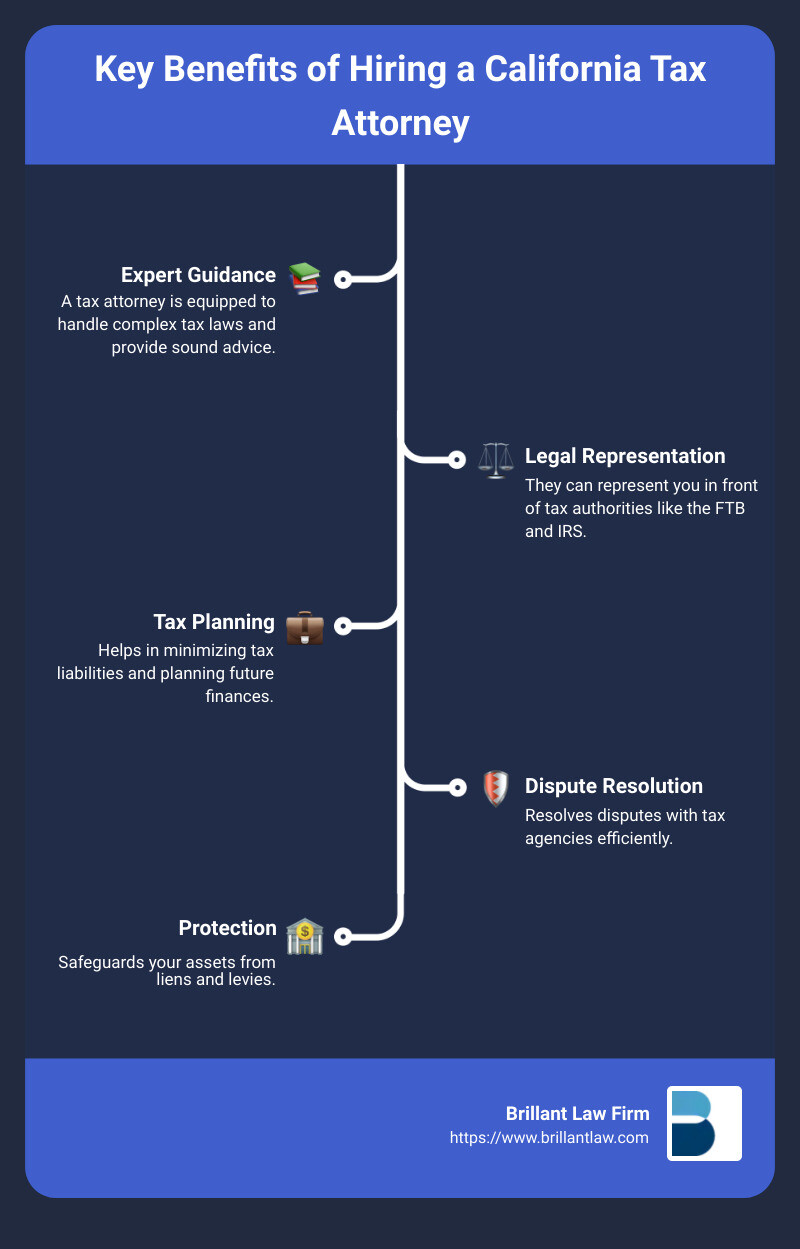
Key Benefits of Hiring a California Tax Attorney:
- Expert Guidance: A tax attorney is equipped to handle complex tax laws and provide sound advice.
- Legal Representation: They can represent you in front of tax authorities like the FTB and IRS.
- Tax Planning: Helps in minimizing tax liabilities and planning future finances.
- Dispute Resolution: Resolves disputes with tax agencies efficiently.
- Protection: Safeguards your assets from liens and levies.
Having a dedicated california tax attorney can be the difference between financial peace of mind and ongoing stress. Their expertise can guide you through intricate tax laws, helping you avoid mistakes that could lead to penalties or recourse actions.
As David Brillant, a full-service tax and trust and estate lawyer, my comprehensive experience enables me to handle everything from simple to highly complex cases. I’m a Certified Specialist in Estate Planning, Trust, and Probate Law by the State Bar of California Board of Legal Specialization, and I hold a Masters in Taxation, with honors. This deep expertise ensures that any California tax attorney service I provide adheres to the highest standards of excellence.
Know your california tax attorney terms:
– irs tax relief attorneys
– tax relief attorney los angeles
Why You Might Need a Tax Attorney
Navigating the labyrinth of tax laws can be overwhelming. Here are some scenarios where you might need a California tax attorney:
Tax Disputes
When disputes arise with tax authorities, having a skilled attorney can make a world of difference. Disputes can stem from disagreements over tax amounts owed, penalties, or interpretation of tax laws. Attorneys can negotiate on your behalf and represent you in administrative hearings and courtrooms.
Audits
Facing an IRS or California Department of Tax and Fee Administration (CDTFA) audit can be intimidating. A tax attorney can:
- Prepare you for the audit: Gather necessary documents and information.
- Represent you: Communicate and negotiate with auditors.
- Protect your rights: Ensure the audit is conducted fairly and legally.
Criminal Tax Issues
Willfully evading taxes can lead to serious consequences, including felony charges, heavy fines, and imprisonment. The IRS Criminal Investigation Division investigates these violations. If you’re facing such charges, a tax attorney can:
- Defend you in court: Provide legal representation.
- Negotiate settlements: Work towards reducing penalties or avoiding jail time.
- Guide you through programs: Help you opt into programs like the Offshore Voluntary Disclosure Program (OVDP) to mitigate risks.
Tax Planning
Effective tax planning can save you money and prevent future issues. A tax attorney can help with:
- Business structuring: Advising on whether to operate as a partnership, LLC, or corporation.
- Transactional advice: Ensuring tax efficiency in mergers, acquisitions, and other deals.
- Estate planning: Minimizing estate taxes and ensuring proper distribution of assets.
FTB Issues
The California Franchise Tax Board (FTB) can be particularly aggressive in its collection procedures. Common issues include:
- Residency disputes: Determining if you owe California taxes.
- Payroll tax issues: Reclassification of independent contractors as employees.
- Collection actions: Navigating wage garnishments, bank levies, and property seizures.
Example: The FTB may try to convert you to a California resident and charge you California tax. Or, the Employment Development Department (EDD) may reclassify your independent contractors as employees, leading to hefty penalties.
In any of these situations, a California tax attorney can provide the expertise and representation you need to protect your interests and achieve favorable outcomes.
Key Qualities to Look for in a California Tax Attorney
When searching for a California tax attorney, it’s crucial to know what qualities to look for. Here are the key attributes that can make a significant difference:
Rapport
Trust and Communication
Building trust is essential. You should feel comfortable discussing sensitive financial information with your attorney. Look for someone who listens carefully and communicates clearly.
Comfort
Your attorney should make you feel at ease. If you don’t feel comfortable, it might be hard to work together effectively.
Experience
FTB and IRS Expertise
Experience dealing with the California Franchise Tax Board (FTB) and the IRS is non-negotiable. These agencies have specific procedures and rules, and your attorney should know them inside out.
California Tax Law
California has unique tax laws. Your attorney should be well-versed in these laws to provide accurate advice and effective representation.
Specific Cases
Experience in handling cases similar to yours is invaluable. For example, an attorney with decades of experience handling thousands of complex tax cases, including those in industries like sports and entertainment, can be a great asset.
Client Reviews
Online Reviews
Check online reviews on platforms like Avvo and LinkedIn. Look for consistent positive feedback, especially about the attorney’s expertise and client service.
Reputation
A strong reputation can give you confidence in your choice. Attorneys active in leadership roles with several bar associations often have a strong standing in the legal community.
In summary, when choosing a California tax attorney, focus on rapport, experience, and client reviews. These qualities will help ensure you get the best possible representation for your tax issues.
Common Tax Issues Handled by California Tax Attorneys
Tax Audits
Facing a tax audit can be stressful. The IRS and the California Department of Tax and Fee Administration (CDTFA) conduct audits to ensure compliance with tax laws. Audits can arise from discrepancies in your tax return or random selection.
Audit Process:
- Notification: You will receive a letter notifying you of the audit.
- Document Review: The auditor will review your financial documents.
- Interview: You may be interviewed to clarify any issues.
- Resolution: The audit concludes with either no change, a refund, or a tax bill.
Tip: Many clients of Tax Lawyers Group have obtained a no-change status or minimal payment, highlighting the importance of expert legal representation.
Tax Fraud
Tax fraud involves intentionally falsifying information on your tax return to reduce tax liability. This can include underreporting income, inflating deductions, or hiding money in offshore accounts.
Criminal Charges and Penalties:
- Felony Charges: Willful tax evasion can lead to felony charges.
- Penalties: Convictions may result in heavy fines and imprisonment.
Example: The IRS Criminal Investigation Division investigates violations and can refer cases to the Department of Justice for prosecution.
Tax Levies and Wage Garnishments
A tax levy allows the IRS to seize your property to satisfy a tax debt. Wage garnishments involve your employer withholding a portion of your paycheck to pay the IRS.
IRS Procedures:
- Assessment: The IRS assesses the tax and sends a bill.
- Final Notice: If you fail to pay, the IRS sends a Final Notice of Intent to Levy.
- Seizure: The IRS can then levy your bank account or garnish wages.
Note: If a levy causes economic hardship, you can apply for a release due to financial hardship.
Sales Tax Audits
The CDTFA conducts sales tax audits to ensure businesses report the accurate amount of sales tax. This is especially common for small to medium-sized businesses.
Compliance:
- Purpose: Confirm accurate sales tax reporting and promote compliance.
- Risk: Sales tax audits can lead to criminal tax fraud actions.
Advice: Small business owners should approach audits with professional assistance to avoid severe consequences.
By understanding these common tax issues, you can better prepare and protect yourself. If you face any of these challenges, consulting a California tax attorney can provide crucial guidance and representation.
How to Fight the California Franchise Tax Board (FTB)
Dealing with the California Franchise Tax Board (FTB) can be intimidating, but there are ways to fight back. Here’s how you can manage appeals, protests, the Office of Tax Appeals, and payment plans to address your tax issues effectively.
Appeals
If you disagree with the FTB’s decision, you have the right to appeal. This process allows you to challenge the tax assessment formally.
- Notice of Proposed Assessment (NPA): First, you’ll receive an NPA, which outlines the FTB’s findings.
- File an Appeal: You must file a written appeal within 60 days of receiving the NPA.
- Hearing: The appeal will be reviewed, and you may have a hearing to present your case.
Tip: Having a seasoned California tax attorney can make a significant difference in presenting a strong appeal.
Protests
If you’re not ready to go to the appeal stage, you can start with a protest. This is a less formal way to dispute the FTB’s findings.
- Written Protest: Submit a written protest within 60 days of the NPA.
- Review: The FTB will review your protest and may request additional information.
- Outcome: The FTB will either adjust your tax bill or uphold their original decision.
Fact: Protests can often resolve issues without needing to escalate to an appeal.
Office of Tax Appeals
If your appeal with the FTB doesn’t go in your favor, you can take your case to the Office of Tax Appeals (OTA). This independent body reviews disputes between taxpayers and the FTB.
- File an Appeal: If the FTB denies your protest, you can appeal to the OTA.
- Hearing: The OTA will hold a hearing where you can present your evidence.
- Decision: The OTA will issue a decision, which can be more favorable than the FTB’s ruling.
Example: In the case of Gilbert Hyatt, his dispute with the FTB went all the way to the Supreme Court, showing that persistence can pay off.
Payment Plans
If you owe taxes but can’t pay in full, the FTB offers payment plans to help you manage your debt.
- Application: Apply for a payment plan through the FTB’s website or by phone.
- Approval: The FTB will review your financial situation and approve a plan that fits your budget.
- Payments: Make regular payments to avoid additional penalties and interest.
Advice: Consult a tax attorney to ensure you get the best terms possible for your payment plan.
By understanding these strategies, you can effectively fight the FTB and manage your tax issues. Up next, we’ll explore Strategies to Save on Taxes in California.
Strategies to Save on Taxes in California
Saving on taxes in California can be challenging, but there are several strategies you can use to reduce your tax burden. Here are some key methods:
IRA Contributions
Contributing to an Individual Retirement Account (IRA) is a smart way to save on taxes.
- Traditional IRA: Contributions may be tax-deductible, which can lower your taxable income.
- Roth IRA: While contributions are not deductible, withdrawals during retirement are tax-free.
Tip: Consult a tax professional to determine which type of IRA is best for your situation.
Mortgage Interest
Homeowners can benefit from mortgage interest deductions.
- Mortgage Interest Deduction: You can deduct the interest paid on your mortgage, which can significantly reduce your taxable income.
- Home Equity Loans: Interest on home equity loans used for home improvements can also be deductible.
Example: If you paid $10,000 in mortgage interest, you could potentially reduce your taxable income by that amount.
Casualty Losses
If you’ve experienced a disaster, you might be able to deduct casualty losses.
- Qualifying Events: Events like fires, earthquakes, and floods usually qualify.
- Deduction Amount: The loss must exceed 10% of your adjusted gross income (AGI) and be reduced by $100 per event.
Fact: The IRS allows you to claim these losses in the year they occurred or the previous year, which can be advantageous for your tax situation.
Lottery Winnings
Winning the lottery is exciting, but it comes with tax implications.
- Federal and State Taxes: Lottery winnings are subject to both federal and state taxes.
- Tax Strategies: Consider taking the annuity option to spread the tax burden over several years, or consult a tax attorney to explore other tax-saving strategies.
Advice: If you win a substantial amount, hiring a California tax attorney can help you steer the complex tax rules and minimize your tax liability.
By leveraging these strategies, you can effectively reduce your tax burden in California. Up next, we’ll answer some frequently asked questions about hiring a California tax attorney.
Frequently Asked Questions about Hiring a California Tax Attorney
How much do tax lawyers make in CA?
Tax lawyers in California can earn a substantial income, but it varies widely based on experience, specialization, and location.
- Average Salary: The average salary for a tax lawyer in California is around $120,000 per year.
- Hourly Rate: Many tax attorneys charge between $200 and $500 per hour, depending on their expertise.
- Weekly/Monthly Earnings: On a weekly basis, this could translate to earnings of approximately $2,300 to $9,600, and monthly earnings of $9,600 to $38,400.
Fact: Highly experienced tax attorneys or those working in large firms might earn significantly more, sometimes exceeding $200,000 annually.
What is the minimum income to file taxes in California?
The minimum income to file taxes in California depends on your filing status, age, and whether you can be claimed as a dependent.
- Single: If you’re under 65 and earned at least $19,310, you must file. If you’re 65 or older, the threshold is $25,760.
- Married Filing Jointly: Couples under 65 must file if their combined income is at least $38,624. If one spouse is 65 or older, the threshold is $45,074; if both are 65 or older, it’s $51,524.
- Head of Household: The minimum income is $32,643 if you’re under 65 and $39,093 if you’re 65 or older.
- Dependents: If you can be claimed as a dependent, the threshold is $12,950 or your earned income plus $400, whichever is greater.
Tip: Even if you don’t meet these thresholds, filing a return might be beneficial to claim refunds or credits.
How to save taxes in California?
Saving on taxes in California involves utilizing various strategies, deductions, and credits. Here are some key methods:
- Tax Strategies:
- Tax-Deferred Accounts: Contributing to 401(k) or IRA accounts can reduce taxable income.
Health Savings Account (HSA): Contributions are tax-deductible, and withdrawals for medical expenses are tax-free.
Deductions:
- Mortgage Interest: Deduct mortgage interest paid on your home.
- State and Local Taxes (SALT): Deduct up to $10,000 in state and local taxes.
Charitable Contributions: Donations to qualified charities can be deducted.
Credits:
- Earned Income Tax Credit (EITC): Available to low-to-moderate income earners.
- Child Tax Credit: Up to $2,000 per qualifying child.
- Education Credits: American Opportunity Credit and Lifetime Learning Credit can reduce tax liability for education expenses.
Example: If you contribute $5,000 to a Traditional IRA and qualify for the SALT deduction, you can significantly lower your taxable income, reducing your overall tax bill.
By understanding these aspects, you can make informed decisions about hiring a California tax attorney and managing your tax obligations effectively.
Conclusion
Navigating tax issues in California can be challenging, but having the right legal support can make all the difference. At Brillant Law Firm, we specialize in providing comprehensive tax litigation services to both individuals and businesses. Our team of experienced attorneys is dedicated to resolving your tax disputes efficiently and effectively.
Why Choose Brillant Law Firm?
Expertise: Our attorneys are well-versed in federal and state tax laws, ensuring you receive the most up-to-date and relevant advice. We handle everything from tax controversies and appeals to proactive tax planning.
Track Record: We have a history of successfully handling complex tax cases. For instance, our firm played a pivotal role in the Borikas and Traiman v Alameda Unified School District cases, securing significant refunds and establishing important legal precedents.
Client-Centered Approach: We prioritize your needs and work diligently to protect your interests. Our goal is to provide custom solutions that address your unique tax situation.
Comprehensive Services: Whether you’re dealing with an IRS audit, facing tax fraud charges, or need assistance with tax levies and wage garnishments, we have you covered. Our team is also skilled in handling sales tax audits and fighting the California Franchise Tax Board (FTB).
Accessible: We offer free 15-minute consultations to help you understand your options and decide on the best course of action.
Contact Us
If you’re facing tax issues and need expert legal advice, don’t hesitate to reach out to us. You can contact Brillant Law Firm at:
Address: 2540 Camino Diablo, Suite 200, Walnut Creek, CA 94597
Website: Brillant Law Firm
Email: info@brillantlaw.com
We understand that tax problems can be overwhelming, but you don’t have to face them alone. Contact us today to see how we can assist you in resolving your tax issues and achieving peace of mind.


