California estate planning services: 5 Powerful Ways for Success 2025
Understanding Estate Planning in California: Protecting Your Legacy
California estate planning services are essential legal arrangements that help you protect your assets, provide for your loved ones, and ensure your healthcare wishes are respected. If you’re looking for estate planning services in California, here’s what you need to know:
Essential California Estate Planning Services:
1. Living Trust Creation – Avoids probate and speeds asset transfer
2. Will Drafting – Specifies guardianship and asset distribution
3. Power of Attorney – Designates someone to handle your affairs if incapacitated
4. Advance Healthcare Directive – Documents your medical preferences
5. Medi-Cal Planning – Protects assets while qualifying for benefits
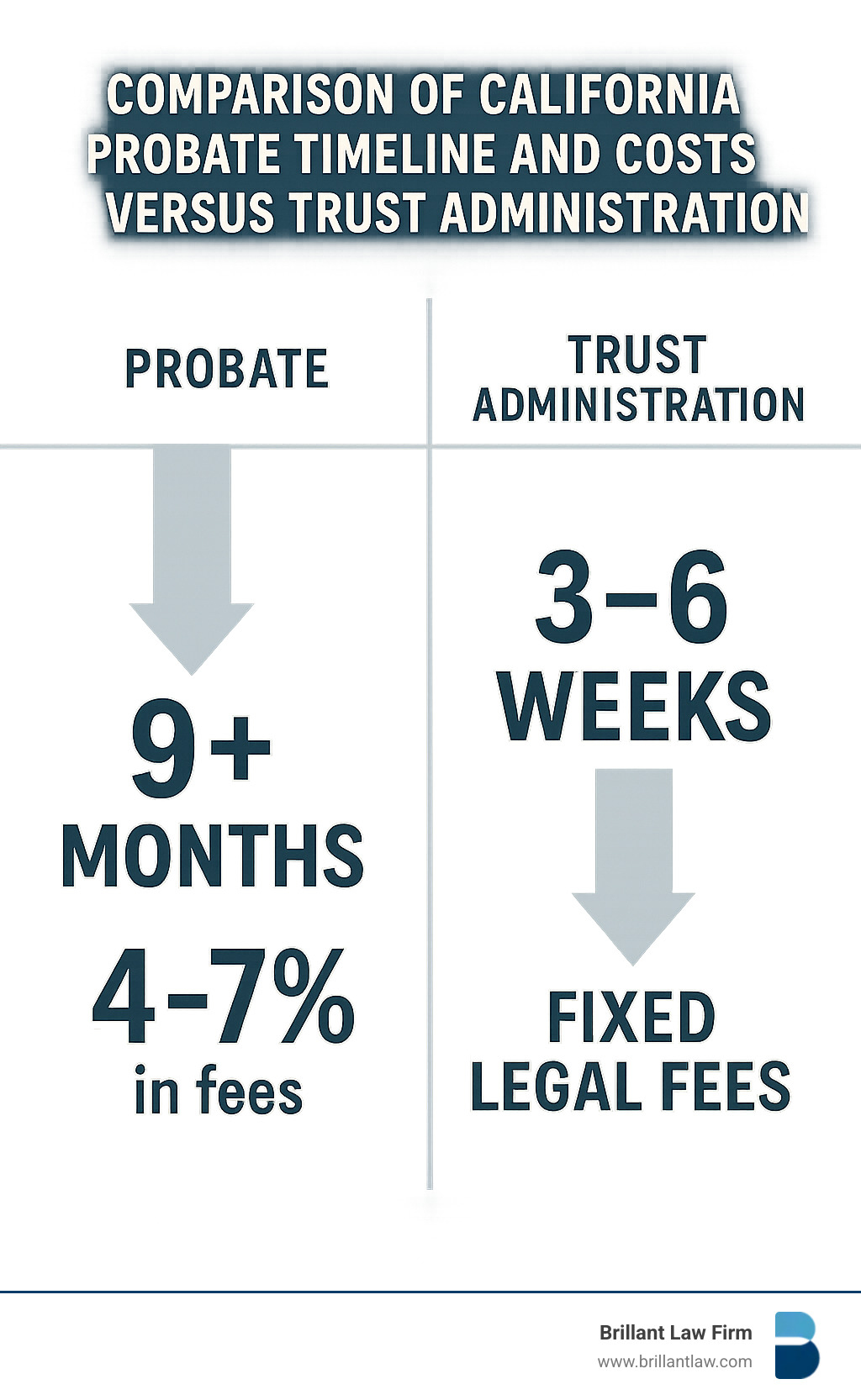
Estate planning isn’t just for the wealthy—it’s for anyone who wants to protect their loved ones from unnecessary stress, delays, and expenses. Without proper planning, your estate could face California’s probate process, which typically costs about 5% of your estate’s value and takes a minimum of 9 months to complete.
Consider this: a $2 million estate (which in California might just be a family home and some savings) could incur $100,000 in probate fees. By contrast, establishing a comprehensive estate plan through a living trust typically costs between $3,000 and $9,000—a significant savings that provides immediate peace of mind.
I’m David Brillant, a Certified Specialist in Estate Planning, Trust and Probate Law by the State Bar of California Board of Legal Specialization, providing comprehensive California estate planning services to clients with simple to complex needs for over two decades. My expertise in both taxation and estate planning allows me to create strategies that protect your assets while minimizing tax implications.
California estate planning services vocabulary:
– Digital estate planning tools
– Durable power of attorney California
1. Start with the Basics: Why Estate Planning Matters in California
Think estate planning is just for the ultra-wealthy? In California, it’s actually something almost everyone needs—especially if you own a home, have children, or simply want to spare your loved ones unnecessary stress after you’re gone. With California’s sky-high property values, even a modest home can push your estate into six or seven figures.
What exactly is your “estate”? It’s everything you own: your home, bank accounts, retirement funds, investments, vehicles, furniture, jewelry, and yes—even that autographed Giants baseball tucked away in your closet. All of these assets matter when planning for the future.
When Californians don’t have an estate plan, the consequences can be serious. If you become incapacitated or pass away without proper documents in place, California’s intestate succession laws take over. This means the state—not you—decides who gets your assets and who makes decisions on your behalf. Not exactly what most of us would choose.
The financial impact can be shocking too. Probate in California typically costs about 5% of your estate’s value. For a $1 million estate (which in many parts of California might just be your family home), that’s $50,000 gone to court costs and attorney fees. And probate isn’t just expensive—it’s slow. The process takes a minimum of 9 months, but often stretches well beyond a year.
California’s community property rules add another layer of complexity, especially for blended families or those in second marriages. These rules state that assets acquired during marriage are generally owned 50/50 by both spouses, which can create unexpected outcomes without proper planning.
Don’t just take my word for it—the Judicial Branch of California provides detailed information about what happens when estate planning is neglected.
Here’s a real-world example we’ve seen: A family in Walnut Creek spent over a year and more than $100,000 in fees settling their mother’s relatively straightforward estate through probate. All this headache—the delays, the expenses, the public court proceedings—could have been avoided with a simple living trust.
California estate planning services aren’t about planning for death—they’re about taking control of your legacy and protecting the people you love. Whether your estate is modest or substantial, having a plan custom to California’s specific laws gives you and your family priceless peace of mind.
2. Core Documents Every Californian Needs
Think of a solid estate plan as your financial and healthcare safety net – something you hope you’ll never need to use, but will be incredibly grateful for if you do. When exploring California estate planning services, you’ll find these essential documents form the backbone of your protection strategy:
A living trust serves as the cornerstone of most California estate plans, allowing your assets to transfer privately and efficiently while bypassing the probate process entirely. Paired with this, your pour-over will acts as a safety net, catching any assets you might have missed and directing them where you intended.
For those “what if” scenarios we don’t like to think about, a durable power of attorney becomes invaluable – it designates someone you trust to manage your finances if you become unable to do so yourself. Similarly, your advance health care directive ensures your medical wishes are respected and appoints someone to make healthcare decisions on your behalf.
If you have children under 18, a guardian nomination is perhaps the most important document you’ll create, naming who will raise your children if something happens to you. Don’t forget the often-overlooked HIPAA release, which gives loved ones access to your medical information during emergencies.

One step many Californians miss: actually funding your trust. Creating the trust document is only half the battle – you need clear instructions for transferring assets into your trust. Without this crucial step, your carefully crafted plan might not work as intended.
Need help organizing all these pieces? Our Estate Planning Checklist walks you through each step.
California Estate Planning Services Essentials
California has specific legal requirements for these documents to be valid. Most require either notarization (typically costing around $15) or proper witness signatures. This small investment in formality provides enormous legal protection down the road.
The trust funding process deserves special attention. Simply signing your trust documents isn’t enough – you need to actually transfer ownership of your assets into the trust by changing deeds, bank accounts, and investment registrations. Skip this step, and those assets might still end up in probate despite your careful planning.
TABLE: Wills vs. Living Trusts in California
| Feature | Will | Living Trust |
|---|---|---|
| Avoids Probate? | ❌ No | ✅ Yes (if fully funded) |
| Public or Private? | Public court record | Private |
| Controls Incapacity? | ❌ No | ✅ Yes |
| Effective When? | At death | Immediately + after death |
| Cost to Set Up | $500–$2,500 | $3,000–$9,000 |
| Update Process | New doc or codicil needed | Amendable at any time |
| Great for Minor Kids? | Guardian nomination possible | Can include minor’s trust terms |
Bottom line: A living trust is the gold standard for avoiding probate, maintaining privacy, and providing flexibility.
While a living trust costs more upfront, the long-term savings are substantial. Consider the peace of mind knowing your family won’t face months of court proceedings during an already difficult time. For most California homeowners, the math makes the choice clear – the probate fees alone on even a modest home would exceed the cost of creating a comprehensive trust by several times over.
3. Navigating Probate: Costs, Delays, and How to Dodge Them
Let’s talk about the elephant in the room—California probate. It’s like a slow-moving train that costs a small fortune to ride. And unfortunately, without proper planning, your loved ones might be forced to take that journey.
Probate in California comes with two absolute certainties: it will drain both time and money from your estate.
Those statutory probate fees are no joke. We’re talking about 4–7% of your estate’s gross value (and yes, that means before debts are paid). To put that in perspective, a modest $500,000 estate would incur around $26,000 in fees, while a $1,000,000 estate jumps to $46,000. And that’s before adding court filing fees, referee fees, appraiser costs, and those mandatory newspaper notices.
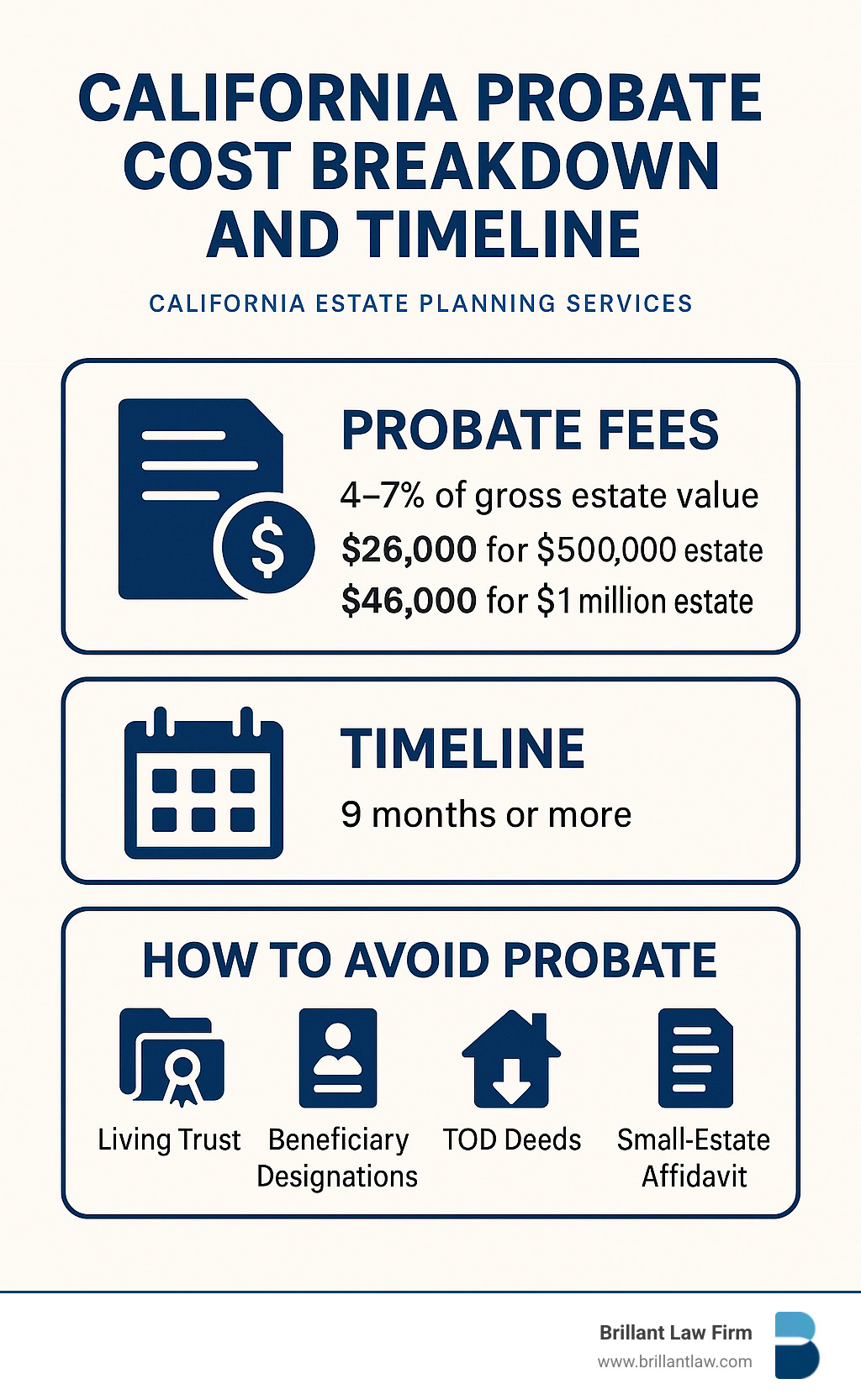
The timeline isn’t any prettier. You’re looking at a minimum of 9 months, but contested or complex estates often stretch to 12–24 months. I’ve seen families wait nearly two years just to access assets they desperately needed.
Perhaps worst of all is the stress. Since probate is court-supervised, everything becomes public record—yes, that means your financial details, family dynamics, and more, all available for anyone curious enough to look.
How can you spare your loved ones this ordeal? Thankfully, several effective strategies exist:
A Living Trust is the gold standard solution. By moving your assets into a properly funded trust, you bypass the court system entirely. Your successor trustee can distribute assets according to your wishes without judicial oversight.
Beneficiary Designations work wonders for certain assets. Your retirement accounts, life insurance policies, and some investment accounts can pass directly to named beneficiaries.
Transfer-on-Death (TOD) Deeds allow California real estate to transfer automatically upon death. They’re relatively simple to create and can be a lifesaver for property that might otherwise trigger probate.
For smaller estates, the Small-Estate Affidavit provides a shortcut. As of 2024, estates under $184,500 may qualify for this simplified procedure, saving both time and money.
Want to dive deeper? Check out our comprehensive guide: How to Avoid Probate or review the official probate fees table from the California courts.
Let me share a quick success story: One of our Castle Hill clients owned a $1.2 million home and was concerned about her heirs facing probate. We helped her implement a transfer-on-death deed and establish a properly funded trust. When she passed away, her children completely bypassed probate—saving over $50,000 and avoiding months of waiting and stress.
With California estate planning services from experienced attorneys, you can create similar protections for your loved ones. The cost of planning ahead is always less than the cost of cleaning up afterward.
4. Special Strategies: Trusts, Medi-Cal Planning, and Asset Protection
Estate planning in California goes well beyond the basics when you have unique needs or substantial assets. Think of these specialized strategies as the difference between off-the-rack and custom-custom clothing—both cover you, but one fits your exact measurements.
Medi-Cal Planning & Nursing Home Costs
Here’s a sobering reality check: nursing home care in California typically costs over $10,000 per month. Without proper planning, families often end up selling the family home or depleting life savings just to qualify for Medi-Cal assistance.
Medi-Cal planning isn’t about gaming the system—it’s about legally structuring your assets so you can qualify for benefits without losing everything you’ve worked for. Many Californians don’t realize that with proper advance planning, you can protect significant assets while still qualifying for care.
For families with disabled loved ones, Special Needs Trusts are invaluable. These specialized trusts ensure your disabled family member can benefit from your estate while maintaining eligibility for crucial government benefits like SSI and Medi-Cal.
Tax Minimization & Proposition 19
California’s Proposition 19 changed the rules dramatically for passing property to children without triggering reassessment. Those low property taxes your parents have enjoyed for decades? They could disappear without careful planning.
“I’ve seen families shocked by property tax bills that suddenly tripled after inheriting a home,” says David Brillant. “With proper trust planning, we can often preserve those favorable tax assessments.”
Dynasty Trusts provide multi-generational protection, allowing your assets to benefit your children, grandchildren, and beyond while shielding those assets from creditors, lawsuits, and even divorce settlements. Think of it as creating a financial fortress that lasts for generations.
Asset Protection Trusts work like financial umbrellas—they shield your hard-earned assets from life’s storms, whether those are business liabilities, malpractice claims, or other unexpected legal challenges.

One detail many people overlook: after you’re gone, your trust will need its own Taxpayer Identification Number (TIN) for proper administration and tax reporting. It’s a small but crucial step that your successor trustee will need to handle.
“What surprises many of my clients is how these advanced planning techniques aren’t just for the ultra-wealthy,” notes Brillant. “If you own a home in California, you likely have enough assets to benefit from these strategies.”
Want to explore more customized approaches for your family situation? Our Family Trust Planning guide walks you through options custom to California residents.
The best time to implement these strategies is now—many protection techniques require years to maximize their effectiveness, especially for Medi-Cal planning. The peace of mind you’ll gain is worth every minute spent planning today.
5. Choosing the Right California Estate Planning Services
Finding the perfect estate planning partner is a bit like finding a great family doctor – you want someone who really gets you, not just someone who hands you a form to fill out.
Experience & Specialization matters tremendously. I recommend looking for a Certified Specialist in Estate Planning, Trust & Probate Law (like our team at Brillant Law Firm). This certification means your attorney has proven expertise specifically in California estate law – not just general practice.
When it comes to fees, transparency is key. Most comprehensive California estate planning services typically range from $3,000 for simpler plans to $9,000 for more complex situations. Some specialized strategies might cost more, but a good attorney will explain why. Be cautious about those “too-good-to-be-true” bargains from trust mills – $499 trusts often lead to expensive problems down the road.

Many firms (including ours) now offer both virtual and in-person consultations. Choose what works best for your schedule and comfort level – the important thing is finding someone who communicates in a way that makes you feel heard and understood.
Ask potential attorneys about their update process. Estate plans aren’t “set it and forget it” documents. How do they handle reviews? What’s their policy on amendments? Are there maintenance fees? A good firm will have clear answers about ongoing support.
Don’t underestimate the power of client reviews and referrals. Read testimonials, ask for references, and check professional memberships. Estate planning is deeply personal – hearing how an attorney has helped others in similar situations can be incredibly reassuring.
California Estate Planning Services Checklist
When evaluating California estate planning services, keep these essentials in mind:
Look for attorneys who offer customization for your unique family structure rather than one-size-fits-all solutions. They should clearly explain their pricing and exactly what services are included. Post-signing support matters too – will they help with trust funding? Provide secure document storage? Offer digital access to your documents?
Smart questions to ask during your consultation:
– “How will you help ensure my trust is properly funded?” (The #1 reason trusts fail!)
– “What happens if I need to reach you urgently if I’m incapacitated?”
– “Do you have experience with Medi-Cal planning or special needs situations?”
– “Will you notify me about relevant law changes that might affect my plan?”
– “What’s your process for amendments, and are there additional fees?”
Red flags to watch for: Attorneys who pressure you to name them as trustees, promise tax outcomes that sound too good to be true, or can’t clearly explain their recommendations in terms you understand.
You’re not just buying documents – you’re building a relationship with someone who will help protect your family’s future. Take your time finding the right fit.
For more on why professional guidance matters, check out our Benefits of an Estate Planning Attorney guide.
Frequently Asked Questions about California Estate Planning Services
Do only wealthy Californians need an estate plan?
No, estate planning isn’t just for the wealthy—it’s for everyone. If you own a home in California (where even modest properties can be worth $1 million), have children, or simply want to spare your loved ones from court headaches, you need an estate plan.
Think of estate planning as less about wealth and more about control. Without a plan, you’re letting California’s intestate laws make crucial decisions about your assets and your children’s guardianship. Even if you’re just starting out in life, basic documents like a power of attorney and advance healthcare directive ensure someone you trust can make decisions if you can’t.
As one client told me, “I thought estate planning was for rich people until my friend’s family spent two years in probate over a small condo in San Jose.” That’s the reality in California—modest estates still face significant probate costs and delays.
How often should I review or update my documents?
Life doesn’t stand still, and neither should your estate plan. I recommend reviewing your plan every 3-5 years at minimum. But you should definitely revisit your documents after major life events like:
- Marriage or divorce
- Birth or adoption of children or grandchildren
- Death of a spouse or beneficiary
- Moving to a new state
- Significant changes in your assets (buying property, receiving an inheritance)
- Changes in tax laws (which happen frequently in California)
Laws change and families evolve. The trust you created when your children were small may need adjustments now that they’re adults with their own children. The power of attorney naming your spouse needs updating after a divorce.
One of my clients finded her 12-year-old trust still listed her ex-husband as successor trustee—something she definitely wanted to change! Regular reviews help catch these issues before they become problems.
Can I change my estate plan after it’s signed?
Absolutely! Most estate planning documents—especially living trusts, wills, and powers of attorney—are fully amendable and revocable during your lifetime as long as you have mental capacity. Estate plans aren’t set in stone.
At Brillant Law Firm, we actually encourage regular reviews and updates. We’ve designed our process to make amendments straightforward and affordable. Sometimes a simple one-page amendment can update a beneficiary or trustee. Other times, a complete restatement of your trust makes more sense if you have multiple changes.
The only documents you can’t easily change are irrevocable trusts, which are specifically designed to be permanent for tax or asset protection purposes. But even these sometimes have modification provisions built in.
One client laughed when I told her she could update her trust: “I’ve been living with the wrong successor trustee for five years because I thought it was too complicated to change!” Don’t make that mistake—your estate plan should evolve as your life does.
Conclusion
Estate planning in California isn’t just about creating legal documents—it’s about providing genuine peace of mind for you and your family. At Brillant Law Firm, we understand that your estate plan represents your life’s work, your family’s security, and your lasting legacy.
When you choose our California estate planning services, you’re not just getting paperwork. You’re partnering with dedicated professionals who take the time to understand your unique situation, concerns, and goals. We pride ourselves on creating custom solutions that protect what matters most to you.
Think about it: the right estate plan can save your loved ones from months of probate delays, thousands in unnecessary fees, and the stress of navigating complex legal matters during an already difficult time. It’s truly one of the most thoughtful gifts you can leave behind.
Our team brings decades of specialized experience to your estate planning journey. As Certified Specialists in Estate Planning, Trust and Probate Law by the State Bar of California, we offer that perfect blend of technical expertise and compassionate guidance that turns complicated legal concepts into clear, actionable plans.
Ready to take the next step toward securing your legacy? Schedule a consultation today and experience the difference that personalized California estate planning services can make. We’ll walk you through the process at your pace, answer all your questions, and design a comprehensive plan that gives you and your family lasting protection.
Brillant Law Firm proudly serves clients throughout Walnut Creek, Saranap, San Miguel, and Castle Hill, CA. We specialize in bespoke, ironclad estate strategies custom to your unique needs. Contact us to get started on your personalized California estate planning services journey.