

Why California Estate and Trust Law Matters
California estate and trust law is crucial for anyone looking to plan the distribution of their assets or manage an estate responsibly. Estate planning and trust administration offer a structured approach to ensure your wishes are honored, taxes are minimized, and your loved ones are protected.
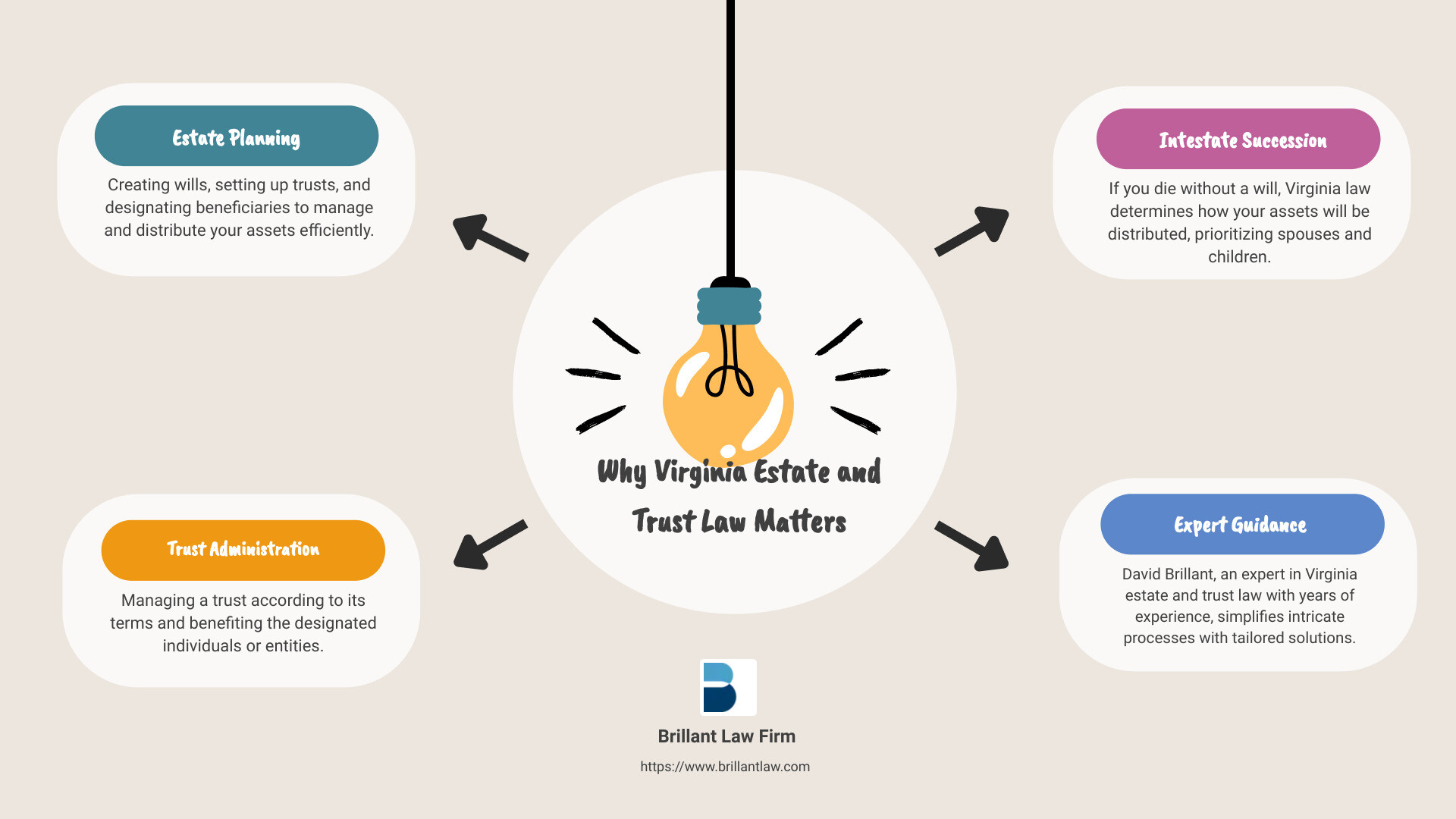
Here’s a quick rundown of California estate and trust law:
- Estate Planning: This involves creating wills, setting up trusts, and designating beneficiaries to manage and distribute your assets efficiently.
- Trust Administration: This process involves managing a trust according to its terms and benefiting the designated individuals or entities.
- Intestate Succession: If you die without a will, California law determines how your assets will be distributed, typically prioritizing spouses and children.
I’m David Brillant, an expert in California estate and trust law with years of experience in handling complex estate planning, trust administration, and litigation. My goal is to simplify these intricate processes and provide custom solutions to protect your legacy.
Understanding California Estate and Trust Law
Key Differences Between Wills and Trusts
When it comes to California estate and trust law, understanding the difference between a will and a trust is crucial.
Wills
A will is a legal document that outlines how your assets should be distributed after your death. It becomes effective only upon death and must go through probate—a court-supervised process to validate the will and distribute assets. Wills can include instructions for:
- Distribution of assets to heirs and beneficiaries
- Appointment of an executor
- Guardianship for minor children
- Funeral and burial instructions
One downside is that wills are public records, meaning anyone can access them once they are filed with the probate court.
Trusts
A trust is a legal arrangement where you (the grantor) transfer assets to a trustee to manage on behalf of your beneficiaries. Trusts can be either revocable or irrevocable and can take effect during your lifetime or after death. Key benefits include:
- Privacy: Trusts are not public records, so your financial affairs remain private.
- Avoiding Probate: Assets in a trust generally do not go through probate, speeding up distribution and reducing costs.
- Control: Trusts allow for detailed instructions on how and when beneficiaries receive assets.
Trusts can be complex, but they offer greater control and privacy compared to wills.

Intestate Succession in California
Intestate succession is the process that takes place when someone dies without a will. In California, the law dictates how assets are distributed, prioritizing close family members. Here’s a quick rundown:
- Spouse and Children: If you are married and have children, your spouse typically inherits the entire estate if all children are also the spouse’s. If you have children from another relationship, the estate is split.
- No Spouse or Children: If there is no spouse or children, the estate goes to other close relatives—parents, siblings, and then more distant relatives.
- No Living Relatives: If no family members can be found, the estate will revert to the state.
This legal framework ensures that assets are distributed in a predictable manner, but it may not align with your personal wishes. Therefore, having a will or trust is essential for precise estate planning.

By understanding these key aspects of California estate and trust law, you can make informed decisions to protect your assets and ensure your wishes are honored.
Next, we’ll dive into the specifics of creating and managing trusts in California.
Creating and Managing Trusts in California
Creating and managing a trust in California involves several important steps and responsibilities. Understanding these can help ensure your assets are protected and your wishes are fulfilled.
How to Put Your House in a Trust
Putting your house in a trust can offer many benefits, including avoiding probate and ensuring privacy. Here’s a simple guide to get you started:
Create a Trust Document: The first step is to draft a trust document. This legal document outlines the terms of the trust, including the assets it holds and the beneficiaries. You can work with an estate planning attorney to ensure it meets California’s legal requirements.
Notarize the Document: Once the trust document is prepared, it needs to be signed in the presence of a notary public. This step formalizes the document and makes it legally binding.
Change the Title: To transfer your house into the trust, you must change the title of the property. This involves preparing a new deed that transfers ownership from you to the trust. The deed must be signed and recorded with the local county recorder’s office.
Appoint a Trustee: The trust document will name a trustee, who is responsible for managing the trust assets according to your wishes. This could be you, a family member, or a professional fiduciary.
Can a Trustee Also Be a Beneficiary?
Yes, a trustee can also be a beneficiary, but there are important considerations to keep in mind:
Roles and Responsibilities: The trustee has a fiduciary duty to manage the trust assets in the best interests of the beneficiaries. This means they must act impartially and avoid conflicts of interest.
Grantor, Trustor, Settlor: These terms all refer to the person who creates the trust. In many cases, the grantor can also be the trustee and beneficiary during their lifetime, especially in a revocable living trust.
Beneficiary’s Rights: As a beneficiary, the trustee will receive benefits from the trust according to the terms set out in the trust document. This dual role requires careful management to ensure that the trustee does not favor their interests over those of other beneficiaries.
Creating and managing a trust involves understanding these roles and responsibilities to ensure the trust operates smoothly and fulfills its intended purpose.
By carefully drafting the trust document, properly transferring assets, and choosing the right trustee, you can create a robust estate plan that protects your assets and honors your wishes.
Next, we’ll explore the various estate planning services available in California to help you achieve your goals.
Estate Planning Services in California
Estate Planning
Planning for the future is crucial, and California estate and trust law provides a framework to ensure your wishes are honored. Our experienced team at Brillant Law Firm helps you define your goals and turn your “wishes” into concrete plans.
Whether you’re looking to secure your family’s financial future or ensure your healthcare directives are followed, we craft customized estate plans that fit your unique needs. We help you draft wills, set up trusts, and designate beneficiaries, making sure every aspect of your estate is covered.
Estate Settlement
Settling an estate can be an overwhelming process, filled with many steps and potential traps. Our team has years of experience guiding families through this sensitive time. We handle everything from probate court proceedings to the distribution of assets, ensuring each step is executed with technical skill and sensitivity.
In some cases, we relieve families of the burden by serving as executor ourselves. This ensures that the estate is settled expediently and in accordance with the decedent’s wishes, without adding stress to grieving family members.
Trust Administration
Managing a trust is rarely simple. Our team, acting as a professional fiduciary, accepts complexity and solves problems with the objectivity of a neutral party. We ensure that the trust is managed according to its terms and in the best interest of the beneficiaries.
We can also serve in an advisory role to trustees, offering expert guidance to ensure that the trust operates smoothly and fulfills its intended purpose. Our neutral stance helps in making objective decisions, free from personal bias, which is crucial for maintaining trust integrity.
By offering a comprehensive range of estate planning services, Brillant Law Firm ensures that your legacy is protected, your loved ones are cared for, and your wishes are honored.
Frequently Asked Questions about California Estate and Trust Law
Is a Trust Better Than a Will in California?
When deciding between a trust and a will, it’s important to understand the key differences.
Control of Assets: A trust offers more control over how and when your assets are distributed. For example, you can specify that beneficiaries receive funds at certain ages or milestones.
Probate: A major advantage of a trust is that it can help you avoid probate. Probate is a lengthy and costly legal process that happens after someone dies. Trusts bypass this process, allowing assets to be distributed more quickly and privately.
Privacy: Wills become public records once they go through probate. Trusts, on the other hand, remain private, keeping your financial matters confidential.
Immediate Effect: Trusts can take effect immediately upon your death or even while you’re alive, depending on the type. Wills only take effect after you pass away and have been validated by a court.
How Do I Put My House in a Trust in California?
Putting your house in a trust involves several steps:
Trust Document: First, create a trust document. This legal document outlines the terms of the trust, including who the trustee and beneficiaries are.
Notary Public: Have the trust document notarized. This adds a layer of legal validation to the document.
Title Change: Change the title of your house to reflect the trust. You’ll need to file a new deed with the local county recorder’s office, showing the trust as the new owner.
Trustee: Make sure the trustee understands their responsibilities. The trustee will manage the property according to the terms you’ve set in the trust document.
How Long Does an Executor Have to Settle an Estate in California?
The timeline for settling an estate in California can vary, but here are the general steps:
Appointment: The executor is officially appointed by the court.
Inventory: The executor must file an inventory of the estate’s assets, usually within four months of their appointment.
Debts and Taxes: The executor must pay any debts and taxes owed by the estate.
Distribution: Finally, the executor distributes the remaining assets to the beneficiaries.
California Law: While there is no strict deadline, executors are expected to settle the estate “as soon as possible,” typically within a year. However, complex estates may take longer.
By understanding these aspects of California estate and trust law, you can make more informed decisions about your estate planning needs. If you have further questions, Brillant Law Firm is here to help.
Conclusion
At Brillant Law Firm, we pride ourselves on our expertise in California estate and trust law. Our team is dedicated to providing you with the highest quality legal services, ensuring that your estate planning and trust administration needs are met with excellence and commitment.
We understand that each client’s situation is unique. That’s why we offer bespoke strategies custom to your specific goals and circumstances. Whether you need help with estate planning, estate settlement, or trust administration, our experienced attorneys are here to guide you every step of the way.
Our firm’s dedication goes beyond just legal advice; we strive to build lasting relationships with our clients. We believe in a holistic approach that not only addresses your immediate legal needs but also plans for your future.
If you’re ready to take the next step in securing your legacy, contact us today. Our team is here to provide the expertise and support you need to steer California estate and trust law with confidence.


