

When dealing with shareholder disputes, it’s crucial to have a skilled business shareholder dispute lawyer who can guide you through complex business conflicts and offer effective legal solutions. At Brillant Law Firm, we understand the nuances of these disputes and are dedicated to resolving them swiftly and efficiently.
Shareholder disputes can bring even the most successful businesses to a standstill, causing significant disruption to operations and governance. Such conflicts often arise due to disagreements over the company’s direction, compensation issues, or breaches of fiduciary duties. These issues can quickly escalate, making it essential to address them with professional guidance.
In California, experienced legal counsel can help mediate these conflicts, bringing clarity and resolution to ensure that your business remains focused on its goals. Alternative dispute resolution methods, such as mediation and arbitration, can be effective tools in reaching amicable agreements without the need for court intervention.
I’m David Brillant, and with my extensive expertise as a business shareholder dispute lawyer, I have successfully steerd complex legal challenges to protect clients’ interests in California. My background in estate planning, trust, and probate law, coupled with a deep understanding of taxation, allows me to offer custom solutions to each unique case.
Understanding Shareholder Disputes
Shareholder disputes can be a significant challenge for any business. Understanding the root causes and how to address them is essential for maintaining harmony and protecting the interests of all parties involved. Let’s explore some common aspects of shareholder disputes: breach of fiduciary duty, shareholder agreements, and minority shareholder rights.
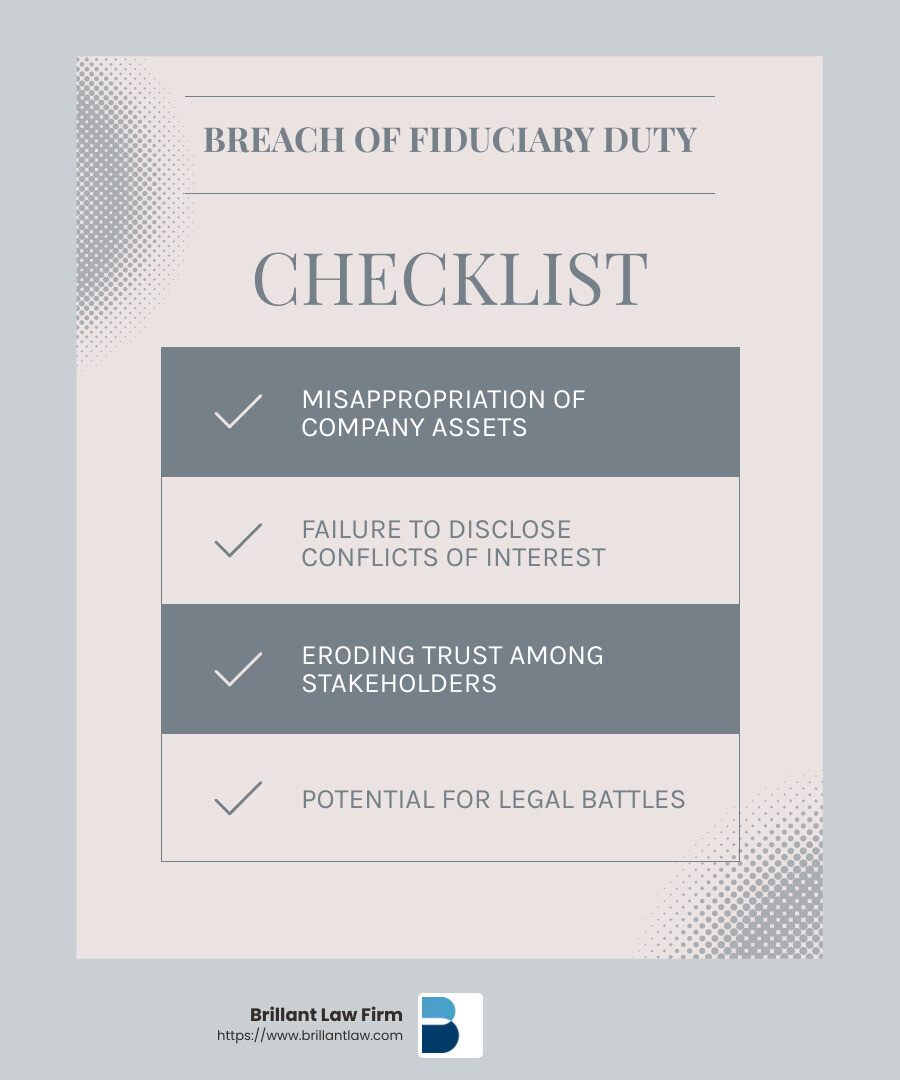
Breach of Fiduciary Duty
A fiduciary duty is an obligation to act in the best interest of another party. In the context of businesses, directors and officers owe this duty to the shareholders and the company itself. When these duties are breached, it can lead to serious disputes. Examples include misappropriating company assets or failing to disclose conflicts of interest. These breaches can erode trust and lead to legal battles.
Shareholder Agreement
A well-drafted shareholder agreement is a crucial tool in preventing disputes. This document outlines the rights and responsibilities of shareholders, providing clear guidelines on matters such as share transfers, voting rights, and dispute resolution. Without such an agreement, misunderstandings can easily arise, leading to conflicts that could have been avoided.
For example, in closely held corporations, founders may want to restrict share transfers to maintain control. A shareholder agreement can specify these restrictions and provide mechanisms like the right of first refusal to address potential issues.
Minority Shareholder Rights
Minority shareholders often face challenges due to their limited voting power. This can lead to feelings of exclusion or unfair treatment, especially when majority shareholders make decisions that affect the entire company. In California, minority shareholders have certain protections against oppressive actions by majority shareholders. These protections help ensure that their voices are heard and that they have recourse if they believe they are being treated unfairly.
By understanding these key components of shareholder disputes, businesses can take proactive steps to prevent conflicts and ensure smooth operations. In California, having a business shareholder dispute lawyer can provide invaluable guidance and support in navigating these complex issues.
Transitioning to the next section, we’ll explore how these disputes can be effectively resolved through various methods.
Common Causes of Shareholder Disputes
Shareholder disputes can disrupt even the most successful companies. Understanding the common causes of these conflicts can help businesses prevent them. Let’s explore three major areas: breach of agreement, fiduciary mismanagement, and compensation discrepancies.
Breach of Agreement
A shareholder agreement is like a rulebook for the company’s operations and shareholder interactions. Breaching this agreement is a common cause of disputes. Such breaches might include:
Unauthorized Share Transfers: Selling or transferring shares without following the proper procedures can lead to disputes. Shareholder agreements often include specific terms for transferring shares to prevent these issues.
Competing Business Activities: Engaging in business activities that compete with the company is another breach. This can harm the company and create tension among shareholders.
A clear and comprehensive shareholder agreement can help prevent these breaches by setting out rules and procedures that all parties must follow.
Fiduciary Mismanagement
Fiduciary mismanagement occurs when those in positions of trust, such as directors or officers, fail to act in the best interests of the company and its shareholders. Examples include:
Conflict of Interest: Not disclosing personal interests that conflict with company interests can lead to disputes. Transparency is key to avoiding conflicts of interest.
Misappropriation of Assets: Using company assets for personal gain is a serious breach of fiduciary duty. This can include skimming cash or using company resources for personal use.
Such mismanagement can erode trust and lead to legal action. Companies must ensure that directors and officers understand their fiduciary responsibilities to prevent these issues.
Compensation Discrepancies
Compensation discrepancies often arise when shareholder-employees feel they are not being paid fairly compared to their contributions. This can lead to:
Unequal Pay: Differences in pay without clear justification can cause dissatisfaction and disputes among shareholders.
Unjustified Bonuses: Awarding bonuses or other compensation without proper reasoning can also lead to conflict.
To avoid these issues, companies should establish clear compensation policies that are transparent and justified by performance and contribution.
By understanding these common causes of shareholder disputes, businesses can take proactive measures to prevent them. In California, having a business shareholder dispute lawyer can provide essential guidance and support in managing these complex issues.
Next, we’ll dig into how these disputes can be effectively resolved through methods like negotiation and mediation.
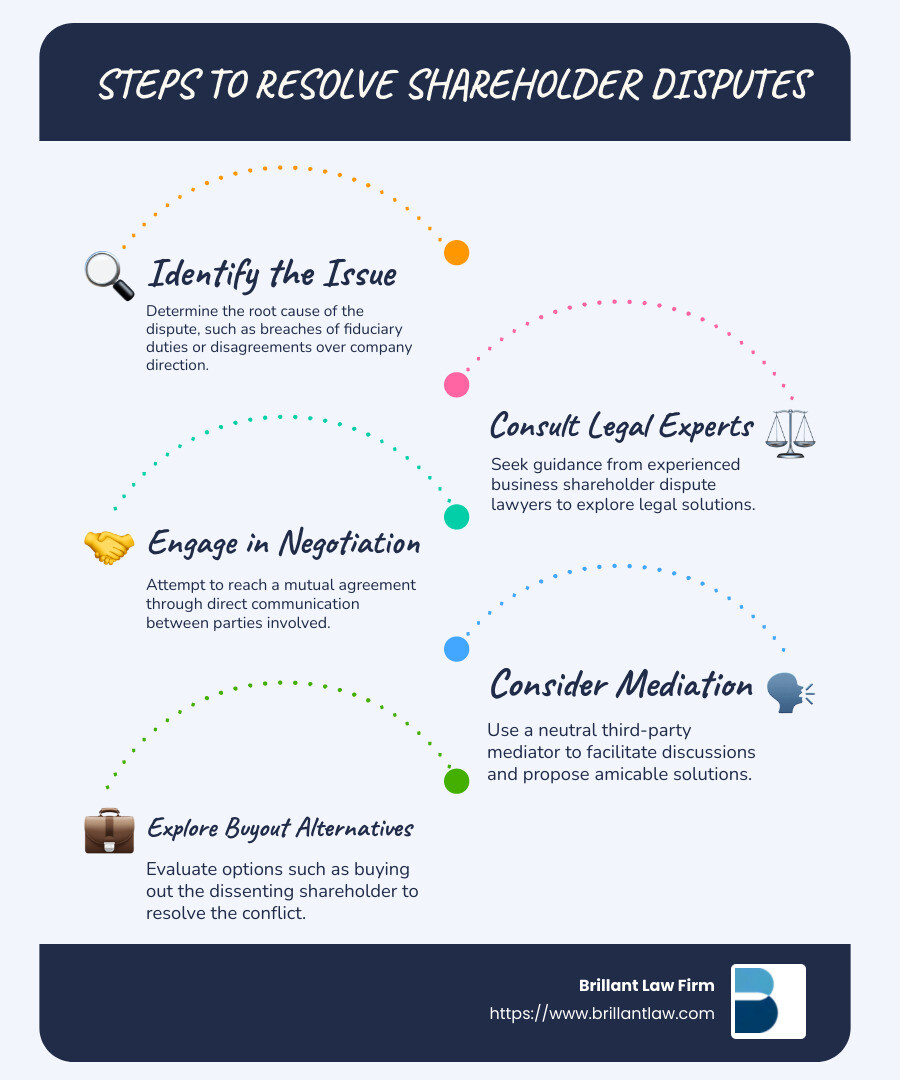
Resolving Shareholder Disputes
Resolving shareholder disputes is crucial for maintaining the health and success of a business. Let’s explore some effective strategies: negotiation, mediation, and buyout options.
Negotiation
Negotiation is often the first step in resolving disputes. It involves open discussions between the parties to find a mutually agreeable solution. Here’s why negotiation can be effective:
Cost-Effective: Unlike legal battles, negotiation saves time and money. It avoids the high costs associated with litigation.
Preserves Relationships: By fostering communication, negotiation helps maintain business relationships. This is important for companies where shareholders continue to work together.
Flexible Solutions: Negotiation allows for creative solutions that might not be possible in a court ruling. Parties can tailor agreements to suit their specific needs.
To succeed in negotiation, have a clear understanding of the shareholder agreement and the issues at hand. A business shareholder dispute lawyer can provide valuable insights and strategies during these discussions.
Mediation
If negotiation doesn’t resolve the dispute, mediation is a strong next step. Mediation involves a neutral third party, the mediator, who facilitates discussions and helps the parties reach a resolution.
Neutral Perspective: Mediators provide an unbiased view, helping parties see the issue from different angles. This can lead to breakthroughs in stalled discussions.
Confidential Process: Mediation is private, allowing parties to discuss sensitive issues without public exposure. This confidentiality can encourage more open communication.
Voluntary Participation: Unlike court decisions, mediation outcomes are voluntary. This means all parties must agree to the resolution, ensuring buy-in and commitment.
Mediation is particularly useful for complex disputes where emotions run high. A skilled mediator can guide the process, helping parties find common ground.
Buyout Options
When negotiation and mediation aren’t enough, buyout options may be considered. This involves one party buying out the shares of the other to resolve the dispute.
Clean Break: A buyout can provide a clear resolution, allowing the business to move forward without ongoing conflict.
Fair Valuation: It’s crucial to agree on a fair valuation of the shares. This can prevent further disputes and ensure both parties feel treated fairly.
Dissenters’ Rights: In some cases, dissenting shareholders can exercise their rights to receive a fair value for their shares, as outlined in the shareholder agreement.
Buyout options can be complex and often require professional guidance to steer. A business shareholder dispute lawyer can help ensure that the process is fair and legally sound.
By using these methods, businesses can resolve disputes effectively and maintain their focus on growth and success. Next, we’ll explore the vital role of a business shareholder dispute lawyer in navigating these challenges.
The Role of a Business Shareholder Dispute Lawyer
When shareholder disputes arise, a business shareholder dispute lawyer becomes an essential ally. Their role extends beyond legal representation; they’re key in resolving disputes and safeguarding shareholder rights.
Legal Representation
A dispute lawyer provides expert legal representation, ensuring that your interests are protected throughout the process. They are your voice in negotiations, mediations, or court proceedings. Their expertise helps in:
Preparing and Filing Paperwork: Legal proceedings involve a lot of paperwork. Lawyers ensure all documents are carefully prepared and filed on time. This includes complaints, motions, and any necessary legal documents.
Court Representation: If disputes escalate to court, having a skilled lawyer is invaluable. They manage everything from opening statements to examining witnesses, aiming for a favorable outcome.
Dispute Resolution
Resolving disputes efficiently is crucial for business continuity. Lawyers play a critical role in steering the process towards resolution:
Negotiation and Mediation: Lawyers are adept at both negotiation and mediation. They know how to steer discussions to reach a mutually satisfactory agreement, often avoiding the need for costly litigation.
Alternative Dispute Resolution (ADR): Many shareholder agreements include ADR clauses, requiring mediation or arbitration before litigation. Lawyers guide you through these processes, ensuring all procedures are followed correctly.
Buyout Assistance: In cases where a buyout is necessary, lawyers ensure a fair valuation and smooth transaction, safeguarding your interests.
Protecting Shareholder Rights
Shareholder rights are a cornerstone of any business. Lawyers ensure these rights are upheld:
Fiduciary Duties: They assess whether fiduciary duties have been breached. A breach can lead to serious legal consequences, and lawyers help steer these complexities.
Dissenters’ Rights: In situations like mergers, dissenting shareholders may exercise appraisal rights to receive fair value for their shares. Lawyers guide shareholders through this process, ensuring fair compensation.
Minority Shareholder Protections: Lawyers ensure minority shareholders are not unfairly treated, advocating for their rights in any dispute.
By involving a business shareholder dispute lawyer, businesses can focus on growth while ensuring disputes are handled professionally and legally. Next, we’ll address some frequently asked questions about shareholder disputes to further clarify this complex topic.
Frequently Asked Questions about Shareholder Disputes
How do you resolve shareholder disputes?
Resolving shareholder disputes often requires a mix of negotiation, mediation, and legal avenues. Here’s a simple breakdown:
Negotiation: This is the first step. Shareholders sit down, often with their lawyers, to discuss the issue and try to reach a mutual agreement. Think of it as a business meeting where everyone aims to find common ground.
Mediation: If negotiation stalls, mediation is the next step. A neutral third party helps facilitate the discussion, aiming for a solution that satisfies all parties. It’s less formal than court and can help maintain business relationships.
Legal Remedies: When disputes can’t be resolved through talks, legal remedies come into play. This might involve court proceedings where a judge decides the outcome. Legal action is usually the last resort due to its cost and time.
What is an example of a shareholder dispute?
Shareholder disputes can arise from various situations. A common example is a breach of agreement. Imagine a shareholder failing to invest the agreed capital into the company. This breach can lead to serious disagreements.
Another example is valuation disputes. When a shareholder wants to sell their shares, disagreements over the share’s value can occur. These disputes often require expert valuation and sometimes legal intervention to resolve.
When can a shareholder sue another shareholder?
A shareholder can sue another when there’s a violation of shareholder rights. This includes situations like:
Breach of Fiduciary Duty: If a shareholder believes another has acted against the company’s best interests, they can take legal action. For instance, using company resources for personal gain is a breach.
Unfair Treatment: Minority shareholders who feel sidelined or unfairly treated can sue. This might happen if they’re denied access to financial records or not given their rightful dividends.
Legal Action for Breaches: Legal action is also an option if there’s a clear breach of the shareholder agreement, such as unauthorized sale of shares.
Understanding these scenarios helps shareholders know when it’s appropriate to seek legal intervention. Up next, we’ll dig into the conclusion, highlighting how Brillant Law Firm offers bespoke strategies and a commitment to excellence in handling shareholder disputes.
Conclusion
When it comes to resolving shareholder disputes, Brillant Law Firm stands out with its bespoke strategies and unwavering commitment to excellence. We understand that every business conflict is unique, requiring custom solutions that align with your specific needs and goals.
Our approach is simple yet effective. We start by getting to know your business inside and out. This allows us to craft personalized strategies that not only aim to resolve the current dispute but also prevent future conflicts. Our deep expertise in business, civil litigation, and appeals ensures that you have a strong advocate on your side.
At Brillant Law Firm, we believe in transparency and integrity. Our clients can expect fair and honest billing practices, with no hidden costs. This commitment to clear communication extends to every aspect of our service, ensuring that you are informed and confident in the steps we take together.
Whether dealing with a breach of fiduciary duty or navigating complex shareholder agreements, our team is dedicated to providing you with the highest level of legal representation. We aim to resolve disputes efficiently, often through negotiation or mediation, to save you time and resources.
The right legal support can make all the difference. If you’re facing a shareholder dispute, trust Brillant Law Firm to guide you through the process with expertise and care. Find more about how we can help by visiting our Business Litigation Attorney page.
In business, conflicts are inevitable, but with Brillant Law Firm by your side, you can turn those boardroom battles into legal solutions that safeguard your business’s future.


