

Business restructuring services are essential tools for companies facing financial distress, seeking business recovery, or planning a strategic turnaround. These services typically involve a mix of financial restructuring, operational changes, and strategic business reviews aimed at stabilizing a company, enhancing liquidity, and laying the groundwork for long-term success.
When businesses enter choppy waters, it’s often a result of rapidly changing market conditions, rising costs, or misalignments in strategy. To steer these challenges successfully, companies must quickly accept business restructuring services. Key focus areas include:
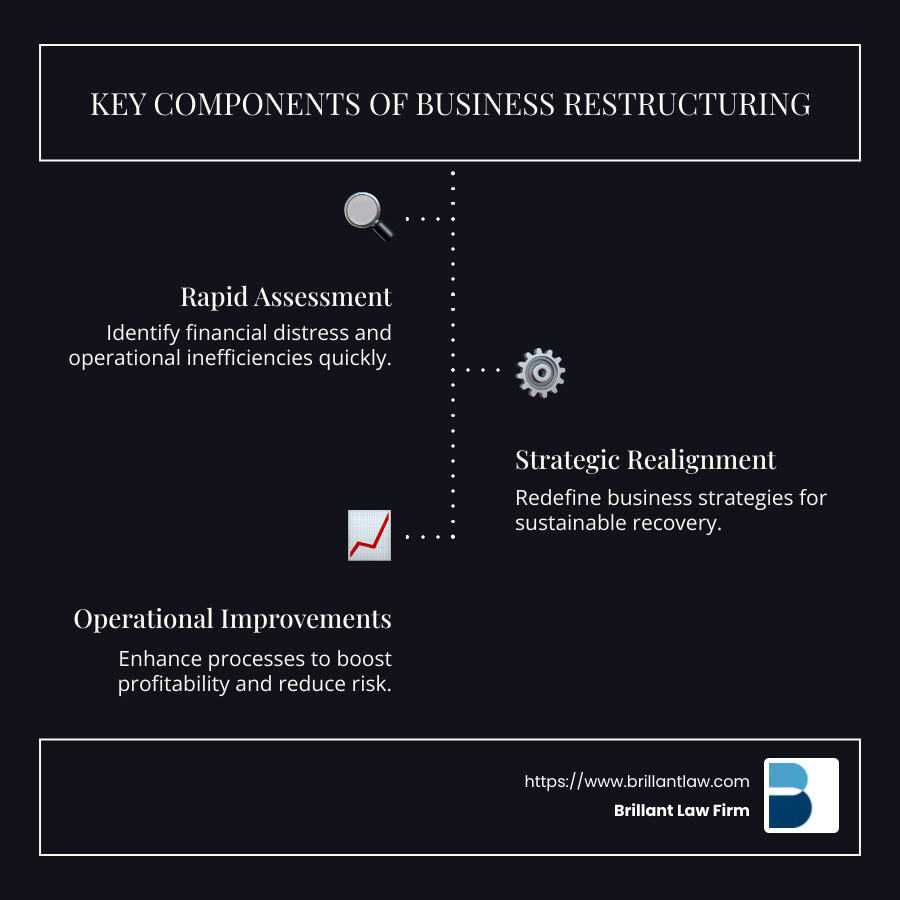
- Assessing Current Challenges: Identifying the roots of financial distress and operational inefficiencies.
- Strategic Realignment: Redefining business strategies and restructuring to achieve sustainable recovery.
- Operational Adjustments: Enhancing processes to improve profitability and reduce risk.
For readers seeking quick insights, the essence of business restructuring is about changing adversity into opportunity. The ultimate goal is to preserve value, minimize losses, and position the company for future growth.
I’m David Brillant, a seasoned lawyer with a strong background in Trusts, Estates, and Business Restructuring Services, all custom to the unique regulatory landscape of California. With deep expertise in navigating complex legal and financial challenges, my team at Brillant Law Firm is dedicated to crafting bespoke restructuring strategies that drive success.
Quick Business restructuring services terms:
– Business Owner Legal Needs
– Business tax advisory services
Understanding Business Restructuring Services
Business restructuring services are vital for companies facing financial challenges or seeking a strategic turnaround. These services involve various approaches like financial restructuring, operational restructuring, and portfolio restructuring. Each plays a crucial role in stabilizing and revitalizing a business. Let’s break down these components:
Financial Restructuring
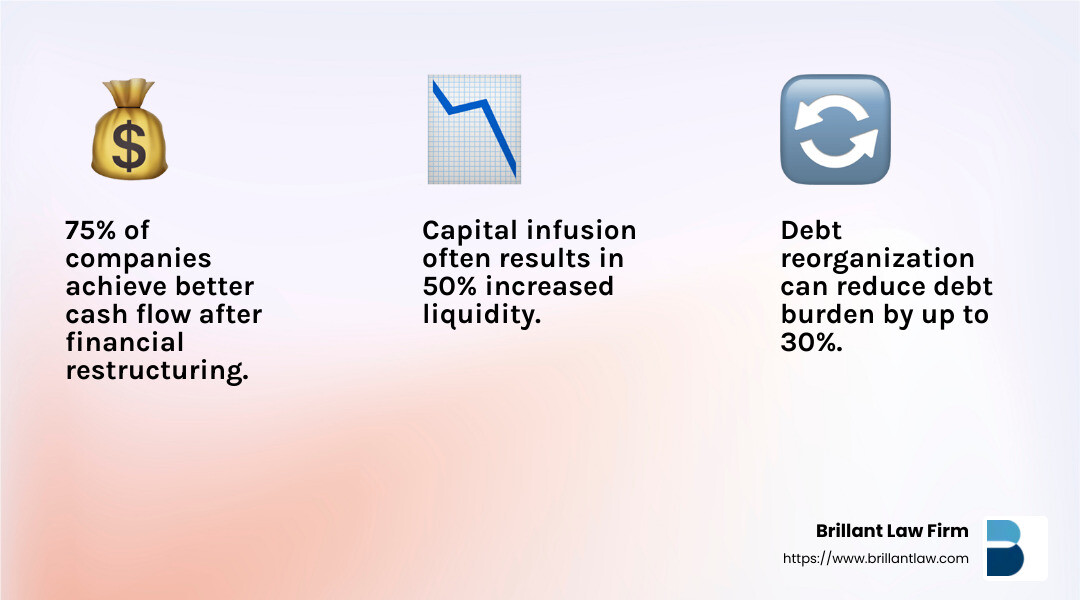
Financial restructuring focuses on reorganizing a company’s financial assets and liabilities. The goal is to improve liquidity, reduce debt, and improve financial stability. This often involves:
- Debt Reorganization: Altering the terms of existing debt or converting debt into equity.
- Capital Infusion: Seeking new investments or refinancing existing obligations to bolster cash flow.
- Cost Optimization: Identifying areas where costs can be reduced without impacting core operations.
Operational Restructuring
Operational restructuring targets the internal processes of a business. The aim is to improve efficiency and profitability by streamlining operations. Key actions include:
- Process Improvement: Analyzing and refining business processes to eliminate inefficiencies.
- Resource Allocation: Ensuring resources such as personnel and technology are optimally used.
- Performance Monitoring: Implementing systems to continually assess and improve operational performance.
Portfolio Restructuring
Portfolio restructuring involves realigning a company’s assets and business units to better fit its strategic goals. This can mean divesting non-core assets or acquiring new ones. The focus is on:
- Asset Optimization: Selling or repurposing underperforming assets to free up capital.
- Strategic Acquisitions: Acquiring businesses or assets that align with the company’s long-term objectives.
- Risk Management: Diversifying the portfolio to mitigate risks associated with market volatility.
In California, where the business landscape is dynamic and competitive, these restructuring strategies can make a significant difference. By addressing financial, operational, and portfolio aspects, businesses can transform challenges into opportunities for growth and stability.
In the next section, we will explore the key steps involved in business restructuring, including conducting a strategic review and forming a dedicated change team.
Key Steps in Business Restructuring
Starting on a business restructuring journey can seem daunting, but breaking it down into clear steps can simplify the process. Let’s explore the essential steps: conducting a strategic review, assembling a change team, and crafting a communications plan.
Strategic Review
The first step in any restructuring process is a thorough strategic review. This involves analyzing the current state of your business and identifying areas of improvement. Key elements include:
- Assessing Business Performance: Examine financial statements, operational metrics, and market conditions to pinpoint weaknesses and opportunities.
- Identifying Core Competencies: Determine what your business does best and focus on these strengths.
- Setting Clear Objectives: Establish specific, measurable goals for the restructuring process. This could mean increasing profitability, improving cash flow, or expanding market share.
A strategic review acts as a roadmap, guiding the rest of the restructuring process and ensuring alignment with the company’s long-term vision.
Change Team
Once the strategic review is complete, the next step is to form a dedicated change team. This team will be responsible for implementing the restructuring plan. Key considerations include:
- Selecting the Right People: Choose team members with diverse skills and expertise, including finance, operations, and human resources.
- Defining Roles and Responsibilities: Clearly outline each team member’s role to ensure accountability and efficiency.
- Providing Training and Support: Equip the team with the necessary tools and knowledge to execute the plan effectively.
A well-structured change team can drive the restructuring process forward, ensuring that changes are implemented smoothly and effectively.
Communications Plan
A clear and concise communications plan is vital for keeping all stakeholders informed and engaged throughout the restructuring process. This involves:
- Transparent Communication: Regularly update employees, investors, and other stakeholders about the progress and impact of the restructuring.
- Addressing Concerns: Provide channels for feedback and address any concerns promptly to maintain trust and morale.
- Highlighting Successes: Celebrate milestones and achievements to motivate the team and reinforce the benefits of restructuring.
Effective communication ensures that everyone is on the same page and helps to minimize resistance to change.
By focusing on these key steps—strategic review, change team, and communications plan—businesses can steer the complexities of restructuring with confidence. This structured approach not only facilitates a smoother transition but also lays the foundation for long-term success.
In the next section, we’ll dive into the different types of restructuring strategies, including financial, organizational, and portfolio restructuring.
Types of Restructuring Strategies
When it comes to business restructuring services, understanding the different types of strategies is crucial. Each strategy targets specific areas within a business, and choosing the right one—or a combination—can significantly impact the success of the restructuring process. Let’s explore the three main types: financial restructuring, organizational restructuring, and portfolio restructuring.
Financial Restructuring
Financial restructuring focuses on reshaping a company’s financial framework to improve liquidity and reduce debt. This strategy is often employed when a business is experiencing financial distress or anticipating a downturn. Key actions include:
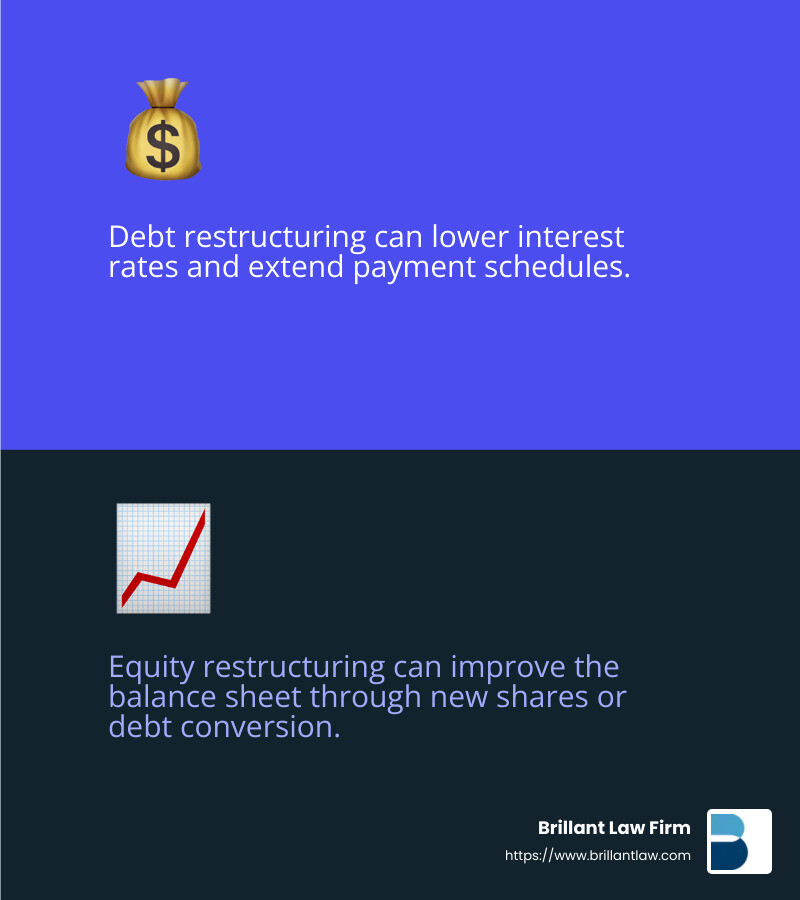
- Debt Restructuring: Negotiating with creditors to modify the terms of debt agreements, potentially reducing interest rates or extending payment schedules.
- Equity Restructuring: Issuing new shares or converting debt into equity to improve the balance sheet.
- Cash Flow Management: Implementing measures to improve cash flow, such as improving collections and optimizing working capital.
Financial restructuring aims to stabilize the company’s financial health and create a solid foundation for future growth.
Organizational Restructuring
Organizational restructuring involves changing the company’s internal structure to improve efficiency and effectiveness. This can include:
- Reorganizing Departments: Streamlining operations by consolidating departments or redefining roles and responsibilities.
- Leadership Changes: Appointing new leaders or redefining leadership roles to align with the company’s strategic objectives.
- Process Improvements: Identifying and eliminating inefficiencies in workflows and processes to boost productivity.
By optimizing the organizational structure, businesses can improve their operational performance and better adapt to market changes.
Portfolio Restructuring
Portfolio restructuring focuses on the company’s assets and business units, ensuring they align with strategic goals. This might involve:
- Divesting Non-Core Assets: Selling off underperforming or non-essential assets to focus on core business areas.
- Mergers and Acquisitions: Acquiring new businesses or merging with others to expand capabilities or market reach.
- Strategic Partnerships: Forming alliances with other companies to leverage shared resources and expertise.
Portfolio restructuring allows companies to refine their focus and allocate resources more effectively, ultimately driving long-term value creation.
Each restructuring strategy serves a distinct purpose, and the right approach depends on a company’s unique situation and goals. By carefully considering financial, organizational, and portfolio restructuring options, businesses can position themselves for a successful change.
Next, we’ll explore the benefits of business restructuring and how it can lead to improved efficiency, profitability, and cash flow.
Benefits of Business Restructuring
Improved Efficiency
Imagine a business as a machine. Over time, parts can wear out or become outdated. Business restructuring services help you upgrade these parts, ensuring your company runs smoothly. By reorganizing departments and streamlining operations, businesses can cut out inefficiencies. This means faster decision-making, reduced waste, and a more agile organization.
For example, a company might centralize its support functions like HR and IT into shared services. This not only reduces costs but also ensures consistent quality across departments. As the PwC research highlights, operational improvements can drive profitability by identifying inefficiencies and developing programs to address them.
Increased Profitability
Profitability isn’t just about making more money; it’s about spending less where it doesn’t count. Restructuring can help businesses focus on core areas that drive profit. By divesting non-core assets or entering strategic partnerships, companies can concentrate resources on what they do best.
Consider a retail business facing reduced consumer spending. By restructuring its portfolio to focus on high-margin products, it can maintain profitability even in tough times. According to PwC, streamlining costs and looking for quick wins can generate revenue growth and fund the journey to recovery.
Improved Cash Flow
Cash flow is the lifeblood of any business. Without it, even profitable companies can struggle. Restructuring can improve cash flow through better cash management practices. This might include renegotiating payment terms with suppliers or implementing more effective collection processes.
For instance, during a liquidity crisis, companies might release cash reserves in net working capital, as suggested by the PwC Middle East team. By improving liquidity management and identifying “quick wins,” businesses can buy time to enact broader turnaround strategies.
In summary, restructuring isn’t just about cutting costs or surviving tough times. It’s about changing a business to be more efficient, profitable, and financially stable. By focusing on these areas, companies can position themselves for long-term success and value creation.
Next, we’ll address some frequently asked questions about business restructuring services to further clarify how you can benefit from these strategies.
Frequently Asked Questions about Business Restructuring Services
What is business restructuring?
Business restructuring is the process of reorganizing a company to improve its efficiency, profitability, and overall performance. This can involve changes to the financial, operational, and legal structure of the business. Think of it as giving your business a makeover to make it stronger and more competitive.
Financial restructuring focuses on addressing issues like debt, cash flow, and financial stability. This might involve renegotiating terms with creditors or restructuring existing debt to improve liquidity.
Operational restructuring involves streamlining processes and improving efficiency. This could mean reorganizing departments or adopting new technologies to improve productivity.
Legal restructuring may involve changing the business’s legal structure, such as moving from a partnership to a corporation, to better align with strategic goals.
What are the three types of restructuring?
Financial Restructuring: This type focuses on the financial aspects of a business, such as debt management and cash flow improvement. Companies often use this approach to address financial distress or to prepare for future growth.
Organizational Restructuring: This involves changing the internal structure of the company. It could mean merging departments, flattening management layers, or creating new roles to better meet business objectives.
Portfolio Restructuring: This strategy focuses on the company’s assets and investments. It might include divesting from non-core business units or acquiring new ones that align better with the company’s strategic goals.
How can I restructure my business?
Restructuring a business can seem daunting, but breaking it down into clear steps can help:
Strategic Review: Start by assessing your current situation. Identify the areas that need change and the opportunities for improvement. This step involves a thorough analysis of your business operations, financial status, and market position.
Change Team: Assemble a team of experts to lead the restructuring process. This team should include internal leaders and possibly external consultants who bring fresh perspectives and specialized skills.
Communications Plan: Keeping everyone informed is crucial. Develop a plan to communicate changes to employees, stakeholders, and customers. Transparency helps maintain trust and ensures everyone is aligned with the new direction.
Restructuring is not just about cutting costs or surviving a crisis—it’s about changing your business for long-term success. By focusing on financial, organizational, and portfolio restructuring, and following a strategic process, you can position your company for a stronger future.
Next, we’ll conclude with how Brillant Law Firm can provide bespoke strategies custom for businesses in California.
Conclusion
Restructuring can be a complex journey, but with the right guidance, it can transform your business into a more resilient and profitable entity. At Brillant Law Firm, we specialize in crafting bespoke strategies that are carefully custom to meet the unique needs of businesses in California. Our expertise spans across trusts, estates, taxation, business, and civil litigation, allowing us to offer comprehensive solutions that address both legal and operational challenges.
Operating exclusively within California, our team is deeply familiar with the state’s legal landscape, ensuring that our strategies are not only effective but also compliant with local regulations. We understand that each business is unique, and our commitment to excellence drives us to deliver personalized solutions that align with your strategic goals.
If you’re considering restructuring or need legal insights to steer financial distress, our dedicated attorneys are here to help. With locations in Walnut Creek, Saranap, San Miguel, and Castle Hill, Brillant Law Firm is well-positioned to support businesses throughout California. We invite you to explore our business law services and find how we can assist in changing your business for a brighter future.
Restructuring is more than just a response to challenges; it’s an opportunity to redefine your business’s path to success. Let Brillant Law Firm be your trusted partner in this journey.


