

Business purchase agreement lawyer: 7 Powerful Reasons in 2025
Why Every Business Buyer and Seller Needs Legal Protection
A business purchase agreement lawyer is essential for protecting your interests when buying or selling a business, ensuring proper documentation, and avoiding costly legal pitfalls that could derail your transaction.
Key Roles of a Business Purchase Agreement Lawyer:
• Risk Assessment – Identify hidden liabilities and potential deal-breakers
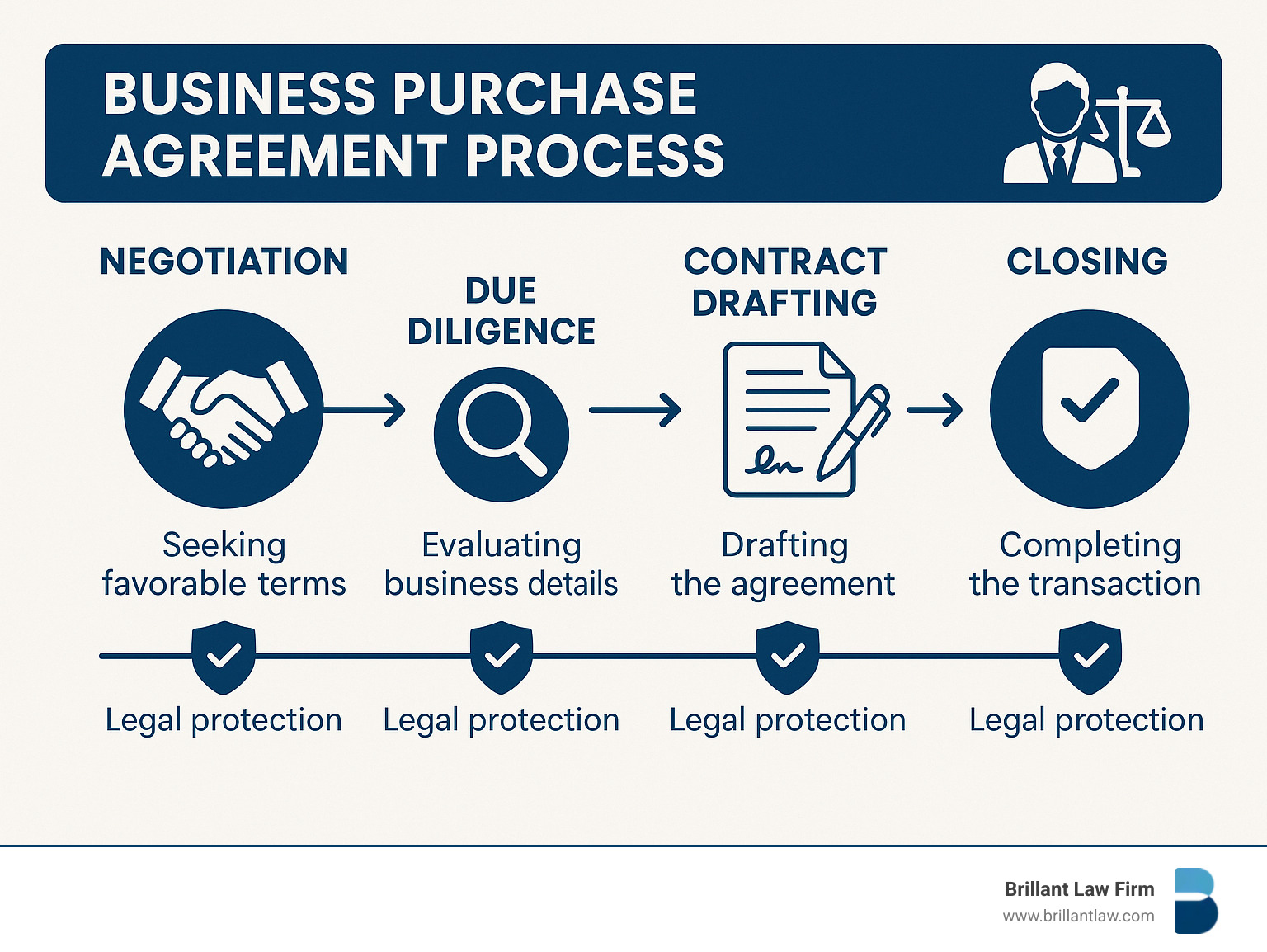
• Contract Drafting – Create legally sound agreements with proper protections
• Due Diligence – Review financial records, legal documents, and compliance issues
• Negotiation Support – Secure favorable terms for purchase price and conditions
• Closing Management – Handle regulatory filings and final transaction details
• Cost Range – California fees typically $5,000-$15,000+ flat fee or 1-1.5% of purchase price
Buying or selling a business without proper legal counsel is like performing surgery without anesthesia – technically possible, but unnecessarily risky and painful. Research shows that a well-drafted business purchase agreement can help avoid costly litigation, potentially saving business owners tens of thousands of dollars in legal fees and damages.
Whether you’re acquiring assets, purchasing stock, or selling your life’s work, the complexity of business transactions demands specialized expertise. From structuring the deal to managing post-closing obligations, every detail matters when your financial future is on the line.
As David Brillant, a California attorney specializing in complex business transactions and estate planning, I’ve guided countless clients through successful business acquisitions and sales. My experience as a business purchase agreement lawyer has shown me that proper legal representation isn’t just valuable – it’s absolutely critical for protecting your investment and ensuring a smooth closing.
Business Purchase Agreement 101: Asset vs. Stock Deals & Key Parts
Think of a business purchase agreement as the blueprint for your entire transaction. This legally binding contract doesn’t just transfer ownership from seller to buyer – it’s the roadmap that guides every step of your deal, from the initial handshake to the final closing. Without a solid agreement, you’re essentially flying blind through one of the most important financial decisions of your life.
The importance of getting this document right cannot be overstated. I’ve seen too many deals fall apart because someone tried to cut corners with a basic template or DIY approach. While online legal tools show over 148,200 customizations of business purchase agreements, using a template without proper legal guidance is like trying to perform surgery with a cookbook – you might have the basic steps, but you’re missing the expertise to handle complications when they arise.
A comprehensive business purchase agreement needs to cover all the essential bases. This includes the full legal names of everyone involved, the purchase price and payment structure, and a detailed inventory of what’s actually being transferred. You’ll also need clear language about which liabilities the buyer assumes, how intellectual property rights transfer, and what contingencies allow either party to walk away from the deal.
The agreement must also address financial documentation requirements, create an operational outline for the transition period, specify how employees will be treated, and lock down the closing date and payment terms. Miss any of these elements, and you could find yourself in expensive legal hot water down the road.
Representations and warranties are essentially promises each party makes about their ability to complete the transaction. Sellers typically promise they own the business free and clear, that their financial statements are accurate, and that all taxes are current. Buyers usually warrant they have the financial capacity to close the deal. These aren’t just formalities – they’re your legal protection if something goes wrong.
Indemnities work like insurance policies built into your contract. They specify who pays when problems surface after closing. For example, if an undisclosed lawsuit emerges against the business post-sale, indemnity clauses determine whether you or the other party bears that financial burden.
The purchase price and payment terms section goes far beyond just stating a dollar amount. California business transactions often involve complex payment structures, price adjustments based on closing-date inventory, and specific handling of deposits and escrow arrangements.
Liability allocation is where many California deals get particularly complex. Our state’s regulatory environment means you need crystal-clear language about which debts and obligations transfer to the buyer and which remain with the seller. Get this wrong, and you could inherit problems you never bargained for.
Non-compete and confidentiality clauses protect your investment by preventing sellers from immediately starting competing businesses or sharing trade secrets. In California, these clauses require careful crafting due to our state’s specific restrictions on non-compete agreements. What works in other states might be completely unenforceable here.
| Aspect | Asset Purchase | Stock Purchase |
|---|---|---|
| What’s Transferred | Specific assets and liabilities | Entire company entity |
| Liability Exposure | Limited to assumed liabilities | All company liabilities |
| Tax Treatment | Step-up basis for assets | No basis adjustment |
| Regulatory Approvals | Asset-specific permits | Corporate filings |
| Complexity | Moderate | High |
| Seller Protection | Higher | Lower |
Asset Purchase Basics
An asset purchase is like buying à la carte from a restaurant menu – you pick exactly what you want and leave the rest behind. Instead of purchasing the entire business entity, you’re buying specific assets and assuming only the liabilities you choose to take on.
The IRS treats the sale of all the assets as individual transactions rather than a single business sale, which creates significant tax implications for both parties. This distinction isn’t just accounting paperwork – it directly affects your bottom line.
In an asset deal, you’re essentially cherry-picking the best parts of the business. You might want the tangible assets like equipment, inventory, and real estate, plus the intangible assets like customer lists, trademarks, and that valuable but hard-to-define “goodwill” – the reputation and customer loyalty built over years.
The beauty of asset purchases lies in what you can leave behind. Unwanted liabilities, pending lawsuits, tax problems, and regulatory issues can stay with the seller. It’s like buying a house but leaving the seller’s mortgage and property tax issues behind.
The IRS requires specific allocation of your purchase price among different asset categories, affecting how both you and the seller report the transaction. This allocation impacts depreciation schedules, capital gains treatment, and future tax obligations – details that matter significantly in California’s high-tax environment.
Stock Purchase Essentials
A stock purchase means you’re buying the whole enchilada – the entire corporate entity with all its assets, liabilities, contracts, and legal obligations. Think of it as buying a house with everything inside, including items you might not want.
The entity transfer creates business continuity that can be valuable. Contracts remain in place, licenses stay valid, and employee relationships continue uninterrupted. Customers may not even notice the ownership change, which can be crucial for service-based businesses.
However, this continuity comes with a price – debt assumption of everything the company owes. Unlike asset deals where you can pick and choose debts, stock purchases mean inheriting all company liabilities. This includes obvious debts like bank loans and trade payables, but also potential environmental liabilities, employment disputes, and any legal skeletons hiding in the corporate closet.
The due diligence process becomes absolutely critical in stock purchases because you’re buying the entire legal entity with all its history. This is where having an experienced business purchase agreement lawyer becomes invaluable – we know where to look for hidden problems and how to structure protections when issues are found.
The Essential Role of a Business Purchase Agreement Lawyer in California
Think of a business purchase agreement lawyer as your personal guide through a legal maze that gets more complex every year. California’s business environment isn’t just sophisticated – it’s uniquely challenging, with regulations that can make even seasoned entrepreneurs feel like they’re reading hieroglyphics.
When you’re buying or selling a business in California, you’re not just dealing with standard contract law. You’re navigating environmental regulations that don’t exist in other states, employment laws that change frequently, and tax implications that can make or break your deal’s profitability.
Risk mitigation is where we really earn our keep. It’s one thing to spot obvious problems like unpaid taxes or pending lawsuits. It’s another thing entirely to identify the subtle issues that could cost you hundreds of thousands down the road – like a lease that automatically terminates upon sale or intellectual property that isn’t actually owned by the business.
Compliance with California’s specific legal requirements isn’t optional, and the rules here often differ dramatically from what you might expect. For example, California’s restrictions on non-compete agreements mean that buyer protections must be crafted very differently than they would be elsewhere.
The negotiation phase is where art meets science. We help you secure favorable terms while keeping the deal moving forward. Too aggressive, and you might lose the opportunity. Too passive, and you might pay dearly for years to come.
Drafting a business purchase agreement isn’t like filling out a form – it’s like creating a custom blueprint for your specific situation. Generic templates are about as useful as a roadmap from 1950 when you’re trying to steer today’s California business landscape.
California attorney fees for business purchase agreements typically reflect both the complexity of our legal environment and the higher cost of professional services here. You might expect to invest anywhere from $5,000 to $15,000 or more for comprehensive legal representation, but this investment often saves you multiples of that amount in avoided problems.
How a Business Purchase Agreement Lawyer Safeguards Buyers
As a buyer, you’re essentially writing a very large check based on promises and representations from someone who has every incentive to present their business in the best possible light. That’s where proper legal protection becomes invaluable.
Due diligence goes far beyond reviewing profit and loss statements. We dig into contract terms, examine litigation history, review regulatory compliance, investigate environmental issues, and analyze employee matters. It’s detective work that requires knowing exactly where to look and what questions to ask.
Undisclosed liabilities are the stuff of buyer nightmares. Imagine finding six months after closing that the business owes $200,000 in environmental cleanup costs, or that a former employee has filed a discrimination lawsuit that could result in significant damages. We structure comprehensive indemnification provisions that shift these risks back to the seller where they belong.
Financing contingencies provide essential escape routes if your funding falls through. These provisions need to be carefully balanced – too loose, and sellers won’t take your offer seriously. Too tight, and you might be forced to complete a purchase you can’t afford.
Our deep experience with California’s unique business environment means we understand local regulations that out-of-state attorneys might miss entirely. From coastal commission requirements to specific industry licensing issues, these details matter enormously.
More info about Business Contract Lawyer California
How a Business Purchase Agreement Lawyer Shields Sellers
Sellers need robust protection too, and the stakes are just as high. After all, you’re typically receiving the largest single payment of your business career, and you want to make sure you actually get to keep it.
Price security involves much more than just agreeing on a number. We structure payment terms, escrow arrangements, and security provisions that ensure you’ll actually receive your money. This might include personal guarantees from buyers, security interests in the business assets, or staged payments tied to specific performance milestones.
Indemnity caps are absolutely critical for limiting your exposure to post-closing claims. Without proper limits, you could find yourself defending lawsuits and paying damages that exceed what you received from the sale. We negotiate reasonable caps that protect your proceeds while giving buyers appropriate recourse for legitimate problems.
Non-compete scope requires particular finesse in California, where the law severely restricts these agreements. We must craft provisions that provide meaningful protection to buyers while staying within California’s legal boundaries – it’s a narrow path that requires specialized knowledge.
Post-closing obligations need clear definition and reasonable limits. Whether you’re training the new owner, transitioning customer relationships, or providing ongoing consultation, these commitments should have defined scope, specific duration, and fair compensation.
More info about Business Agreement Drafting
Due Diligence & Deal Protection: Price, Liabilities, Key Clauses
Due diligence is where the rubber meets the road in business transactions. Think of it as the business equivalent of a thorough medical exam before major surgery – you want to know exactly what you’re dealing with before you commit to the procedure.
This comprehensive investigation process reveals the true health of the business and uncovers potential deal-killers that could turn your dream acquisition into a financial nightmare. As a business purchase agreement lawyer in California, I’ve seen too many deals go sideways because buyers skipped corners during due diligence or sellers weren’t properly protected against unfair claims.
Financial records tell the real story of the business, not just the glossy version presented in marketing materials. We dig deep into cash flow patterns, examine how quickly customers pay their bills, and analyze whether inventory is moving or gathering dust. Sometimes we find that what looked like steady growth was actually propped up by extending credit to risky customers or delaying vendor payments.
Tax returns often reveal discrepancies that raise red flags. When the tax returns show different numbers than the financial statements, we need to understand why. Are there legitimate timing differences, or is someone playing fast and loose with the numbers? California’s complex tax environment means we also examine state and local compliance, looking for any pending audits or outstanding liabilities.
Asset verification goes beyond trusting the seller’s word. We physically inspect major equipment, verify that the business actually owns what it claims to own, and check for liens or encumbrances. I once had a client find that the “owned” delivery trucks were actually leased, completely changing the deal economics.
Environmental concerns can create massive unexpected costs, especially in California where environmental regulations are among the strictest in the nation. We investigate potential contamination issues, review compliance with air quality standards, and examine waste disposal practices. Even businesses that seem environmentally benign can have hidden issues – like that dry cleaner whose previous owner used chemicals that are now banned and require expensive cleanup.
Employee matters demand careful attention in our state’s employee-friendly legal environment. We review employment contracts, benefit obligations, union agreements, and any brewing discrimination or wage claims. California’s complex labor laws mean that even small compliance issues can become expensive problems after closing.
The financial structure of your deal deserves just as much attention as the due diligence investigation. Purchase price allocation isn’t just an accounting exercise – it directly impacts your tax bill. In asset deals, how you allocate the price among inventory, equipment, goodwill, and other categories affects everything from depreciation schedules to capital gains treatment. The IRS has specific rules about the sale of all the assets, and getting this wrong can be costly.
Earn-out provisions can bridge valuation gaps when buyers and sellers disagree about future prospects. However, these arrangements are like prenups – they work great when everyone’s happy, but can become contentious when expectations aren’t met. We structure these provisions with clear performance metrics and dispute resolution procedures.
Escrow arrangements provide security for both parties by holding back part of the purchase price to cover potential claims. Think of escrow as a security deposit that protects against problems found after closing. We negotiate appropriate amounts and release schedules that balance protection with cash flow needs.
Survival periods determine how long the seller remains on the hook for their promises about the business. Different representations may have different survival periods – tax matters might survive longer than general business representations, reflecting the applicable statutes of limitations.
Default remedies spell out what happens when things go wrong. These provisions need to be enforceable but not punitive, providing meaningful recourse without being so harsh that courts won’t enforce them.
Must-Have Clauses Buyers Love
Indemnification provisions serve as your insurance policy against the unknown. We craft comprehensive indemnities that cover not just obvious breaches of promises, but also specific risks like environmental cleanup costs, tax disputes, and employment claims. The goal is ensuring that if skeletons emerge from the business’s closet, you’re not the one paying to bury them again.
Detailed representations and warranties are the seller’s sworn statements about the business condition. We negotiate extensive promises covering financial accuracy, legal compliance, material contracts, intellectual property ownership, and operational matters. These aren’t just legal formalities – they’re your protection against nasty surprises.
Walk-away contingencies provide escape routes when problems emerge. Whether it’s unsatisfactory due diligence results, financing difficulties, or regulatory approval delays, these provisions let you exit the deal without penalty when circumstances change.
Must-Have Clauses Sellers Demand
Liability limitations cap your exposure to post-closing claims, preventing buyers from coming after your entire net worth over minor issues. We negotiate reasonable limits that consider the purchase price and specific business risks while providing buyers with appropriate recourse.
Carve-outs from liability caps ensure that certain serious matters like fraud or criminal activity aren’t subject to limits. These provisions maintain the integrity of the limitation while recognizing that some behaviors shouldn’t be protected.
Disclosure schedules let you reveal known issues that might otherwise constitute breaches of your representations. Proper disclosure is like getting absolution – it protects you from future claims while keeping the deal moving forward. The key is being thorough without scaring buyers away from legitimate business risks.
From Letter of Intent to Closing: Timeline, Costs & Choosing Counsel
The journey from initial interest to business ownership follows a well-established path, though each transaction has its unique twists and turns. Understanding this process helps you prepare for what’s ahead and avoid common stumbling blocks that can derail deals.
Everything typically starts with a Letter of Intent (LOI) or term sheet. Think of this as your “handshake on paper” – it outlines the basic deal structure, purchase price, and key terms without creating binding obligations. While these documents are usually non-binding, they’re incredibly important because they set expectations and establish the framework for everything that follows.
The negotiation phase is where the real work begins. For straightforward deals, expect 2-4 weeks of back-and-forth discussions as we hammer out detailed terms. Complex transactions involving multiple locations, regulatory issues, or unusual structures can stretch this timeline to several months. During this period, we’re not just arguing over price – we’re crafting protections, allocating risks, and building contingencies that protect your interests.
Drafting the definitive agreement requires the specialized touch of an experienced business purchase agreement lawyer. This isn’t about filling in blanks on a template – we’re creating a custom document that anticipates potential problems and provides clear solutions. Every business has unique characteristics that require custom legal protections.
Once both parties sign the agreement, the deal becomes legally binding subject to closing conditions. This signature triggers the formal due diligence period and starts various countdown clocks for contingencies. It’s an exciting moment, but also when the real pressure begins to satisfy all closing conditions.
Regulatory filings can add complexity depending on your business type. You might need bulk sale notices to protect creditors, liquor license transfers, professional license assignments, or industry-specific approvals. In California, these requirements can be particularly detailed, which is why local expertise matters.
The closing checklist becomes your roadmap to the finish line. We ensure every condition is satisfied, every document is properly executed, and every regulatory requirement is met before funds change hands. Missing even small details can delay closing or create post-transaction problems.
In California, legal fees for business purchase agreements reflect both the complexity of our state’s legal environment and the higher cost of experienced counsel. Flat fee arrangements typically range from $5,000 to $15,000+ depending on transaction complexity, business size, and regulatory requirements. For larger deals, percentage-based fees of 1-1.5% of the purchase price are common and often more economical for substantial transactions.
When selecting a business purchase agreement lawyer, focus on specific experience rather than general practice. Look for attorneys who regularly handle business transactions, understand California’s unique legal landscape, and communicate in plain English rather than legal jargon. The cheapest option rarely provides the best value when your financial future is at stake.
More info about Business Ownership Transfer Lawyer
Red-Flag Pitfalls to Avoid
Ambiguous asset lists are deal killers waiting to happen. When the agreement says “all equipment,” does that include the seller’s personal laptop they use for business? Every asset and exclusion needs specific identification to prevent post-closing arguments about what was actually included in the sale.
Being silent on debts creates a ticking time bomb for buyers. The agreement must clearly spell out which liabilities transfer to you and which stay with the seller. Assumptions about “obvious” debt allocations often prove expensive when disputes arise.
Weak non-compete provisions waste everyone’s time and money. California has particularly strict rules about non-compete agreements, so these clauses require careful crafting to provide meaningful protection while remaining enforceable under our state’s laws.
Missed deadlines can trigger penalty clauses, void contingencies, or even kill deals entirely. Proper project management and clear communication between all parties keep transactions moving toward successful closing.

Frequently Asked Questions about Business Purchase Agreement Lawyers
What does a Business Purchase Agreement Lawyer actually do?
Think of a business purchase agreement lawyer as your personal guide through one of the most complex transactions you’ll ever make. We’re part detective, part negotiator, part protector, and part project manager – all rolled into one.
Our work starts before you even find the right business to buy or sell. We help you understand whether an asset purchase or stock purchase makes more sense for your specific situation. This choice affects everything from taxes to liability exposure, so getting it right from the beginning saves you headaches (and money) down the road.
Once you’re in negotiations, we become your advocate at the table. We draft and review contracts with a keen eye for protecting your interests while keeping the deal moving forward. Our job is to spot potential problems before they become expensive surprises – kind of like having a really good mechanic inspect a used car before you buy it.
The due diligence process is where our detective skills shine. We coordinate with accountants, environmental consultants, and other professionals to thoroughly investigate the business. After years of experience, we know exactly where the skeletons are usually buried and how to structure protections when we find issues.
At closing, we make sure all the legal boxes are checked, documents are properly signed, and your money gets transferred safely. But our relationship doesn’t end there – we also help you understand your ongoing obligations and rights under the agreement, so you’re not left wondering what happens next.
How long does a California business sale usually take?
If you’re hoping to buy or sell a business next week, I have some news that might disappoint you. Most California business transactions take 60 to 120 days from the moment you sign a letter of intent until you’re shaking hands at the closing table.
Simple asset purchases can sometimes close in 30 to 45 days if everything goes smoothly. But complex stock purchases or deals requiring regulatory approvals? Those can stretch out to 6 months or even longer. It’s a bit like asking how long it takes to build a house – the answer depends on whether you’re putting up a simple cabin or a custom mansion.
The due diligence period typically eats up 2 to 4 weeks of that timeline. This is when we’re digging through financial records, investigating potential problems, and negotiating final terms. Document preparation and review usually takes another 2 to 3 weeks, assuming we don’t hit any major snags.
California’s regulatory environment can add extra time, especially for businesses that need special licenses or environmental clearances. This is exactly why bringing in an experienced business purchase agreement lawyer early in the process is so valuable – we can spot potential delays from a mile away and plan accordingly.
Can I draft the agreement myself and just have a lawyer review it?
I get this question a lot, and I understand the impulse to save money. But asking whether you can draft your own business purchase agreement is a bit like asking whether you can perform your own appendectomy – technically possible, but probably not the wisest choice.
Business purchase agreements are incredibly complex legal documents that require specialized knowledge to draft properly. Generic templates you find online are like one-size-fits-all clothing – they might technically cover the basics, but they’re not going to fit your specific situation very well.
The cost difference between having an attorney review a flawed agreement versus drafting it correctly from the start is usually minimal. But the risk difference? That’s enormous. A poorly drafted agreement can cost you tens of thousands of dollars in disputes, missed protections, or provisions that turn out to be completely unenforceable.
In my experience, clients who try to save money on legal fees during the drafting stage often end up spending far more fixing problems later. As my grandfather used to say, “The bitterness of poor quality remains long after the sweetness of low price is forgotten.”
If you’re serious about protecting your investment and ensuring a smooth transaction, invest in proper legal counsel from the beginning. Your future self will thank you for it.
Conclusion
Buying or selling a business represents one of the most significant financial decisions you’ll ever make. Whether you’re acquiring your dream company or selling the business you’ve poured your heart into for decades, this transaction will likely involve your largest asset. That’s exactly why protecting this investment requires the specialized expertise that only an experienced business purchase agreement lawyer can provide.
The numbers don’t lie: proper legal representation can save you at least $40,000 on your transaction while shielding you from costly litigation and those nasty hidden liabilities that love to surface after closing. In California’s complex business environment, this expertise becomes even more valuable. Our state’s sophisticated legal landscape means that what works in other states might not fly here—and that difference could cost you dearly.
At Brillant Law Firm, we get it. Every business transaction tells a unique story, and cookie-cutter solutions simply don’t work. That’s why our bespoke strategies are custom-crafted specifically to your situation, ensuring comprehensive protection while keeping your deal moving smoothly toward closing. We’ve walked countless clients through successful business acquisitions and sales throughout California, and we know exactly where the pitfalls hide.
Think of us as your transaction insurance policy—except instead of paying premiums after something goes wrong, you’re investing upfront in making sure nothing goes wrong in the first place. Our unparalleled expertise and unwavering dedication mean you can sleep soundly knowing every detail is handled by professionals who’ve seen it all before.
Don’t let your business transaction become one of those cautionary tales you hear at networking events. You know the ones—where someone tried to save a few thousand on legal fees and ended up losing tens of thousands in disputes, missed protections, or unenforceable agreements. Partner with experienced counsel who understands both the legal complexities and practical realities of California business sales.
Whether you’re buying your first business or selling the company you’ve built from scratch, we’re here to ensure your transaction succeeds. Contact our Business Law Lawyers team today to discuss how Brillant Law Firm can be your trusted California partner for a stress-free business acquisition or sale.

Here’s the bottom line: in business transactions, the cost of proper legal representation is always less than the cost of inadequate protection. Your future self will thank you for making this critical investment in professional protection. Choose wisely, choose experience, and choose Brillant Law Firm for your California business purchase agreement needs.


