

Understanding the Crucial Role of Trust Lawyers in Estate Planning
Attorneys specializing in trusts play a pivotal role in estate planning, ensuring a smooth transfer of assets and helping to avoid family conflicts. If you need quick insight into what they do, here’s a concise overview:
- Wealth Planning: Structuring plans to meet your financial objectives.
- Estate Administration: Managing the legal process after someone’s death.
- Trust Administration: Overseeing the execution of trust terms.
- Dispute Resolution: Handling probate and trust litigation issues.
They provide legal guidance on creating trust agreements, wills, powers of attorney, and other key documents.
Having a skilled trust lawyer is essential for anyone with complex assets or specific directives for future generations. These lawyers don’t just draft documents; they also steer intricate tax laws, ensure compliance with federal and state regulations, and handle sensitive family matters with empathy and discretion.
I’m David Brillant, a Certified Specialist in Estate Planning, Trust, and Probate Law with a Master’s in Taxation. I enjoy solving complex problems and specialize in both the transactional and litigation aspects of trusts and estates. Let me guide you through the nuances of estate planning with expert insights.

What is a Trust Lawyer?
A trust lawyer, also known as an attorney specializing in trusts, is a legal expert who focuses on the creation, management, and administration of trusts. These professionals play a key role in estate planning, helping individuals ensure their assets are distributed according to their wishes.
Responsibilities of a Trust Lawyer
The responsibilities of a trust lawyer are extensive and can be divided into several key areas:
- Drafting Trust Agreements: Creating detailed legal documents that specify how assets should be managed and distributed.
- Estate Planning: Designing comprehensive plans that include wills, powers of attorney, and medical directives.
- Trust Administration: Overseeing the execution of trust terms, including managing assets and distributing them to beneficiaries.
- Dispute Resolution: Handling conflicts that arise over trusts, such as contesting a trust or resolving disputes between beneficiaries and trustees.
Types of Trusts
Trust lawyers deal with various types of trusts, each serving a different purpose. Here are some common types:
- Revocable Trusts: These can be altered or revoked by the trustor during their lifetime.
- Irrevocable Trusts: Once established, these cannot be changed, offering benefits like tax reduction and asset protection.
- Living Trusts: Created during the trustor’s lifetime, these trusts manage assets before and after death.
- Testamentary Trusts: Established through a will and activated upon the trustor’s death.
- Special Needs Trusts: Designed to provide for beneficiaries with disabilities without affecting their eligibility for government benefits.
Estate Planning
Estate planning is a critical aspect of a trust lawyer‘s work. It involves:
- Wealth Transfer: Ensuring assets are passed efficiently and effectively to the next generation.
- Tax Planning: Minimizing estate and gift taxes through strategic planning.
- Business Succession: Creating plans for the future of family-owned businesses.
- Charitable Giving: Structuring donations to charities in a tax-efficient manner.
Elizabeth, a partner at Withers Bergman LLP, exemplifies the expertise required in this field. She focuses on estate planning, planned giving, and tax-exempt organizations, helping clients manage family wealth transfers and complex probate issues.
Trust lawyers not only draft documents but also steer intricate tax laws, ensure compliance with federal and state regulations, and handle sensitive family matters with empathy and discretion. This makes them indispensable for anyone with complex assets or specific directives for future generations.
In the next section, we’ll explore why you need an attorney specializing in trusts and how they can provide the expertise and legal guidance essential for effective estate planning.
Why You Need an Attorney Specializing in Trusts
When it comes to managing and distributing your assets, attorneys specializing in trusts offer invaluable expertise. Here’s why you need one:
Expertise
Trust lawyers have specialized knowledge in estate planning and trust administration. They understand the nuances of federal and state laws, ensuring your trust complies with all legal requirements. For example, Martin Neumann, with over 30 years of experience, helps clients clarify goals and steer complex issues they might not have considered, such as the impact of substantial inheritances on family members.
Legal Guidance
Creating a trust involves more than just drafting documents. Trust lawyers provide comprehensive legal guidance, addressing various aspects such as:
- Wealth Planning: Attorneys consider your objectives, family relationships, and tax implications to design a plan that meets your goals.
- Tax Planning: They help minimize estate and gift taxes through strategic planning. The Tax Cuts and Jobs Act of 2017, for example, raised estate tax exemptions, and a knowledgeable lawyer can help you leverage these changes.
- Business Succession: For family-owned businesses, a trust lawyer can create plans to ensure smooth transitions and continued operations.
Trust Administration
Administering a trust can be complex and time-consuming. Trust lawyers assist with:
- Trustee Counseling: Trustees have significant responsibilities and can benefit from legal advice to avoid liability. A qualified California trust lawyer can guide trustees through their duties and help with decision-making.
- Accounting Disputes: Trustees must prepare periodic accountings for beneficiaries. A trust lawyer can help check these accountings or prepare them to prevent disputes. If disputes arise, they can represent either trustees or beneficiaries in court.
Dispute Resolution
Trust disputes can be emotionally charged and legally complex. Trust lawyers handle:
- Trust Contests: If a trust is contested, perhaps due to undue influence or lack of capacity, a trust lawyer can represent your interests. For instance, if an adult child persuades a dying parent to alter their trust, disinheriting other children, a trust lawyer can help contest the changes.
- Property Disputes: Sometimes, assets in a trust may be disputed. For example, if siblings inherit a house and disagree on selling it, a trust lawyer can facilitate a resolution, possibly through a partition action.
In summary, trust lawyers provide the expertise, legal guidance, and dispute resolution skills essential for effective trust and estate management. They help ensure your assets are managed and distributed according to your wishes, providing peace of mind for you and your loved ones.
In the next section, we’ll dig into how to choose the right trust lawyer, focusing on experience, specialization, and client reviews.
How to Choose the Right Trust Lawyer
Choosing the right trust lawyer is crucial. Here are some key factors to consider:
Experience
Experience is vital. Look for attorneys specializing in trusts with a proven track record. For example, a lawyer with over 30 years of experience helping clients achieve their estate planning and trust administration goals can be invaluable. Experience ensures the lawyer has handled various scenarios and can provide seasoned advice.
Specialization
Not all lawyers are created equal. Ensure your lawyer specializes in trusts and estates. Specialists focus on estate planning, planned giving, and tax-exempt organizations. Specialization means they have in-depth knowledge and can steer complex legal landscapes effectively.
Client Reviews
Client reviews offer insight into a lawyer’s reputation and client satisfaction. Look for testimonials on the lawyer’s website or third-party review sites. Positive reviews often highlight qualities like empathy, patience, and effective communication.
Initial Consultation
An initial consultation is your chance to gauge the lawyer’s competence and compatibility. During this meeting, ask about their experience, specialization, and approach to handling trust-related issues. This is also a good time to discuss fees and billing practices.
Questions to Ask
Here are some essential questions to ask during your initial consultation:
How do you charge for your services? Some lawyers charge flat fees, while others bill by the hour. Knowing this upfront can help you budget accordingly.
How do you feel about revocable living trusts? Understanding their stance on different trust structures can clarify if their approach aligns with your needs.
What other issues do you address? Estate planning often involves more than just trusts. Ensure they can handle related matters like powers of attorney and healthcare directives.
Will you send estate planning documentation for me to review? It’s crucial to review all documents to avoid misunderstandings.
Will anyone else in your office be able to discuss my issues in your absence? Knowing there’s a backup can provide peace of mind if your primary lawyer is unavailable.
By considering these factors and asking the right questions, you can find a trust lawyer who meets your needs and ensures your estate planning goals are achieved.

In the next section, we’ll explore the various services offered by trust lawyers, including estate planning, trust administration, and dispute resolution.
Services Offered by Trust Lawyers
Trust lawyers provide a variety of services to help manage and protect your assets. Here are some key services they offer:
Estate Planning
Estate planning is the cornerstone of a trust lawyer’s services. They help you create a comprehensive plan for distributing your assets after your death. This includes drafting wills, setting up trusts, and creating powers of attorney and medical directives.
For instance, Brillant Law Firm’s Trusts & Estates attorneys focus on revocable living trusts to ensure a tax-efficient transfer of assets to beneficiaries. They also use advanced techniques like family limited partnerships (FLPs) and grantor retained annuity trusts (GRATs) to minimize estate taxes.
Trust Administration
Trust administration involves managing and distributing the assets in a trust according to its terms. Trust lawyers assist trustees in fulfilling their duties and ensure the trust operates smoothly. This includes:
- Preparing trust accountings: Trustees must provide periodic accountings to beneficiaries. Lawyers can help prepare these documents to avoid disputes.
- Distributing assets: Lawyers ensure that assets are distributed to beneficiaries as outlined in the trust.
- Handling tax matters: They prepare necessary tax forms and ensure compliance with tax laws.
Wealth Transfer
Wealth transfer planning involves strategies to pass on your assets to the next generation efficiently. Trust lawyers use various tools to achieve this, including:
- Charitable remainder trusts (CRTs) and charitable lead trusts (CLTs): These trusts provide tax benefits while supporting charitable causes.
- Qualified Personal Residence Trusts (QPRTs): These allow you to transfer your home to heirs at a reduced tax cost.
- Insurance trusts: These are used to manage life insurance policies and reduce estate taxes.
Dispute Resolution
Disputes can arise during the administration of a trust or estate. Trust lawyers offer expertise in resolving these conflicts, often without going to court. However, if litigation is necessary, they are equipped to handle it. Common disputes include:
- Trust contests: Challenging the validity of a trust due to undue influence or lack of capacity.
- Accounting disputes: Disagreements over the accuracy of trust accountings.
- Property disputes: Conflicts over the ownership or distribution of trust assets.
Brillant Law Firm has a strong track record in trust litigation, helping clients steer complex trust matters.
Elder Abuse Claims
Elder abuse is a serious issue, and trust lawyers can help protect vulnerable seniors. They handle cases involving financial exploitation, such as:
- Misappropriation of assets: When someone unlawfully takes or uses an elder’s assets.
- Undue influence: When someone pressures an elder to change their estate plan for personal gain.
Trust lawyers work to recover stolen assets and ensure the elder’s wishes are respected.
In the next section, we’ll discuss the top qualities to look for in a good trust lawyer, including communication skills, attention to detail, and legal acumen.
Top Qualities of a Good Trust Lawyer
When it comes to managing and protecting your assets, finding the right attorney specializing in trusts is crucial. Here are the top qualities to look for:
Communication Skills
A good trust lawyer must have excellent communication skills. They need to explain complex legal terms in simple language. They should keep you informed about your case and be available to answer your questions.
Attention to Detail
Trust law involves many intricate details. A small mistake can have significant consequences. Therefore, attention to detail is essential. Trust lawyers must carefully review documents, accountings, and legal filings to ensure everything is accurate and compliant with the law.
Empathy
Empathy is another critical quality. Dealing with trusts often involves sensitive family matters and emotional decisions. A good trust lawyer understands your concerns and provides compassionate guidance.
Problem-Solving Skills
Trust disputes and other issues can arise unexpectedly. A skilled trust lawyer needs strong problem-solving skills to resolve conflicts efficiently. Whether it’s negotiating settlements or litigating in court, they must find the best solutions for their clients.
Legal Acumen
Finally, a good trust lawyer must have a deep understanding of trust law and related fields like taxation and estate planning. They should stay updated on legal trends and use their expertise to protect your interests.
In the next section, we’ll address common trust issues and how lawyers can help, including trust disputes, property disputes, and trustee removal.
Common Trust Issues and How Lawyers Can Help
Trust issues can be complex and emotionally charged. Here are some common problems and how attorneys specializing in trusts can assist you.
Trust Disputes
Trust disputes often arise between beneficiaries and trustees. For example, a beneficiary might feel the trustee is not acting in their best interest. A skilled trust lawyer can mediate these disputes and, if necessary, represent you in court to ensure fair treatment.
Property Disputes
Sometimes, property mentioned in a trust wasn’t properly transferred into the trust before the trustor passed away. This can lead to significant confusion and conflict among heirs. A trust lawyer can help resolve these disputes by filing the necessary petitions to transfer property into the trust or by negotiating a fair settlement among the parties involved.
Accounting Disputes
Trustees are responsible for providing periodic accountings to beneficiaries. If beneficiaries believe that the accounting is inaccurate or incomplete, they can contest it. Trust lawyers can review the accountings for errors or signs of misconduct and represent either the trustee or the beneficiaries in court to resolve these issues.
Trust Contests
Trust contests occur when someone challenges the validity of a trust. This could be due to claims of undue influence, lack of capacity, or fraud. For example, if a person with dementia created a trust, it might be contested on the grounds that they were not mentally competent. Trust lawyers can gather evidence, represent your interests, and help determine the trust’s validity.
Trustee Removal
If a trustee is not fulfilling their duties properly, beneficiaries might seek their removal. This could be due to mismanagement, misconduct, or failure to act in the beneficiaries’ best interests. A trust lawyer can help file a petition for removal and present a strong case to the court, ensuring the trust is managed by a competent individual.
In the next section, we’ll answer frequently asked questions about attorneys specializing in trusts, including what questions to ask during your initial consultation and how much trust lawyers typically charge.
Frequently Asked Questions about Attorneys Specializing in Trusts
What questions should I ask a trust lawyer?
When meeting with a trust lawyer, it’s essential to ask the right questions to ensure they are a good fit for your needs. Here are some key questions to consider:
1. How do you charge for your services?
Understanding the fee structure is crucial. Some lawyers charge flat fees for standard services like creating a trust, while others bill by the hour for more complex tasks.
2. What is your experience with trust administration?
Experience matters. Ask about their track record and specific cases they’ve handled that are similar to yours.
3. How do you handle trust disputes?
It’s important to know how they approach conflicts. Do they prefer mediation, or are they prepared to go to court if necessary?
4. Will anyone else in your office be able to discuss my issues in your absence?
Ensure there is a backup plan if your primary attorney is unavailable.
5. Do you offer ongoing support for trust administration?
Some lawyers provide continuous support, while others may only assist during the initial setup. Clarify what level of ongoing assistance you can expect.
How much do trust lawyers charge?
The cost of hiring a trust lawyer can vary widely based on the complexity of your needs and the lawyer’s experience. Here are some common fee structures:
Flat Fees:
Many trust lawyers charge a flat fee for creating a basic trust. This can range from $1,000 to $3,000, depending on the complexity.
Hourly Rates:
For more complex cases, such as trust administration or disputes, lawyers may charge by the hour. Hourly rates can range from $400 to $600, depending on the lawyer’s expertise and location.
Combination of Both:
Some lawyers use a combination of flat fees for standard services and hourly rates for specialized tasks or ongoing administration.
It’s wise to discuss and agree on the fee structure upfront to avoid any surprises.
What are the benefits of hiring a trust lawyer?
Hiring a trust lawyer offers several key benefits:
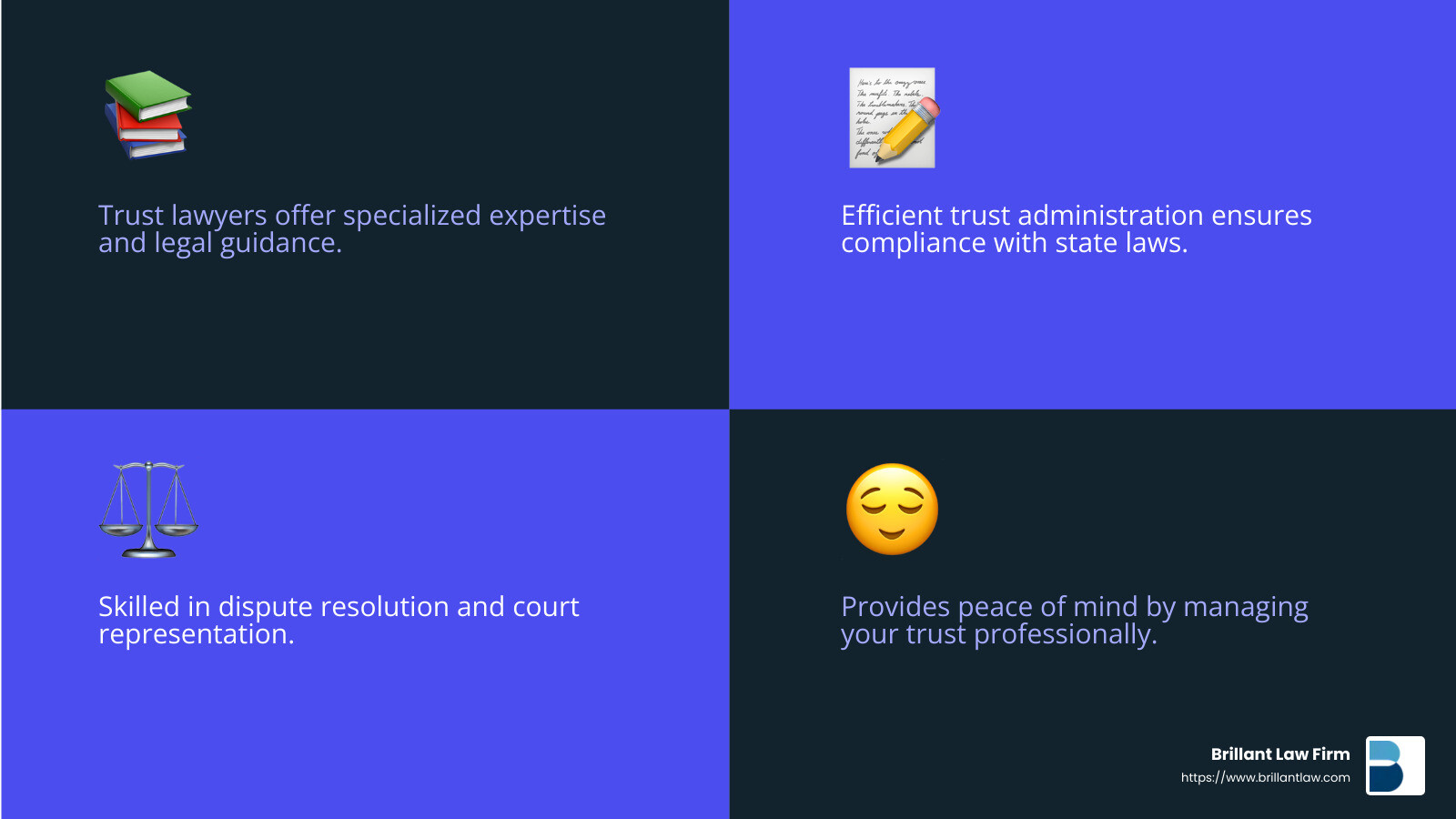
1. Expertise and Legal Guidance:
Trust lawyers specialize in estate planning and trust administration. They understand the intricacies of trust law and can provide expert advice custom to your situation.
2. Efficient Trust Administration:
Administering a trust can be complex and time-consuming. A trust lawyer can handle the legal paperwork, ensure compliance with state laws, and manage the trust efficiently.
3. Dispute Resolution:
Trust disputes can be emotionally charged and legally complex. A skilled trust lawyer can mediate conflicts, represent you in court, and work towards a fair resolution.
4. Peace of Mind:
Knowing that a professional is managing your trust provides peace of mind. You can be confident that your assets are protected and your wishes will be carried out.
5. Avoiding Common Pitfalls:
An experienced trust lawyer can help you avoid common mistakes, such as improper funding of the trust or overlooking critical legal requirements.
In the next section, we’ll explore the top qualities to look for in a good trust lawyer, including communication skills, attention to detail, and legal acumen.
Conclusion
In summary, attorneys specializing in trusts play a crucial role in estate planning, trust administration, and dispute resolution. They bring expertise, legal guidance, and peace of mind to ensure your assets are managed and distributed according to your wishes.
At Brillant Law Firm, we pride ourselves on our unparalleled expertise and unwavering dedication to our clients. Our team of seasoned professionals offers bespoke strategies custom to meet your specific needs, ensuring that your estate planning and trust administration are handled with the utmost care and precision.
Whether you need assistance with creating a trust, managing trust disputes, or navigating complex estate matters, Brillant Law Firm is here to help. Our commitment to excellence and client-focused approach makes us the ideal partner for all your trust and estate needs.
For more information or to schedule a consultation, visit our Estate and Trust Attorneys page or contact us directly. Let us help you secure your legacy and provide peace of mind for you and your loved ones.
Thank you for reading “The Ultimate Guide to Trust Lawyers: Finding the Right Specialist.” We hope this guide has provided valuable insights and guidance on selecting the right trust lawyer for your needs. If you have any further questions or require assistance, don’t hesitate to reach out to us at Brillant Law Firm. We’re here to help.


