

Why Estate Planning and Trusts Matter
When considering attorneys for living trusts, it’s crucial to understand the basics of estate planning, wills, and trusts. These legal instruments ensure that your assets are managed and distributed according to your wishes after your passing. Whether you are young or old, having a well-drafted estate plan can avoid disputes, provide for your loved ones, and offer you peace of mind.
Quick Overview:
- Estate Planning: It’s a comprehensive strategy that encompasses wills, trusts, and various legal directives to manage your assets both during your life and after your death.
- Wills: Legal documents designating the distribution of your property, guardianship of minor children, and executors to manage your estate.
- Trusts: Instruments that allow for the management and distribution of your assets, potentially avoiding probate and offering privacy.
Now let’s discuss some tips on why hiring an expert makes a difference.
My name is David Brillant, a Certified Specialist in Estate Planning, Trust, and Probate Law with a Masters in Taxation. I have extensive experience helping individuals create ironclad, personalized estate plans. Let’s explore how the right attorney can make all the difference in your estate planning needs.

Understanding Living Trusts
What is a Living Trust?
A living trust is a legal arrangement created during a person’s lifetime to manage and distribute their assets. It’s set up by a grantor, who transfers ownership of their assets into the trust. The grantor designates a trustee to manage these assets for the benefit of the beneficiaries.
Think of it like a treasure chest where you place your valuables, and you give someone you trust the key to manage it according to your instructions.
Key Roles in a Living Trust:
– Grantor: The person who creates the trust.
– Trustee: The person or entity responsible for managing the trust.
– Beneficiaries: The individuals or organizations that receive the benefits from the trust.
Types of Living Trusts
Living trusts can be custom to meet various needs. Here are the main types:
Revocable Trust
A revocable trust can be altered or revoked by the grantor at any time. It allows for flexibility and control over the assets while the grantor is alive. However, the assets in a revocable trust are still subject to estate taxes.
Irrevocable Trust
An irrevocable trust cannot be changed once it’s established. This type of trust can offer stronger asset protection and potential tax benefits, as the assets are no longer considered part of the grantor’s taxable estate.
Testamentary Trust
A testamentary trust is created through a will and only takes effect after the grantor’s death. It is commonly used to manage assets for minor children or other beneficiaries who may not be ready to manage the assets themselves.
Special Needs Trust
A special needs trust is designed to provide for a beneficiary with disabilities without disqualifying them from government benefits like Medicaid or Supplemental Security Income.
Medicaid Trust
A Medicaid trust is used to protect assets from being counted for Medicaid eligibility, ensuring that the grantor can receive long-term care benefits while preserving their estate for their heirs.
Charitable Trust
A charitable trust is set up to benefit one or more nonprofit organizations. It can provide tax benefits to the grantor while supporting causes they care about.
Benefits of a Living Trust
Living trusts offer numerous advantages, making them a popular choice for estate planning.
Probate Avoidance
One of the primary benefits is probate avoidance. Unlike wills, living trusts do not go through the public probate process, allowing for a quicker and more private distribution of assets.
Privacy
Living trusts keep your financial affairs private. Since they do not go through probate, the details of the trust and its assets remain confidential.
Asset Management
A living trust provides a structured way to manage your assets. The trustee ensures that the assets are handled according to your wishes, which can be particularly helpful if you become incapacitated.
Tax Benefits
Certain types of living trusts, like irrevocable trusts, can offer tax advantages by removing assets from your taxable estate.
Disability Planning
A living trust can include provisions for managing your assets if you become incapacitated. You can designate a successor trustee to take over, ensuring that your financial affairs are handled smoothly without court intervention.
A well-crafted living trust can provide peace of mind, knowing that your assets will be managed and distributed according to your wishes, without the delays and costs associated with probate.
Next, let’s explore why you need an attorney to set up a living trust and how to choose the right one.
Attorneys for Living Trusts
Why You Need an Attorney for a Living Trust
Creating a living trust can be a complex process. While it’s possible to do it yourself, hiring an estate planning attorney or trust attorney can ensure that your trust is legally sound and serves your intended purpose.
Here’s why:
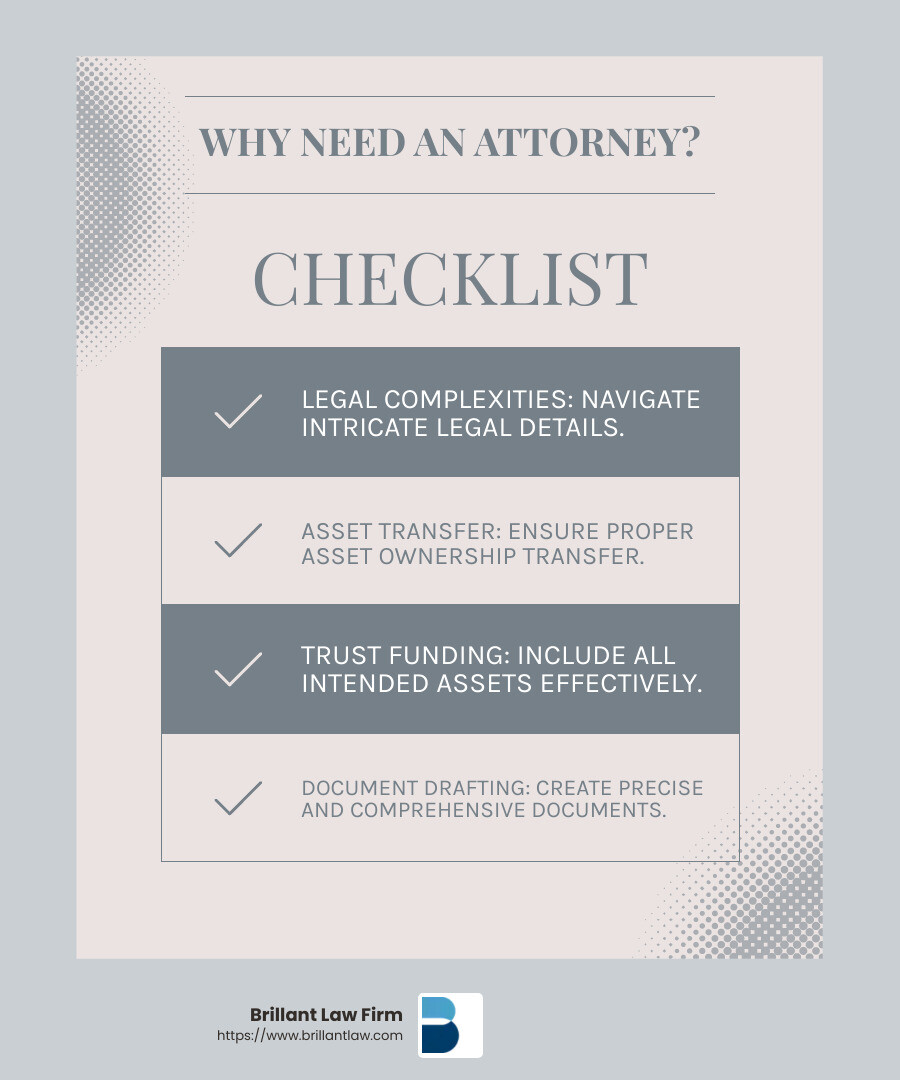
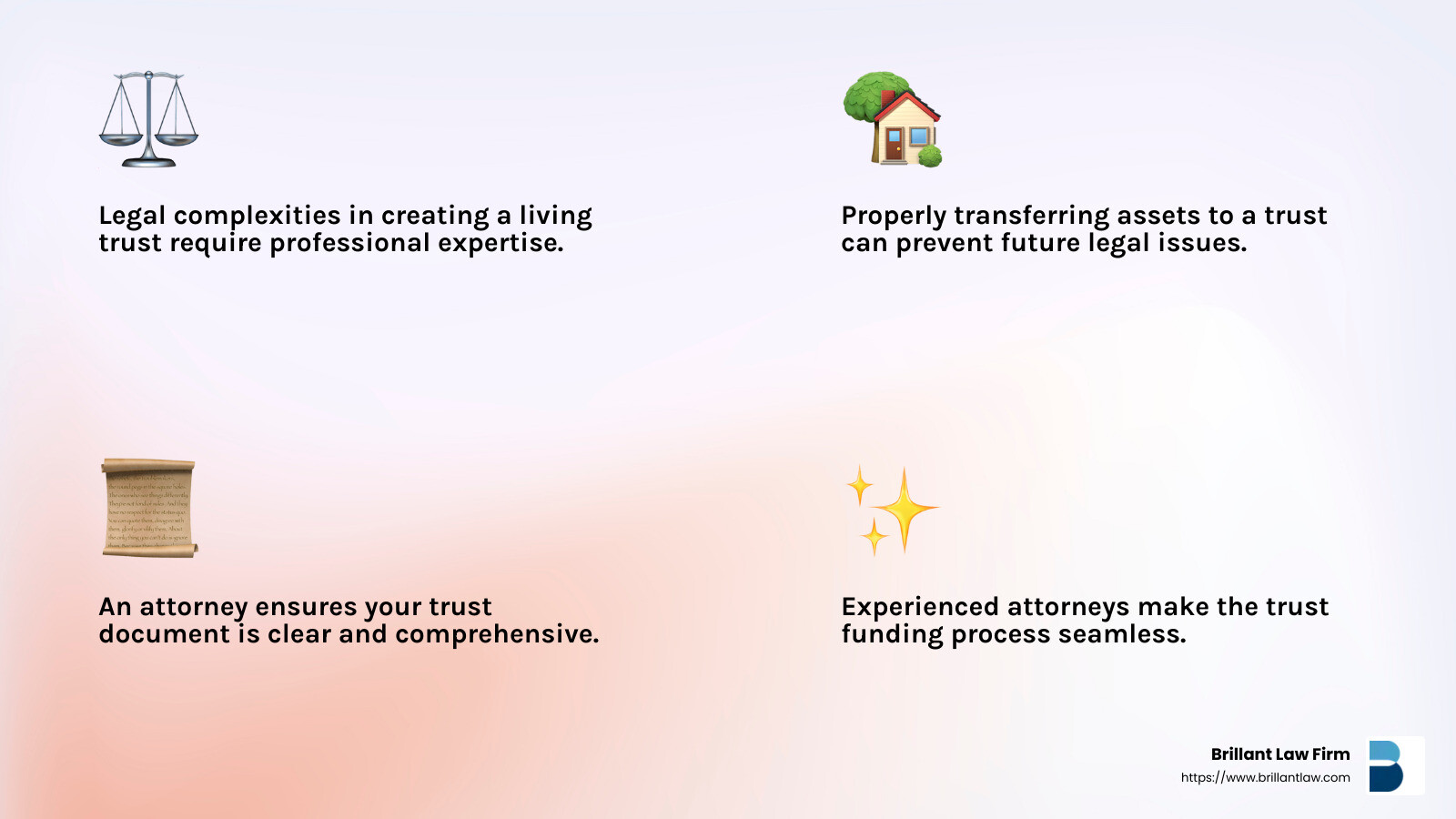
Legal Complexities: Living trusts involve intricate legal details. An attorney can steer these complexities, ensuring the trust complies with state laws and accurately reflects your wishes.
Asset Transfer: Transferring assets into a trust is not as simple as it sounds. An attorney can help you properly transfer ownership of your assets to the trust, avoiding potential legal issues down the road.
Trust Funding: Funding a trust involves more than just listing assets. Your attorney will guide you through the necessary steps to ensure all intended assets are included, making the trust effective.
Document Drafting: Legal documents must be precise. An attorney ensures that your trust document is clear, comprehensive, and correctly executed.
Choosing the Right Attorney
Selecting the right attorney is crucial. Here are some factors to consider:
Experience: Look for an attorney with experience in estate planning and living trusts. An experienced lawyer will have encountered various scenarios and can provide custom advice.
Specialization: Ensure the attorney specializes in estate planning and probate law. A specialist will be up-to-date with the latest legal changes and best practices.
Client Reviews: Check reviews and testimonials from past clients. Positive feedback can indicate the attorney’s reliability and effectiveness.
Consultation Process: A good attorney will offer an initial consultation. This is an opportunity to discuss your needs, ask questions, and gauge whether the attorney is a good fit for you.
At Brillant Law Firm, our team of experienced estate planning attorneys is dedicated to helping you create a living trust that meets your specific needs. We understand the legal intricacies and will work closely with you to ensure your trust is properly established and funded.
Next, we’ll walk you through the steps to set up a living trust.
Creating a Living Trust
Setting up a living trust involves several key steps. Each step is crucial to ensure your trust is effective and legally sound.
Steps to Set Up a Living Trust
- Asset Inventory
Start by listing all your assets. This includes real estate, bank accounts, investments, and personal property. Knowing what you own helps in deciding what to transfer into the trust.
Trust Document Drafting
Draft a legal document called a Declaration of Trust. This document establishes the trust, names the trustee, and specifies the beneficiaries.
Trustee Appointment
Choose a trustee to manage the trust. You can be the initial trustee, but you should also name a successor trustee to take over if you become incapacitated or pass away.
Beneficiary Designation
Clearly identify who will benefit from the trust. These beneficiaries will inherit the assets according to your instructions.
Asset Transfer
Transfer ownership of your assets to the trust. This means re-titling property, updating account ownership, and changing beneficiary designations where necessary.
Trust Funding
- Ensure all intended assets are included in the trust. This step is critical; any assets not transferred to the trust will not be governed by it.
Common Mistakes to Avoid
- Funding Challenges
One common mistake is not properly transferring assets into the trust. If assets aren’t correctly transferred, they won’t be protected by the trust and may go through probate.
Incomplete Documents
Ensure your trust documents are complete and accurately reflect your wishes. Missing information can lead to legal complications and disputes.
Outdated Information
- Regularly review and update your trust. Life changes like marriage, divorce, or the birth of a child should prompt a review to ensure your trust remains current.
Creating a living trust requires careful planning and attention to detail. By following these steps and avoiding common pitfalls, you can ensure your trust effectively protects your assets and fulfills your wishes.
Next, we’ll address some frequently asked questions about living trusts.
Frequently Asked Questions about Living Trusts
What is the Downside of a Living Trust?
While living trusts offer many benefits, they also have some downsides:
Limited Asset Protection: Assets in a living trust are still considered part of your estate. Creditors can make claims against these assets, and they are counted when determining eligibility for Medicaid nursing home coverage. This means a living trust does not shield your assets from creditors or legal judgments.
Funding Challenges: One of the most common issues is the failure to properly transfer assets into the trust. If assets aren’t correctly transferred, they won’t be protected by the trust and may still go through probate. This step is crucial and often requires meticulous attention to detail.
How Much Does a Living Trust Cost?
The cost of setting up a living trust can vary widely, depending on several factors:
Attorney Fees: Hiring an attorney to draft a living trust typically costs between $1,000 and $3,500, depending on the complexity of the estate and the attorney’s experience. For example, in San Jose, CA, a basic living trust with supporting documents can cost between $2,000 and $3,500 when prepared by a traditional law firm.
DIY Options: For those looking to save money, online services like LegalZoom offer more affordable options, starting at $399 for a basic trust package. However, this might not be suitable for complex estates.
Additional Costs: Beyond the initial setup, there may be ongoing costs for updating and maintaining the trust, especially if significant life changes occur.
What is the Primary Purpose of a Living Trust?
The primary purpose of a living trust is to facilitate the transfer of assets outside of probate. Here’s why this is important:
Probate Avoidance: Probate is a public, time-consuming, and often expensive court process. By avoiding probate, a living trust allows beneficiaries to receive their inheritance more quickly and privately.
Asset Management: A living trust helps manage your assets during your lifetime and provides clear instructions for their distribution after your death. This can be particularly useful if you become incapacitated, as the trust can include provisions for managing your affairs.
Privacy: Unlike a will, which becomes a public document once it goes through probate, a living trust remains private. This means the details of your estate and your beneficiaries are not disclosed to the public.
Living trusts are a powerful tool in estate planning, but they are not without their challenges. Understanding the costs, potential downsides, and primary benefits can help you make an informed decision about whether a living trust is right for you.
Next, we’ll dig into the common mistakes to avoid when setting up a living trust.
Conclusion
Choosing the right attorney for your living trust is crucial. At Brillant Law Firm, we specialize in estate planning and provide expert legal advice custom to your specific needs. Our team of trust attorneys is dedicated to ensuring your assets are managed and distributed according to your wishes, offering you peace of mind.
Why Choose Brillant Law Firm?
Expertise: Our attorneys have experience in estate planning, trusts, and probate law. We understand the complexities involved and are equipped to handle any challenges that may arise.
Client-Focused Strategies: We prioritize your needs and goals. Our bespoke strategies are designed to protect your interests and ensure your wishes are honored.
Comprehensive Services: From drafting living trusts to managing asset transfers, we offer a full range of services to cover all aspects of estate planning. Our team is well-versed in the latest legal requirements and best practices.
Collaboration: We work closely with other professionals, such as CPAs and financial planners, to provide a holistic approach to your estate planning. This ensures all aspects of your financial and legal needs are addressed.
Commitment to Excellence: Our unwavering dedication to excellence means you can trust us to handle your estate planning with the utmost care and professionalism.
Get Started Today
Estate planning is not just about creating documents; it’s about making the right plans for your future and your loved ones. With Brillant Law Firm, you can rest assured that your estate is in good hands.
Contact us today to schedule a consultation and take the first step toward securing your legacy. Let us help you steer the complexities of estate planning with confidence and ease.
By choosing Brillant Law Firm, you’re not just hiring an attorney; you’re gaining a partner dedicated to protecting your future. Whether it’s setting up a living trust or managing other aspects of your estate, we are here to provide the guidance and expertise you need.


